Tag: Polish Music

  • Andrzej Panufnik Rediscovering a Polish Giant

    Andrzej Panufnik Rediscovering a Polish Giant

    Andrzej Panufnik is the sleeping giant of Polish music. He’s one of those figures, like Bohuslav Martinu, who always seems poised on the verge of greatness, and yet never quite achieves the full degree of recognition he deserves.

    To begin with, his particular brand of modernism was eclipsed by the avant-garde experiments of his friend and compatriot, Witold Lutoslawski. Panufnik’s relationship with Lutoslawski dated back to the war years. During the Nazi occupation, the two formed a piano duo that played in Warsaw cafés – at the time the only way to share live music in public, since there was a ban on organized gatherings.

    In the meantime, Panufnik quietly produced subversive works celebrating Polish heroism and the resistance. Following the war, he was instrumental in the re-establishment of the Warsaw Philharmonic. However, increasing friction with Poland’s communist regime led to the composer’s defection, under hair-raising circumstances, in 1954. He was granted asylum in England, where he received a knighthood in 1991, the year of his death.

    This week on “The Lost Chord,” we’ll pay tribute to Panufnik with two of his ten symphonies, both of them markedly “Polish” in character.

    His “Sinfonia Rustica” (1948, revised in 1955), as the title implies, is a work very much of the people, making use of fragmented Polish themes, meant to reflect the rustic, semi-abstract, paper-cut art of the peasantry. Not only the symphony’s framework, but also the layout of the orchestra, is meant to reflect the symmetry found in Polish folk art. Nevertheless, despite the work’s direct character, it was denounced in 1949 as “alien to the great socialist era.”

    Whenever I listen to Panufnik’s “Sinfonia Sacra” (1963), I always think of Henryk Sienkiewicz’s 1884 epic, “With Fire and Sword,” set in the 17th century Polish-Lithuanian Commonwealth during the Khmelnytsky Uprising. With its evocation of winged hussars in courageous battle against the Cossacks, Sienkiewicz’s monumental page-turner whipped readers living in a partitioned Poland into a patriotic fervor.

    Conceived as a tribute to Poland’s millennium of Christianity and statehood, the symphony reflects the composer’s religious and patriotic sentiments. Panufnik based the work on the first known hymn in the Polish language, “Bogurodzica.” Throughout the Middle Ages, this served as something of a national anthem, sung not only in the church, but also on the battlefields by Polish knights.

    Watch your toes – the giant stirs! Join me for two symphonies by Andrzej Panufnik, on “Andrzej the Giant,” on “The Lost Chord,” now in syndication on KWAX, the radio station of the University of Oregon!


    Remember, KWAX is on the West Coast, so there’s a three-hour difference for the Trenton-Princeton area. Here are the respective air-times of my recorded shows (with East Coast conversions in parentheses):

    PICTURE PERFECT, the movie music show – Friday on KWAX at 5:00 PACIFIC TIME (8:00 PM EDT)

    THE LOST CHORD, unusual and neglected rep – Saturday on KWAX at 4:00 PACIFIC TIME (7:00 PM EDT)

    Stream them here!

    https://kwax.uoregon.edu/

  • Penderecki’s Utrenja Holy Saturday’s Haunting Masterpiece

    Penderecki’s Utrenja Holy Saturday’s Haunting Masterpiece

    While there are plenty of Vespers settings by classic composers to maintain a solemn and reflective atmosphere appropriate to the delayed gratification of Easter Sunday, few works for Holy Saturday are as engaging – or as challenging – as Krzysztof Penderecki’s “Utrenja.”

    Penderecki, who emerged from the 1960s as an icon of the avant-garde, here performs a delicate balancing act. The heavy weather of tone clusters and quicksilver cacophony disperses for hurricane’s eye interludes of hypnotic tonality. The overall impression is eerie as can be, but also affectingly mysterious. It’s a ritual both time-honored and timeless.

    The text is based on the Orthodox liturgy for Holy Saturday, for the lamentation for Christ’s death, and the Easter Sunday morning service commemorating the Resurrection.

    The two parts were first performed separately. “The Entombment,” composed in 1970, was dedicated to Eugene Ormandy, who recorded it with the Philadelphia Orchestra and the Temple University Choir; “The Resurrection,” was composed in 1971. Both parts were commissioned by West German Radio.

    Audience response to the joint premiere in 1971 was tumultuous, likely as much for extramusical considerations as for the music itself. The performance took place only days after the putdown by Polish armed forces of the Gdansk shipyard riots, sparked by precipitous inflation, that resulted in 44 people killed and over 1000 injured. Polish art and politics have frequently been familiar bedfellows.

    Penderecki’s “Utrenja” has long since joined his “Polish Requiem” and “St. Luke Passion” as a milestone of modern Polish music. Not music for every day, perhaps, but if you’re feeling a little adventurous, put it on and just go with it. Afterward, you can always listen to Rachmaninoff’s “Vespers,” if you want.

    Petrifying Penderecki:

    Reassuring Rachmaninoff:


    IMAGE: “Mourning from Chomranice,” by an artist identified as the Master of Mourning, c. 1440

  • Polish Music’s Gloom and Romance

    Polish Music’s Gloom and Romance

    This Sunday night on “The Lost Chord,” polish up on your Polish music with works by Mieczyslaw Karlowicz and Emil Mlynarski.

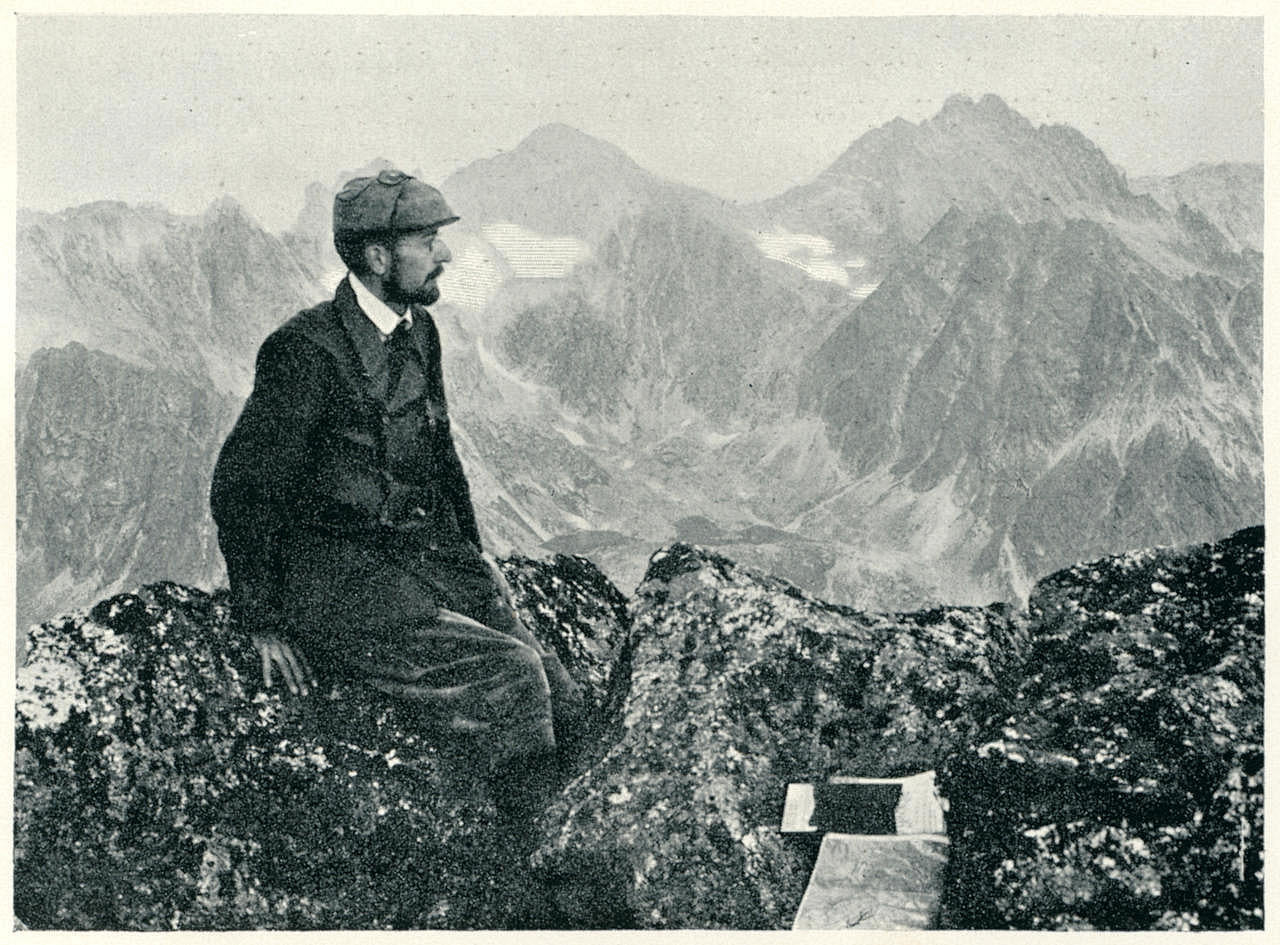
    Karlowicz, by all accounts one of the gloomiest of composers, embraced an outlook and philosophy that might well be described as pessimism leavened with pantheism. In this melancholy world, all love is unfulfilled or doomed, all existence leads to tragedy and destruction. The only place the composer seemed to find solace was in his beloved Tatras. He once noted, “Atop a high mountain, I become one with the surrounding space. I cease to feel individual. I can feel the mighty, everlasting breath of eternal being.”

    It is perhaps a kind of poetic justice that a life spent cultivating suicidal despair, and raising it to a level of high art, would be cut short, when Karlowicz was killed in an avalanche in 1909, aged only 32 years – a most fitting end for an orophile with fatalistic tendencies.

    On the eve of Valentine’s Day’s, we’ll hear one of the six symphonic poems upon which Karlowicz’s reputation, in large part, is based. “Stanislaw and Anna Oswiecim,” inspired by a painting of Stanislaw Bergmann, evokes a tale of forbidden love between brother and sister, ending in inevitable tragedy.

    Then it’s romance of different sort, with a violin concerto by Mlynarski.

    Mlynarski was recognized both at home and abroad as a staunch champion of Polish musical causes. He directed the Warsaw Opera and spearheaded the drive to build Warsaw Philharmonic Hall. He conducted festivals of Polish music in Paris, commissioned Sir Edward Elgar to write “Polonia” for a wartime Polish Relief Concert, and conducted the world premiere of Karol Szymanowski’s opera “King Roger.” He was, in fact, voted Poland’s most popular conductor. (Parenthetically, he also became the father-in-law of Artur Rubinstein.)

    Among his other achievements, he toured with the London Symphony Orchestra, became permanent conductor of the Scottish National Orchestra, shared concerts with Sir Thomas Beecham, and for a time was dean of the Curtis Institute of Music in Philadelphia.

    He was also an outstanding violinist. He studied with Leopold Auer, toured widely, and won a major composition award with his First Violin Concerto.

    Violinist Nigel Kennedy first encountered his music when he was handed a tape of Mlynarski’s Violin Concerto No. 2 by an anonymous Polish fan following a concert. Kennedy went on to make his own recording of the work. I think you’ll agree, it’s a very beautiful discovery.

    I hope you’ll join me in dipping into the archive for an hour of Polish music, on “Pole Vault,” this Sunday night at 10:00 EST, on WWFM – The Classical Network and wwfm.org


    PHOTO: Mieczyslaw Karlowicz, man of destiny

  • Andrzej Panufnik Rediscovering a Polish Master

    Andrzej Panufnik Rediscovering a Polish Master

    Andrzej Panufnik is the sleeping giant of Polish music. He’s one of those figures, like Bohuslav Martinu, who always seems poised on the verge of greatness, and yet never quite achieves the full degree of recognition he deserves.

    To begin with, his particular brand of modernism was eclipsed by the avant-garde experiments of his friend and compatriot, Witold Lutoslawski. Panufnik’s relationship with Lutoslawski dated back to the war years. During the Nazi occupation, the two formed a piano duo that played in Warsaw cafés – at the time the only way to share live music in public, since there was a ban on organized gatherings.

    In the meantime, Panufnik quietly produced subversive works celebrating Polish heroism and the resistance. Following the war, he was instrumental in the re-establishment of the Warsaw Philharmonic. However, increasing friction with Poland’s communist regime led to the composer’s defection, under hair-raising circumstances, in 1954. He was granted asylum in England, where he received a knighthood in 1991, the year of his death.

    This Sunday night on “The Lost Chord,” we’ll pay tribute to Panufnik with two of his ten symphonies, both of them markedly “Polish” in character.

    His “Sinfonia Rustica” (1948, revised in 1955), as the title implies, is a work very much of the people, making use of fragmented Polish themes, meant to reflect the rustic, semi-abstract, paper-cut art of the peasantry. Not only the symphony’s framework, but also the layout of the orchestra, is meant to reflect the symmetry found in Polish folk art. Nevertheless, despite the work’s direct character, it was denounced in 1949 as “alien to the great socialist era.”

    Whenever I listen to Panufnik’s “Sinfonia Sacra” (1963), I always think of Henryk Sienkiewicz’s 1884 epic, “With Fire and Sword,” set in the 17th century Polish-Lithuanian Commonwealth during the Khmelnytsky Uprising. With its evocation of winged hussars in courageous battle against the Cossacks, Sienkiewicz’s monumental page-turner whipped readers living in a partitioned Poland into a patriotic fervor.

    Conceived as a tribute to Poland’s millennium of Christianity and statehood, the symphony reflects the composer’s religious and patriotic sentiments. Panufnik based the work on the first known hymn in the Polish language, “Bogurodzica.” Throughout the Middle Ages, this served as something of a national anthem, sung not only in the church, but also on the battlefields by Polish knights.

    Watch your toes – the giant stirs! Join me for two symphonies by Andrzej Panufnik, on “Andrzej the Giant,” this Sunday night at 10:00 EDT, on WWFM – The Classical Network and wwfm.org.

  • Panufnik, Nelhýbel & Rutter: Rediscovering Masters

    Panufnik, Nelhýbel & Rutter: Rediscovering Masters

    I’ve said it before, and I’ll say it again: Andrzej Panufnik (1914-1991) is the sleeping giant of Polish music. He’s one of those figures, like Bohuslav Martinu, who always seems perched on the verge of greatness, and yet never quite achieves the full degree of recognition he deserves.

    To begin with, his particular brand of modernism was eclipsed by the avant-garde experiments of his compatriot and friend, Witold Lutoslawski. Panufnik’s relationship with Lutoslawski dated back to the war years. During the German occupation, the two formed a piano duo which played in Warsaw cafes – at the time the only way to share live music in public, since there was a ban on organized gatherings.

    In the meantime, Panufnik quietly produced subversive works celebrating Polish heroism and the resistance. Following the war, he was instrumental in the re-establishment of the Warsaw Philharmonic. However, increasing friction with Poland’s communist regime led to the composer’s defection, under hair-raising circumstances, in 1954. He was granted asylum in England, where he received a knighthood in the year of his death.

    Panufnik’s “Sinfonia Rustica,” composed in 1948 and revised in 1955, as the title implies, is a work very much of the people, making use of fragmented Polish themes, meant to reflect the rustic, semi-abstract, paper-cut art of the peasantry. Not only the symphony’s framework, but also the layout of the orchestra, is meant to reflect the symmetry found in Polish folk art. Nevertheless, despite the work’s direct character, it was denounced in 1949 as “alien to the great socialist era.”

    The Czech composer Václav Nelhýbel (1919-1996) was also displaced. Nelhybel left Nazi-occupied Prague for Switzerland in 1942. Later, he settled in the United States, where he taught at Lowell State College. He also served as composer-in-residence at the University of Scranton for several years until his death. During his time in America, he oversaw many bands and youth ensembles. He is remembered as an energetic and demanding though ultimately endearing taskmaster.

    Nelhýbel was dizzyingly prolific, with 400 published works to his credit and an additional 200 left in manuscript. The “Etude Symphonique” of 1964 is as exacting and propulsive as the artist who created it, with a three-note motive exhaustively developed. The work’s churning rhythms and cross-rhythms lend it a sense of vitality, and new ideas are continually formulated and examined.

    Of a more reflective nature is John Rutter’s Requiem. Rutter (b. 1945) is best known for his all-pervasive music for Christmas. His setting of the Requiem, composed in 1985, eschews the terror and high drama of Berlioz and Verdi to offer solace and tranquility in the manner of Gabriel Fauré’s most beloved essay in the form. I think you’ll find it the perfect restorative music for an early autumn evening.

    Works by these three composers will form the loom upon which I hope to weave a compelling program for your late September satisfaction, today from 4 to 7 p.m. EDT, on WWFM – The Classical Network and wwfm.org.


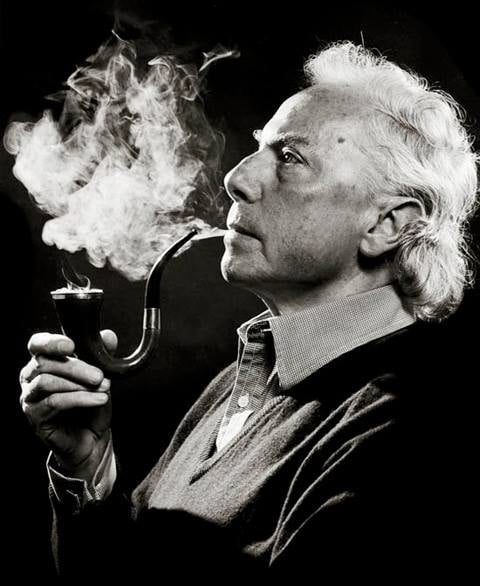
    Clockwise from left: Andrzej the Giant; Vaclav the Vital; and John the Rejuvenator

Tag Cloud

Aaron Copland (92) Beethoven (95) Composer (114) Film Music (120) Film Score (143) Film Scores (255) Halloween (94) John Williams (185) KWAX (229) Leonard Bernstein (100) Marlboro Music Festival (125) Movie Music (135) Opera (198) Philadelphia Orchestra (88) Picture Perfect (174) Princeton Symphony Orchestra (106) Radio (87) Ralph Vaughan Williams (85) Ross Amico (244) Roy's Tie-Dye Sci-Fi Corner (290) The Classical Network (101) The Lost Chord (268) Vaughan Williams (103) WPRB (396) WWFM (881)

DON’T MISS A BEAT

Receive a weekly digest every Sunday at noon by signing up here


RECENT POSTS