Tag: Romania

  • Bad Day in Bucharest: Ileana Cotrubaș has died

    Bad Day in Bucharest: Ileana Cotrubaș has died

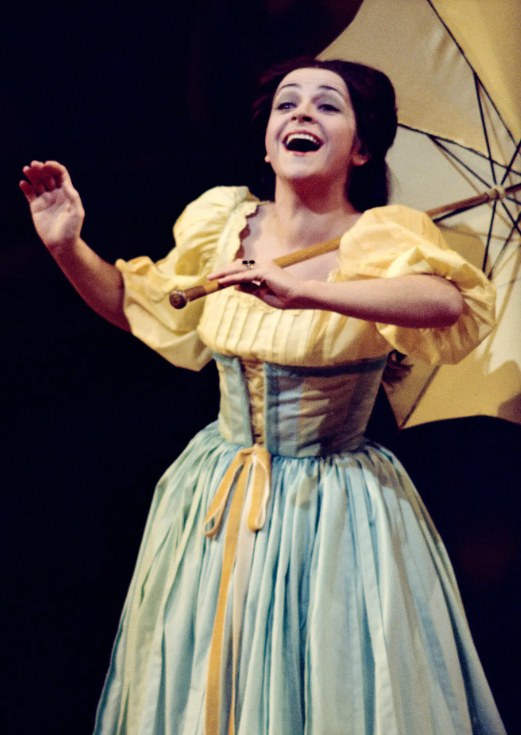
    Yesterday, I posted about Romania’s most celebrated composer, George Enescu, on his birthday. Today, I share the sad news that one of Romania’s most renowned singers, the soprano Ileana Cotrubaș, has died.

    Cotrubaș cracked the big time the old-fashioned way. Musical precocity and hard work led to engagements at the Bucharest Opera. Vocal competitions got her noticed abroad. She continued to hone her craft at Oper Frankfurt and Vienna State Opera. She also sang in Brussels, Hamburg, Berlin, Glyndebourne, Covent Garden, and Chicago.

    It’s hard, then, to understand why some of her online biographies attribute her “international breakthrough” to her response to an emergency request in January 1975 for her to substitute for an indisposed Mirelli Freni – at the suggestion of Luciano Pavarotti, no less – in “La bohème” at La Scala. Big shoes to fill, in any case! She flew from her home, then in Kent (U.K.), to Milan, arriving at the theater 15 minutes before curtain. She did her makeup on the flight. Her performance as Mimì wound up enchanting both critics and audience.

    We’ve all heard this kind of story. Cotrubaș was an overnight success twenty years in the making.

    She made her Met debut, also as Mimì, in 1977, opposite José Carreras. Two of her Met characterizations, of Gilda (“Rigoletto”) and Violetta (“La traviata”) – a role for which she was particularly acclaimed – were televised. She also recorded her Violetta with Carlos Kleiber.

    At least twice, she stormed out of productions over disagreements with her stage directors. I suspected she would not have been happy in this decadent era of Regietheater. Reading more about her, I learn that I am right.

    Ileana Cotrubaș retired from public singing in 1990. She died today in Bucharest at the age of 87. Listen to her Mimì and try not to get a lump in your throat.


    R.I.P.
  • Have a Piece of George Enescu

    Have a Piece of George Enescu

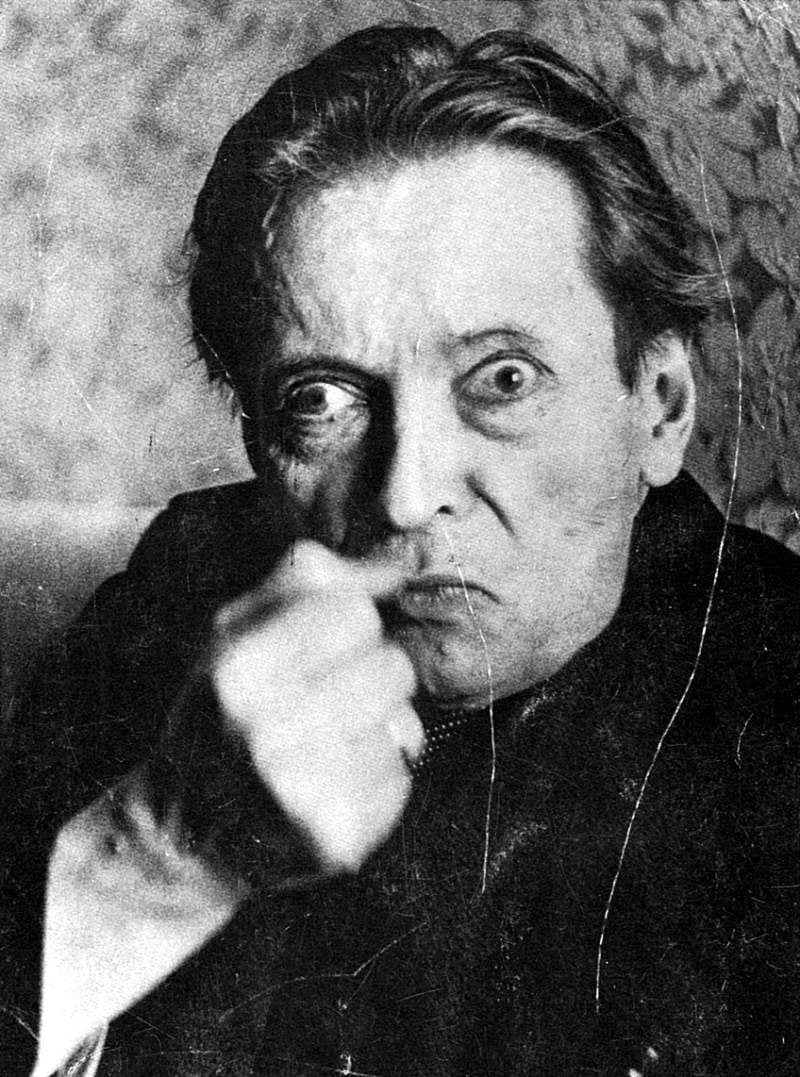
    Why exactly is composer George Enescu apoplectic? Because, still, 71 years after his death, all we ever hear is his Romanian Rhapsody No. 1.

    Enescu (1881-1955), arguably Romania’s greatest musical export, was a child prodigy who excelled also as a violinist, a pianist, a conductor, and a teacher. At the age of seven, he became the youngest student ever to be admitted to the Vienna Conservatory. He graduated before his 13th birthday. From there, he went to Paris and embarked on a charmed career with too many highlights to detail here. Pablo Casals, described him as “the greatest musical phenomenon since Mozart.”

    He composed his biggest hit, the Romanian Rhapsody No. 1 (1901), at the age of 19. So popular did it prove that it became a kind of millstone to Enescu. People didn’t want to hear anything else. They still don’t!


    On Enescu’s birthday, give the gift of an open mind and take a few minutes to sample some of his other music!

    ———-

    A lovely piece for a summer’s day, the Decet for Winds (1906)


    A live performance of Enescu’s first published piece, the “Romanian Poem” (1898), written when he was only 16


    Concert Overture on Popular Romanian Themes (1948)


    Enescu plays his own Violin Sonata No. 3 (1926), with legendary Romanian pianist Dinu Lipatti


    Lipatti plays Enescu’s Piano Sonata No. 3 (1933-35)


    Symphonie Concertante for Cello and Orchestra (1901)


    The visionary Symphony No. 3, with choral finale (1916-18; rev. 1921-51)


    And okay, his greatest hit. Again. Just because something’s popular doesn’t mean it’s not great.


    Celebrating George Enescu on the anniversary of his birth!

  • Romania Mania Unearthing Musical Gems

    Romania Mania Unearthing Musical Gems

    For a country so steeped in music, George Enescu has done an awful lot of the heavy lifting. Regarded as Romania’s most gifted musical polymath, Enescu exploded onto the international scene at the age of 19 with his world famous “Romanian Rhapsody No. 1.” Perhaps even more impressive, his “Romanian Poem,” a half-hour expanse for chorus and orchestra, was composed four years earlier.

    But Enescu was also a gifted violin prodigy, a pianist, a conductor, and a notable teacher. Although we are exposed to a shamefully small proportion of his compositional output, at least much of it has been recorded, and his name is secure in the classical music pantheon. This Sunday night on “The Lost Chord,” we’ll look beyond Enescu to hear music by three of his compatriots, only one of whom managed to achieve a reputation beyond the borders of his homeland.

    George Stephănescu (1843-1925) was an important figure in the development of Romanian opera. He founded the nation’s first opera company in 1885. He is also credited with having composed the first Romanian symphony. Stephănescu conducted at the National Theater and taught at the Bucharest Academy of Music. His “National Overture” of 1876 reflects his patriotic concerns.

    By contrast, György Ligeti (1923-2006) was destined generally to be a bit of an outlier. Born into a Jewish family in an ethnically Hungarian region of Transylvania, Ligeti went on to become one of the most important composers of his generation, but much of his music is in a style which would be deemed “avant-garde.” But he also had his playful side. In 1951, he wrote his “Concert românesc” (“Romanian Concerto”), a wholly accessible and little-known work based on actual Romanian folk tunes that he had studied at the Folklore Institute in Bucharest. Despite this being one of his most overtly delightful works, the piece was banned after a single rehearsal in Bucharest and was not heard publicly until 1971. “Totalitarian regimes do not like dissonances,” he observed ruefully.

    Finally, Paul Constantinescu (1909-1963) was part of a generation of Romanian composers who came of age in the shadow of Enescu. He composed in most musical forms: opera, ballet, oratorio, incidental music, symphonic, chamber and choral music, and music for film, yet he remains little-known in the West. His concertante output includes works for violin, cello, piano and harp, in addition to a concerto for string orchestra. We’ll hear Constantinescu’s Piano Concerto, from 1952.

    I hope you’ll join me for this neglected music from Southeast Europe. That’s “Romania Mania,” this Sunday night at 10:00 EDT, on WWFM – The Classical Network and wwfm.org.

Tag Cloud

Aaron Copland (93) Beethoven (95) Composer (114) Film Music (141) Film Score (143) Film Scores (255) Halloween (94) John Williams (195) KWAX (229) Leonard Bernstein (103) Marlboro Music Festival (125) Movie Music (156) Mozart (89) Opera (212) Philadelphia Orchestra (89) Picture Perfect (174) Princeton Symphony Orchestra (108) Radio (88) Ross Amico (244) Roy's Tie-Dye Sci-Fi Corner (290) The Classical Network (101) The Lost Chord (268) Vaughan Williams (103) WPRB (396) WWFM (881)

DON’T MISS A BEAT

Receive a weekly digest every Sunday at noon by signing up here


RECENT POSTS