Tag: Romantic Symphony

  • Howard Hanson Romantic Symphony & Film

    Howard Hanson Romantic Symphony & Film

    I don’t know if I ever shared this before – from the Classic Ross Amico Cabinet of Curiosities, an inscribed photo of Howard Hanson.

    For 40 years, Hanson was director of the Eastman School of Music, in which capacity he nurtured and championed innumerable American composers, giving literally thousands of premieres at the helm of the Eastman-Rochester Orchestra (an ensemble he founded). The lucky ones found their way onto records, issued on the Mercury label.

    Hanson, of course, was himself a composer. He was awarded the Pulitzer Prize for Music in 1944, for his Symphony No. 4 “Requiem,” written in memory of his father. But his best-known music, unquestionably, is his Symphony No. 2 “Romantic,” composed in 1930.

    A cassette tape of the piece must have been circulating in Hollywood, beginning in the late 1970s. It started turning up in the movies, either directly, as in the end credits to “Alien” (1979), or as thinly-veiled homage, as in the bicycle chase and finale of “E.T. The Extra-Terrestrial” (1982). More recently, Hans Zimmer cribbed it for “The Boss Baby” (2017).

    I can understand the allure. The quintessential “Hanson sound” is one of heart-on-the-sleeve romanticism, characterized by glowingly nostalgic melodies. But the composer also had his severe side. As the offspring of Swedish immigrants in Wahoo, Nebraska, he was also inclined to a certain Nordic austerity, especially in his later works.

    I never met Dr. Hanson myself, but he has all my respect and gratitude. Happy birthday, Howard Hanson!


    Romantic Hanson, incongruously, in “Alien”

    Hans Zimmer cribs for “The Boss Baby”

    John Williams’ most glorious music, for the last 15 minutes of “E.T.,” would not have been the same without his influence

    As it’s heard in the original

    Romantic Symphony (complete)

    Piano Concerto

    “Elegy in Memory of Serge Koussevitzky”

    Koussevitzky conducts Hanson’s Symphony No. 3 (in commemoration of the 300th anniversary of the first Swedish settlement in Delaware)

    “Pastorale” for Oboe, Harp and Strings
  • Schubert’s Unfinished Symphonies Revealed

    Schubert’s Unfinished Symphonies Revealed

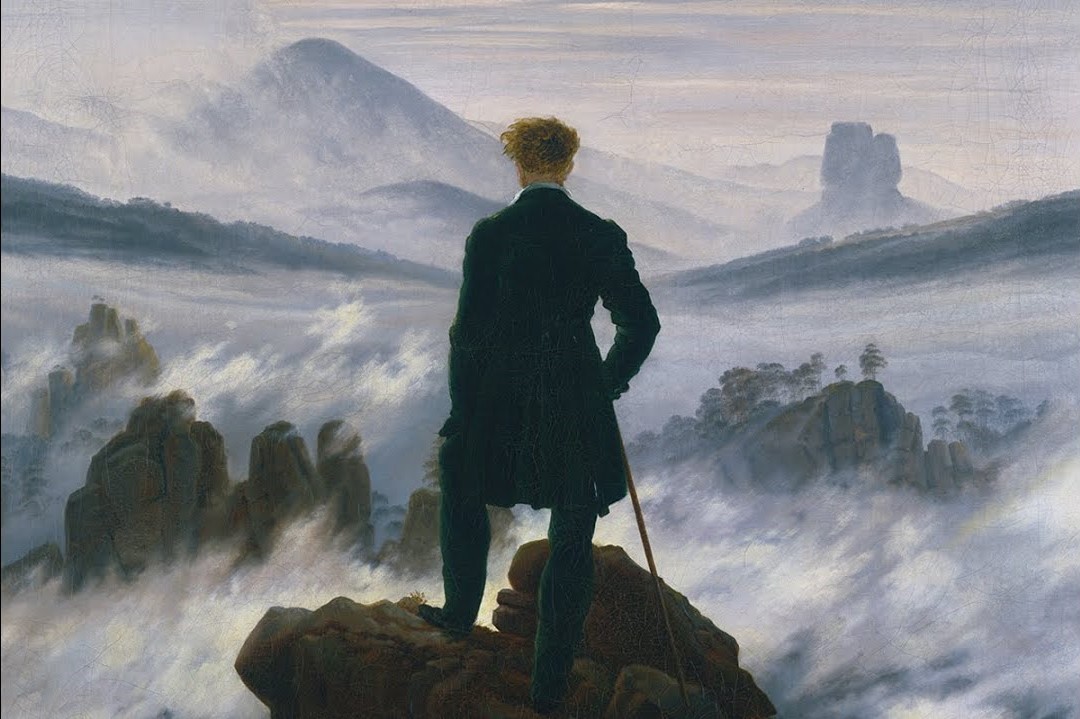
    Franz Schubert’s “Unfinished” Symphony is not his only unfinished symphony.

    Schubert began thirteen symphonies, of which nine are generally numbered; but of these, he only completed seven. And regarding the canonical nine, there has been some discrepancy over the centuries as to the actual sequence of their composition.

    Schubert began his famous “Unfinished” Symphony (now widely accepted as No. 8 ) in 1822. It consists of two complete movements. Despite the fact that Schubert would live another six years, for whatever reason, he never finished the other two. There’s a nearly-completed scherzo that exists in short score, with only two pages in the composer’s orchestration. (Another fragment was discovered in an attic in Vienna only in 2017.) It’s been speculated that material originally intended for the last movement may have wound up in another piece, or that Schubert was distracted by work on the “Wanderer Fantasy,” or that the symphony ultimately held bad associations for him, since it coincided with his having contracted syphilis.

    But Schubert wasn’t exactly the kind of guy to fall into crippling despondency.

    The symphony was given its first performance on December 17, 1865 – 37 years after the composer’s death. A characteristic Schubertian blend of geniality and passion, the piece was immediately recognized as one of his most beautiful orchestral works. It is sometimes referred to as the first Romantic symphony. It certainly is a moody one.

    There have been a number of attempts to complete the symphony over the years. Like Michelangelo’s abandoned “Pietà,” it continues to fascinate, despite – or perhaps because of – its orphan status. The music is some of Schubert’s most famous. It has been used in numerous movies and cartoons and as the basis for other composers’ compositions.

    Just don’t get the idea that Schubert never finished anything. He may have died at 31, but in a career that spanned less than 20 years, he managed to complete about 1500 works, including symphonies, overtures, incidental music, quartets, quintets, an octet, twenty piano sonatas, operas, masses, some fifty additional choral works, and about 600 songs.

    Then, this was before Facebook.

    Happy birthday, Franz Schubert.

  • Howard Hanson Romantic Composer in Hollywood

    Howard Hanson Romantic Composer in Hollywood

    Howard Hanson, you incurable Romantic, you.

    For 40 years, you were director of the Eastman School of Music. You were the recipient of the Pulitzer Prize in 1944, for your Symphony No. 4, “Requiem,” dedicated to the memory of your father.

    You championed innumerable American composers, as conductor of the Eastman-Rochester Orchestra, an ensemble you founded. The lucky ones made it onto your now highly-collectible recordings for the Mercury label.

    Undoubtedly, your best-known music is the Symphony No. 2, “Romantic,” composed in 1930. The trademark “Hanson sound” is one of heart-on-the-sleeve lyricism, with wistful melodies arrayed in lambent orchestration.

    The Symphony No. 2 has been a great favorite in Hollywood, at least since the 1970s. How else would you have turned up in the end credits of “Alien” (1979), or been evoked in the bicycle chase and finale of “E.T.” (1982), or, most recently, been cribbed for “The Boss Baby” (2017)?

    Romantic Hanson in “Alien”:

    Hans Zimmer borrows for “The Boss Baby”:

    John Williams’ most glorious music, for the last 15 minutes of “E.T.,” would not have been the same without your influence.

    As it’s heard in the original:

    “E.T.” is a brilliant score, but clearly Williams was a fan of your “Romantic Symphony.”

    Happy birthday, Howard Hanson!


    Romantic Symphony (complete)

    Piano Concerto

    “Elegy in Memory of Serge Koussevitzky”

    Koussevitzky conducts Hanson’s Symphony No. 3

    “Pastorale” for Oboe, Harp and Strings
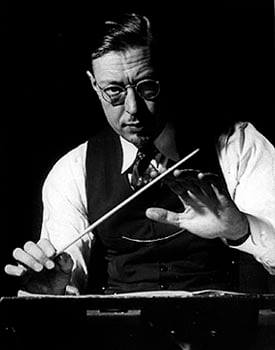
    Hanson conducts Henry Cowell’s Symphony No. 4, a recording that never made it to compact disc

    https://www.youtube.com/watch?v=hOz9aAMFXI8

Tag Cloud

Aaron Copland (92) Beethoven (95) Composer (114) Film Music (119) Film Score (143) Film Scores (255) Halloween (94) John Williams (185) KWAX (229) Leonard Bernstein (99) Marlboro Music Festival (125) Movie Music (134) Opera (198) Philadelphia Orchestra (86) Picture Perfect (174) Princeton Symphony Orchestra (106) Radio (87) Ralph Vaughan Williams (85) Ross Amico (244) Roy's Tie-Dye Sci-Fi Corner (290) The Classical Network (101) The Lost Chord (268) Vaughan Williams (102) WPRB (396) WWFM (881)

DON’T MISS A BEAT

Receive a weekly digest every Sunday at noon by signing up here


RECENT POSTS