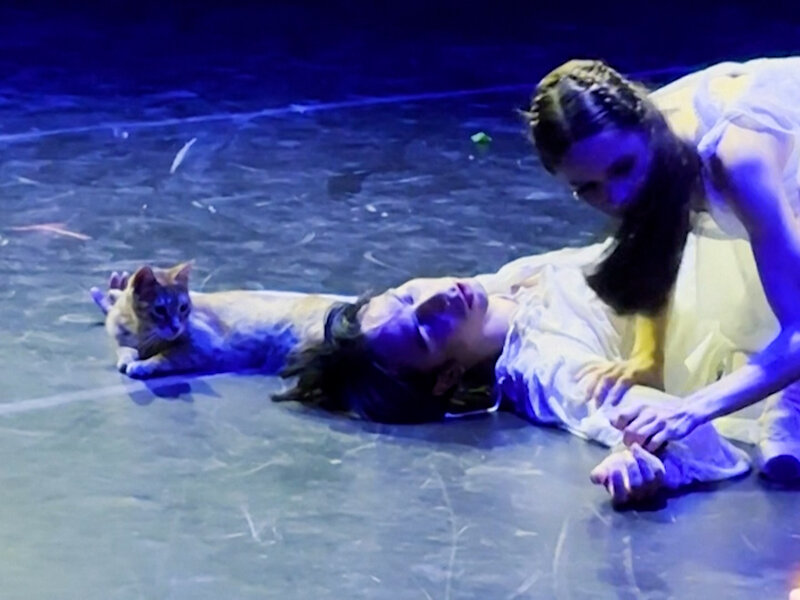
I guess Tybalt wasn’t the only rat-catcher in this production of “Romeo and Juliet.”
A stray cat brought unexpected levity to Prokofiev’s “Romeo and Juliet” during a performance by the Imperial Russian Ballet in Izmir, Turkey. Far from being upset by the four-legged interloper, the dancers evidently took to the feline balletomane, as he or she was brought out a few minutes later to share in the final bow. Later, it was shown that the ginger started turning up at rehearsals.
Scroll down to watch all three videos at the link.
https://slippedisc.com/2026/06/cat-steals-the-scene-in-ro-meouw-and-juliet-ballet/
Isn’t the Imperial Russian Ballet now properly identified as the Mariinsky?
Or hereafter, the Meow-riinsky?
Tag: Romeo and Juliet
-
Romeo and Juliet Ends in Cat-astrophe
-
Shakespeare’s Birthday Celebration on KWAX
Some are born great, some achieve greatness, and some have greatness thrust upon them.
We don’t know exactly when Shakespeare was born, but he was baptized on April 26, 1564 – which means it could have been a few days earlier. Since he died on April 23, 1616, and because everyone loves symmetry, his birthday is most commonly observed on the presumptively-shared anniversary of his death. His little life may have been rounded with a sleep, but posterity has fluffed the pillows in an impulse to keep things tidy.
At any rate, we hardly need an excuse to celebrate his plays, which have inspired lots of colorful music. This morning on “Sweetness Light,” we’ll quaff our fill of Shakespearean comedy, with selections by Otto Nicolai, Edward German, Felix Mendelssohn (as transcribed and performed by Sergei Rachmaninoff), and William Walton.
We’ll also hear a fragment of a projected opera by Pyotr Ilych Tchaikovsky on the subject of “Romeo and Juliet,” left incomplete at the time of the composer’s death. It was edited and orchestrated by his pupil, Sergei Taneyev. You may not know the fragment, but you will most definitely recognize the thematic material!
Partying is such sweet sorrow. We’ll celebrate the Bard on “Sweetness and Light,” this Saturday morning at 11:00 EDT/8:00 PDT, exclusively on KWAX, the radio station of the University of Oregon!
Stream it wherever you are at the link:
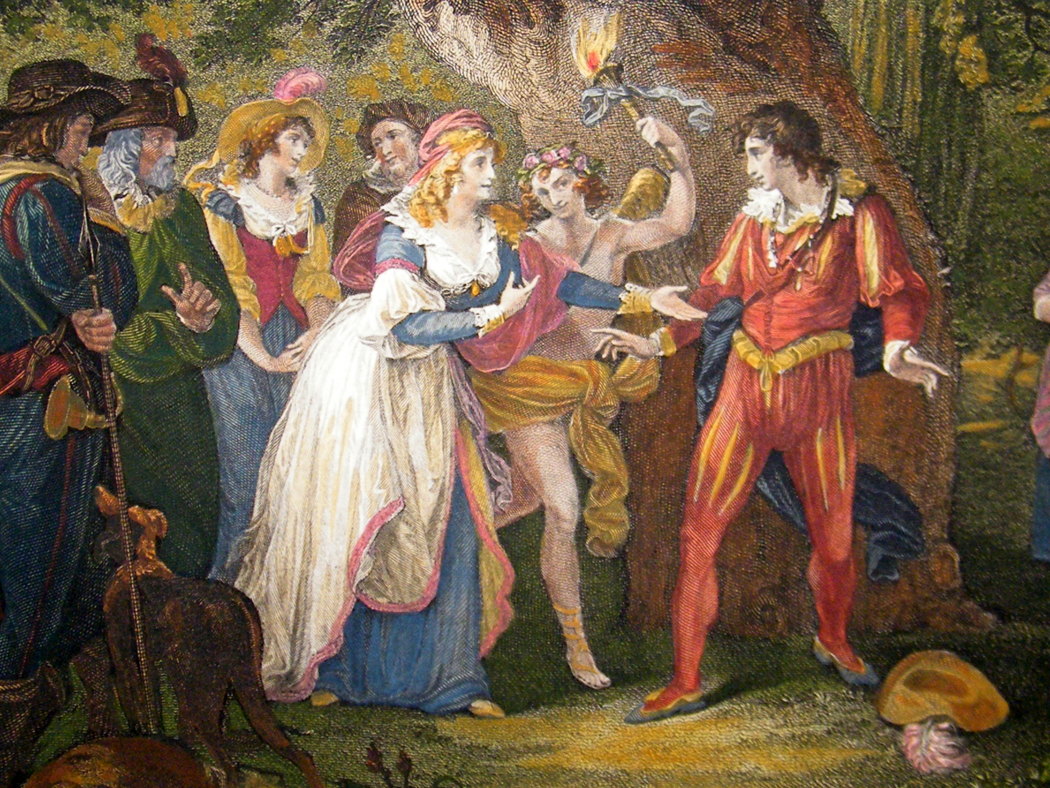
IMAGE: William Hamilton, “As You Like It” (1790)
-
Zeffirelli’s Shakespeare & Film Scores
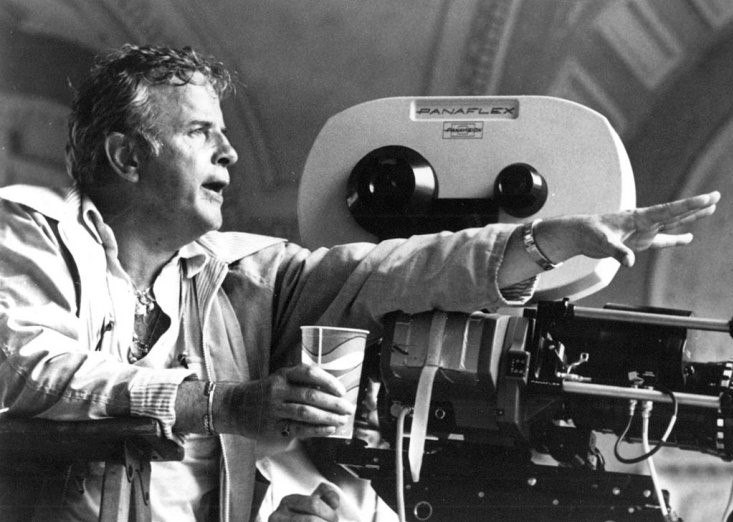
Franco Zeffirelli died on June 15 at the age of 96. The influential director favored big emotions and grandiose subjects, making his biggest mark in Shakespeare and opera. I’ll leave the opera to other hands. However, this week on “Picture Perfect,” I’ll do what I can to honor his artistry with music from a selection of his films.
“Romeo and Juliet” (1968) was probably the most culturally significant of these. Not only did it turn out to be a surprise hit, the film has been a staple of high school English curricula for decades. Zeffirelli’s vision proved especially appealing to teenaged audiences – in part because of the refreshing youth of its leads (Leonard Whiting and Olivia Hussey, 17 and 16 respectively).
“Romeo and Juliet” was nominated for several Academy Awards, including those for Best Picture and Best Director. Laurence Olivier spoke the film’s prologue and epilogue, and reportedly dubbed the voice of the Italian actor who played Lord Montague. Nino Rota wrote the music, and the love theme was popularized as “A Time for Us.”
Another enduring success for Zeffirelli, a devout Roman Catholic, was his television miniseries, “Jesus of Nazareth” (1977). This time Olivia Hussey plays Mary, mother of Jesus. The all-star cast includes eight Academy Award winners, past and future (Anne Bancroft, Ernest Borgnine, James Earl Jones, Laurence Olivier, Christopher Plummer, Anthony Quinn, Rod Steiger, and Peter Ustinov). It makes me happy to learn that the sets for the film were reused by Monty Python for “Life of Brian.”
The music was by Maurice Jarre, David Lean’s composer-of-choice. I realize we’ve been hearing a lot of late-period Jarre recently, when he was most under the spell of electronics. “Jesus of Nazareth” sports a good old-fashioned orchestral score, with obligatory Biblical chorus.
Zeffirelli proved again and again that he was especially adept at adapting Shakespeare for the big screen. With the unlikely casting of action hero Mel Gibson as the melancholy Dane, “Hamlet” (1990) was something of a gamble that paid off. Zeffirelli puzzlingly tampers with one of the all-time great openings in the history of drama, delaying the appearance of the ghost of Hamlet’s father in favor of some fabricated funeral that looks like a rejected scene from “Star Wars,” but Gibson brings to the title role a refreshing vitality. The reading is passionate and dangerous. The music was by Ennio Morricone.
Art imitates life in Zeffirelli’s first feature as director, “The Taming of the Shrew” (1967), a showcase for the famously tempestuous husband-and-wife Richard Burton and Elizabeth Taylor. In addition, “Shrew” and “Romeo” provided notable supporting roles for a young Michael York. Nino Rota supplies an alternately rollicking and melancholy score in a manner that seems characteristic of Italian composers – perhaps the influence of Italian opera?
Of course Zeffirelli made a magnificent imprint in the world of opera, with his opulent, eye-popping productions. For film, he directed adaptations of “La traviata” and “Otello,” with Placido Domingo.
Among his other films were “Brother Sun, Sister Moon,” “The Champ,” “Endless Love,” “Jane Eyre,” and “Tea with Mussolini.” But we’ll go with the spectacle – I think Franco would have wanted it that way – this Friday evening at 6:00 EDT, on WWFM – The Classical Network and wwfm.org.
-
Shakespeare Berlioz Love and Loss on WWFM
As I said yesterday, we don’t really know when Shakespeare was born (he was baptized on April 26, 1564). Traditionally his birthday is celebrated on April 23, since that also happens to mark the anniversary of his death, in 1616, and by nature man is a compulsive creature, seeking order in all things.
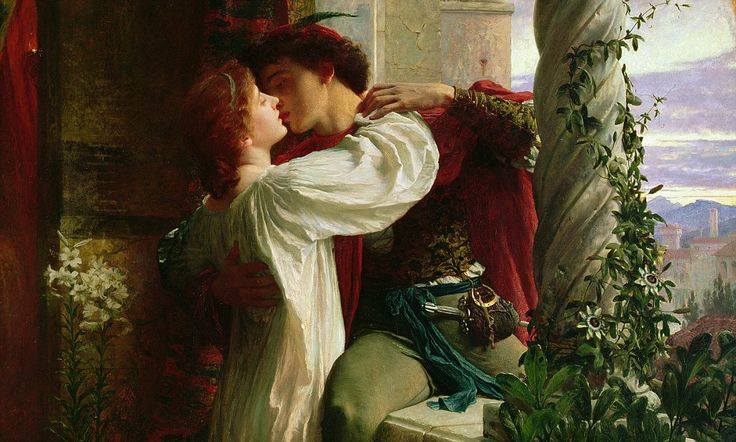
Though we’ve manufactured a birthday for the Bard it is quite possible he could have been born at any time between now and Thursday. So why not take advantage of the broad blank canvas provided me on a Tuesday afternoon to present Hector Berlioz’s mad, ramshackle symphony, “Romeo and Juliet?”
Berlioz adored Shakespeare. His “Symphonie Fantastique,” remember, was inspired by his passion for the actress Harriet Smithson, whom he had seen in Paris as Ophelia and fell instantly under her spell. He would woo and win her with his macabre, at times hysterical “symphonie.” At least, for as wild as his opium-induced vision of rejection, dejection, and, ultimately, damnation, would become, the work somehow clung to a semblance of “symphonic,” its romanticism bubbling out over the top of its somewhat classical structure.
“Romeo and Juliet,” on the other hand, is neither fish nor fowl – a veritable Frankenstein’s monster assembled from the components of symphony, symphonic poem, opera, and oratorio. Unwieldy and flamboyant, Berlioz’s “symphony” unfolds as a collage of the play’s emotional high points – plus a scherzo inspired by Mercutio’s Queen Mab exposition, which is the symphony’s best known movement. In fact, it is rare to hear anything else, except perhaps the love music. Listen for a complete performance of this perplexing masterpiece, this afternoon at 2 p.m. EDT.
First, on today’s Noontime Concert, it’s a program of new music with the American Modern Ensemble. The group’s founder, composer Robert Paterson, will be represented by two works – a collection of arias from the opera “Three Way” (2017), which explores the present and future of sex and love, and “In Real Life” (2015-16) for soprano and chamber orchestra, which examines the humor and heartbreak of what it means to join a dating website. In between, we’ll hear Robert Maggio’s “Forgetfulness” (2015), a setting for baritone and chamber ensemble of Billy Collins’ poem about Alzheimer’s Disease and dementia. The concert took place at Merkin Concert Hall at Kaufman Music Center in New York City.
The course of true love never did run smooth. Being caught between warring houses in old Verona seems almost attractive, by comparison. It’s an afternoon of romance, androids, and BDSM (I’m not kidding), from 12 to 4 p.m. EDT, on WWFM – The Classical Network and wwfm.org.
-
Ballets Russes: English Music for the Stage
We don’t know for sure when he was born (he was baptized on April 26, 1564), but April 23 is the day the world has chosen to celebrate Shakespeare.
Rather than pummel you with more music inspired by the Bard, I thought I would take a circuitous approach, this Sunday night on “The Lost Chord,” and present Constant Lambert’s 1924-25 ballet, “Romeo and Juliet.” Do not go into it expecting the star-cross’d lovers of Shakespeare’s immortal tragedy. Lambert’s version takes a look at a ballet company. In the process of preparing an adaptation of the play, the two leads fall in love. They flee a rehearsal, and are glimpsed eloping in an aeroplane!
Lambert was only 20 years-old when he wrote the music, which is cheeky and burlesque, evocative of commedia dell’arte and perhaps influenced by contemporaneous displays of joie de vivre by composers of the Parisian collective, Les Six.
“Romeo and Juliet” was one of only two ballets commissioned from English composers by Serge Diaghilev for his Ballets Russes. The other was “The Triumph of Neptune,” written in 1926 by Gerald Hugh Tirwhitt-Wilson, 14th Baron Berners.
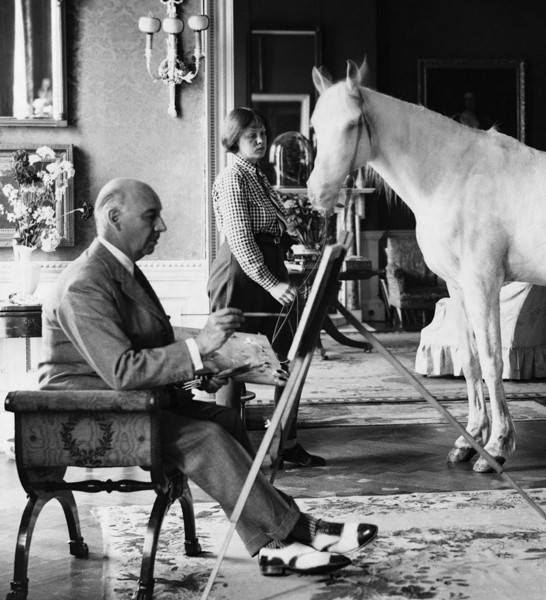
Berners was an exemplar of a certain tradition of English eccentricity, in which a lord might invite a giraffe to an outdoor tea party or a horse would be given license to roam the indoors to mingle with his guests. His garden was full of paper flowers, his dogs wore pearl necklaces, and he built a hundred foot folly tower, allegedly just to annoy the neighbors.
Berners was gifted in so many areas – as a composer, of course, but also as a writer (his stories and autobiographical musings have been brought back into print) and a painter (he loved to include mustaches in his portraits, whether the sitter had one or not). He liked ballet best of all, since it allowed him to write the scenarios and design the backdrops, in addition to composing the music.
“The Triumph of Neptune” is Berners’ best-known piece. In this instance, it was Sacheverell Sitwell who devised the scenario, which sprang from their mutual enchantment with 19th century theatrical prints. An English sailor is shipwrecked en route to Fairyland. He is saved by Britannia, who dances a hornpipe. He returns home in spirit form, to find his wife carrying on with a well-dressed villain. But all ends happily, as he is turned into a prince and marries Neptune’s daughter.
The choreography was by George Balanchine, and the work became a great favorite of Sir Thomas Beecham.
I hope you’ll join me for “England à la Russe” – music written by English composers for the Ballets Russes – this Sunday night at 10:00 EDT, on WWFM – The Classical Network and at wwfm.org.
PHOTOS: Berners paints a horse; Lambert pushes a car
Tag Cloud
Aaron Copland (93) Beethoven (95) Composer (114) Film Music (144) Film Score (143) Film Scores (255) Halloween (94) John Williams (195) KWAX (229) Leonard Bernstein (104) Marlboro Music Festival (125) Movie Music (159) Mozart (90) Opera (212) Philadelphia Orchestra (89) Picture Perfect (174) Princeton Symphony Orchestra (109) Radio (88) Ross Amico (244) Roy's Tie-Dye Sci-Fi Corner (290) The Classical Network (101) The Lost Chord (269) Vaughan Williams (105) WPRB (397) WWFM (881)