Tag: Roque Cordero

  • Black Composers Series Rediscovered

    Black Composers Series Rediscovered

    To reiterate, the 2019 compact disc reissue of CBS Records’ landmark Black Composers Series of the 1970s, though lamentably underpublicized and unconscionably delayed, was still just ahead of the curve, as there has been an explosion of Black classical music in our concert halls in only the last few years. In the intervening decades? The pickings were slim.

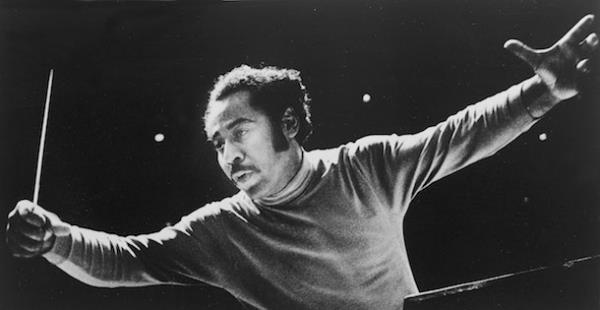
    These visionary recordings, made under the direction of conductor Paul Freeman (pictured) and employing world class orchestras and soloists, were originally released on vinyl between 1974 and 1978, providing rare exposure to 200 years’ worth of neglected music at a time when most of it was essentially unknown.

    This week on “The Lost Chord,” it’s the third in a four-part survey of highlights from this exciting boxed set, which was reissued, finally, by Sony Classical.

    José Silvestre de los Dolores White y Lafitte (or José or Joseph White, for short) was one of the great romantic violinists. Born in Cuba in 1835, he made his public debut at the age of 18 with the most celebrated North American pianist of the day, Louis Moreau Gottschalk. It was Gottschalk who encouraged White to study at the Paris Conservatory and who raised the money to send him there. This launched the young man on a globetrotting trajectory that sent him all over Europe, the Caribbean, South America, Mexico, and the Northeastern United States.

    White died in Paris in 1918. We’ll hear his Violin Concerto in F-sharp minor, played by the prolific and committed Aaron Rosand. Why this is not a repertory piece is anybody’s guess.

    David Baker, born in 1931, was professor of jazz studies at the Indiana University Jacobs School of Music, a program he founded. From 1991 to 2012, he was also director and conductor of the Smithsonian Jazz Masterworks Orchestra. On top of everything else, he was extraordinarily productive as a writer and recording artist, leaving over 65 recordings, 70 books, and 400 articles.

    Baker died in 2016. He was trained as a trombonist – he was active as a jazz performer throughout the 1940s and early ‘50s – but a facial injury suffered in an automobile accident caused him to switch to the cello. We’ll hear Baker’s Cello Sonata, composed in 1973 for the great Janos Starker, who will perform it with Alain Planès at the keyboard.

    Finally, Roque Cordero was born in Panama City in 1917. He studied composition with Ernst Krenek and conducting with Dimitri Mitropoulos. He became director of Panama’s Institute of Music and artistic director and conductor of its National Symphony. Later, he was assistant director of the Latin American Music Center, professor of composition at Indiana University, and, from 1972, distinguished professor emeritus at Illinois State University. Cordero died in Dayton, Ohio, in 2008, at the age of 91.

    Fascinatingly, Cordero’s music tends to balance Panamanian folklore with more advanced techniques. The boxed set contains not only his Violin Concerto, with Sanford Allen the soloist, but also “Eight Miniatures for Small Orchestra” of 1948. We’ll hear Paul Freeman conduct the latter with the Detroit Symphony Orchestra.

    I hope you’ll join me for “Black to the Future, Part III,” yet another program of highlights from the Sony Classical reissue of CBS Records’ forward-looking Black Composers Series, on “The Lost Chord,” now in syndication on KWAX, the radio station of the University of Oregon!


    Clip and save the start times for all three of my recorded shows:

    PICTURE PERFECT, the movie music show – Friday at 8:00 PM EST/5:00 PM PST

    SWEETNESS AND LIGHT, the light music program – ALL NEW! – Saturday at 11:00 AM EST/8:00 AM PST

    THE LOST CHORD, unusual and neglected rep – Saturday at 7:00 PM EST/4:00 PM PST

    Stream them, wherever you are, at the link!
    https://kwax.uoregon.edu/

  • Roque Cordero Panama’s Only Composer

    Roque Cordero Panama’s Only Composer

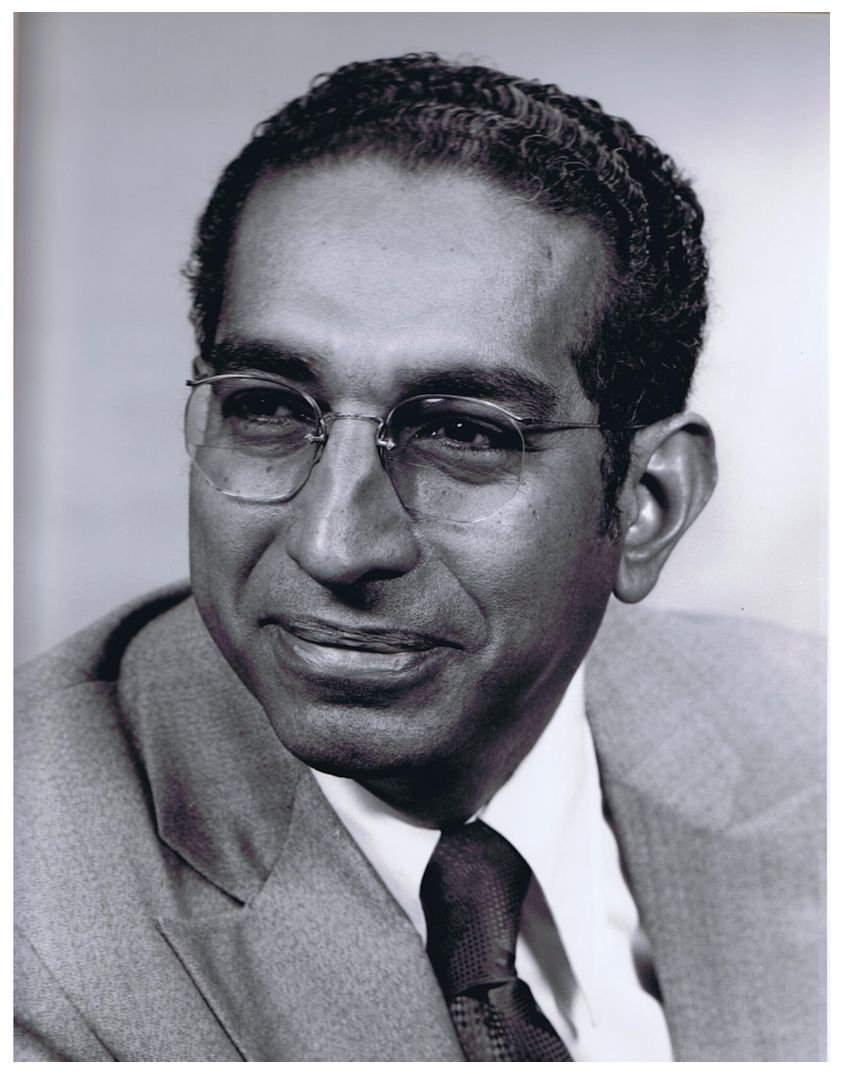
    He’s not only Panama’s greatest composer. He’s Panama’s ONLY composer. At least according to Roque Cordero, stated half-jokingly in an interview he gave in 1989, when he had just turned 72 years-old.

    Cordero’s music tends to balance Panamanian folklore with more advanced techniques, as exemplified in perhaps his most frequently performed work, the “Eight Miniatures for Small Orchestra” of 1948.
    More challenging is his Violin Concerto from 1962. I only just came across a concert performance of the piece from 2010 with Rachel Barton Pine as soloist – in the work’s Panamanian premiere? – which I’m adding to the links below.

    I was already familiar with the concerto from Paul Freeman’s “Black Composers Series,” which originally appeared on vinyl, on Columbia Records, back in the 1970s (reissued as a box set of CDs by Sony Classical only in 2019). Sanford Allen was the soloist in the world premiere recording. Barton Pine’s performance is distinguished not only by her characteristically superb commitment, but also because the concert actually took place in the composer’s home town of Panama City. Cordero was born there on this date in 1917.

    He won a scholarship to pursue music education at the University of Minnesota. There he studied conducting with Dmitri Mitropolous. It was Mitropolous who introduced him to Ernst Krenek, with whom he studied composition at Hamline University. (Mitropolous, recognizing his promise, paid all his expenses.)

    Back in Panama, Cordero became director of the National Music Institute and was appointed artistic director and conductor of the Panama National Symphony. Later, he was assistant director of the Latin American Music Center, professor of composition at Indiana University, and, from 1972, distinguished professor emeritus at Illinois State University. He died in Dayton, Ohio, in 2008, at the age of 91.

    “I am Panamanian,” he told Bruce Duffie, in the 1989 interview linked below. “I am not an American citizen, simply because I represent something to my country. If I become an American citizen, I would be just one more composer of the United States. I am a composer from Panama. When you read about me, you will find that I am the only composer from Panama, and because I am the only one, I am called the best. If there were two, I wouldn’t be the best [laughs], and I have to be the best. Unfortunately, Panama doesn’t have a musical tradition. How I became a composer is a mystery to me, and to anyone who has studied the music of Latin America.”

    Start with the “Adagio trágico” or “Sonatina Rítmica.” Then move on to “Eight Miniatures for Small Orchestra.” When you feel like your ears are awake, only then, check out Barton Pine’s performance of Cordero’s Violin Concerto.

    Happy birthday, Roque Cordero!


    “Adagio trágico” (1946-55), begun after the death of the composer’s mother; taken up again after the assassination of Panamanian President José Antonio Remón Cantera, whose wife had been one of Cordero’s benefactors

    “Sonatina Rítmica” (1943)

    “Eight Miniatures for Small Orchestra” (1948)

    Symphony No. 2 (1957)

    Violin Concerto (1962)

    Interview with Bruce Duffie

    http://www.bruceduffie.com/cordero.html

  • Black Composers Series Rediscovered

    Black Composers Series Rediscovered

    To reiterate, the compact disc reissue of CBS Records’ landmark Black Composers Series – available complete for the first time in over 40 years – though lamentably underpublicized, is an event of enormous significance.

    These visionary recordings, made under the direction of conductor Paul Freeman (pictured) and employing world class orchestras and soloists, were originally released on vinyl between 1974 and 1978, providing rare exposure to 200 years worth of neglected music at a time when most of it was essentially unknown.

    Tune in tonight for the third in a four-part survey of highlights from this exciting boxed set, which was released by Sony Classical just in time for #BlackHistoryMonth.

    José Silvestre de los Dolores White y Lafitte (or José or Joseph White, for short) was one of the great romantic violinists. Born in Cuba in 1835, he made his public debut at the age of 18 with the most celebrated North American pianist of the day, Louis Moreau Gottschalk. It was Gottschalk who encouraged White to study at the Paris Conservatory and who raised the money to send him there. This launched the young man on a globetrotting trajectory that sent him all over Europe, the Caribbean, South America, Mexico, and the Northeastern United States.

    White died in Paris in 1918. We’ll hear his Violin Concerto in F-sharp minor, played by the prolific and committed Aaron Rosand. Why this is not a repertory piece is anybody’s guess.

    David Baker, born in 1931, was professor of jazz studies at the Indiana University Jacobs School of Music, a program he founded. From 1991 to 2012, he was also director and conductor of the Smithsonian Jazz Masterworks Orchestra. On top of everything else, he was extraordinarily productive as a writer and recording artist, leaving over 65 recordings, 70 books, and 400 articles.

    Baker died in 2016. He was trained as a trombonist – he was active as a jazz performer throughout the 1940s and early ‘50s – but a facial injury suffered in an automobile accident caused him to switch to the cello. We’ll hear Baker’s Cello Sonata, composed in 1973 for the great Janos Starker, who will perform it with Alain Planès at the keyboard.

    Finally, Roque Cordero was born in Panama City in 1917. He studied composition with Ernst Krenek and conducting with Dmitri Mitropolous. He became director of Panama’s Institute of Music and artistic director and conductor of its National Symphony. Later, he was assistant director of the Latin American Music Center, professor of composition at Indiana University, and, from 1972, distinguished professor emeritus at Illinois State University. Cordero died in Dayton, Ohio, in 2008, at the age of 91.

    Fascinatingly, Cordero’s music tends to balance Panamanian folklore with more advanced techniques. The boxed set contains not only his Violin Concerto, with Sanford Allen the soloist, but also “Eight Miniatures for Small Orchestra” of 1948. We’ll hear Paul Freeman conduct the latter with the Detroit Symphony Orchestra.

    I hope you’ll join me for “Black to the Future, Part III,” yet another program of highlights from the Sony Classical reissue of CBS Records’ forward-looking Black Composers Series, this Sunday night at 10:00 EST, on WWFM – The Classical Network and wwfm.org.

Tag Cloud

Aaron Copland (92) Beethoven (95) Composer (114) Film Music (120) Film Score (143) Film Scores (255) Halloween (94) John Williams (185) KWAX (229) Leonard Bernstein (100) Marlboro Music Festival (125) Movie Music (135) Opera (198) Philadelphia Orchestra (88) Picture Perfect (174) Princeton Symphony Orchestra (106) Radio (87) Ralph Vaughan Williams (85) Ross Amico (244) Roy's Tie-Dye Sci-Fi Corner (290) The Classical Network (101) The Lost Chord (268) Vaughan Williams (103) WPRB (396) WWFM (881)

DON’T MISS A BEAT

Receive a weekly digest every Sunday at noon by signing up here


RECENT POSTS