Tag: Royal Albert Hall

  • John Foulds’ World Requiem Forgotten Masterpiece?

    John Foulds’ World Requiem Forgotten Masterpiece?

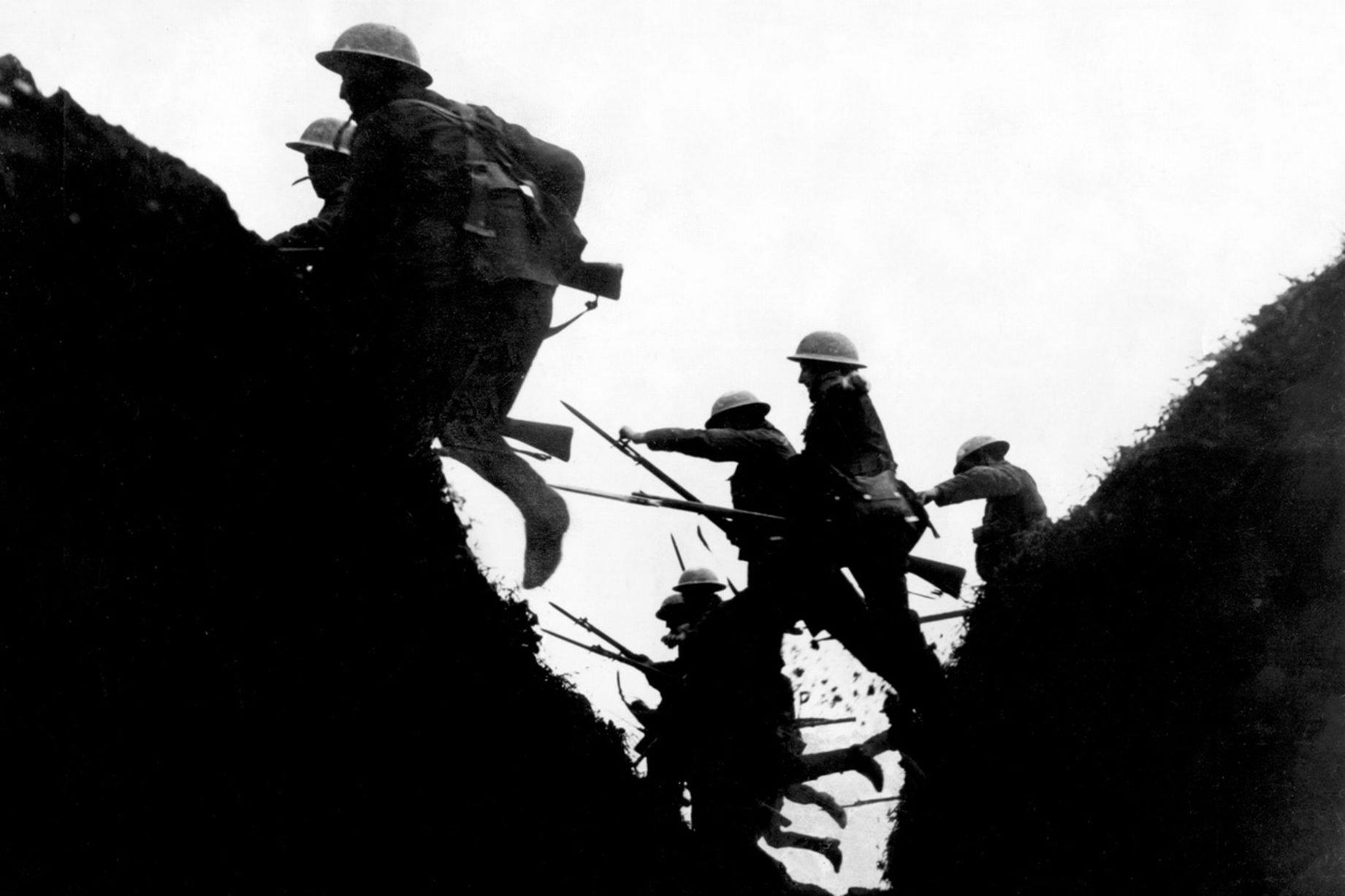
    It was on November 11, 1918 – the eleventh hour of the eleventh day of the eleventh month – that representatives of the Allied Forces and Germany sat down to sign the Armistice that concluded hostilities on the Western Front, formally ending the “War to End All Wars.”

    Five years later, John Foulds’ “A World Requiem,” conceived as a memorial to the dead of all nations, was given its first performance, on November 11th, 1923. The work was embraced by the public, though critical reaction was mixed. Subsequent performances took place from 1924 to 1926 as part of a Festival of Remembrance. After that, it lay unheard for some eight decades, until resurrected by conductor Leon Botstein.

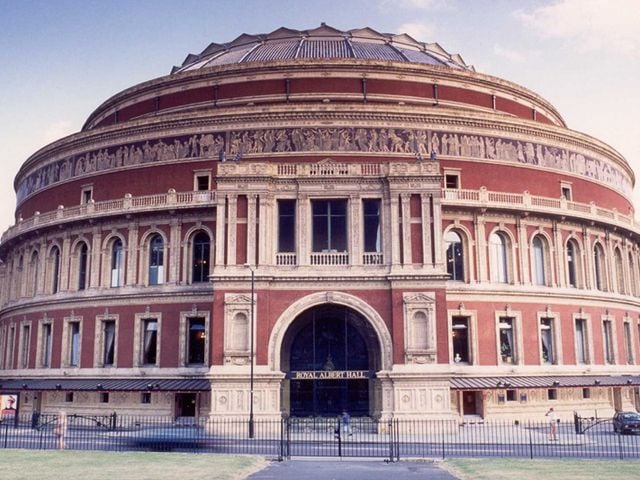
    Botstein has dusted off more than his share of worthy curiosities over the years, though few more ambitious than “A World Requiem.” A performance of the 90-minute piece requires up to 1,250 musicians. The work’s world premiere recording, on the Chandos label, was taken from a live concert presented on Armistice Day 2007, at the venue in which the work was first heard, Royal Albert Hall London.

    The Requiem’s texts were derived from various spiritual sources by the composer’s wife, Maud MacCarthy, built on fragments from the Requiem Mass, as well as writings of John Bunyan and the Hindu poet Kabir. The overall tone is more Brahms than Britten. Part One of the oratorio promises peace and rest; Part Two conveys radiant visions of paradise.

    I had assumed that the work’s neglect had to do with the dual concerns of cost and evolving musical taste. However, around the time of the Requiem’s revival, it was discovered that performances may actually have been suppressed by the BBC, possibly at the instigation of Sir Adrian Boult – this despite the fact that Foulds donated all proceeds to the poppy appeal for the British legion. You can read more about the alleged “banning” of the Requiem here:

    https://www.manchester.ac.uk/discover/news/world-requiem-was-unofficially-banned/

    Across the pond and closer to home, in 1954, at the urging of U.S. veterans, Armistice Day was renamed Veterans Day. Though the intent of the holiday is frequently confused with that of Memorial Day, Veterans Day is a time to honor ALL military veterans, not just those who died in service to their country.

    Foulds’ gargantuan oratorio could serve double-duty. Sadly, it is almost never performed at all.

    The oratorio falls into 20 movements (two parts subdivided into ten each) for soloists, massed choirs, including children’s choirs, large orchestra, offstage instrumentalists, and organ. A progressive tonal framework is spiced with quarter tones, cluster chords, and certain repetitive sequences.

    War’s the pity. Always remember, and thank you to those who served.

    Part I

    1 I Requiem – 8:44
    2 II Pronuntiatio – 4:05
    3 III Confessio – 5:46
    4 IV Jubilatio – 5:06
    5 V Audite – 7:04
    6 VI Pax – 3:53
    7 VII Consolatio – 5:08
    8 XIII Refutatio – 0:38
    9 IX Lux Veritatis – 1:19
    10 X Requiem 3:25

    45:08

    Part II

    1 XI Laudamus – 6:30
    2 XII Elysium – 6:24
    3 XIII In Pace – 3:17
    4 Hymn of the Redeemed – 4:37
    5 XIV Angeli – 3:27
    6 XV Vox Dei – 3:07
    7 XVI Adventus – 4:01
    8 XVII Vigilate – 2:03
    9 XVIII Promissio et Invocatio – 7:30
    10 XIX Benedictio – 1:41
    11 XX Consummatus 2:06

    44:50
  • Proms Cancelled A Missed Opportunity for Music?

    Proms Cancelled A Missed Opportunity for Music?

    The BBC has cancelled the last two Proms, out of respect for the Queen’s passing. Last night, barely an hour after her death was announced, the Philadelphia Orchestra took the stage of Royal Albert Hall to play “God Save the Queen” and “Nimrod” from Elgar’s “Enigma Variations.”

    Traditionally, the Last Night of the Proms is a raucous affair, marked by audience participation and lots of flag-waving, “popular” in the truest sense. Many people attend the event that ordinarily would never set foot in a concert hall. Certainly, you’re not going to please everyone, but might not the scheduled programs have been altered to include selections of a more suitable mood?

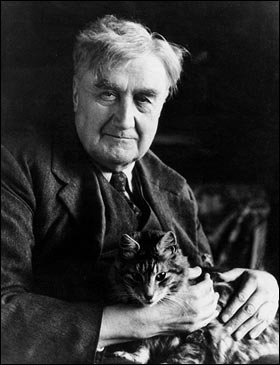
    The music of Ralph Vaughan Williams has been very well-represented on this year’s Proms, as well it should be, in his sesquicentennial year. Interestingly, it turns out that the Queen was an admirer of Vaughan Williams’ Symphony No. 5. This serene work by a 71 year-old composer bears a message of consolation and hope and has been offering solace to audiences since its premiere in June 1943 – the height of World War II – introduced on a Prom concert at Albert Hall, no less. An air-raid warning sounded before the concert, but was ignored.

    Might not this favorite of the Queen, a symphony of such national significance and great humanity, have been substituted, rather than simply turning out the lights and leaving everyone to pass the evenings at home with their phones and tellies?


    Vaughan Williams’ Symphony No. 5

    “O Taste and See,” composed for the Queen’s coronation in 1953

  • Walton Symphony No 2 Previn LSO Royal Albert Hall

    Walton Symphony No 2 Previn LSO Royal Albert Hall

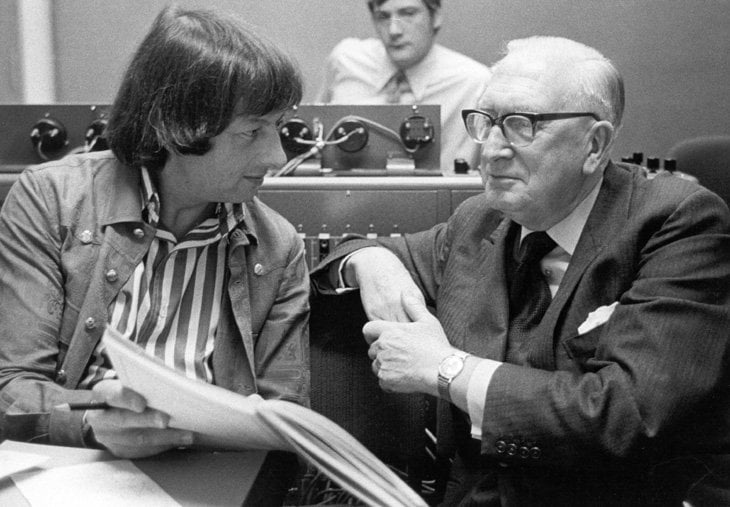
    On William Walton’s birthday, and the 150th anniversary of the opening of Royal Albert Hall, here’s André Previn conducting the London Symphony Orchestra in Walton’s undervalued Symphony No. 2, at the Proms in 1974.

  • Royal Albert Hall Celebrates & Classical Greats

    Royal Albert Hall Celebrates & Classical Greats

    Quite the day for musical Anglophiles!

    In addition to it being the birthdays today of Sir William Walton and Sir Richard Rodney Bennet, it’s also the 150th anniversary of the opening of Royal Albert Hall.

    Wagner conducted there. Hitchcock filmed there. Muhammad Ali fought there.

    The hall was opened by Queen Victoria in 1871.

    Of course, at this point, a lot of emphasis is being placed on the popular bands and singers who performed there. I don’t know why, but I have never had the slightest interest in rock music. I continue to scratch my head at the rest of the world.

    Here’s an article on the history of Albert Hall that includes some of its quirkier events (still a little weak on the classical music, which you’d probably expect from the derogatory use of “stuffy” in the first sentence):

    https://www.bbc.com/news/uk-england-london-56428543

    Hate to refer you to the Wikipedia page, but it’s got more information than most:

    https://en.wikipedia.org/wiki/Royal_Albert_Hall

    Footage of Royal Albert Hall in 1967:

    Hitchcock filmed the climax of both versions of “The Man Who Knew Too Much” there, in 1934 and 1956. Bernard Herrmann is seen conducting the orchestra in the 1956 version. Don’t watch the clip if you haven’t seen the film yet and plan to do so!

    Audio of Elgar conducting his “Enigma Variations” there in 1926:

    Vaughan Williams conducting his Symphony No. 5 there in 1952:

Tag Cloud

Aaron Copland (92) Beethoven (95) Composer (114) Film Music (121) Film Score (143) Film Scores (255) Halloween (94) John Williams (185) KWAX (229) Leonard Bernstein (100) Marlboro Music Festival (125) Movie Music (136) Opera (198) Philadelphia Orchestra (88) Picture Perfect (174) Princeton Symphony Orchestra (106) Radio (87) Ralph Vaughan Williams (85) Ross Amico (244) Roy's Tie-Dye Sci-Fi Corner (290) The Classical Network (101) The Lost Chord (268) Vaughan Williams (103) WPRB (396) WWFM (881)

DON’T MISS A BEAT

Receive a weekly digest every Sunday at noon by signing up here


RECENT POSTS