I can’t believe it’s been two months already since the Fisher Center for the Performing Arts announced that the focus of this summer’s Bard Music Festival will be “Mozart and His World.” The festival, now in its 36th year, will we be held at Bard College in Annandale-on-Hudson, NY, August 7-16. The fact that I didn’t share the news immediately is attributable to several factors:
Firstly, I’m sorry, Mozart may have been one the greatest musical geniuses who ever lived – and he wrote some music I would never want to be without (e.g. “The Marriage of Figaro,” an opera I like to say basically saved my life, or least got me through a very rough time) – but the idea of two weekends of his music doesn’t exactly thrill me.
In the past, I wouldn’t have considered it an issue, since the “and His World” qualifier ensured there would be plenty of fascinating discoveries by the subject’s contemporaries, those who influenced him, and those he in turn influenced.
Also, historically, Bard has been exceptional in digging deep into composers’ basements and turning up neglected scores from cobwebbed corners of their attics. This year, alas, seems to be a little disappointing in these regards.
For one thing, I was hoping the programs would mix it up a bit more and cast some light into the future. After all, there are so many pieces influenced by or written in tribute to Mozart. One program will include Tchaikovsky’s “Mozartiana” – hardly a rarity, but at least it will be presented in a lesser-heard piano version – though I would expect the concerts to also weave in works such as Jean Françaix’s “Hommage à l’ami Papageno” for wind ensemble or, say, Francis Poulenc’s Concerto for Two Pianos, with its clearly Mozartian slow movement. If not those works specifically, perhaps a few like them.
Of course at Bard, you never know everything you’re going to get until the actual, physical program goes to print. This early in the process, what’s given on the website is frequently but a sketch. But I imagine the major works are in place.
Anyway, for all my grousing, I will be there for at least some of it, and once I am in the concert halls and into the music, I know I will have a good time, regardless, even if I can’t imagine buying a ticket based on being able to hear the “Prague Symphony” again.
Unquestionably, there will be rarities: a Michael Haydn mass, selections from a Salieri opera, a Clementi piano sonata that contains the germ for Mozart’s overture to “The Magic Flute.” But what about the Mozart-Salieri collaboration “Per la Ricuperata Salute di Ofelia,” rediscovered as recently as 2016? How about Rimsky-Korsakov’s one-act opera “Mozart and Salieri?” Or Reynaldo Hahn’s “Mozart?”
As always with these things, people will have their own ideas, and I know I should be thankful for anything this group organizes – and I am! But there’s no way I can pretend to be anywhere near as pumped for a Mozart festival as I was for those devoted to past subjects, such as Prokofiev, Sibelius, Rimsky-Korsakov, Berlioz, Vaughan Williams, Bohuslav Martinů, Carlos Chávez, and Erich Wolfgang Korngold.
Okay, I’ve been putting it off, but now at last I come to the elephant in the room. I so badly do not want to even address it, but there’s the unfortunate quagmire through which co-artistic director Leon Botstein – also president of Bard College since 1975 – is currently slogging. If you don’t already know it, Botstein is in the Epstein files. Not with anything like the same frequency as the President of the United States, mind you, or, from what we know so far, with anywhere near the same degree of skeeviness. Actually, it doesn’t appear there’s any skeeviness at all. But the timing couldn’t be worse. The excrement hit the fan just before this year’s festival would have to be announced.
The New York Times has covered Botstein’s interactions with Epstein extensively, but a lot of “journalists,” I’ve noticed, in particular those writing for the local papers of the Hudson Valley, seem to have their knives out, through suggestive phraseology and loaded words. The last thing Bard needs, in this sensitive situation, is for anyone to be striking sparks.
I hasten to add, although Botstein is kind of a hero to me, I am in no way discounting the real and lasting trauma experienced by any of Epstein’s victims or that of anyone else who has suffered sexual abuse in their personal lives or at the hands of anyone on the faculty of the college itself (which has been alleged; after all, it is a college, and there are often abuses of authority at such institutions). There have been no allegations of Botstein himself participating in any illegal behavior.
However, one of Epstein’s victims made an interesting point in an interview when she stated that the fact that Epstein was able to attract someone as estimable as Botstein to his sphere – and Botstein is FAR from the only one – it lent to an illusion of legitimacy, so that she and others like her struggled with the disconnect between what they were seeing, this kind of acceptance, and what they were actually experiencing.
But Botstein himself appears to be clean, and the man himself has done so much for not only music, but for education, for social causes, and for the school itself. It would be unfortunate if he were forced out for the sin of trying to elicit additional funds from a millionaire, who made an unsolicited $75,000 donation to the college.
But an independent investigation is ongoing. I will stand by the findings, as I hope the student activists will. There is a group on campus raising hell as only young people can.
Botstein, who is brilliant and brilliantly articulate, is conspicuously absent, or downplayed to the extent that I don’t see him mentioned anywhere in the Bard promotional material. I’m hoping he is not forced out of the festival altogether, as there is no one currently involved that could ever fill his shoes.
He’s still attached to this year’s opera production, which precedes the festival, as part of Bard SummerScape, a larger celebration of the arts that spans June 25-August 16. I already have my ticket to hear him conduct Richard Strauss’ “Die ägyptische Helena” (“The Egyptian Helen”). The opera runs July 24-August 2.
Furthermore, I will hear him at Carnegie Hall this Thursday, with vocal soloists and the American Symphony Orchestra, as he introduces and conducts Berlioz’s rarely-encountered edition of Carl Maria von Weber’s “Der Freischütz.”
One of the reasons I feel so disheartened by my own reaction to this year’s music festival – a reaction that I suspect will be shared by others attracted to Bard for its advocacy of unusual and neglected repertoire – is that I do not want the college to misconstrue my or anyone’s lack of enthusiasm and/or low attendance for distaste for, or protest against, Botstein.
Be that as it may, you’ll find the program, as it currently stands, at the links below. If you’re a Mozart nut, I hope you will consider attending.
Long live the Bard Music Festival. I’m hoping we’ll still have a few more years of Botstein, who will turn 80 in December, but appears to be as vital as ever, and in comparatively good health, at least on the evidence of what I’ve seen at Bard and at his concerts in New York City.
Next year, another neglected or underappreciated composer, please!
——-
Bard Music Festival
https://fishercenter.bard.edu/what-we-do/bard-music-festival/
Bard SummerScape, including Strauss’ “The Egyptian Helen”
https://fishercenter.bard.edu/what-we-do/summerscape/
Tag: Salieri
-

Salieri Beyond Amadeus The Real Story
In the words of Wilde’s Lord Henry, there is only one thing in the world worse than being talked about, and that is not being talked about.
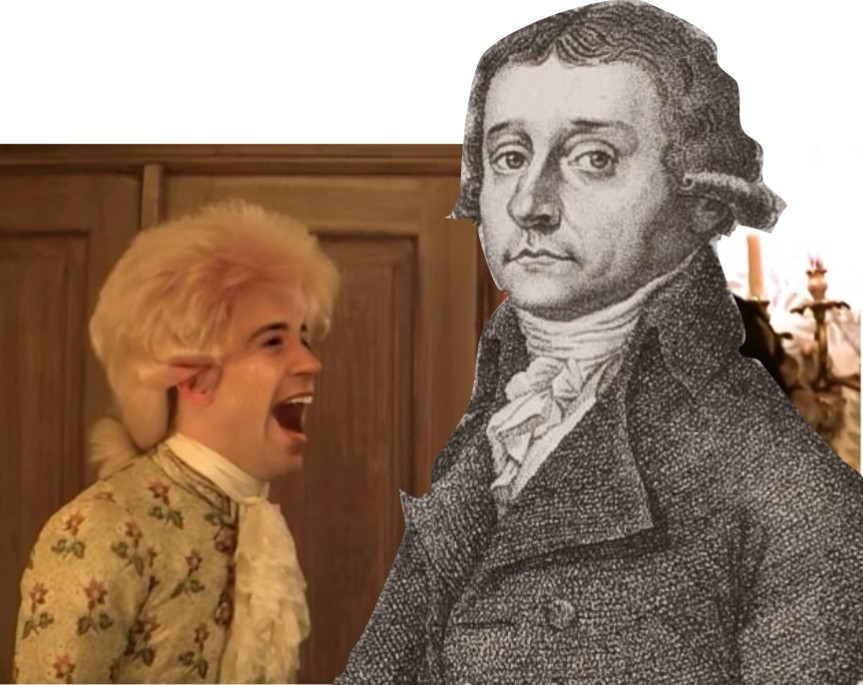
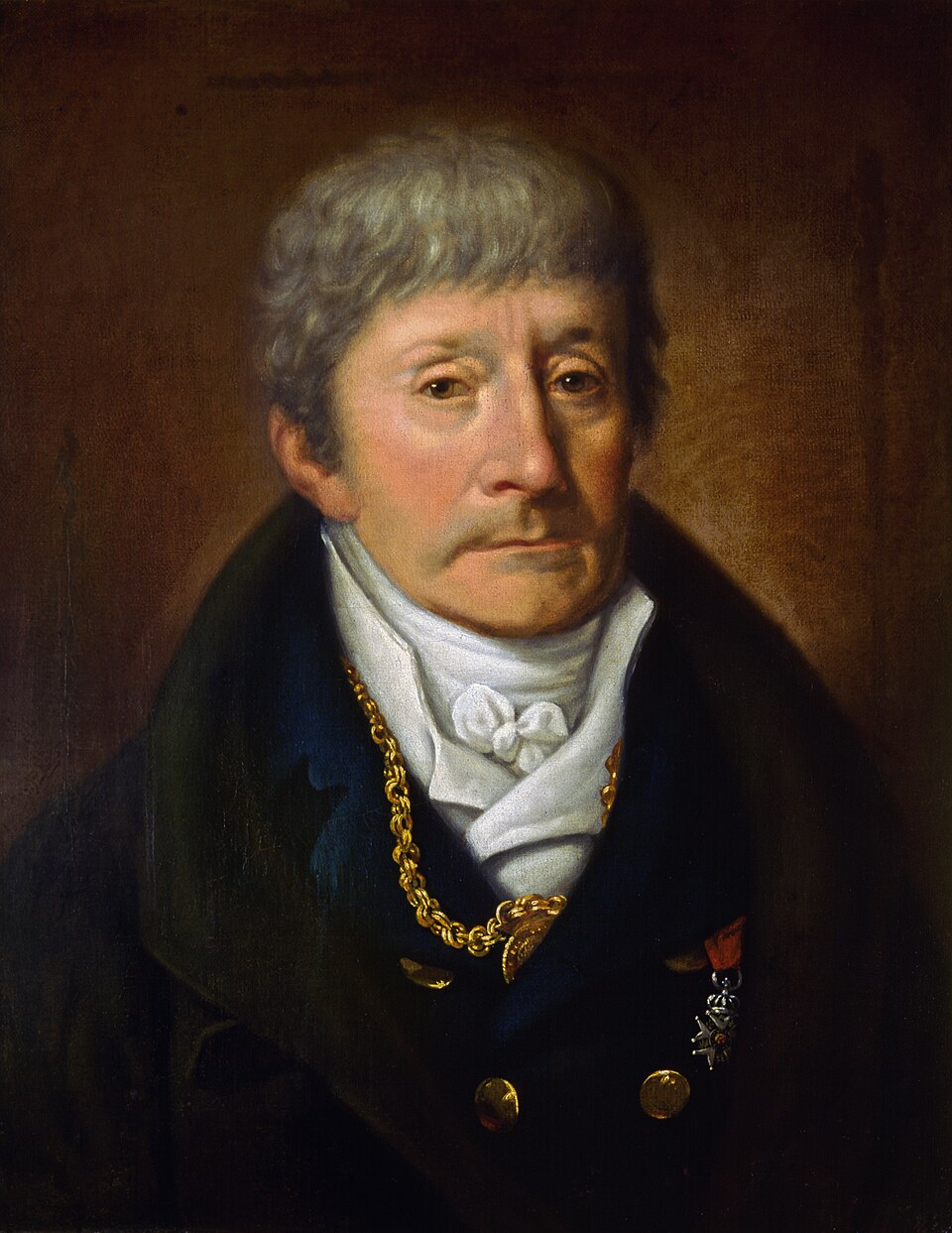
While it might be true there’s no such thing as bad publicity, it would be nice if Antonio Salieri could transcend his notoriety – as the alleged murderer of Mozart and a second-rate hack – to be recognized for some of his actual achievements. Especially since none of the charges leveled against him happen to be true!
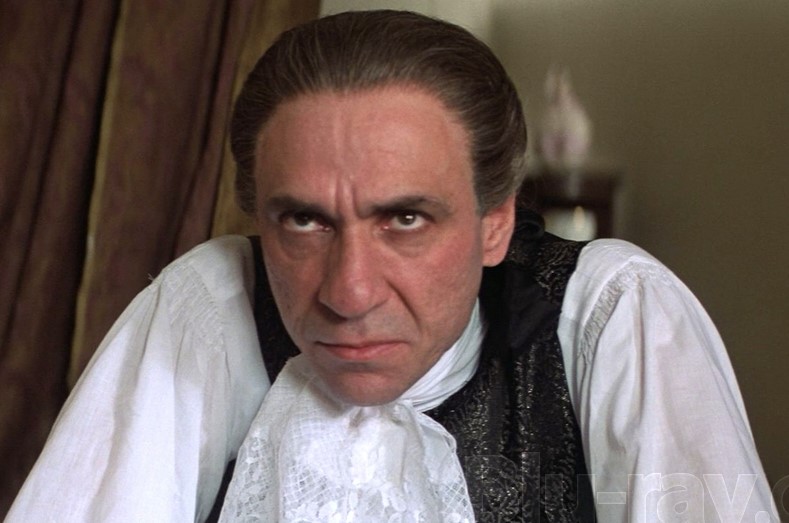
I like “Amadeus” as much as the next guy, and while I am very happy it has served to keep Salieri’s name alive, and perhaps lent a greater degree of commercial viability to subsequent recordings of his music, it is worthwhile to examine the historical facts.
In reality, Salieri was a generous teacher, who fostered Beethoven, Schubert, Liszt, and even Franz Xaver Mozart, his rival’s son, who was born a little more than four months before his father’s death.
Salieri himself was a prolific and successful composer. He wrote 37 operas, in addition to orchestral works, concertos, chamber music, and sacred pieces. While he was no Mozart – who was? – his music is finely crafted and often quite enjoyable, certainly no worse than that of a majority of his contemporaries.
Yes, Mozart believed Salieri and the Italian faction ensconced at the Viennese court (including future Mozart librettist Lorenzo Da Ponte) were against him. And there may have been something to it at first. However, beyond a rivalry pertaining to certain specific jobs, Mozart and Salieri appear often to have been better than cordial acquaintances.
The two even collaborated on a cantata, “Per la ricuperata salute di Ofelia” (“For the recovered health of Ophelia”), rediscovered in 2016, a joint venture apparently entered into voluntarily (in contrast to an earlier contest, in which two one-act operas were juxtaposed, purely for the edification of the emperor). The cantata was written in 1785, to celebrate the recently-convalesced soprano Nancy Storace, who would soon create the role of Mozart’s Susanna in “The Marriage of Figaro.”
When Salieri was appointed Kapellmeister in 1788, his first act was to revive “Figaro.” He was also responsible for arranging first performances of Mozart’s Piano Concerto No. 22 (K. 482), the Clarinet Quintet, and the Symphony No. 40. He was full of praise for “The Magic Flute.” And as I said, he took it upon himself to educate Mozart’s son.
Sadly, Salieri’s enormous compositional output gradually faded from memory already during the latter years of his life. Ironically, it is the scandalmongers who kept his name alive.
Rumors of Salieri’s involvement in Mozart’s death were codified by Alexander Pushkin in 1831, a few years after Salieri himself had passed, in the poetic drama “Mozart and Salieri.” This was later set as an opera, in 1898, by Nikolai Rimsky-Korsakov.
Peter Schaffer picked up the thread in 1979, when he wrote the play “Amadeus,” which of course was adapted into the Academy Award-winning film in 1984.
As the compact disc era progressed, more and more of Salieri’s output became available for first-hand assessment – and guess what? A lot of it is quite good!
Happy birthday, Patron Saint of Mediocrity!
Russian film version of Rimsky’s “Mozart and Salieri” (without subtitles):
In English, if a bit fuzzy:
Salieri’s Concerto for Flute, Oboe and Orchestra:
Overture to “Les Horaces”
“Das Lob der Musik” (“The Praise of Music”)
A Mozart and Salieri collaborative effort, the cantata “Per la ricuperata salute di Ofelia”
“I absolve you.”
-

Salieri Beyond the Mozart Myth Debunked
Poor, maligned Antonio Salieri. He was a second-rate hack. He murdered Mozart. Yadda yadda yadda.
While it’s true there’s no such thing as bad publicity, it would be nice if the man could transcend his notoriety to be recognized for his achievements. Especially since none of the charges against him happen to be true.
I like “Amadeus” very much, and while I am happy it has served to keep Salieri’s name alive and perhaps lend a greater degree of commercial viability to subsequent recordings of his music, it is worthwhile to examine the historical facts.
In reality, Salieri was a generous teacher, who fostered Beethoven, Schubert, Liszt and even Franz Xaver Mozart, the composer’s son, who was born a little more than four months before his father’s death.
Salieri was also a prolific and successful composer. He wrote 37 operas, in addition to orchestral works, concertos, chamber music and sacred pieces. While he was no Mozart – who was? – his music is finely crafted and often quite enjoyable, certainly no worse than that of a majority of his contemporaries.
Yes, Mozart believed Salieri and the Italian faction ensconced at the Viennese court (including future Mozart librettist Lorenzo Da Ponte) were against him, and there may have been something to it at first. However, beyond a rivalry over certain specific jobs, Mozart and Salieri appear to have been often better than cordial acquaintances. The two even collaborated on a cantata, “Per la ricuperata salute di Ophelia,” a venture which was apparently entered into voluntarily (as opposed to an earlier juxtaposition of one-act operas composed for the edification of the emperor). Here it is, only recently rediscovered:
When Salieri was appointed Kapellmeister in 1788, his first act was to revive “The Marriage of Figaro.” He was responsible for arranging first performances of Mozart’s Piano Concerto No. 22, K. 482, the Clarinet Quintet and the Symphony No. 40. He was full of praise for “The Magic Flute.” And as I said, he took it upon himself to educate Mozart’s son.
Sadly, Salieri’s enormous compositional output gradually faded from memory already during the latter years of his life. Ironically, it is the scandalmongers who kept his name alive.
Rumors of Salieri’s involvement in Mozart’s death were codified by Alexander Pushkin in 1831, a few years after Salieri himself had passed, in the tragedy “Mozart and Salieri.” This was later set as an opera, in 1898, by Nikolai Rimsky-Korsakov.
Peter Schaffer picked up the thread in 1979, when he wrote the play “Amadeus,” which of course was adapted into the Academy Award-winning film in 1984.
As the compact disc era advanced, more and more of Salieri’s repertoire became available for first-hand assessment – and guess what? A lot of it is quite good!
Join me Friday afternoon to sample some of it, among my featured selections, from 4 to 6 EDT, on WWFM – The Classical Network and wwfm.org. Then stick around, as I host “Picture Perfect,” music for the movies, at 6. I’ll have more about that in just a bit.
Tag Cloud
Aaron Copland (92) Beethoven (95) Composer (114) Film Music (121) Film Score (143) Film Scores (255) Halloween (94) John Williams (185) KWAX (229) Leonard Bernstein (100) Marlboro Music Festival (125) Movie Music (136) Opera (198) Philadelphia Orchestra (88) Picture Perfect (174) Princeton Symphony Orchestra (106) Radio (87) Ralph Vaughan Williams (85) Ross Amico (244) Roy's Tie-Dye Sci-Fi Corner (290) The Classical Network (101) The Lost Chord (268) Vaughan Williams (103) WPRB (396) WWFM (881)