Tag: Schumann

  • Schumann’s Spring Symphony Rediscovered Gem

    Schumann’s Spring Symphony Rediscovered Gem

    When I received this 3-CD set from a friend, sent to me some time ago as a discard from WCLV, Cleveland’s classical music station, what really piqued my interest was the bonus material, which includes some rarely-heard overtures, most especially the world premiere recording of a work for chorus and orchestra called “Festive Overture on ‘Rheinweinlied’” – “Song of the Rhine Wine.”

    What I didn’t expect was to be knocked back on my heels by a stunning performance of Robert Schumann’s Symphony No. 1 (a.k.a. the “Spring Symphony”). It’s by a lesser-known orchestra – the Klassische Philharmonie Düsseldorf – and a student one at that, but it’s a real corker! The timpanist sounds as if he should be auditioning for “The Rite of Spring” and at climaxes the brass sing with the vigor of youth.

    The effect is heightened, no doubt, by conductor Florian Merz’s interpretative decisions. The orchestra, playing on modern instruments, employs historically-informed practices, emulating the dimensions of Schumann’s orchestra when he was actually conductor in Dusseldorf. I must say, it really brings out the quirk, which brings the listener closer to the Schumann I imagine. The rest of the set doesn’t quite achieve this seismic resonance (though the Symphony No. 2 is also pretty damn impressive), yet it’s all undeniably well-played, with a natural feel for rubato.

    Merz, who founded the group at the age of 15 (making him about 26 at the time of the recordings), knows what he wants, and he gets it. This is not the butterfly-and-lady-bug spring of May/June, but rather the stormy, sacrifice-to-the-old-gods spring of March/April, mercurial and electric. It’s a spring before modern conveniences, with all its danger and rough edges intact. It is the spring of actual experience.

    I will never part with this set. The “Spring Symphony” is tops!

  • Johannes Brahms 190th Birthday Google Doodle

    The “young eagle from the North,” as Schumann described him, gets his own Google Doodle. Happy birthday, Johannes Brahms, born 190 years ago today.

    https://www.google.com/doodles/johannes-brahmss-190th-birthday

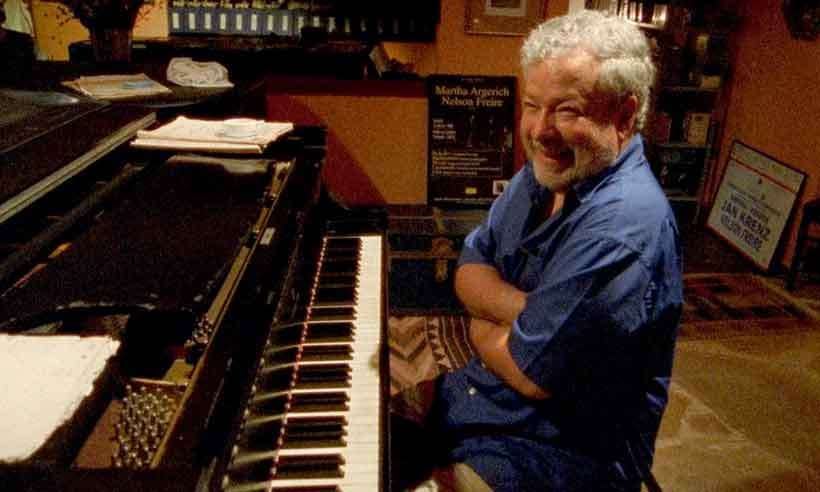
  • Nelson Freire Brazilian Pianist Dies at 77

    Nelson Freire Brazilian Pianist Dies at 77

    I just learned that the Brazilian pianist, Nelson Freire, died yesterday, too young at 77.

    Freire suffered multiple fractures in his right arm from a street fall in 2019. He fell on his shoulder, when trying to protect his hands. The accident led to an intricate, four-hour surgery, believed to have been successful. However, not long after, the COVID-19 pandemic prohibited international travel and public performance.

    I never saw Freire in concert, but his recordings are very special indeed. And there is much to savor on YouTube. His repertoire was broad, though he seemed most at home with the Romantics – Schumann, Liszt, Brahms, and Chopin – from whose works he mined much poetry. He enjoyed a long artistic partnership and lifelong friendship with Martha Argerich, born in neighboring Argentina.

    With his lack of concern for publicity and self-promotion, Freire must have made his handlers a little crazy. In interviews, he could be modest to a fault. He was always an artist who expressed himself most eloquently through his musicmaking. R.I.P.


    Freire playing Chopin’s “Barcarolle” in recital in 2009

    Sight-reading Liszt’s arrangement of Schumann’s “Widmung” (“Dedication”) for Argerich on a “dirty piano”

    https://www.youtube.com/watch?v=wyqdxK_7oJk

    Playing Schumann’s “Fantasy in C” in 1983

    As a sprout, at 21 years-old, in 1965!

    With Argerich in “La Valse” in 1984

    https://www.youtube.com/watch?v=TeLwPH8Lf_s

  • First Piano Quintet Schumann or Before?

    First Piano Quintet Schumann or Before?

    Quick! Who wrote the first piano quintet?

    The combo of keyboard and four string instruments began to exert its pull on composers as far back as the 18th century, with artists like Luigi Boccherini experimenting with works for piano and string quartet. More commonly, the piano was joined by violin, viola, cello, and double bass. Think Schubert’s “Trout” Quintet. Mozart and Beethoven both wrote quintets for piano and winds (oboe, clarinet, horn, and bassoon).

    But it wasn’t until 1842 that the genre firmly took root with Robert Schumann’s chamber music masterpiece, the Piano Quintet in E-flat major, Op. 44. It was Schumann who brought together the modern piano, with its increased power and dynamic range, with the established string quartet (two violins, viola, and cello) that had become the most common and confessional of chamber music combinations. The result allowed for the unprecedented exploration of a much broadened musical vocabulary that spanned confessional intimacy and public declaration. The innovation was immediately recognized and embraced as the quintessential Romantic chamber music form.

    Hear Schumann’s pioneering Piano Quintet on today’s Noontime Concert on The Classical Network, as we present a performance by the Manhattan Chamber Players. The program, titled “Breaking New Ground,” will also include Mozart’s String Quintet in C major, K. 515, from 1787. Again, Boccherini wrote a lot of string quintets, but his preference had been to augment the classical quartet through the addition of a second cello. It was Mozart who established the more common practice of doubling the violas. K. 515 became the inspiration for one of Schubert’s greatest works, the String Quintet in C major of 1828. This concert took place at Manhattan’s Baruch Performing Arts Center on April 26, 2017.

    Then stick around – at 2:00, we’ll hear a complete performance of Bedřich Smetana’s sprawling collection of nationalistic tableaux, “Má Vlast” (“My Country”). There’s more to this cycle of six symphonic poems than the well-worn “Vltava” (a.k.a. “The Moldau”). Each movement evokes some aspect of Czech history, legend, and countryside.

    I hope you’ll join me for Mozart, Schumann, Smetana, and more, this Tuesday from 12 to 4 p.m. EST, on WWFM – The Classical Network and wwfm.org.

  • Schumann & Mendelssohn: Musical Friendship

    Schumann & Mendelssohn: Musical Friendship

    On this week’s “Music from Marlboro,” we’ll have works by two composers who were definitely BFF.

    Though for some reason I always peg Robert Schumann as significantly younger, he and Felix Mendelssohn were in fact born only a year apart (Mendelsson in 1809 and Schumann in 1810).

    Schumann’s ideas were more progressive, for one, at least on the surface. Mendelssohn, more of a classicist, achieved superstardom early as one of music’s great child prodigies. The two met in 1835. Schumann was a struggling artist with ambitions to become a piano virtuoso – ambitions frustrated by a hand injury he sustained a few years earlier. He was in the process of composing a string of piano masterworks that would help cement his lasting fame.

    Mendelssohn was from a well-to-do family, the grandson of philosopher Moses Mendelssohn, and currently Kapellmeister of the Leipzig Gewandhaus Orchestra. He had given his first concert at the age of nine and composed two of his most astonishing masterpieces while yet in his teens (the Octet for Strings in 1825, at the age of 16, and the Overture to “A Midsummer Night’s Dream” in 1826). What the two men shared in common, aside from a passion for music, were an intellectual curiosity and a love of literature.

    Needless to say, they became fast friends. Mendelssohn conducted Schumann’s orchestral works, they entertained themselves by playing chamber music, and they engaged in engrossing discussions about the nature and direction of their art in the wake of Beethoven. It was a friendship that would last for the remainder of their lives.

    Mendelssohn died in 1847 at the age of 38; Schumann, who struggled with mental illness since at least 1833, began to exhibit psychotic behavior and asked to be placed in an institution in 1854. He died there two years later at the age of 46.

    Schumann’s “Andante and Variations” was composed in 1843, in the wake of two chamber music masterworks, the Piano Quintet and the Piano Quartet, both in the key of E flat major. For the composer, sadly, three times was not to be a charm. Part of the problem was the unusual instrumentation, which calls for two pianos, two cellos, and horn. Early performances in the Schumann home were so loud, it may have contributed to his disgust with the piece. At Mendelssohn’s suggestion, he arranged it for two pianos alone. It was only in 1868 that Johannes Brahms, another of Schumann’s friends, recognized the worth of the original version and gave its first public performance with the composer’s widow, Clara, in 1868.

    We’ll hear it today, performed at the Marlboro Music Festival in 1985 by husband-and-wife pianists Claude Frank and Lilian Kallir, cellists Melissa Meell and Peter Stumpf, and hornist Julie Landsman.

    We’ll also have Mendelssohn’s String Quartet in A minor, written in 1827, a few months after Beethoven’s death. Mendelssohn was 18 years-old at the time and clearly intoxicated by Beethoven’s late quartets, which had only recently been published. Though certainly influenced by the deceased master, Mendelssohn’s own essay in the form is quite at odds with the introspection of Beethoven’s Op. 135. In contrast, he infuses the quartet’s Classical structure with a passionate Romanticism. He also explores the possibilities of cyclic form more exhaustively than any other composer, possibly, before César Franck. We’ll hear it performed at the 1995 Marlboro Music Festival by violinists Lisa-Beth Lambert and Hiroko Yajima, violist Annemarie Moorcroft, and cellist Sophie Shao.

    I hope you’ll join me for works by Schumann and Mendelssohn, on the next “Music from Marlboro,” this Wednesday evening at 6:00 EST, on WWFM – The Classical Network and wwfm.org.

    Marlboro School of Music and Festival: Official Page


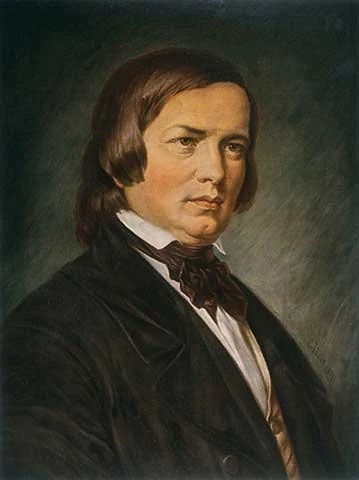
    Robert Schumann (left) and his “brother from another mother”
Tag Cloud

Aaron Copland (92) Beethoven (95) Composer (114) Film Music (120) Film Score (143) Film Scores (255) Halloween (94) John Williams (185) KWAX (229) Leonard Bernstein (100) Marlboro Music Festival (125) Movie Music (135) Opera (198) Philadelphia Orchestra (88) Picture Perfect (174) Princeton Symphony Orchestra (106) Radio (87) Ralph Vaughan Williams (85) Ross Amico (244) Roy's Tie-Dye Sci-Fi Corner (290) The Classical Network (101) The Lost Chord (268) Vaughan Williams (103) WPRB (396) WWFM (881)

DON’T MISS A BEAT

Receive a weekly digest every Sunday at noon by signing up here


RECENT POSTS