Tag: Sergei Rachmaninoff

  • The Internet’s Last Obituary of Ruth Slenczynska

    The Internet’s Last Obituary of Ruth Slenczynska

    I had computer issues on Thursday morning, and by the time they were resolved, news had broken that Michael Tilson Thomas died. Naturally, such a huge loss to the classical music world would become the focus of my attention. But by the time I was finally able to address it, it was already well into the afternoon – and then on Friday and Saturday I have to promote my radio shows – so I’ve been unable to acknowledge the death of pianist Ruth Slenczynska.

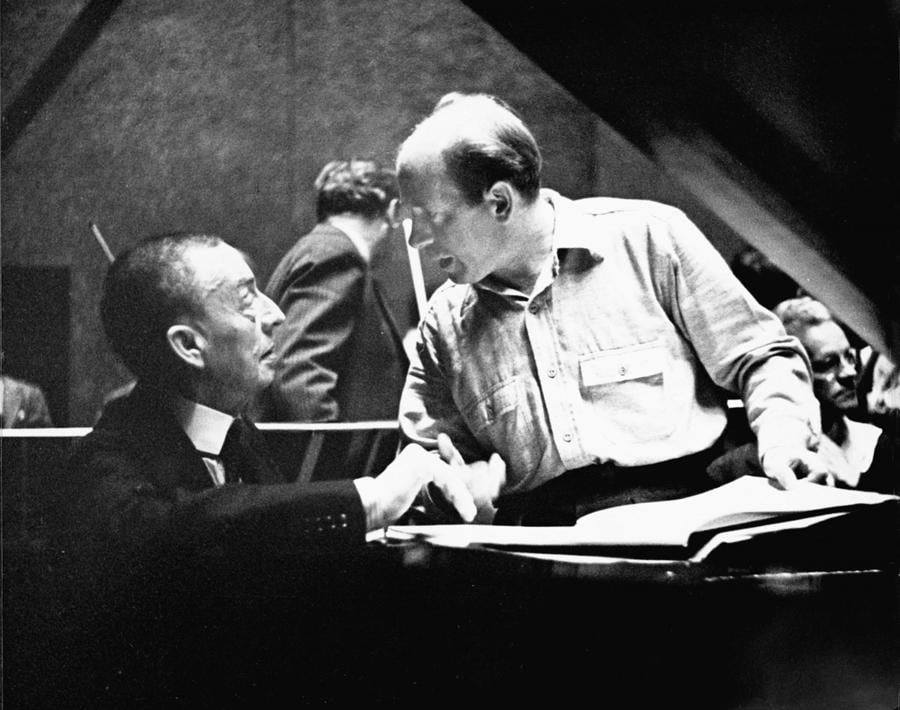
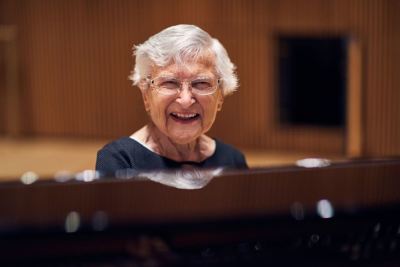
    Slenczynska, who passed on Wednesday at the age of 101, was believed to have been the last living pupil of Sergei Rachmaninoff.

    Sadly, her story is an all-too-familiar one. Driven hard by a domineering father – an ambitious violinist who sustained a serious, career-ending injury on the battlefield during World War I and used his daughter a proxy to fulfill his shattered dreams – Slenczynska was ruthlessly molded into a celebrated child prodigy.

    Her harrowing training involved enforced practice of up to 9 hours a day. She was kept from any society, any distraction. She was denied food, berated, and even beaten. (“The moment I missed a note, I got a crack across the cheek,” she writes in her autobiography.) When she was forced to play a recital while suffering from undiagnosed appendicitis and failed to live up to her father’s expectations, he disowned her. She wasn’t even 16 years-old. But she’d already been playing in public for ten years.
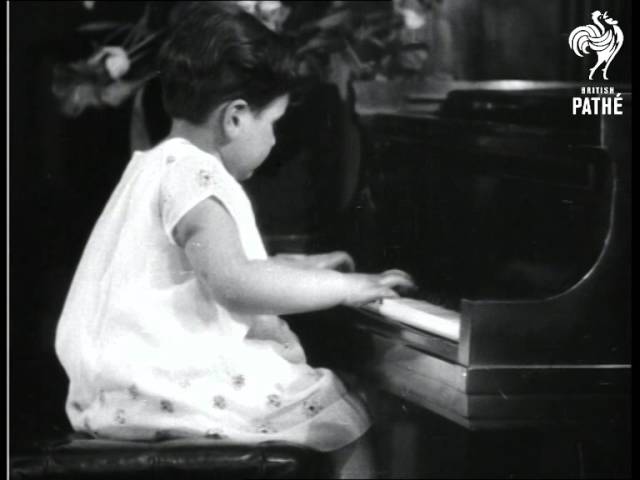

    Slenczynska made her debut in Berlin at the age of 6. She performed with orchestra for the first time in Paris at the age of 7. Now at 15, she walked away from it all, attending Berkeley (where she was a psychology major) and hoping to live a normal life. She married at 19, but divorced nine years later. Still a young woman, she began to teach piano, which drew her back into the concert world.

    She was artist in residence at Southern Illinois University Edwardsville, a full-time position, from 1964 to 1987. In 1957, she published her memoir, “Forbidden Childhood,” which surely helped exorcise some demons. In 1968, she wrote “Music at Your Fingertips: Aspects of Pianoforte Technique.”

    Her complete recordings for American Decca, set down between 1956 and 1963, were reissued as a box set by Deutsche Grammophon in 2020. Several albums were also released on Ivory Classics. In 2022, she made her final record, “Ruth Slenczynska: My Life in Music,” at the age of 97.
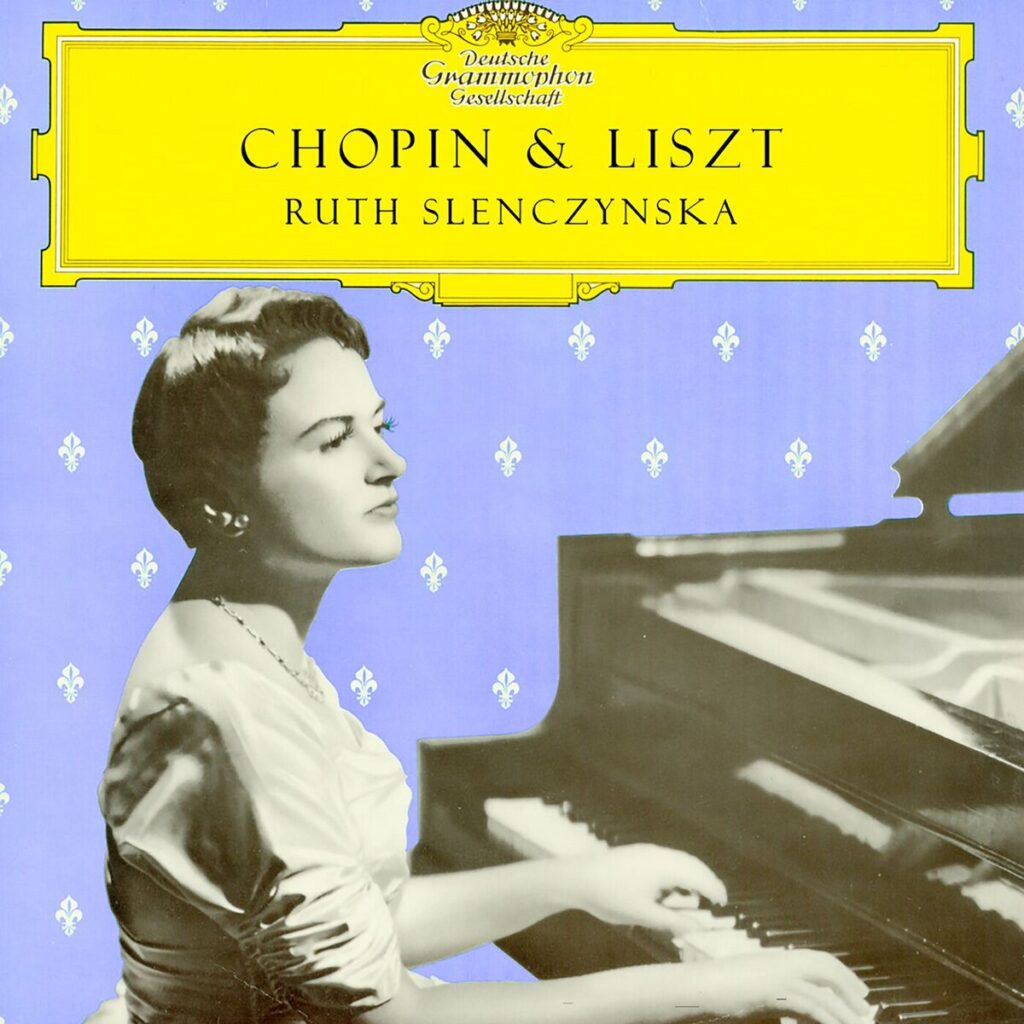

    For interviews, she would sometimes recount her first meeting with Rachmaninoff, which took place at his Paris apartment when she was 9. In 2024, she told The Washington Post, “This very tall man opened the door and looked down at me. He pointed at me with his long finger and said, ‘THAT plays the piano?’”

    If that’s not Rachmaninoff, I don’t know what is.

    Even without the Rachmaninoff connection, her pedigree is breathtaking. Among her other teachers were Artur Schnabel, Egon Petri, Alfred Cortot, and Josef Hoffman.

    Here’s a nice write-up by Australian Broadcasting Corporation, in which she talks about, among a great deal else, her meeting with Harry Truman. Truman, who also trained as a pianist, played a Mozart duet with her at the White House. By coincidence, I just wrote about Truman’s record collection the other day, with a link to a catalogue of the recordings he owned. In scrolling through the list, I noted there were several by Slenczynska in his library, including some of her Chopin and Liszt performances.

    https://www.abc.net.au/listen/programs/legends/ruth-slenczynska/106602856

    Slenczynska was born in Sacramento, CA, in 1925. In her retirement, she kept an apartment in Manhattan, but spent her last few years in Hershey, PA. After a rocky start, she seemed to pull herself together to live a fairly normal, even rewarding existence. Good for her. May she rest in peace.

    ——–

    Slenczynska talks and plays Rachmaninoff in 1963

    https://www.youtube.com/watch?v=75XnR9iGoIo

    Slenczynska in a Pathé newsreel, at the age of 5

    https://www.youtube.com/watch?v=SPZiuPw-LLs

    Slenczynska at 99

    https://www.youtube.com/watch?v=lR1McqDIeLM

  • Fritz Kreisler Sesquicentennial: Violin Legend

    Fritz Kreisler Sesquicentennial: Violin Legend

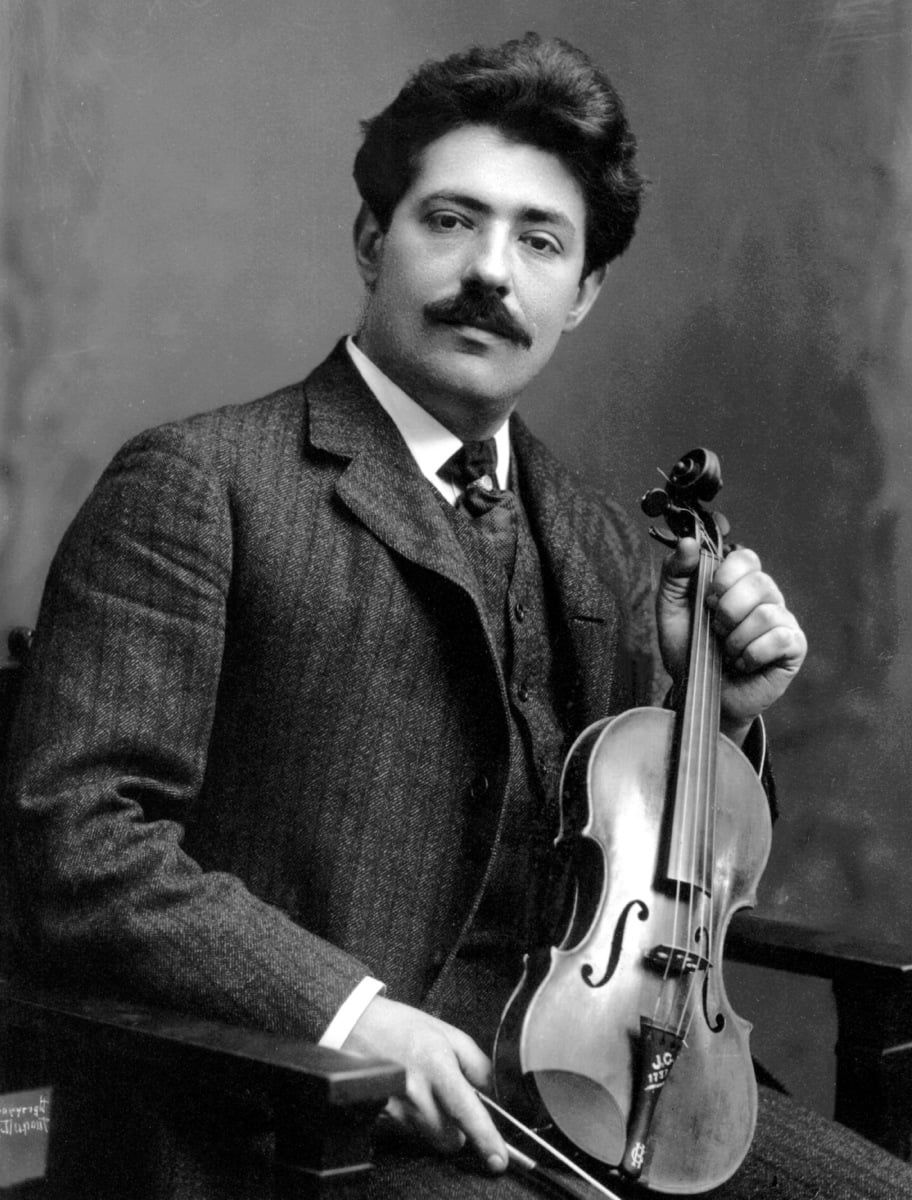
    Somehow, as I was in the thrall of the groundhog yesterday, I failed to equate February 2 with the birthday of Fritz Kreisler. And I’d had my eye on it, too, because it happened to be an important one. Kreisler was born on February 2, 1875 – 150 years ago.

    In contrast to the cool intensity of his colleague, the great violinist Jascha Heifetz, who subjected himself to a punishing, though strictly secret, regimen of self-discipline in pursuit of superhuman perfection, Kreisler was warm, gregarious, and easygoing. As a sweet-toned confectioner and purveyor of violin bonbons, Kreisler ruffled feathers, not with his playing, but because he casually let slip that many of the 18th century “rediscoveries” he had used to charm audiences, critics, and musicologists were not in fact rediscoveries at all. Nor did they date from the 18th century. Rather they were composed by Kreisler himself. When the professionals complained, Kreisler shrugged.

    It would be futile to argue against his serious musical credentials. He gave the world premiere of the Elgar concerto and became a favorite recital partner of Sergei Rachmaninoff. A famous anecdote relates that Kreisler and Rachmaninoff were giving a concert in New York. In the middle of a performance, Kreisler suffered a memory lapse, and as he noodled around on his violin, trying to find his way back, he inched closer to his pianist. “Where are we?” Kreisler whispered. To which Rachmaninoff replied, “Carnegie Hall.”

    In 1941, Kreisler was crossing the street, when he was hit by a milk truck. The accident fractured his skull and put him in a coma. Like something out of an early Woody Allen comedy, when he awoke, he could communicate only in Latin and Greek. Thankfully, the effect was only temporary.

    Kreisler met Heifetz, with whom he shared a birthday (Heifetz was born in Vilnius on February 2, 1901), for the first time at a private press party in 1912. After listening to the boy play through the Mendelssohn concerto, Heifetz declared, “We can all just break our fiddles over our knees.”

    Happy belated birthday, and a joyous sesquicentennial, Fritz Kreisler. And since February 3 happens to be the anniversary of the birth of Felix Mendelssohn, here’s Kreisler performing Mendelssohn’s evergreen concerto.

    Kreisler plays the “Meditation” from Massenet’s “Thaïs”

    Kreisler, master of the miniature

    Kreisler and Rachmaninoff play Schubert

    Kreisler plays Rachmaninoff

    Rachmaninoff plays Kreisler

    Kreisler with John McCormack, in an aria from Benjamin Godard’s “Jocelyn”

    Two-part radio interview on the occasion of Kreisler’s 80th birthday, with spoken tributes from Elman, Menuhin, Milstein, Stern, Szigeti and others:

  • Rachmaninoff’s Birthday Dog Prelude & His Regrets

    Rachmaninoff’s Birthday Dog Prelude & His Regrets

    According to the “Old Style” calendar, Sergei Rachmaninoff was born in Russia on March 20, 1873 – which translates to April 1 on the Gregorian calendar. However, it would appear that Rachmaninoff himself preferred to celebrate on April 2, as supported by this application for U.S. citizenship archived at the Library of Congress.

    https://www.danperforms.com/wp-content/uploads/2021/05/Rachmaninoff-Birth-Certificate.jpg

    Today is an excellent excuse, therefore, to share this clip of some dude playing the Prelude in C-sharp minor with the assistance of his dog – which I can’t stop watching!

    https://www.youtube.com/shorts/FdUbPrxU7g4

    Rachmaninoff, a lifelong dog-lover, no doubt would have approved.

    Unfortunately, the composer came to loathe this particular piece, the second of five “Morceaux de fantaisie,” Op. 3. Russian publishers at the time did not pay royalties, so he basically sold it outright, at the age of 19, for 40 rubles.

    Much to his chagrin, “The Prelude” was an instant hit. Opportunistic publishers in the West issued it under many titles, and of course he never saw a penny.

    Yet he was expected to include it in every recital.

    Whenever it came time for him to play his encores, invariably audiences would cry “C-sharp!” If he refused, they hissed. The composer confided, “Many, many times I wish I had never written it.”

    The piece is so sober and portentous, how could it not have been parodied often?

    You asked for it, you got it: happy belated birthday, Sergei Rachmaninoff!


    Mickey Mouse, “The Opry House”

    Harpo Marx, “A Day at the Races”

    Igudesman & Joo

  • Rachmaninoff’s Last Pupil Still Plays

    There’s an article about Ruth Slenczynska, believed to be the last living pupil of Sergei Rachmaninoff, in today’s Washington Post. Slenczynska, who turned 99 on January 15th, now makes her home in Hershey, PA.

    I love her recollection of Rachmaninoff’s first impression of her, when she met him in Paris at the age of 9. “This very tall man opened the door and looked down at me. He pointed at me with his long finger and said, ‘THAT plays the piano?’”

    If that’s not Rachmaninoff, I don’t know what is.

  • Rachmaninoff Rediscovered on The Lost Chord

    Rachmaninoff Rediscovered on The Lost Chord

    This Sunday night on “The Lost Chord,” get a piece of the Rach!

    It’s an hour of historic recordings of Sergei Rachmaninoff.

    We’ll hear Rachmaninoff play his own “Symphonic Dances” in a newly rediscovered, fly-on-the-wall recording, captured surreptitiously at the home of Eugene Ormandy in 1940. Then Ormandy will introduce – and conduct – the Philadelphia Orchestra, in a special memorial performance of “Isle of the Dead,” given only days after the composer’s death, in 1943.

    We’ll round out the hour with a literal party piece – as Rachmaninoff tosses off the Ukrainian folk song, “Bublichki,” or “Bagels,” in 1942.

    These recordings are part of a 3-CD boxed set, issued by Marston Records, the record label of industry legend Ward Marston. Now based in West Chester, PA (he was born in Philadelphia in 1952), Marston is one of classical music’s most revered audio engineers. Incredibly, he has been blind since birth.

    Marston’s work in restoration and conservation of historic audio has been both miraculous and rapturously received. His acclaimed remasterings have appeared on the Andante, Biddulph, Naxos, Pearl, RCA, and Romophone labels. For more information and a complete catalogue of Marston Records releases, look online at marstonrecords.com.

    Then join me for an hour of Sergei Rachmaninoff in vintage recordings. That’s “Rach of Ages,” this Sunday night at 10:00 EST, on WWFM – The Classical Network and wwfm.org.

Tag Cloud

Aaron Copland (92) Beethoven (95) Composer (114) Film Music (120) Film Score (143) Film Scores (255) Halloween (94) John Williams (185) KWAX (229) Leonard Bernstein (100) Marlboro Music Festival (125) Movie Music (135) Opera (198) Philadelphia Orchestra (88) Picture Perfect (174) Princeton Symphony Orchestra (106) Radio (87) Ralph Vaughan Williams (85) Ross Amico (244) Roy's Tie-Dye Sci-Fi Corner (290) The Classical Network (101) The Lost Chord (268) Vaughan Williams (103) WPRB (396) WWFM (881)

DON’T MISS A BEAT

Receive a weekly digest every Sunday at noon by signing up here


RECENT POSTS