Tag: Shana Tova

  • Shana Tova & Milhaud’s Jewish Music

    Shana Tova & Milhaud’s Jewish Music

    Shana tova! Wishing a sweet 5786 to all who celebrate.

    As a classical music radio host, I’ve had many opportunities to broadcast selections from a fascinating 50-CD box set assembled from the Milken Archive of American Jewish Music for Naxos Records. (I believe these were also issued separately.) I do not own the box, but over the years, I’ve managed to collect most of the individual discs for my own library. Of course, the set was not intended to be comprehensive – how could it be? – but Milken (founded in 1990) continues its mission to document, preserve, and disseminate a vast body of music related to the American Jewish experience – including, among others, historical and traditional music associated with synagogue and seder, songs of a more secular nature for the Yiddish theater, and classical concert music.

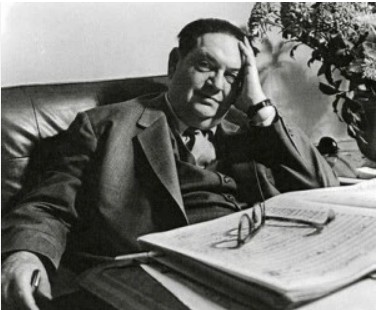
    One Milken revelation was a string quartet by Darius Milhaud, best known in classical music circles as one of the group of iconoclastic French composers that gained notoriety in Paris in the 1920s as “Les Six.” This loose collective followed in the footsteps of Erik Satie in subverting the pretensions of the concert hall. Les Six pushed back against miasmic Wagnerism of the fin de siècle era, employing the lighter textures and lucid forms of neoclassicism, and often emulating the breezy, contemporary ambience of café, boulevard, and circus. In Milhaud’s case, he also really leaned into the popular music of Brazil, which he encountered while serving as secretary to ambassador Paul Claudel. Another enthusiasm was the music of his native Provence (hence, the “Suite provençale”).

    Less well-known is his connection to his Jewish heritage. Milhaud was born into a long-established family of the Comtat Venaissin (County of Venaissin, an enclave surrounding the city of Avignon), with roots traceable to the Middle Ages. The Comtat’s Carpentras synagogue, built in the 14th century, is the oldest in France. Interestingly, Milhaud’s lineage on his father’s side was neither Ashkenazi nor Sephardi, but rather uniquely Provençal – possessing its own historical and cultural traditions – as the settlement dates to the early Common Era. Milhaud’s mother was partly Sephardi on HER father’s side, by way of an Italian forebear.

    Milhaud wrote several works on Jewish themes. His “Études sur des themes liturgiques du Comtat Venaissin” (“Studies on Comtat Venaissin Liturgical Themes”) incorporates melodies from the region’s Rosh Hashanah and Yom Kippur observances. It was composed on a commission from the Braemer Foundation of Philadelphia. In light of his unusual heritage, Milhaud was asked to distill his memories of family celebrations and services at the synagogue in Aix-en-Provence into a string quartet. The work received its premiere at Congregation Adath Jeshurun in Elkins Park, just outside Philadelphia, in 1973. Milhaud died in 1974 at the age of 81.

    Enjoy the music here:

    Learn more about it:

    https://www.milkenarchive.org/music/volumes/view/intimate-voices/work/etudes-sur-des-themes-liturgiques-du-comtat-venaissin/

    More from the Milken Archive:

    https://www.milkenarchive.org/

  • Shana Tova Music for the Jewish High Holy Days

    Shana Tova Music for the Jewish High Holy Days

    Shana tova!

    This week on “The Lost Chord,” we welcome the year 5785 with an hour of music for the Jewish High Holy Days.

    Herman Berlinski (1910-2001) was a prolific composer, who made his mark largely in the field of liturgical music. His “Shofar Service” (1964) is scored for baritone, shofar, two trumpets, organ, and chorus. The shofar, traditionally fashioned out of a ram’s horn, is sounded, as applies here, during the Rosh Hashana or New Year service. The text is compiled from the Union Prayer Book.

    David Stock (1939-2015), a longtime resident of Pittsburgh, served on the faculty of Duquesne University. He was founder of the Pittsburgh New Music Ensemble, and acted as composer in residence for the Pittsburgh Symphony Orchestra and the Seattle Symphony. “Yizkor” (1999), Stock’s elegy for string orchestra, takes its name from the communal memorial service and prayer that honors the deceased. The custom is notably observed on Yom Kippur, or the Day of Atonement.

    Finally, we’ll turn to “The Chagall Windows” (1974), luminous, strange, and beautiful impressions of stained glass tableaux from the synagogue of the Hadassah Medical Center in Jerusalem, by the English pianist and composer John McCabe (1938-2015). The windows depict the twelve sons of the patriarch Jacob and the Twelve Tribes of Israel. McCabe addresses the windows in interlinked sections, so as to give the work a more symphonic, perhaps less episodic, feel.

    The world premiere recording was made for EMI in 1974. We’ll hear a live performance from the next year, captured in a more natural acoustic, with the London Philharmonic conducted by Bernard Haitink.

    Best wishes for a sweet, happy, and healthy new year. It’s a fresh start, from tekeeyah to atonement, on “Shofar, So Good” – music for the High Holy Days – on “The Lost Chord,” now in syndication on KWAX, the radio station of the University of Oregon!


    Clip and save the start times for all three of my recorded shows:

    PICTURE PERFECT, the movie music show – Friday at 8:00 PM EDT/5:00 PM PDT

    SWEETNESS AND LIGHT, the light music program – ALL NEW! – Saturday at 11:00 AM EDT/8:00 AM PDT

    THE LOST CHORD, unusual and neglected rep – Saturday at 7:00 PM EDT/4:00 PM PDT

    Stream them, wherever you are, at the link!

    https://kwax.uoregon.edu/

  • Shana Tova High Holy Days Music on “The Lost Chord”

    Shana Tova High Holy Days Music on “The Lost Chord”

    Shana Tova! Best wishes for a happy, healthy, and sweet new year. Because of last week’s 9/11 memorial, I’m only finally getting around to acknowledging the Jewish High Holy Days. This Sunday night on “The Lost Chord,” we mark the observance with two complementary works.

    Jacob Weinberg’s String Quartet, Op. 55, of 1950, falls into three movements: “Rosh Hashana,” “Yom Kippur” and “Sukkot.” “Yom Kippur” is based on the cantorial chant “Kol Nidre.” (You know, the same melody employed by Max Bruch in his famous cello piece.)

    Ernest Bloch’s “Israel Symphony,” composed between 1912 and 1917, is more like an orchestral rhapsody in three sections – “Prayer in the Desert,” “Yom Kippur” and “Succoth” – played continuously and culminating in parts for four vocal soloists.

    Sukkot, which follows Yom Kippur by only five days, is the harvest festival, during which temporary dwellings (or sukkot) are erected to commemorate the Jews’ 40 years wandering in the desert after the Exodus from Egypt. In modern times, these are decorated with fruits and vines. In contrast to the austerity and fasting of Yom Kippur, the Day of Atonement, Sukkot is a celebration of life and abundance. But in ancient Israel, it was a solemn affair, with sacrifices offered at the temple.

    The High Holidays are a period of reflection, ten days of awe and repentance. Welcome the year 5782, on “Totally Awesome” – one hour later than usual, due to the length of today’s opera (Wagner’s “Parsifal”?????) – this Sunday night at 11:00 EDT, on WWFM – The Classical Network and wwfm.org.

  • Shana Tova High Holy Days Music

    Shana Tova High Holy Days Music

    Shana tova!

    This Sunday night on “The Lost Chord,” we welcome the year 5781 with an hour of music for the Jewish High Holy Days.

    Herman Berlinski (1910-2001) was a prolific composer, who made his mark largely in the field of liturgical music. His “Shofar Service” (1964) is scored for baritone, shofar, two trumpets, organ, and chorus. The shofar, traditionally fashioned out of a ram’s horn, is sounded, as applies here, during the Rosh Hashana or New Year service. The text is compiled from the Union Prayer Book.

    David Stock (1939-2015), a longtime resident of Pittsburgh, served on the faculty of Duquesne University. He was founder of the Pittsburgh New Music Ensemble, and acted as composer in residence for the Pittsburgh Symphony Orchestra and the Seattle Symphony. “Yizkor” (1999), Stock’s elegy for string orchestra, takes its name from the communal memorial service and prayer that honors the deceased. The custom is notably observed on Yom Kippur, or the Day of Atonement.

    Finally, we’ll turn to “The Chagall Windows” (1974), luminous, strange, and beautiful impressions of stained glass tableaux from the synagogue of the Hadassah Medical Center in Jerusalem, by the English pianist and composer John McCabe (1938-2015). The windows depict the twelve sons of the patriarch Jacob and the Twelve Tribes of Israel. McCabe addresses the windows in interlinked sections, so as to give the work a more symphonic, perhaps less episodic, feel.

    The world premiere recording was made for EMI in 1974. We’ll hear a live performance from the next year, captured in a more natural acoustic, with the London Philharmonic conducted by Bernard Haitink.

    Best wishes for a sweet, happy, and healthy new year. It’s a fresh start, from toot to atonement, on “Shofar, So Good” – music for the High Holy Days – this Sunday night at 10:00 EDT, on WWFM – The Classical Network and wwfm.org.


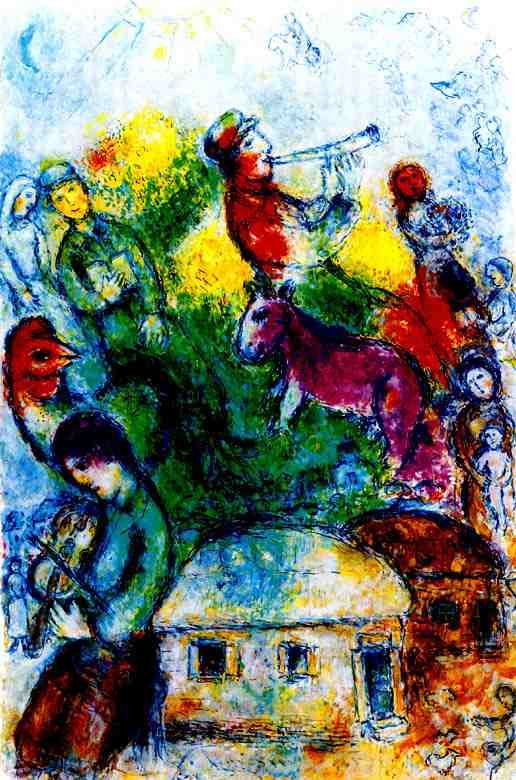
    NOT one of the stained glass windows: Marc Chagall’s “Shofar”

  • Shana Tova Music on WPRB Today

    Shana Tova Music on WPRB Today

    Shana tova!

    This morning on WPRB, we’ll start the day with music evocative of the Jewish High Holidays, including works inspired by the shofar (or ram’s horn, sounded at the opening and close of the season), the Kol Nidre (the solemn prayer sung at the beginning of Yom Kippur services), the synagogue, and Jewish folk traditions.

    Featured composers will include Aaron Minsky, Sergei Prokofiev, Lukas Foss, Ernest Bloch, Maurice Ravel, Matthew H. Fields, Louis Gesensway, Paul Ben-Haim, Max Bruch, Arnold Schoenberg, Emil Nikolaus von Reznicek, Darius Milhaud, David Stock, John McCabe, Herman Berlinski, Paul Schoenfield, and John Duffy.

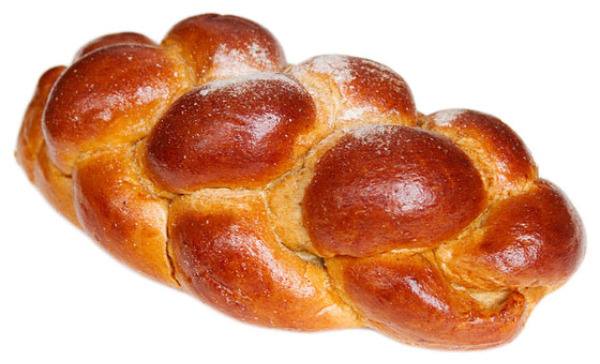
    Lox to enjoy this morning, from 6 to 11 EDT, on WPRB 103.3 FM and at wprb.com. If you knead anything, just give us a “challah,” on Classic Ross Amico.

Tag Cloud

Aaron Copland (92) Beethoven (95) Composer (114) Film Music (120) Film Score (143) Film Scores (255) Halloween (94) John Williams (185) KWAX (229) Leonard Bernstein (100) Marlboro Music Festival (125) Movie Music (135) Opera (198) Philadelphia Orchestra (88) Picture Perfect (174) Princeton Symphony Orchestra (106) Radio (87) Ralph Vaughan Williams (85) Ross Amico (244) Roy's Tie-Dye Sci-Fi Corner (290) The Classical Network (101) The Lost Chord (268) Vaughan Williams (103) WPRB (396) WWFM (881)

DON’T MISS A BEAT

Receive a weekly digest every Sunday at noon by signing up here


RECENT POSTS