Tag: Silent Film

  • Carl Davis A Titan of Film Music Passes

    Carl Davis A Titan of Film Music Passes

    The sound of silents is dead.

    In addition to providing original music for countless silent classics, which he often conducted live with screenings of the films, and frequently recorded, Carl Davis wrote music for the television series “The World at War,” “Pride and Prejudice” (with Jennifer Ehle and Colin Firth), and countless others.

    Among his scores for contemporary film were those for “The French Lieutenant’s Woman” (with Meryl Streep and Jeremy Irons), which was honored with a BAFTA for Best Film Music, Ken Russell’s adaptation of D.H. Lawrence’s “The Rainbow,” and Roger Corman’s “Frankenstein Unbound.” Surely, his most ambitious undertaking on behalf of the silents was his work on a restoration of Abel Gance’s epic “Napoleon,” for which he composed and arranged nearly five hours of music.

    He assisted Paul McCartney in the composition of the “Liverpool Oratorio.” He also wrote orchestral concert works and music for the ballet.

    Though he made Britain his home since 1961, Davis was actually born in Brooklyn. He attended Bard College, where he studied composition with Paul Nordoff. He also studied with Hugo Kauder and later with Per Nørgard. Early on, he obtained valuable conducting experience with organizations such as the New York City Opera and the Robert Shaw Chorale. In 1959, his revue “Diversions” won an off-Broadway award.

    He traveled to the Edinburgh Festival in 1961. His success there led to an invitation to compose music for the BBC satirical series “That Was the Week That Was.” Other TV and radio commissions followed, and Davis made a healthy living for himself in the U.K. He enjoyed a close relationship with the London Philharmonic Orchestra, among others.

    At the time of his death, he was 86 years old.

    By coincidence, Carl Davis will conduct music by Charlie Chaplin for “Modern Times” on my syndicated film music show, “Picture Perfect,” tomorrow on KWAX, the radio station of the University of Oregon. Stream it on the East Coast this Friday at 8:00 PM EDT (5:00 PDT).

    https://kwax.uoregon.edu/

    R.I.P. Carl Davis.


    “The World at War”

    “Pride and Prejudice” (with Melvyn Tan on the fortepiano)

    On composing the score to “The French Lieutenant’s Woman”

    “Napoleon”

    Collaborating with Paul McCartney on “Liverpool Oratorio”

    “Liverpool Oratorio” (complete)

    An interview with Carl Davis
  • Caruso at 150 Silent Film Superstar

    Caruso at 150 Silent Film Superstar

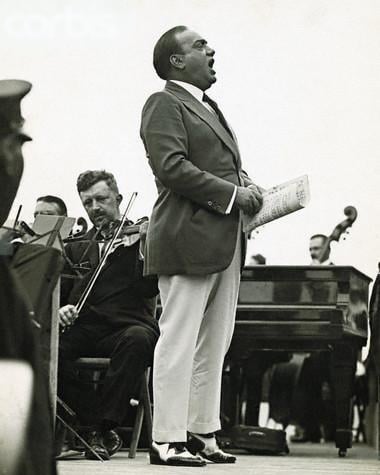
    It’s a cruel irony that the first superstar of the gramophone would have appeared in a silent movie. Here’s Enrico Caruso in a dual role, in the 1918 film “My Cousin.”

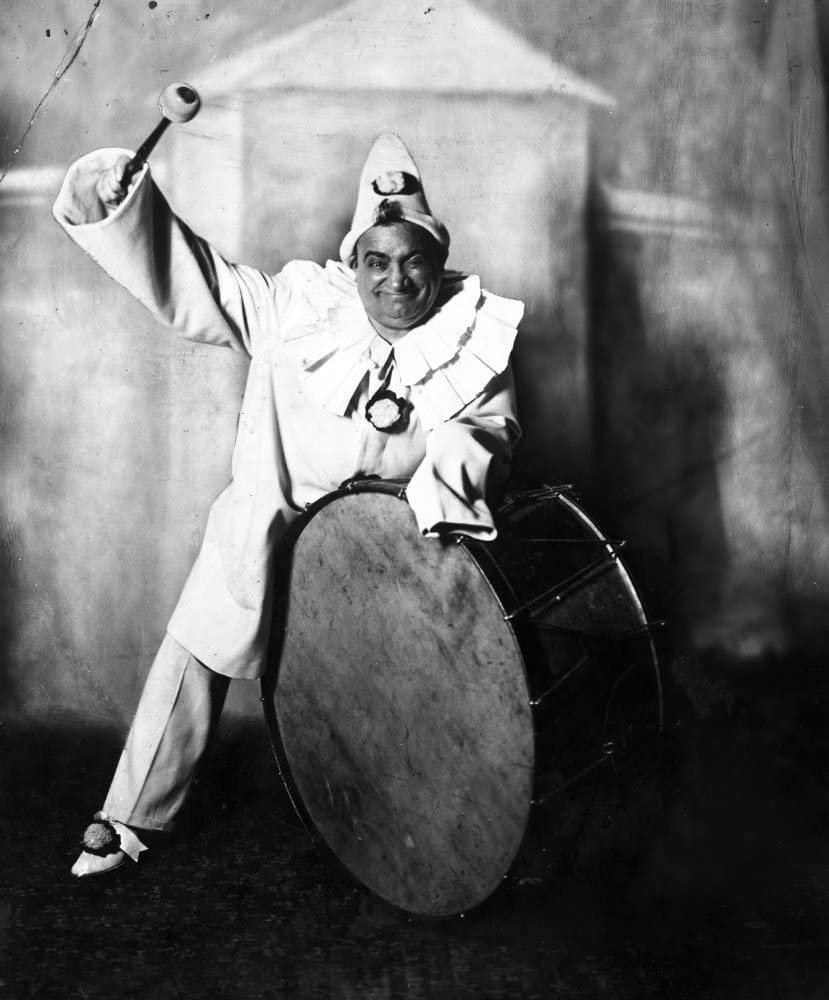
    Caruso’s “Vesti la giubba,” from Leoncavallo’s “Pagliacci,” was the first million-selling recording. He performs it in the movie – without sound!

    However, he did record it three times, in 1902, 1904, and 1907. Here are all three versions, the first two with piano, and the last with orchestra. It’s one of those arias you know, even if you think you don’t.

    Caruso was paid $100,000 to appear in “My Cousin.” Unfortunately, the film bombed at the box office. I guess no one thought about Caruso’s celebrity being tied up with, you know, HIS EXTRAORDINARY VOICE (though Caruso was hardly the only opera singer to appear in the silents). In the meantime, a second Caruso vehicle, “The Splendid Romance” – for which he was also paid $100,000 – was shot, but apparently never released.

    The Great Caruso was born 150 years ago today. It’s believed that an on-stage injury precipitated his untimely demise in 1921 at the age of 48. But the overeating, sedentary lifestyle, and strong Egyptian cigarettes couldn’t have helped. His final months were a phantasmagoria of ailments and surgeries.

    Thousands turned out for his funeral in Naples. For the better part of a decade, his remains were kept on display in a glass sarcophagus, until his wife had him sealed up in an ornate tomb.

    Thanks in part to his 247 records, which wound up earning millions of dollars in royalties, Caruso became one of the first global celebrities. In all, he appeared at the Old Met 863 times. He toured extensively throughout Europe, and North and South America, singing in all the major opera houses. A single appearance in Cuba earned him $10,000. That he was able to achieve the level of superstardom he did, before radio, television, or even transatlantic telephone service, is astonishing.

    Bravo to Enrico Caruso on his sesquicentenary!


    “Di quella pira” from “Il trovatore”

    One of the best-known Neapolitan songs

    Caruso does his part for the war effort

  • Silent Film Music This Sunday Night

    Silent Film Music This Sunday Night

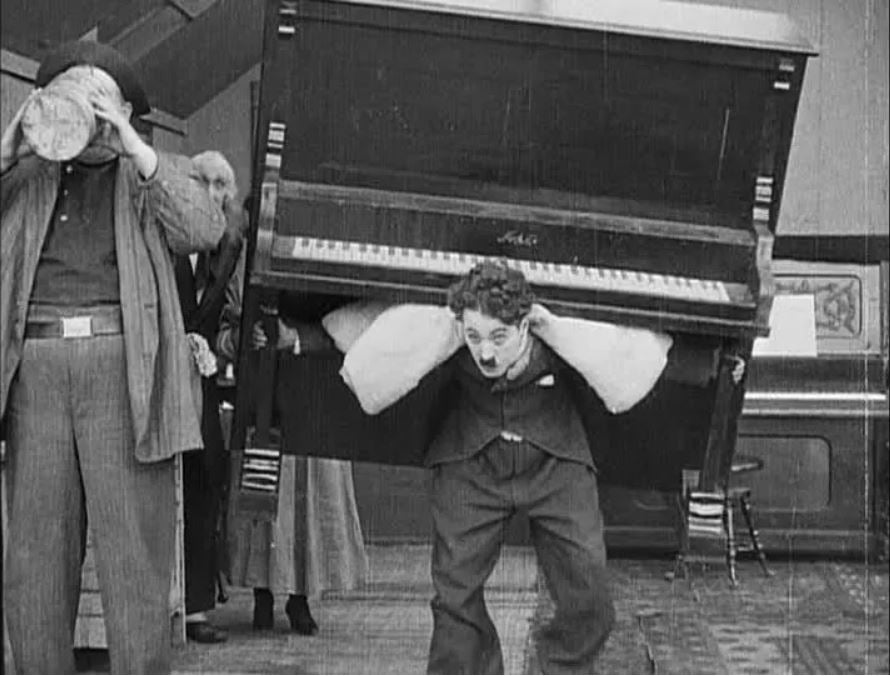
    This Sunday night on “The Lost Chord,” we’ll travel back in time to pretend the Academy Awards never happened, by revisiting the silent era and enjoying concert music inspired by some of its biggest icons – including Douglas Fairbanks, Mary Pickford, Charlie Chaplin, and Rudolph Valentino.

    We’ll hear “Valentino Dances” by Dominick Argento, “Cinema” by Louis Aubert, and a selection from the “Seven Stars Symphony” by Charles Koechlin. As a bonus, the hour will conclude with a charming encore, in the form of one Chaplin’s own compositions.

    The personalities are still big – it’s the pictures that got small, on “Silents Are Golden,” this Sunday night at 10:00 EDT, on WWFM – The Classical Network and wwfm.org.

  • Phantom Carriage A New Year’s Ghost Story

    Phantom Carriage A New Year’s Ghost Story

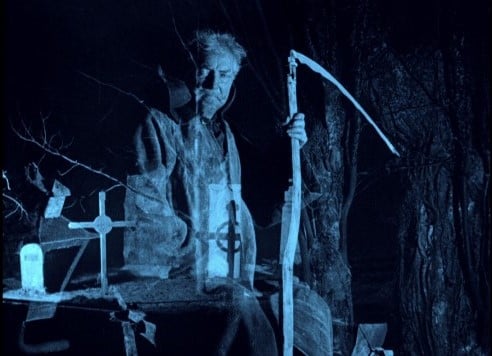
    If you can’t stand the whole, stupid Times Square thing – which promises to be even stupider this year, in the middle of a pandemic – you could do a lot worse than to watch “The Phantom Carriage” (1921).

    Based on a novel by Selma Lagerlöf (of “Gösta Berling’s Saga” fame), this New Year’s Eve ghost story is like a Swedish cousin to Charles Dickens’ “A Christmas Carol.” The director, Victor Sjöström, plays what must be one of the least sympathetic antiheroes in all of cinema. His character, David Holm, is vindictive and mean-spirited – alcoholic, abusive, and a destructive influence on everyone around him. If there’s one character who’s beyond redemption, you figure it’s got to be Holm, who makes Ebenezer Scrooge look like a charm school graduate.

    Holm hits the bottle with a couple of his drinking buddies in a cemetery a few minutes to midnight on New Year’s Eve, as saintly Salvation Army sister Edit calls for him on her deathbed. She’s dying of the consumption she contracted caring for Holm for the first time exactly one year ago. But she clings to life, waiting for confirmation of her belief in Holm’s inherent goodness.

    Holm dismisses Sister Edit’s messenger and relates a story to his companions about a former acquaintance, university-educated Georges, who started him down the path of dissolution. It was Georges who introduced him to, among other things, the legend of the Phantom Carriage. The last person to die each year, we’re told, is fated to drive Death’s carriage. In this capacity, very dreary work, the departed must collect all the souls of the dead for the following year. With a sense of foreboding, Georges, the bon vivant, blanches every New Year’s Eve, climbs into his bunk, and stares at the wall.

    Wouldn’t you know it, his premonition comes to pass. Georges was the last to die the previous year. And now selfish, belligerent Holm takes a fatal crack on the head just at the stroke of 12:00. Thus begins a strange reunion between master and disciple, with Georges directing Holm’s spirit to the sites of all the misery he’s caused. The rest of the story plays out like the Ghost of Christmas Yet to Come, without the laughs.

    The film is fascinating in a way only silent movies are – especially dreamlike in its double-exposure effects of the Phantom Carriage – but the human story is also surprisingly absorbing. There’s one Holm freakout that seems to anticipate Stanley Kubrick’s “The Shining.” For my money “Häxan” (1922), by Danish director Benjamin Christensen, is still the benchmark for silent lurid thrills. “The Phantom Carriage” isn’t really about that. There are no witches’ sabbaths or children being hurled into cauldrons. The power of Sjöström’s film is in its ability to reach across 100 years to engage us with its humanity.

    The film opened in Scandinavia on New Year’s Day, 1921. Ingmar Bergman loved this movie, and it’s easy to see parallels between Holm’s conversations with the Grim Reaper and the iconic chess match between the Knight and implacable Death in “The Seventh Seal.” Sjöström himself would later play the lead in Bergman’s “Wild Strawberries.” Bergman first saw “The Phantom Carriage” at the age of 15 and claimed to watch it at least once every year.

    It’s not a film that will bring a smile to your face on New Year’s Eve. But then, I never smile on New Year’s. Take that, you filthy Mummers.

    https://www.inquirer.com/news/mummers-parade-philadelphia-returns-2022-costumes-brigades-20211230.html

  • Enrico Caruso Silent Film Superstar

    Enrico Caruso Silent Film Superstar

    It’s a cruel irony that the first superstar of the gramophone would have appeared in a silent movie. Here’s Enrico Caruso in a dual role, in the 1918 film “My Cousin.”

    Caruso’s “Vesti la giubba,” from Leoncavallo’s “Pagliacci,” was the first million-selling recording. He performs it in the movie – without sound!

    However, he did record it three times, in 1902, 1904, and 1907. Here are all three versions, the first two with piano, and the last with orchestra. It’s one of those arias you know, even if you think you don’t.

    Caruso was paid $100,000 to appear in “My Cousin.” Unfortunately, the film bombed at the box office. I guess no one thought about Caruso’s celebrity being tied up with, you know, HIS EXTRAORDINARY VOICE (though Caruso was hardly the only opera singer to appear in the silents). In the meantime, a second Caruso vehicle, “The Splendid Romance” – for which he was also paid $100,000 – was shot, but apparently never released.

    The Great Caruso died 100 years ago today. It’s believed that an on-stage injury precipitated his untimely demise at the age of 48. But the overeating, sedentary lifestyle, and strong Egyptian cigarettes couldn’t have helped. His final months were a phantasmagoria of ailments and surgeries.

    Thousands turned out for his funeral in Naples. For the better part of a decade, his remains were kept on display in a glass sarcophagus, until his wife had him sealed up in an ornate tomb.

    Thanks in part to his 247 records, which wound up earning millions of dollars in royalties, Caruso became one of the first global celebrities. In all, he appeared at the Old Met 863 times. He toured extensively throughout Europe, and North and South America, singing in all the major opera houses. A single appearance in Cuba earned him $10,000. That he was able to achieve the level of superstardom he did, before radio, television, or even transatlantic telephone service, is astonishing.

    “Di quella pira” from “Il Trovatore”

    One of the best-known Neapolitan songs

    Caruso does his part for the war effort

Tag Cloud

Aaron Copland (92) Beethoven (95) Composer (114) Film Music (120) Film Score (143) Film Scores (255) Halloween (94) John Williams (185) KWAX (229) Leonard Bernstein (100) Marlboro Music Festival (125) Movie Music (135) Opera (198) Philadelphia Orchestra (88) Picture Perfect (174) Princeton Symphony Orchestra (106) Radio (87) Ralph Vaughan Williams (85) Ross Amico (244) Roy's Tie-Dye Sci-Fi Corner (290) The Classical Network (101) The Lost Chord (268) Vaughan Williams (103) WPRB (396) WWFM (881)

DON’T MISS A BEAT

Receive a weekly digest every Sunday at noon by signing up here


RECENT POSTS