Tag: Silent Night

  • The Sound of Silence, Christmas Eve Edition

    The Sound of Silence, Christmas Eve Edition

    Christmas Eve, already.

    On this date in 1818, the Christmas carol “Silent Night” was first sung at St. Nicholas Church in Obendorf, Austria. The words were from a poem, “Stille Nacht,” written by a young Catholic priest, Joseph Mohr, in the aftermath of the Napoleonic Wars. It’s said that Mohr was inspired in part by a walk he took, on which he was impressed by the quiet, wintry aspect of his town at peace.

    He handed the words off to the church’s choir director, Franz Xaver Gruber, who wrote the melody with a deadline looming for that evening’s mass. The carol was introduced on Christmas Eve, its creators singing it in duet, with Mohr on the guitar. (St. Nicholas Church was prone to flooding, which may have damaged the organ. Eventually, the church would be replaced by Silent Night Chapel.)

    An organ builder and repairman heard the carol and took it with him back to his own village, where it was picked up by two separate families of traveling folk singers, the Strassers and the Rainers. The Rainers performed it before the King of Prussia and Tsar Alexander I and sang it for the first time in the United States, where they introduced it at the Alexander Hamilton Monument outside Trinity Church in New York City.

    Nearly two centuries before social media, the carol went viral. You’d be hard-pressed to find anyone who doesn’t know it. It’s been recorded over 137,000 times, for the first time back in 1905.

    Even given the irresistibly Romantic story of a priest introducing the carol to his congregation on a guitar on Christmas Eve, there had been speculation over the years attributing its creation to starrier names. It was only in 1994 that the original manuscript was discovered in Mohr’s hand. Scholars now believe that two years elapsed between the actual writing of the poem in 1816 and Gruber’s last-minute contribution of the indelible melody.

    If this is true, it does nothing to take away from the carol’s magic, and the rare alchemy between poet and composer.

    ———-

    Stained glass from Silent Night Chapel, reinforcing the legend of Gruber (as opposed to Mohr) on the guitar

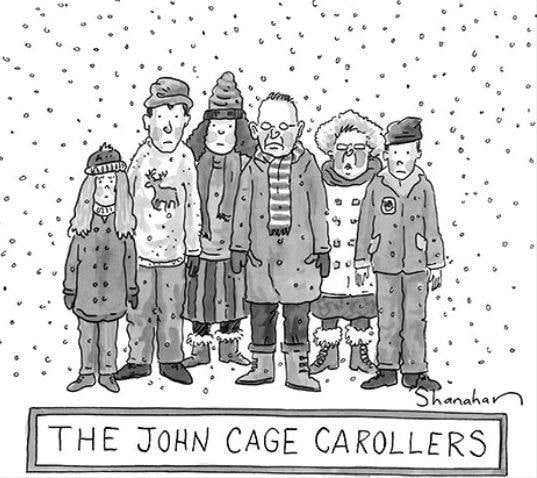
  • Kevin Puts at 50 Pulitzer Winner & Composer’s Career

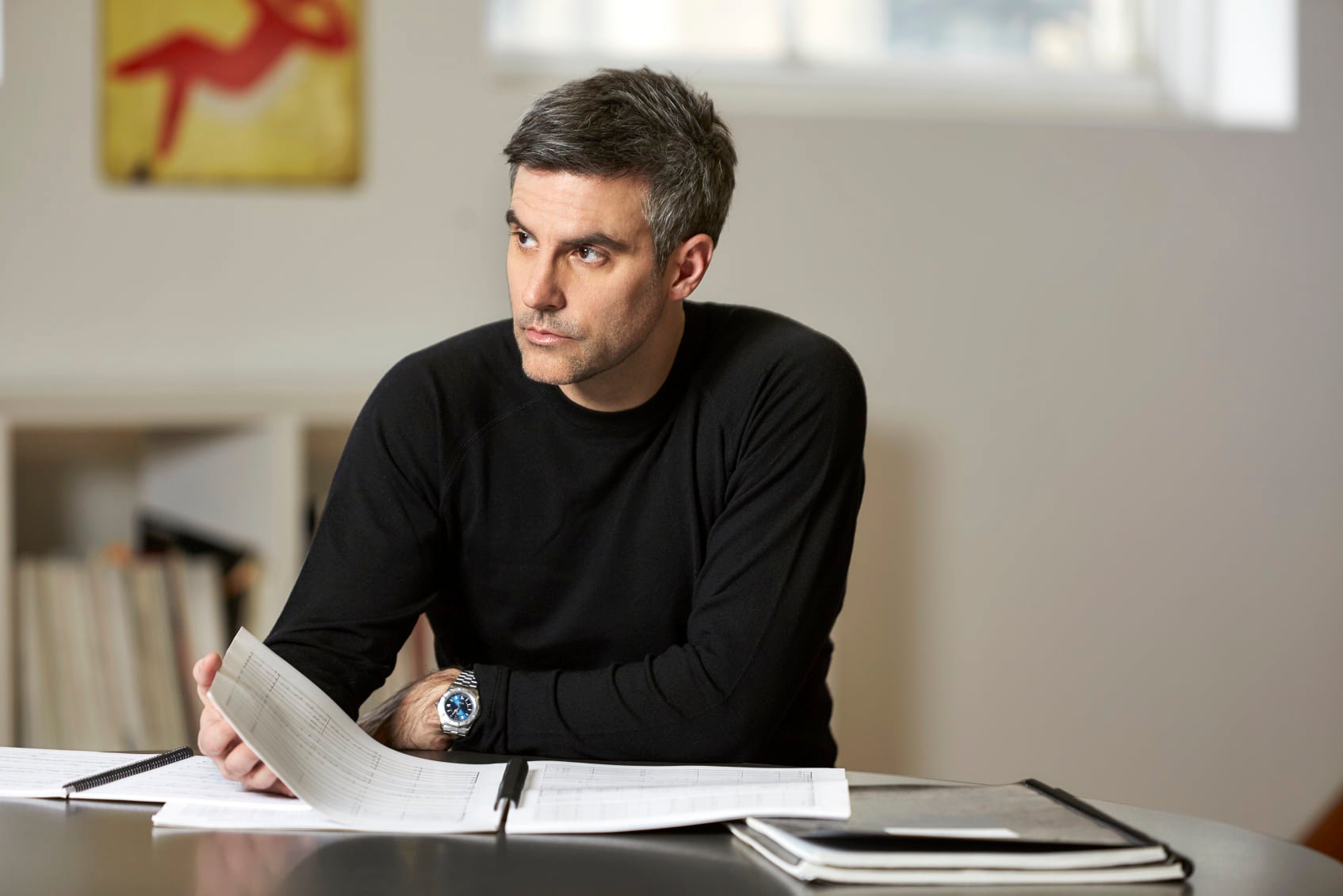
    Kevin Puts at 50 Pulitzer Winner & Composer’s Career

    Kevin Puts is 50 today. Puts was the recipient of the Pulitzer Prize for Music in 2012 for his opera “Silent Night,” about the real-life, unsanctioned 1914 Christmas truce between Scottish, French, and German troops on the Western Front. It’s a poignant story, in whatever form. (It was also dramatized in the 2005 film “Joyeux Noël.”) The opera beautifully captures the transcendent moments of humanity, like shafts of sunlight piercing clouds, during one of the costliest and most violent conflicts in the bloody history of warfare. The work was given its world premiere by Minnesota Opera in 2011. I was lucky enough to catch Opera Philadelphia’s production in 2013.

    Puts’ latest opera, “The Hours,” co-commissioned by the Philadelphia Orchestra and the Metropolitan Opera, was projected to be unveiled at the Met in 2022. It looks like it’s been pushed back to next season. In the meantime, two concert performances will be given by the Philadelphia Orchestra, on March 18 & 20, with Yannick Nézet-Séguin conducting. The cast for the Met debut was to have included Renée Fleming, Kelli O’Hara, and Joyce Di Donato as Virginia Woolf. For the Philadelphia performances, Fleming and O’Hara will be joined by Jennifer Johnson Cano.

    I’ve never heard anything by this composer that hasn’t been direct, beautiful, and worthwhile. He’s a contemporary artist who has had the good fortune to be rewarded for his courage to remain true to himself, avoiding the pitfall of gussying up what he wishes to express with a lot of extraneous modernist effects, in order to maintain his street cred, as some composers of a clearly romantic bent had done in the previous generation. Nor is he a post-modernist hipster, a keyboard noodler, an overweening pop artist, or a soft-headed, wannabe film composer.

    Puts’ language is romantic, but it is not the lingua franca of the 19th century. In embracing tonality and melody, he honors the most fundamental purpose of music, which is not simply to express, but to communicate, and he does so intelligently, in a manner that is capable of reaching a wide audience without cheapening his art.

    Furthermore, at 50, he still has a long career ahead of him.

    Many happy returns, Kevin Puts.


    “Inspiring Beethoven” (with disturbing slideshow)

    The Flute Concerto, which flirts with Mozart in its second movement

    The Symphony No. 2, a response to the events of 9/11

    “Dona nobis pacem” from “Silent Night”

  • Serene Christmas Silent Night Wishes

    Serene Christmas Silent Night Wishes

    Wishing you a serene Christmas (and a Silent Night).

Tag Cloud

Aaron Copland (92) Beethoven (95) Composer (114) Film Music (120) Film Score (143) Film Scores (255) Halloween (94) John Williams (185) KWAX (229) Leonard Bernstein (100) Marlboro Music Festival (125) Movie Music (135) Opera (198) Philadelphia Orchestra (88) Picture Perfect (174) Princeton Symphony Orchestra (106) Radio (87) Ralph Vaughan Williams (85) Ross Amico (244) Roy's Tie-Dye Sci-Fi Corner (290) The Classical Network (101) The Lost Chord (268) Vaughan Williams (103) WPRB (396) WWFM (881)

DON’T MISS A BEAT

Receive a weekly digest every Sunday at noon by signing up here


RECENT POSTS