Tag: Symphony No. 2

  • Rediscovering Weingartner Composer and Conductor

    Rediscovering Weingartner Composer and Conductor

    Felix Weingartner (1863-1942) is best-recognized as a conductor. However, he considered himself equally, if not more so, a composer. He was one of a number of prominent conductors of the day who fit the Mahler paradigm. However, the works of Wilhelm Furtwängler, Otto Klemperer, and most others of his profession are very seldom heard.

    This week on “The Lost Chord,” as we’ll have a chance to enjoy Weingartner’s Symphony No. 2, from 1901, a fascinating mix of old and new, evidently romantic in disposition, yet very much of its time. The recording will feature the Basel Symphony Orchestra, which he himself directed from 1927 to 1934.

    Weingartner held many conducting posts over the years. He succeeded Mahler as principal conductor of the Vienna Hofoper, from 1908 to 1911. He led the Vienna Philharmonic in an official capacity until 1927. He was later chief conductor of the Vienna Volksoper.

    He thought very deeply about the problem of the symphony. I remember reading a book he wrote in which he examined the strengths and weaknesses of all the major symphonies written in the shadow of Beethoven, down to the dawn of the 20th century.

    He himself composed seven symphonies, with other orchestral works, and thanks to the enterprising cpo.de – classic production osnabrück label (CPO for short), all of them have been recorded.

    As a conductor, Weingartner was particularly well-regarded as a Beethoven interpreter. He’d been conducting the Beethoven symphonies as a cycle since at least 1902, and he was the first to complete an integral set of recordings. To round out the hour, we’ll have time to sample the scherzo from the Symphony No. 9, from his superlative recording of 1935.

    I hope you’ll join me in raising a glass to Felix Weingartner. That’s “Wine from Weingartner,” on “The Lost Chord,” now in syndication on KWAX, the radio station of the University of Oregon!


    Remember, KWAX is on the West Coast, so there’s a three-hour difference for the Trenton-Princeton area. Here are the respective air-times of my recorded shows (with East Coast conversions in parentheses):

    PICTURE PERFECT, the movie music show – Friday on KWAX at 5:00 PACIFIC TIME (8:00 PM EDT)

    THE LOST CHORD, unusual and neglected rep – Saturday on KWAX at 4:00 PACIFIC TIME (7:00 PM EDT)

    Stream them here!

    https://kwax.uoregon.edu/


    PHOTO: Weingartner gets busted in Basel in 1927

  • Samuel Barber’s Lost Symphony No. 2

    Samuel Barber’s Lost Symphony No. 2

    Just as KWAX allows for the continued broadcast of “The Lost Chord” – no longer affiliated with WWFM after twenty years, but still available in syndication – Howard Pollack’s biography, “Samuel Barber: His Life and Legacy,” preserves the story behind the composer’s Symphony No. 2.

    Barber’s music will be among my featured works this week on a program devoted to works conceived for the U.S. armed forces. Barber was serving in the U.S. Army Air Force when he was approached to write a symphony in 1943.

    Every two weeks, he would report to a colonel at West Point to demonstrate his progress. Here’s a passage from Pollack’s book, with a nice Princeton connection on p. 236.

    “As it [the symphony] was one of my most complicated works, I had no idea what [the colonel] expected to hear. I rather thought it might be something like ‘You’re in the Army Now.’ So I was a little nervous when I reported to play for him on a battered-up piano in the back of the army theater. All he said was, “Well, corporal, it’s not quite what we expected from you. Since the air force uses all sorts of the most modern technical devices, I’d hoped you’d write this symphony in quarter-tones. But do what you can, do what you can, corporal.”

    Barber actually made some concession toward this general expectation by employing, in the second movement’s final section, an “electrical ‘tone generator’” constructed by Bell Telephone Laboratories in imitation of the low-frequency radio signals used to help pilots navigate during these years. The composer even traveled to the company’s Princeton location to investigate the matter. “In the end, it never did work right,” recalled Barber. “I remember [conductor Serge] Koussevitzky having a fit at rehearsal and shouting “Throw the damn thing out.” When Barber revised the work in 1946, he rewrote the small tone-generator part for E-flat clarinet.

    Barber was very proud of the work when it was completed, thinking it one of his best pieces. However, with the passage of time, he came to feel embarrassed by it, perhaps because of its programmatic roots – although he always emphasized that the work was meant to reflect the emotional response to events rather than the events themselves – or perhaps because of the war itself, the ties to which he felt dated the piece. Whatever the case, after a few drinks one afternoon, he convinced his publisher to allow him back to the office to tear up the score. Of course, the piece had been published, so this was largely a symbolic gesture, and the Symphony No. 2 was revived after his death.

    Parenthetically, Barber did authorize the publication of the work’s Andante as a free-standing piece, called “Night Flight.” The score is prefaced by an epigraph by Antoine de Saint-Exupery (aviator and author of “The Little Prince”), from his novel of the same name, drawn from a passage depicting the final moments of a pilot’s doomed flight: “A single radio post still heard him. The only link between him and the world was a wave of music, a minor modulation. Not a lament, no cry, yet purest of sounds that ever spoke despair.”

    We’ll hear a recording of Barber’s complete, reconstituted symphony with Marin Alsop and the Royal Scottish National Orchestra.

    In addition, we’ll hear Morton Gould’s Symphony No. 4, his first large scale work for symphonic band. Gould’s symphony, composed in 1952 for the United States Military Academy at West Point, calls for a “marching machine,” but on the recording we’ll hear, a classic on the Mercury label, the feet will be those of the 120 musicians of the Eastman School Symphony Band. Frederick Fennell will direct the Eastman Wind Ensemble.

    Remember the sacrifice of Americans at war, while listening to “Orchestrated Maneuvers,” on “The Lost Chord,” now in syndication on KWAX, the radio station of the University of Oregon. Stream it at the link below.


    Keep in mind, KWAX is on the West Coast, so there’s a three-hour time difference – actually rather convenient for those of us located in the vicinity of WWFM. Here are the conversions of the respective air-times of my shows:

    PICTURE PERFECT – Fridays on KWAX at 5:00 PACIFIC TIME (8:00 PM EDT)

    THE LOST CHORD – Saturdays on KWAX at 4:00 PACIFIC TIME (7:00 PM EDT)

    https://kwax.uoregon.edu/


    BONUS: Another of Barber’s wartime works, the “Commando March,” performed by “The President’s Own” U.S. Marine Band

    More info on Howard Pollack’s “Samuel Barber: His Life & Legacy”

    https://www.press.uillinois.edu/books/?id=c044908&fbclid=IwAR2xcgzDYdCzC0KFAlhyMOFt7S72RKmmnh_Nk4lsWPm9goNSUb1LHsSpDWg


    PHOTO: U.S. Army Air Force Corporal Samuel Barber

  • Blackbird Seed Bell Mayhem in My Yard

    Blackbird Seed Bell Mayhem in My Yard

    I put out a new seed bell this morning, and within hours the remnants – the part that simulates the mouth of the bell – were already on the ground, surrounded by a gang of blackbird toughs. Then a squirrel bounced up nonchalantly and rolled it away. I swear I could actually see the question marks and exclamation points over the blackbirds’ heads.

    Can it be much longer before this migratory menace disperses or moves on to greener pastures? The other birds would like to eat, please.

    I don’t know how I didn’t think of this before. It’s the Symphony No. 2 by Finnish composer Einar Englund, subtitled “The Blackbird.” Perhaps I should put my speakers in the window and turn up the volume.

    Too bad the symphony apparently takes the side of the blackbird. One critic described it as “a sarcastic statement by a rebellious soul on the brutality of Man and our distorted civilization, compared with the purity of Nature.” That’s how they roll in Finland, I guess. And I’m not about to tangle with the Swan of Tuonela.

  • Elvis Isasi Shared Song Secret

    Elvis Isasi Shared Song Secret

    What do Elvis Presley’s “Wooden Heart” and Andrés Isasi’s Symphony No. 2 have in common? They both employ the same German folk melody. Bask in the music of this neglected Basque composer on “Assaying Isasi,” on “The Lost Chord,” this Sunday night at 10:00 EDT, on WWFM – The Classical Network and wwfm.org.


    PHOTOS: The King and Isasi (with friends)

  • William Grant Still American Composer Rediscovered

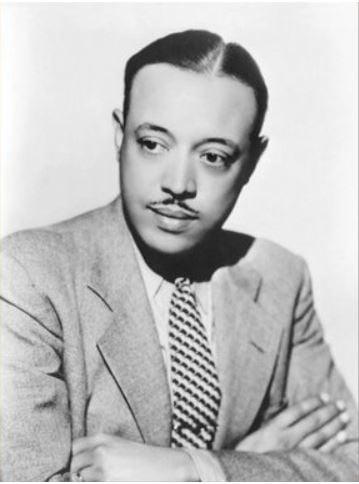
    William Grant Still American Composer Rediscovered

    They say that still waters run deep.

    William Grant Still, frequently described as the “Dean of Afro-American Composers,” wrote a lot of attractive music, much of it informed by the black experience. This Sunday night on “The Lost Chord,” we’ll hear some of it, including the delightful Symphony No. 2, subtitled “Song of a New Race.” Also, a more serious work fueled by racial injustice, “And They Lynched Him on a Tree,” for double-choir, narrator and orchestra.

    Still, who lived from 1895 to 1978, emerged from unlikely circumstances – born in Woodville, Mississippi and raised in Little Rock, Arkansas – to become a major force in American music. Having abandoned a career in medicine for studies at the Oberlin Conservatory of Music and the New England Conservatory in Boston, where he studied with George Whitefield Chadwick, Still was a “first” in many respects.

    His Symphony No. 1, the “Afro-American Symphony” was the first written by a black composer to be performed by a major orchestra (the New York Philharmonic). He was the first to be given the opportunity to conduct a major orchestra (the Los Angeles Philharmonic, at the Hollywood Bowl). His opera, “Troubled Island,” became the first to be produced by a major company (the New York City Opera). Another of his operas, “A Bayou Legend,” was the first to be performed on national television (as late as 1981). His works were performed internationally by the Berlin Philharmonic, the London Symphony Orchestra, the BBC Symphony, and the Tokyo Philharmonic.

    Perhaps the least likely pupil of Edgard Varèse, Still incorporated jazz and blues elements into his concert music. He cut his teeth writing arrangements for Paul Whiteman, W.C. Handy, and Artie Shaw. According to Eubie Blake, one of Still’s improvisations in the pit during Blake’s revue “Shuffle Along” became the basis for Gershwin’s hit tune “I Got Rhythm.” (Blake conceded the appropriation was probably inadvertent.) Still and Gershwin were on friendly terms and made it a point to attend one and another’s performances.

    Listen to Still’s Symphony No. 2 – first performed in 1936 by Leopold Stokowski and the Philadelphia Orchestra – and see if you don’t agree that Gershwin could only wish that he had composed its elegant second movement.

    We’ll follow that with a very different piece, Still’s choral ballad “And They Lynched Him on a Tree,” composed in 1940. Poet Katherine G.C. Biddle, niece of Charlotte Mason, “Godmother of the Harlem Renaissance,” provided the libretto. The work is scored for contralto soloist, as mother of the victim, a “white chorus” to depict the mob, a “black chorus” to discover the lynching, a narrator (William Warfield in this recording), and small orchestra. The piece is almost exactly contemporary with Abel Meeropol’s “Strange Fruit.” It was given its first performance by the New York Philharmonic, conducted by Artur Rodzinski.

    Finally, at the end of the hour, we’ll decompress with Still’s beautiful and contemplative “Summerland.”

    I hope you’ll join me for “Still Runs Deep” – music by William Grant Still – this Sunday night at 10:00 EST, on WWFM – The Classical Network and wwfm.org.

Tag Cloud

Aaron Copland (92) Beethoven (94) Composer (114) Conductor (84) Film Music (109) Film Score (143) Film Scores (255) Halloween (94) John Williams (184) KWAX (228) Leonard Bernstein (98) Marlboro Music Festival (125) Movie Music (124) Opera (196) Philadelphia Orchestra (85) Picture Perfect (174) Princeton Symphony Orchestra (106) Radio (86) Ross Amico (244) Roy's Tie-Dye Sci-Fi Corner (290) The Classical Network (101) The Lost Chord (268) Vaughan Williams (98) WPRB (396) WWFM (881)

DON’T MISS A BEAT

Receive a weekly digest every Sunday at noon by signing up here


RECENT POSTS