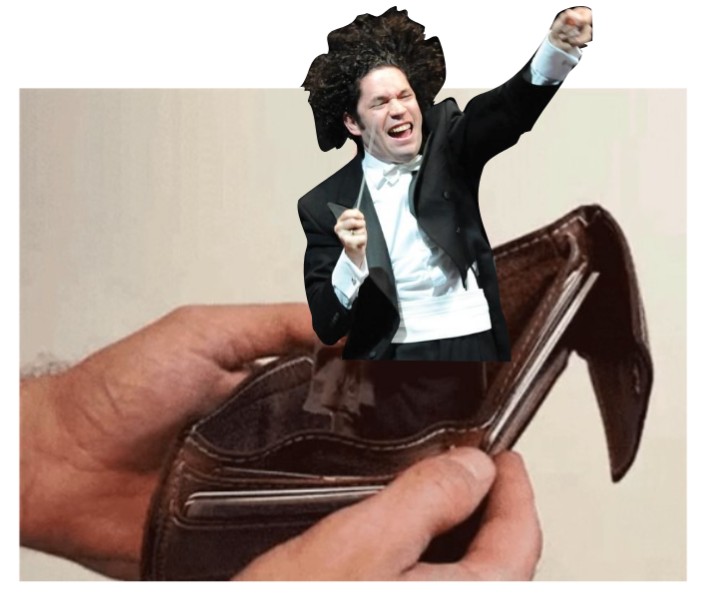
For those of you who weren’t able to make it to the New York Philharmonic this weekend to hear Gustavo Dudamel conduct Charles Ives’ Symphony No. 2, here’s a live performance with the Dude at the helm of the Berlin Philharmonic, no less, in 2023.
This quintessentially American symphony – a kind of scrapbook of Ives’ musical influences, whether they be Brahms or “Bringing in the Sheaves” – should at least be partially within the European wheelhouse, even if the musicians will not “get” all the vernacular references. Dudamel recorded the four Ives symphonies with the Los Angeles Philharmonic for Deutsche Grammophon.
The oboe duet at 9:08 always just delights me. A cheery start to my day!
Thanks to Mather Pfeiffenberger for directing me to the video.
The first concert I had on my calendar for the 2025-26 season had been for September 27, but the opening New York Philharmonic series, which began on Thursday, has been gnawing at me. I don’t have press tickets, and I just wasn’t willing to pay $200 to sit in the back row of the top tier. I mean, I understand it’s the opening series and it features superstar music and artistic director designate Gustavo Dudamel, but come on!
That said, try as I may, I can’t say no to the opportunity to hear Ives’ Symphony No. 2 in what I am hoping is going to be a dynamite performance, on the same program with Bartók’s Piano Concerto No. 3 – with Yunchan Lim, no less. Since his 2022 victory at the Van Cliburn Competition (the youngest ever gold medal winner, at 18), Lim has been one of the most-sought-after pianists in the world. Several times, I have tried and failed to get tickets to his concerto and recital performances. I know he’s bringing the Bartók to Philadelphia in a few weeks, but his appearance in New York only sweetens the pot for a trip in to hear the Ives.
THANKFULLY, I checked the prices for the few remaining tickets again this morning, and they appear to have fallen by a few bucks. Still higher than I ordinarily pay (tickets are listed at nearly half the price for next weekend’s concerts), and a trip in to New York is always an investment, but I’ll pack my dinner and maybe take the train. I know where to park for nothing at that hour and traffic will probably be light on Tuesday, but there would still be the gas and tolls and Manhattan’s insult-to-injury “congestion relief” tax to contend with.
By contrast, when you take the train, you only have a vague idea of when your subway will arrive at Penn Station from Lincoln Center and how long you’ll be standing there watching the monitors, waiting for New Jersey Transit to announce a departure for Trenton. Then, once you’re on the train, there’s the interminable wait at every stop, since at that hour there is no express.
But… bring a good book and don’t sleep through your stop, and you’ll be okay. It’s possible the travel gods will be merciful and no one will be blaring their cell phones, and your burnt offerings will obscure the pervasive scent of marijuana.
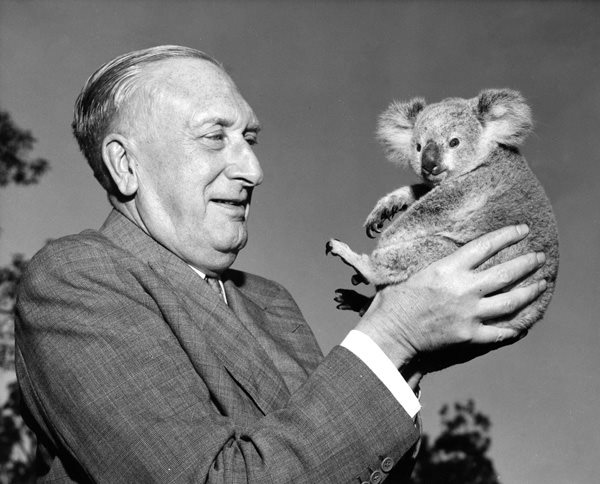
Sir William Walton, beloved for his coronation marches and film scores, also wrote operas, symphonies, concertos, chamber music and choral works. As is often the case, posterity has been astonishingly reductive.
This week on “The Lost Chord,” we’ll hear two long-out-of-print recordings of works composed more than three decades apart.
At the time of the premiere of his Symphony No. 2, in 1957, Walton was perceived as a musical throwback. Indeed, despite the fact that it is more tightly argued, the piece has always been regarded as a poor stepsister of the Symphony No. 1, composed in 1935, a work full of grand gestures, written under the spell of Sibelius.
What apparently escaped critics of the day was the subtlety of its craftsmanship. The finale, in particular, is a set of variations based on a twelve-note row, a technique not unlike that employed in the kind of serial composition so much in vogue at the time.
George Szell gave the American premiere of the symphony, with the Cleveland Orchestra, in December of 1960. A few months later, they made the first recording.
Walton was viewed as an enfant terrible, when, more than three decades earlier, he set Edith Sitwell’s poetry as an entertainment, titled “Façade.” The work was first performed publicly in 1923. The premiere was a succès de scandale, with Sitwell herself speaking her poems into a megaphone protruding from the mouth of a painted face by John Piper, Walton conducting an ensemble of six instruments.
The displeasure of performers, audience and critics was evident, with Noel Coward ostentatiously marching out. However, the work quickly caught on, even becoming downright popular in a variety of arrangements. Within a decade, a purely orchestral version was choreographed by Frederick Ashton.
We’re going to be listening to selections from a treasured recording, unavailable in this country for many years, featuring Dame Peggy Ashcroft and Paul Scofield as the reciters. Both were noted Shakespearean actors, who did much of their best work on stage. Ashcroft received an Academy Award for Best Supporting Actress in 1985, for her part in David Lean’s final film, “A Passage to India,” and Scofield was honored with an Academy Award for Best Actor two decades earlier, in 1966, for his performance in “A Man for All Seasons.”
I hope you’ll join me for “Will’s Wonders Never Cease” – rarely heard recordings of the works of William Walton – on “The Lost Chord,” now in syndication on KWAX, the radio station of the University of Oregon!
Clip and save the start times for all three of my recorded shows:
PICTURE PERFECT, the movie music show – Friday at 8:00 PM EDT/5:00 PM PDT
SWEETNESS AND LIGHT, the light music program – Saturday at 11:00 AM EDT/8:00 AM PDT
THE LOST CHORD, unusual and neglected rep – Saturday at 7:00 PM EDT/4:00 PM PDT
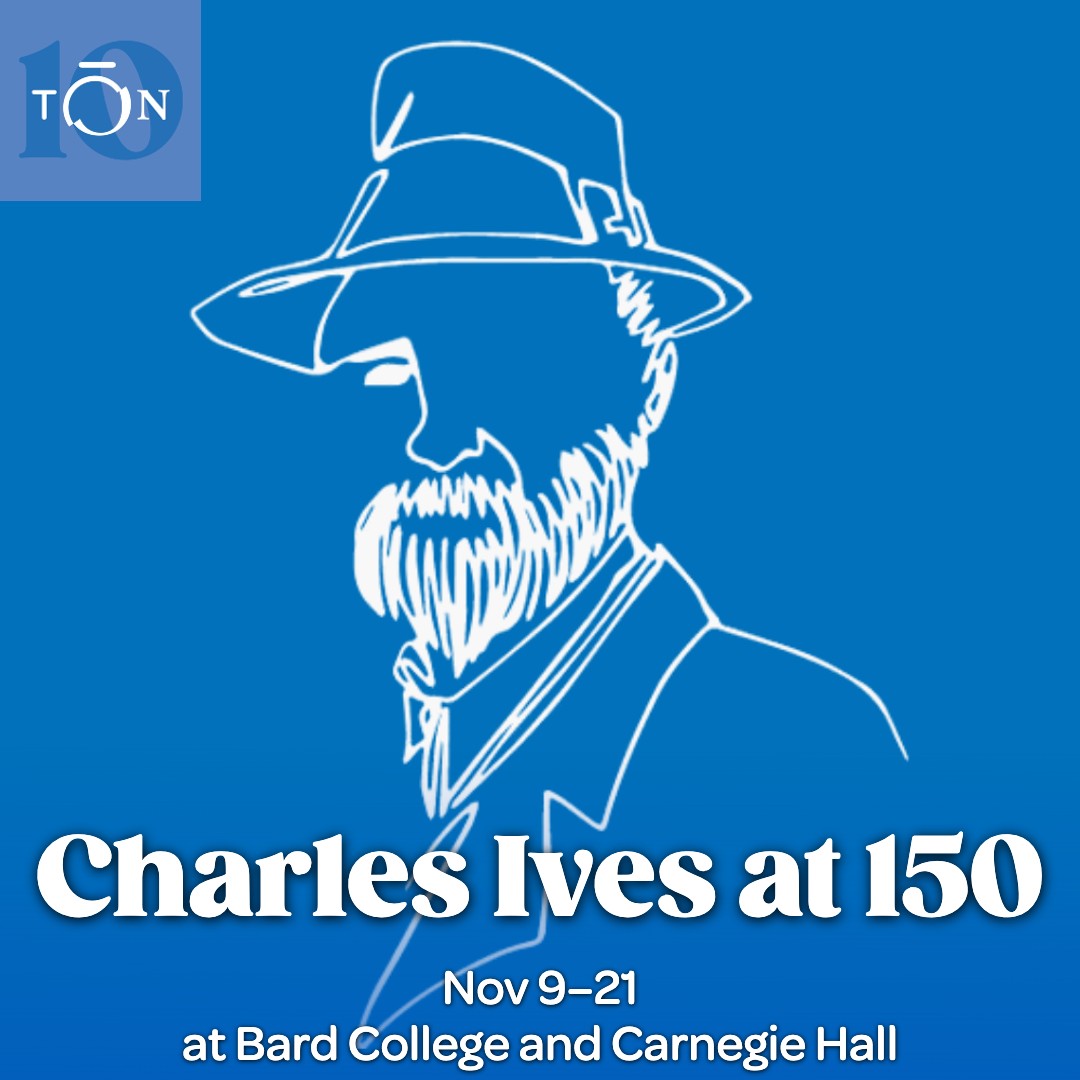
In the comments under my post of October 20 – Charles Ives’ 150th birthday anniversary – I was made to realize that in my 40 years of concertgoing I have never heard an Ives symphony live. How can this possibly be? It’s not like I wasn’t living in a good place, with the Philadelphia Orchestra and the New York Philharmonic at my disposal. But I missed the Ormandy days in Philly (his associate, William Smith, conducted Ives’ 2nd in 1983, the year before I moved there) and the cost and time investment to get to New York, with a pain-in-the-ass train transfer in Trenton, meant that trips in to “the City” were rare. (Bernstein programmed and recorded Ives’ 2nd at Avery Fisher Hall in 1988.)
So imagine my excitement when my friend, H. Paul Moon – the filmmaker with whom I’ve been working on a documentary about the cellist Leonard Rose – contacted me to let me know that Leon Botstein and The Orchestra Now (TŌN) would be bringing Ives’ 2nd as part of an all-Ives concert to be performed at Carnegie Hall tonight. His email began, “Small thing here, nothing special, and there’s always another time, but…”
My response was through-the-roof excitement.
It so happens, I did notice that TŌN was scheduled to perform the same program at Bard College last weekend – the college is also the base of the Bard Music Festival I so adore (next summer the focus will be on the Czech composer Bohuslav Martinu and his world) – but getting there on a good day is a three-hour drive, and I would have gone on a Sunday afternoon, which would have meant automatic end-of-weekend traffic on my return. So I was on the fence about it – they do so many good concerts up there (of course, many of them are livestreamed, but it’s not the same as being in the hall, at the Fisher Center at Bard) – but when I learned they would be bringing the show to Carnegie, I didn’t even have to think about it. I didn’t even look at my schedule. If I had anything else planned, I would change it. I’m in!
And what a program! “The Fourth of July.” “Central Park in the Dark.” The Orchestral Set No. 2. And THE SYMPHONY NO. 2!!! Pardon me for shouting, but this is quite simply not only one of my favorite American symphonies; it’s one of my favorite symphonies by anyone, anywhere, for all time.
Everyone knows Ives the iconoclast, the experimentalist, the cranky Yankee who smashed harmonies and rhythms together like a recalcitrant toddler with its toys in a playpen. But the Symphony No. 2 is different. It distills all of Ives’ musical experiences into one beguiling work that’s like a snapshot of a faded America, with its hymn tunes, parlor songs, and patriotic marches, recollected through a nostalgic, but no less vital for it, glow.
It also serves as a portrait of the artist as a young man, assimilating works by Bach, Beethoven, Brahms, Wagner, Dvořák, Bruckner, and others. So if you were ever curious to hear Beethoven’s 5th Symphony and Wagner’s “Tristan und Isolde” rub shoulders with “America the Beautiful,” “Camptown Races,” “Turkey in the Stray” and “Columbia, the Gem of the Ocean,” then this is the symphony for you. Truly, the more you know about music, the more you’ll be able to get out of it.
All that aside, the music is simply gorgeous, transporting, and exciting – of its time, and perhaps even now (though a lot of the allusions will likely be lost on many), quintessentially American. For me, this is a perfect Thanksgiving concert.
Before each piece, baritone William Sharp will sing some of the songs Ives references. There will be a pre-concert talk at 6:00, with the performance beginning at 7:00.
Of course, any time I’ve got a ticket to Carnegie Hall, it rains. I’d say there’s a good 90 percent chance of that happening, always. Well over a month, probably six or seven weeks, without rain in New Jersey, and now there’s rain in the forecast for today and tomorrow. Next time there’s a drought, just buy me a ticket to Carnegie Hall.
I’ll try to add a picture of the poster tonight.
For more information about the concert, look here:
Join me on “The Lost Chord” for Leopold Stokowski’s rarely-heard recording of Aram Khachaturian’s Symphony No. 2.
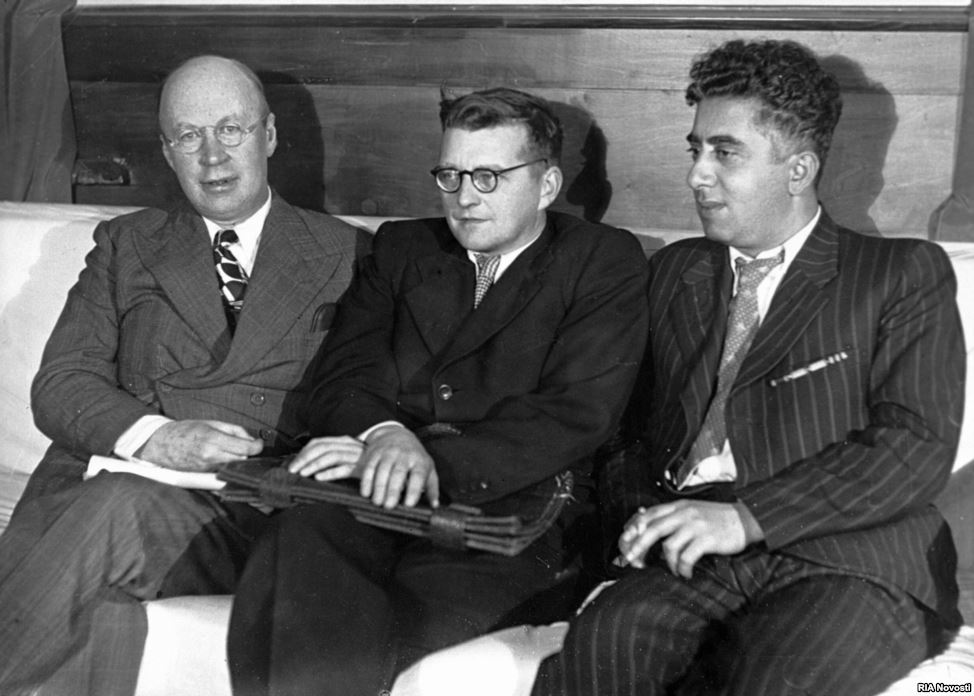
Khachaturian composed the work in 1943, the height of World War II, while holed up at a Composers Union retreat with Shostakovich, Prokofiev, Miaskovsky, and Glière. He described the piece as “a requiem of protest against war and violence.” Its nickname, “The Bell,” alludes to a kind of alarm that opens and closes the work. Overall, the tone is one of unshakable resolve in the face of tragedy.
Stokowski’s recording, long unavailable, was originally issued on United Artists Records in the late 1950s. It reappeared briefly on compact disc, on the EMI label, in 1994, and again in 2009, as part of a 10-disc box set of entrancing Stokowski performances.
Alas, the master tapes have not weathered the years well, so there are moments of distortion, but the power of the work under Stokowski’s direction transcends any technical limitations.
To round out the hour, we’ll hear Russian-born pianist Nadia Reisenberg in a selection from her 1947 Carnegie Hall recital, Khachaturian’s most famous piano piece, the “Toccata.” Reisenberg studied at Philadelphia’s Curtis Institute of Music under Josef Hoffman.
I hope you’ll join me for music by Khachaturian other than the “Sabre Dance.” That’s “Khach as Catch Can,” on “The Lost Chord,” now in syndication on KWAX, the radio station of the University of Oregon.
Clip and save the start times for all three of my recorded shows:
PICTURE PERFECT, the movie music show – Friday at 8:00 PM EST/5:00 PM PST
SWEETNESS AND LIGHT, the light music program – ALL NEW! – Saturday at 11:00 AM EST/8:00 AM PST
THE LOST CHORD, unusual and neglected rep – Saturday at 7:00 PM EST/4:00 PM PST