Tag: The Big Country

  • Big Country Jerome Moross Picture Perfect

    Big Country Jerome Moross Picture Perfect

    August starts BIG this week, on “Picture Perfect,” as we hit the sundrenched plains and wide-open spaces, with music from outsized movies set in the American West.

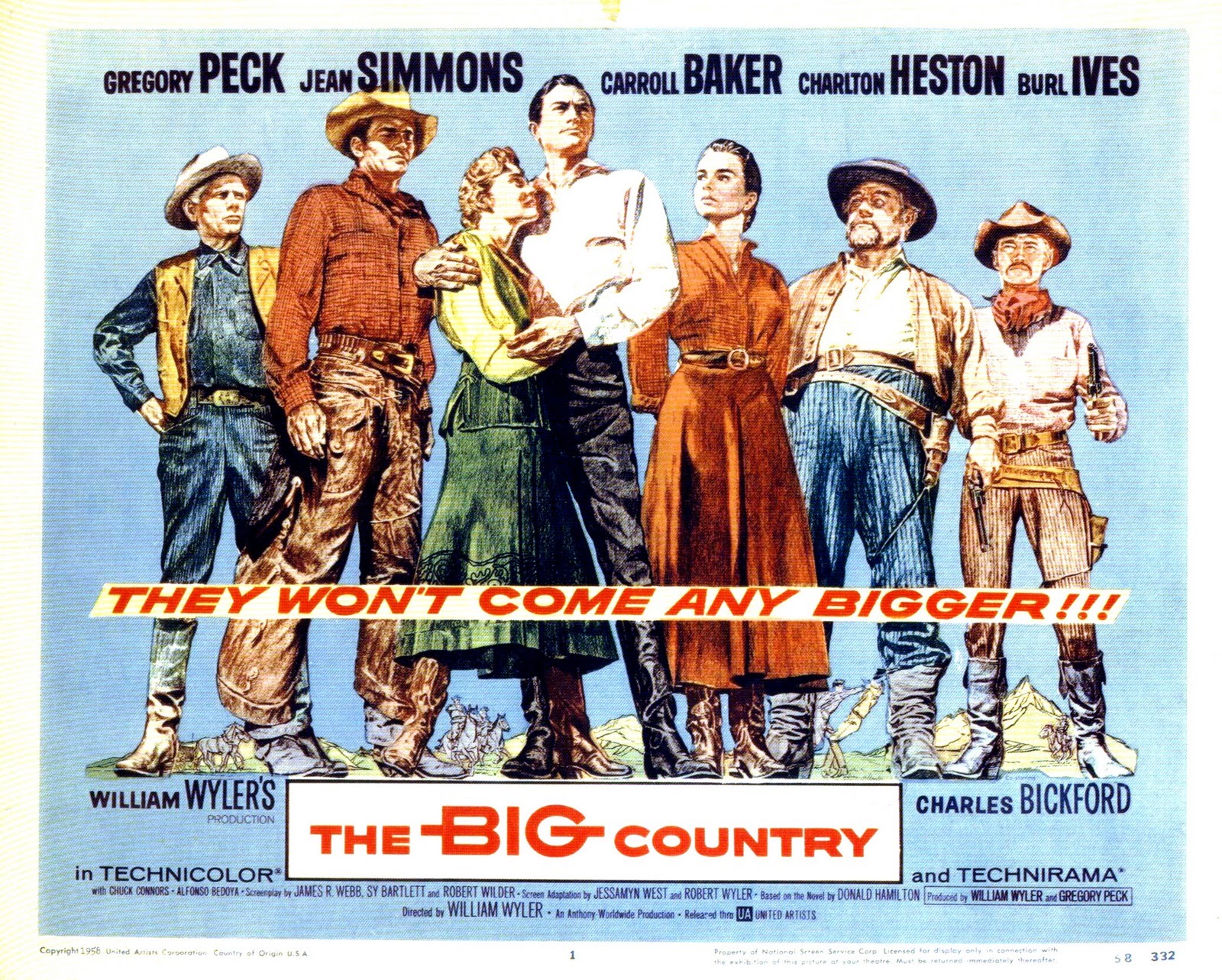
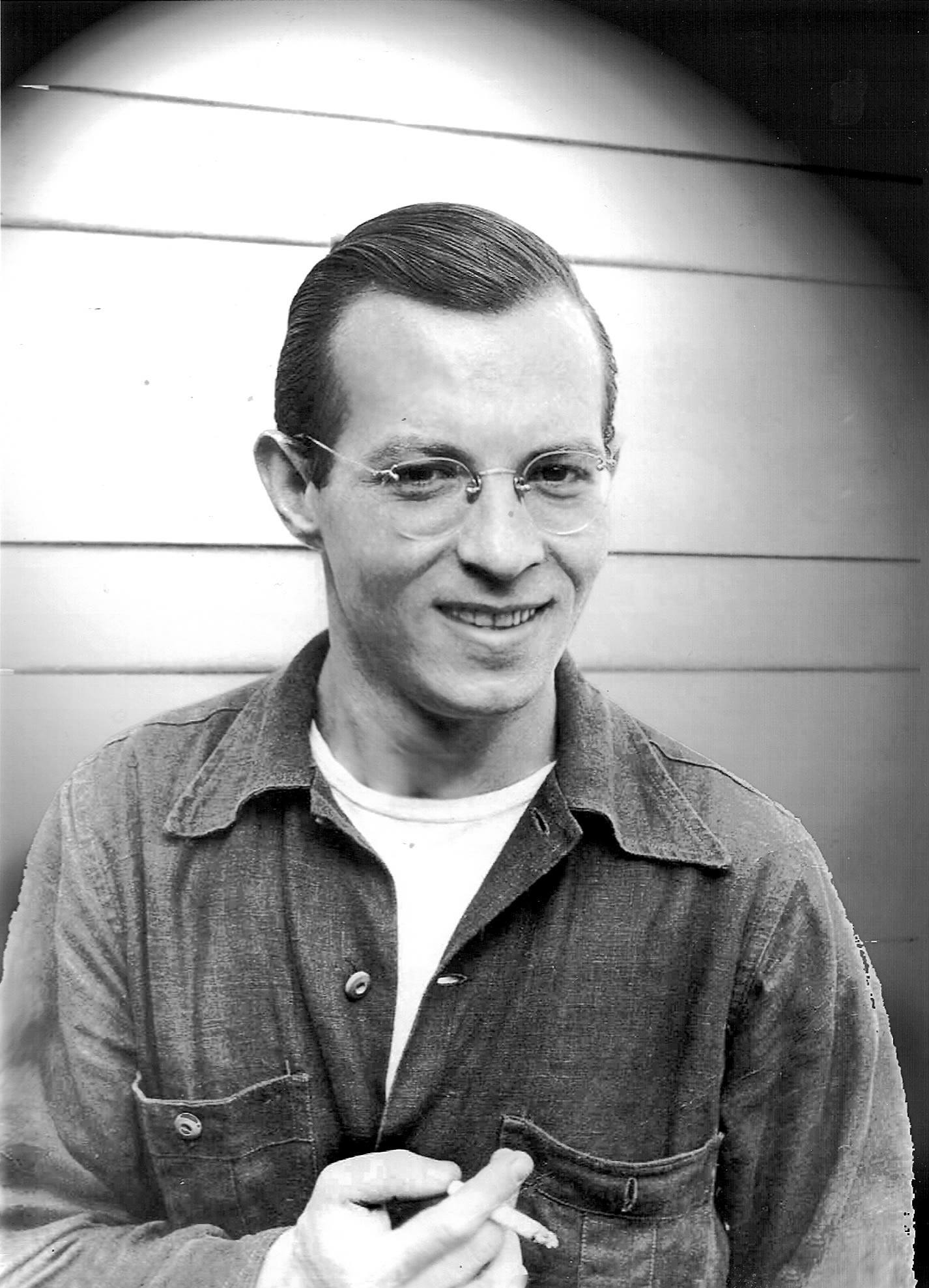
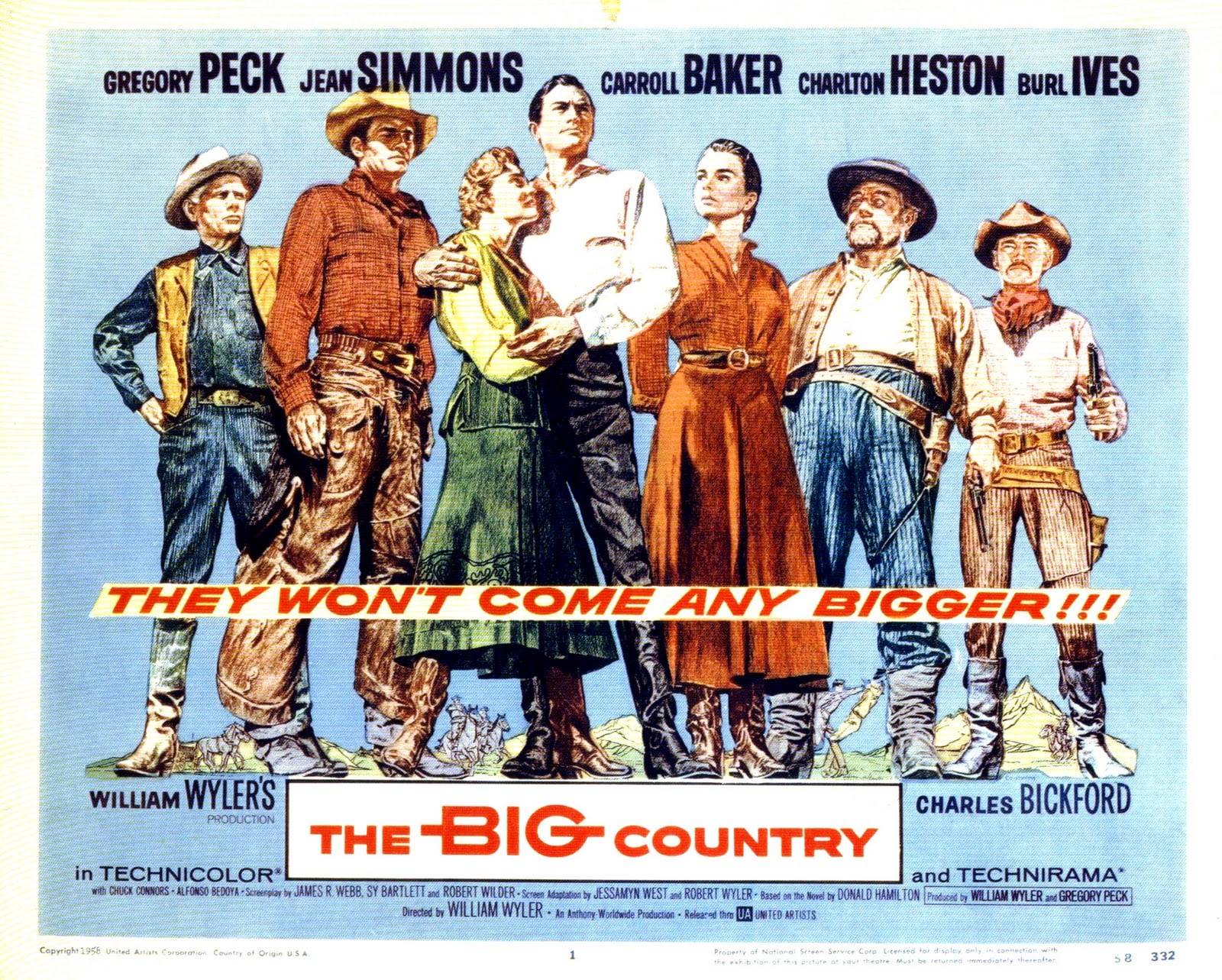
    On the birthday of Jerome Moross, we’ll begin with the composer’s most famous score, that for “The Big Country” (1958).

    Directed by William Wyler, the film’s cast includes Gregory Peck, Jean Simmons, Carroll Baker, Charlton Heston, Charles Bickford, Chuck Connors, and Burl Ives (who won an Oscar). Some big personalities! So it’s hardly surprising that not all the drama was limited to what we see on screen. The actors bristled against constant rewrites and Wyler’s ambiguous directing style. Some of them refused to talk about it, and a few of them refused to talk to each other. Ives, the exception, seemed to be above it all. He maintained he really enjoyed making the picture. In the end, Wyler had to delegate the film’s climax to his assistant, also the film’s editor, Robert Swink, as he had to leave for Rome to prepare for “Ben-Hur.”

    Fortunately, the entire technical crew was first-rate and brought its A-game. It’s a Hollywood miracle that all the pieces of “The Big Country” fit together as well as they do. It really says something that, alongside the awesome scenery, more than anything, it is the music that really solidified the film’s enduring popularity. Moross’ score is right up there, alongside Elmer Bernstein’s music for “The Magnificent Seven,” at the top of the genre.

    Though Moross was adept at writing music in many forms – including concert pieces (a symphony for Beecham), musical theater (the cult classic “The Golden Apple,” including the evergreen “Lazy Afternoon”), and opera (“Sorry, Wrong Number”) – unquestionably he is best known for his work in film. He spent much of his career ping-ponging back and forth between New York and Hollywood.

    When “Porgy and Bess” concluded its New York run in 1935, George Gershwin invited Moross to join the show, on tour, as a pianist. It was while on a bus trip to Los Angeles to participate in “Porgy’s” west coast premiere that the 23-year-old made a stop in Albuquerque.

    “[A]s we hit the Plains I got so excited,” Moross recollected. “. . . [T]he next day I got to the edge of town and then walked out onto the flat land with a marvelous feeling of being alone in the vastness, with the mountains cutting off the horizon. The whole thing was just too much for me . . . it was marvelous, and I just fell in love with it.”

    This communion with the American West stayed with him. It would be 23 years before he composed his big screen magnum opus. The vitality, invention, and lyricism of “The Big Country” was recognized with an Academy Award nomination. The “Western” sound would color Moross’ subsequent film and concert works, with the energetic syncopations of his native New York City bolstering an easy lyrical gift that could easily pass for genuine American folk music.

    Rounding out today’s program will be selections from “The Big Sky” (Dimitri Tiomkin), “Big Jake” (Elmer Bernstein), and “Silverado” (Bruce Broughton).

    It’s all BIG. Saddle up for music by Jerome Moross and friends on “Picture Perfect,” music for the movies, now in syndication on KWAX the radio station of the University of Oregon!


    Clip and save the start times for all three of my recorded shows:

    PICTURE PERFECT, the movie music show – Friday at 8:00 PM EDT/5:00 PM PDT

    SWEETNESS AND LIGHT, the light music program – Saturday at 11:00 AM EDT/8:00 AM PDT

    THE LOST CHORD, unusual and neglected rep – Saturday at 7:00 PM EDT/4:00 PM PDT

    Stream them, wherever you are, at the link!

    https://kwax.uoregon.edu/

  • Jerome Moross Hollywood’s Western Troubadour

    Jerome Moross Hollywood’s Western Troubadour

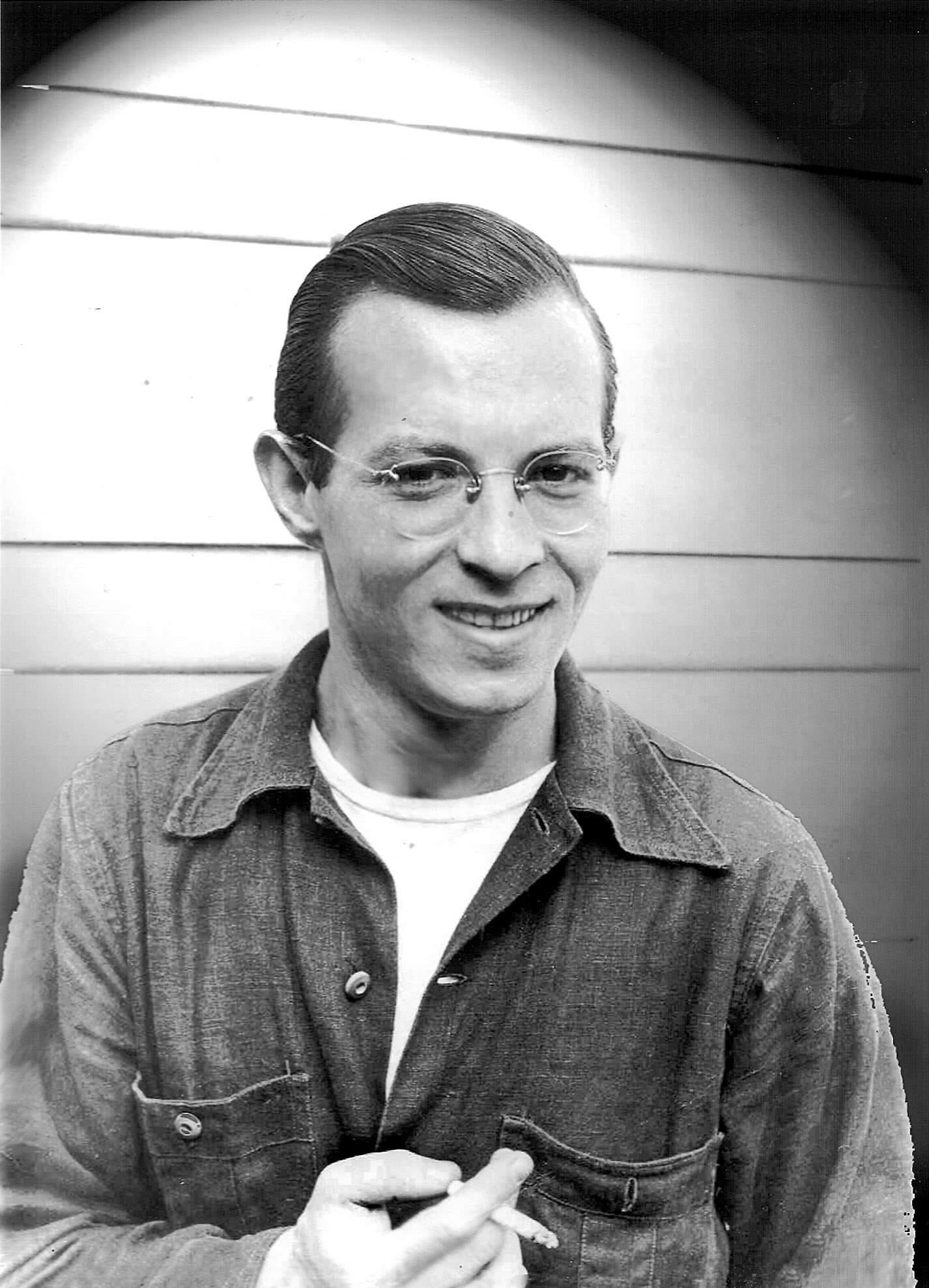
    “[A]s we hit the Plains I got so excited,” recollected Jerome Moross. It was 1936 and, at George Gershwin’s invitation, he was en route to Los Angeles to participate in the West Coast premiere of “Porgy and Bess.” When he stepped off the bus in Albuquerque, it changed him forever.

    “…I got to the edge of town and then walked out onto the flat land with a marvelous feeling of being alone in the vastness, with the mountains cutting off the horizon. The whole thing was just too much for me… it was marvelous, and I just fell in love with it.”

    Moross would recall this powerful communion with the American West decades later, when he came to write his best-known music, the Academy Award-nominated score for “The Big Country” (1958). Indeed, the “western sound” would color many of his future film and concert works, with the energetic syncopations of his native New York City supporting an easy lyrical gift that could easily pass for authentic American folk music.

    This week on “Picture Perfect,” we’ll saddle up for selections from four of Moross’ big screen westerns. The success of “The Big Country” put Moross much in demand as Hollywood’s troubadour of the great outdoors. The trail was still fresh when he was enlisted to score “The Proud Rebel” (1958). The film starred Alan Ladd, as a Civil War veteran with a troubled past, and the Olivia De Havilland, as the ranch owner who takes responsibility for him. Tensions mount as a corrupt landowner and his sons attempt to drive the woman off her ranch.

    While “The Proud Rebel” tapped into predictable western archetypes, “The Valley of Gwangi” (1969) exploded all expectations. A cross-genre western that might best be described as “Annie Get Your Gun” meets “King Kong,” the film’s premise hinges on the discovery by an enterprising band of cowboys of an Allosaurus in a lost valley in Mexico, which of course they press into service at their Wild West show. What could possibly go wrong? In a time before starships and superheroes dominated the cinematic landscape, “Gwangi” must have been very heady stuff for six-year-old boys everywhere.

    The project was conceived decades earlier by Willis O’Brien, the special effects legend who created Kong. But it was left to his protégé, the great Ray Harryhausen, to bring the film to fruition. The result, while never scaling the operatic heights of “Kong,” is a fascinating mélange, a movie that is part cowboy, part creature-runs-amok.

    For those of a certain age, one of Moross’ most recognizable melodies must surely be the theme to the television series “Wagon Train.” Somewhat awkwardly, that music was soon discovered to bear a striking resemblance to a secondary theme in “The Jayhawkers” (1959). Fortunately for Moross, competing studios were willing to look the other way. “The Jayhawkers,” which starred Jeff Chandler and Fess Parker, is set in the days of Bleeding Kansas.

    Join me for an hour in the open air with Jerome Moross. We’ll be borne west on music of great vitality, this week on “Picture Perfect,” music for the movies, now in syndication on KWAX, the radio station of the University of Oregon!


    Clip and save the start times for all three of my recorded shows:

    PICTURE PERFECT, the movie music show – Friday at 8:00 PM EDT/5:00 PM PDT

    SWEETNESS AND LIGHT, the light music program – ALL NEW! – Saturday at 11:00 AM EDT/8:00 AM PDT

    THE LOST CHORD, unusual and neglected rep – Saturday at 7:00 PM EDT/4:00 PM PDT

    Stream them, wherever you are, at the link!
    https://kwax.uoregon.edu/

  • Jerome Moross Frankie and Johnny Rediscovered

    Jerome Moross Frankie and Johnny Rediscovered

    Wow! Here’s a neat discovery. An actual performance of Jerome Moross’ ballet, “Frankie and Johnny.”

    You probably know the bluesy song, inspired by one or more sensational crimes of passion, in which a betrayed woman shoots her lover. (“He was her man, but he done her wrong.”) There are now so many variants that it’s taken on the quality of a folk song. Elvis sang it. Johnny Cash sang it. It’s been covered by innumerable jazz artists.

    Moross uses it as a kind of Greek chorus (sung by a trio Salvation Army sisters) in his brash and jazzy dance piece, which created a sensation at its premiere in 1938. The work predated Leonard Bernstein’s “Fancy Free” by six years and sent the censors into a moral panic.

    Though Moross was adept at writing music in many forms – including concert pieces (a symphony for Beecham), musical theater (the cult classic “The Golden Apple,” including the evergreen “Lazy Afternoon”), and opera (“Sorry, Wrong Number”) – he is best known for his classic film scores. He spent much of his career ping-ponging back and forth between New York and Hollywood.

    When “Porgy and Bess” concluded its New York run in 1935, George Gershwin invited Moross to join the show, on tour, as a pianist. It was while on a bus trip to Los Angeles to participate in “Porgy’s” west coast premiere that the 23 year-old made a stop in Albuquerque.

    “[A]s we hit the Plains I got so excited,” Moross recollected. “. . . [T]he next day I got to the edge of town and then walked out onto the flat land with a marvelous feeling of being alone in the vastness, with the mountains cutting off the horizon. The whole thing was just too much for me . . . it was marvelous, and I just fell in love with it.”

    The experience served him well. Moross drew on the memory of that trip in the writing of some of his most famous music, the Academy Award-nominated score for “The Big Country,” with its sense of wide-open excitement in the face of sweeping vistas. Western high-spirits and American jazz color most of Moross’ output.

    Happy birthday, Jerome Moross. You tackled everything with exuberance and vitality.


    One of the most thrilling credits sequences of all time?

    Surely one of the greatest film scores ever written

    Rare historic radio broadcast of the Symphony No. 1, with Moross himself at the piano

    “Lazy Afternoon” from “The Golden Apple,” sung by Kaye Ballard from the 1954 original cast recording

    Theme to “Wagon Train”

    Sonata in G major for Piano Duet and String Quartet

  • Moross’s Wild West Film Music

    Moross’s Wild West Film Music

    “[A]s we hit the Plains I got so excited,” recollected composer and pianist Jerome Moross. It was 1936 and, at George Gershwin’s invitation, he was en route to Los Angeles to participate in the West Coast premiere of “Porgy Bess.” When he stepped off the bus in Albuquerque, it changed him forever. “…I got to the edge of town and then walked out onto the flat land with a marvelous feeling of being alone in the vastness, with the mountains cutting off the horizon. The whole thing was just too much for me… it was marvelous, and I just fell in love with it.”

    He would recall this powerful communion with the American West decades later when he came to write his best-known music, the Academy Award-nominated score for “The Big Country” (1958). Indeed, the “western” sound would color many of his future film and concert works, with the energetic syncopations of his native New York City supporting an easy lyrical gift that could easily pass for genuine American folk music.

    This week on “Picture Perfect,” we’ll saddle up for selections from four of Moross’ big screen westerns. The success of “The Big Country” put Moross much in demand as Hollywood’s troubadour of the great outdoors. The trail was still fresh when he was enlisted for “The Proud Rebel” (1958). The film starred Alan Ladd, as a Civil War veteran with a troubled past, and the late Olivia De Havilland, as the ranch owner who takes responsibility for him. Tensions mount as a corrupt landowner and his sons attempt to drive the woman off her ranch.

    While “The Proud Rebel” tapped into predictable western archetypes, “The Valley of Gwangi” (1969) exploded all expectations. A cross-genre western that might best be described as “Annie Get Your Gun” meets “King Kong,” the film’s premise hinges on the discovery by an enterprising band of cowboys of an Allosaurus in a lost valley in Mexico, which of course they press into service at their Wild West show. What could possibly go wrong? In a time before starships and superheroes dominated the cinematic landscape, “Gwangi” must have been very heady stuff for six-year old boys everywhere.

    The project was conceived decades earlier by Willis O’Brien, the special effects legend who created Kong. But it was left to his protégé, the great Ray Harryhausen, to bring the film to fruition. The result, while never scaling the operatic heights of “Kong,” is a fascinating mélange, a movie that is part cowboy, part creature-runs-amok.

    For those of a certain age, one of Moross’ most recognizable melodies must surely be the theme to the television series “Wagon Train.” Unfortunately, that music was soon discovered to bear a striking resemblance to a secondary theme in “The Jayhawkers” (1959). Fortunately for Moross, competing studios were willing to look the other way. “The Jayhawkers,” which starred Jeff Chandler and Fess Parker, is set in the days of Bleeding Kansas.

    We are borne west on music of great vitality. Breathe the open air with Jerome Moross, on “Picture Perfect,” music for the movies, this Friday evening at 6:00 EDT, on WWFM – The Classical Network and wwfm.org.

  • Jerome Moross Big Country and Beyond

    Jerome Moross Big Country and Beyond

    It’s a big country.

    When “Porgy and Bess” concluded its New York run in 1935, George Gershwin invited Jerome Moross to join the show, on tour, as a pianist. It was while on a bus trip to Los Angeles to participate in “Porgy’s” west coast premiere that the 23 year-old made a stop in Albuquerque.

    “[A]s we hit the Plains I got so excited,” Moross recollected. “. . .[T]he next day I got to the edge of town and then walked out onto the flat land with a marvelous feeling of being alone in the vastness, with the mountains cutting off the horizon. The whole thing was just too much for me . . . it was marvelous, and I just fell in love with it.”

    The experience served him well, as some of his most famous music, the Academy Award-nominated score for “The Big Country,” enshrines that sense of wide-open excitement in the face of sweeping vistas. Western high-spirits and American jazz color most of Moross’ output, whether for the silver screen, musical theater, or concert hall.

    At home in all forms, Moross composed concert music (including a symphony for Beecham), ballet (“Frankie and Johnny,” with female vocal trio), musical theater (the cult classic “The Golden Apple,” including the evergreen “Lazy Afternoon”), opera (“Sorry, Wrong Number”), and of course classic film scores (his magnum opus, “The Big Country”).

    Happy birthday, Jerome Moross. You tackled everything with exuberance and vitality.


    “The Big Country” (with a young John Williams in the orchestra, on piano):

    “Lazy Afternoon,” sung by Kaye Ballard from the 1954 original cast recording:

    The Sonata in G major for Piano Duet and String Quartet:

Tag Cloud

Aaron Copland (92) Beethoven (95) Composer (114) Film Music (120) Film Score (143) Film Scores (255) Halloween (94) John Williams (185) KWAX (229) Leonard Bernstein (100) Marlboro Music Festival (125) Movie Music (135) Opera (198) Philadelphia Orchestra (88) Picture Perfect (174) Princeton Symphony Orchestra (106) Radio (87) Ralph Vaughan Williams (85) Ross Amico (244) Roy's Tie-Dye Sci-Fi Corner (290) The Classical Network (101) The Lost Chord (268) Vaughan Williams (103) WPRB (396) WWFM (881)

DON’T MISS A BEAT

Receive a weekly digest every Sunday at noon by signing up here


RECENT POSTS