Tag: The Lark Ascending

  • Vaughan Williams Livestream from Bard College

    Vaughan Williams Livestream from Bard College

    Adore the music of Ralph Vaughan Williams but can’t make it to this year’s Bard Music Festival? Some of the concerts will be made available via livestream. The lark ascends at Bard College in Annandale-on-Hudson, NY, August 4 -13. If you’re trapped in the Antarctic, watch online for a modest fee.

    Please note the concerts can be viewed in real-time only, and not on demand. So reserve your tickets, and don’t be late!

    https://fishercenter.bard.edu/whats-on/programs/upstreaming/


    FRIDAY, AUGUST 4, at 7 PM
    PROGRAM ONE – VAUGHAN WILLIAMS: BECOMING AN ENGLISH COMPOSER

    Down Ampney (Come Down, O Love Divine) from “The English Hymnal” (1906)

    Quintet for piano and strings in C minor (1903)

    Fantasia on a Theme of Thomas Tallis (1910)

    Concerto in D minor for violin and strings (1925)

    Serenade to Music (1938)

    O taste and see (1953)

    Songs

    Selections from “Five English Folk Songs” (1913)

    Old Hundredth Psalm Tune (1953)

    Horszowski Trio and guests; William Ferguson, tenor; Theo Hoffman, baritone; Renée Anne Louprette, organ; Grace Park, violin; Sun-Ly Pierce, mezzo-soprano; Brandie Sutton, soprano; Bard Festival Chorale, James Bagwell, music director; The Orchestra Now (TŌN) conducted by Leon Botstein, music director


    SATURDAY, AUGUST 5, at 8 PM
    PROGRAM THREE: THE SYMPHONY AND COMPOSING FOR THE STAGE

    Job, A Masque for Dancing (1930)

    Concerto in C, for two pianos and orchestra (1931, rev. 1947)

    Symphony No. 4 in F Minor (1934)

    Danny Driver & Piers Lane, pianos; The Orchestra Now (TŌN) conducted by Leon Botstein


    SUNDAY, AUGUST 6 at 5 PM
    PROGRAM SIX: LONDON CALLING! FUN IN COCKAIGNE!

    A celebration of Music Hall and pop traditions from Gilbert and Sullivan to the Beatles, including works by Arthur Sullivan (1842–1900), Roger Quilter (1877–1953), Percy Grainger (1882–1961), Gerald Tyrwhitt-Wilson, Lord Berners (1883–1950), Eric Coates (1886–1957), Ivor Novello (1893–1951), Noël Coward (1899–1973), Arthur Benjamin (1893–1960), and others, with selections from Vaughan Williams’ “The Poisoned Kiss” (1927–29; rev.)

    Martin Luther Clark, tenor; Theo Hoffman, baritone; Sun-Ly Pierce, mezzo-soprano; Ann Toomey, soprano; Bard Festival Ensemble; and others


    FRIDAY, AUGUST 11, at 8 PM
    PROGRAM SEVEN – THE LARK ASCENDING: BRITISH MUSIC FOR SMALL ORCHESTRA

    Ralph Vaughan Williams (1872–1958)
    Five Variants of “Dives and Lazarus” (1939)

    Edward Elgar (1858–1934)
    Serenade for Strings, Op. 20 (1896)

    Ralph Vaughan Williams (1872–1958)
    Flos Campi (1925)

    Grace Williams (1906–77)
    Elegy for String Orchestra (1936, rev. 1940)

    Ralph Vaughan Williams (1872–1958)
    The Lark Ascending (1914, orch. 1921)

    Peter Warlock (1894–1930)
    Capriol Suite (1926)

    Frederick Delius (1862–1934)
    Two Aquarelles (1932)

    Gustav Holst (1874–1934)
    St. Paul’s Suite, Op. 29, No.2 (1913)

    Luosha Fang, viola; Bella Hristova, violin; members of the Bard Festival Chorale, James Bagwell, choral director; The Orchestra Now (TŌN) conducted by James Bagwell and Zachary Schwartzman


    SATURDAY, AUGUST 12, AT 8 PM
    PROGRAM NINE: A NEW ELIZABETHAN AGE

    Elizabeth Maconchy (1907–94)
    Proud Thames, coronation overture (1953)

    William Walton (1902–83)
    Partita for Orchestra (1957–58)

    Ralph Vaughan Williams (1872–1958)
    Symphony No. 8 in D Minor (1955)

    Jean Sibelius (1865–1957)
    Andante Festivo (1922/1938)

    Ralph Vaughan Williams (1872–1958)
    “Sinfonia Antartica” (Symphony No. 7) (1952)

    Brandie Sutton, soprano; members of the Bard Festival Chorale, James Bagwell, choral director; American Symphony Orchestra conducted by Leon Botstein, music director


    SUNDAY, AUGUST 13, at 3 PM
    PROGRAM ELEVEN – VAUGHAN WILLIAMS AND SHAKESPEARE

    “Sir John in Love” (1928), after Shakespeare’s “The Merry Wives of Windsor”

    Bard Festival Chorale, James Bagwell, choral director; American Symphony Orchestra conducted by Leon Botstein

    In order of vocal appearance:

    William Ferguson, tenor, as Robert Shallow
    Theo Hoffman, baritone, as Sir Hugh Evans
    Martin Luther Clark, tenor, as Master Slender
    Maximillian Jansen VAP ’21, tenor, as Peter Simple
    Troy Cook, baritone, as Page
    Craig Colclough, bass-baritone, as Sir John Falstaff
    Julius Ahn, tenor, as Bardolph
    Tyler Duncan, baritone, as Corporal Nym
    Kevin Thompson, bass, as Pistol
    Brandie Sutton, soprano, as Anne Page
    Ann Toomey, soprano, as Mrs. Page
    Sarah Saturnino, mezzo-soprano, as Mrs. Ford
    Joshua Blue, tenor, as Fenton
    John Brancy, baritone, as Dr. Caius
    Justin Hopkins, bass-baritone, as Rugby
    Lucy Schaufer, mezzo-soprano, as Mrs. Quickly
    Lucia Lucas, baritone, as Host of the Garter Inn
    William Socolof, bass-baritone, as Ford


    Pre-concert talks will be offered before some of the events. It’s unclear whether or not these will be included as part of the livestreams. It might be worthwhile to check-in a little early.

    Fisher Center at Bard

  • Vaughan Williams’ Lark Ascending Celebrates 100 Years

    Vaughan Williams’ Lark Ascending Celebrates 100 Years

    Vaughan Williams’ “Lark” first ascended 100 years ago today.

    Written in 1914, it was first performed on this date in 1920, albeit in a version for violin and piano, in the unassuming venue of Shirehampton Public Hall in Bristol. Marie Hall was the esteemed violinist. The pianist was Geoffrey Mendham. Hall – who made the first recording of the Elgar Violin Concerto, with the composer as conductor – was also the soloist at the premiere of the orchestral version, which received greater notice, when it was unveiled at the Queen’s Hall, London, on June 14, 1921. The British Symphony Orchestra was conducted on that occasion by Adrian Boult.

    The score, which bears an inscription from a poem of George Meredith, is the quintessence of the composer’s elegiac pastoralism. Thanks in part to frequent radio airplay, the music’s popularity increases annually, with “The Lark Ascending” consistently ranked among top listener favorites. At the same time, it has been embraced by more and more violinists.

    The composer described his leisurely, contemplative, frankly gorgeous violin rhapsody as “a romance.” It now soars as some of his best-known music.

    Hark, hark, the Lark.

    He rises and begins to round,
    He drops the silver chain of sound,
    Of many links without a break,
    In chirrup, whistle, slur and shake.

    For singing till his heaven fills,
    ‘Tis love of earth that he instils,
    And ever winging up and up,
    Our valley is his golden cup
    And he the wine which overflows
    to lift us with him as he goes.

    Till lost on his aerial rings
    In light, and then the fancy sings.

  • Ralph Vaughan Williams: A Birthday Salute

    Ralph Vaughan Williams: A Birthday Salute

    Though he was affectionately known as “Uncle Ralph,” there was more to the man and his music than is suggested by his unpressed, avuncular persona. Ralph Vaughan Williams, more than anyone, elevated the music of the English countryside to high art. He reexamined the past, as he pushed to the future; he peered inward, even as he expressed the universal. Traditionalist and revolutionary, romantic and modernist – his was a remarkable career, and his body of work was more diverse than many realize from the countless performances of “The Lark Ascending” and the “Fantasia on a Theme by Thomas Tallis” for which he is best known.

    This Thursday morning on WPRB, we’ll attempt to convey the full genius of Ralph Vaughan Williams, with an assortment of his recordings from all across the spectrum. We’ll hear his bleakest symphony (conducted by Boult in 1954), as well as his most hopeful (conducted by Barbirolli in 1944). We’ll hear an orchestral fantasy from one of his least-known operas, and the final act of another, which became the basis for one of his most beloved works. We’ll hear rare gems issued by major labels, such as EMI and London/Decca, in their glory days, as well as hard-working independents that specialize in English music, such as Dutton Vocalion Records and Albion Records, the record label of the Ralph Vaughan Williams Society. We’ll hear a recording made by David Munrow, unheard since its release on LP in 1977. We’ll hear works inspired by Spenser and Shakespeare and Aristophanes. Sir David Willcocks will conduct one of RVW’s substantial choral works, and the composer himself with lead a rollicking performance of one of his most hilarious overtures.

    These are some of the attractions you can expect, as we salute Ralph Vaughan Williams on his birthday. I hope you’ll join me this Thursday morning from 6 to 11 EDT on WPRB 103.3 FM and wprb.com. We’ll do our best to keep the cat hairs out of the cake, on Classic Ross Amico.


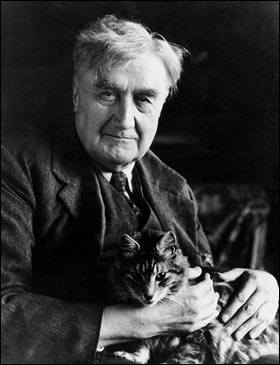
    PHOTO: Vaughan Williams engaged in a shedding contest with his friend, Foxy

Tag Cloud

Aaron Copland (92) Beethoven (95) Composer (114) Film Music (120) Film Score (143) Film Scores (255) Halloween (94) John Williams (185) KWAX (229) Leonard Bernstein (100) Marlboro Music Festival (125) Movie Music (135) Opera (198) Philadelphia Orchestra (88) Picture Perfect (174) Princeton Symphony Orchestra (106) Radio (87) Ralph Vaughan Williams (85) Ross Amico (244) Roy's Tie-Dye Sci-Fi Corner (290) The Classical Network (101) The Lost Chord (268) Vaughan Williams (103) WPRB (396) WWFM (881)

DON’T MISS A BEAT

Receive a weekly digest every Sunday at noon by signing up here


RECENT POSTS