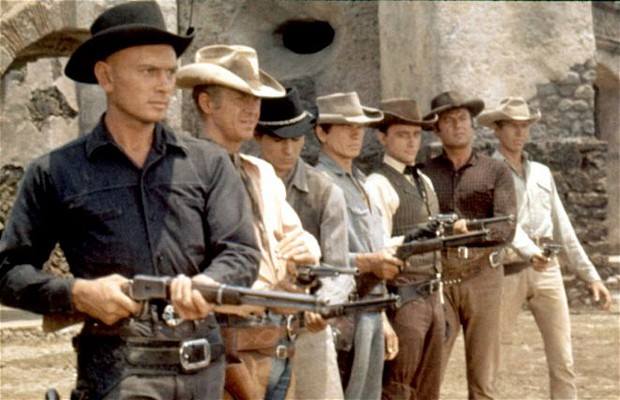
Tag: The Magnificent Seven

  • Elmer Bernstein’s Magnificent Western Film Scores

    Elmer Bernstein’s Magnificent Western Film Scores

    Elmer Bernstein scored films in just about every genre – from “The Man with the Golden Arm” (1955) to “The Ten Commandments” (1956) to “To Kill a Mockingbird” (1962) to “The Great Escape” (1963) to “Animal House” (1978) to “The Age of Innocence” (1993) to his final project, the Oscar-nominated “Far from Heaven” (2002) – but he had a particular knack for the western.

    His swaggering theme for “The Magnificent Seven” (1960) is just about synonymous with most people’s idea of western adventure. (It also sold a heck of a lot of cigarettes when it was licensed by Marlboro.)

    Not surprisingly, “The Magnificent Seven” put Bernstein much in demand as a western composer, and he wrote scores for many, including most of the films of John Wayne’s final decade. What’s striking is just how much he was able to vary them. His work for “The Comancheros” (1961) is very different from that for “True Grit” (1969), for instance, and “The Shootist” (1976), Wayne’s final film, is different still.

    You’ll be able to sample some of them, when we saddle up for seven magnificent western scores of Elmer Bernstein, for the composer’s birthday, on “Picture Perfect” – music for the movies – now in syndication on KWAX, the radio station of the University of Oregon!


    Clip and save the start times for all three of my recorded shows:

    PICTURE PERFECT, the movie music show – Friday at 8:00 PM EDT/5:00 PM PDT

    SWEETNESS AND LIGHT, the light music program – Saturday at 11:00 AM EDT/8:00 AM PDT

    THE LOST CHORD, unusual and neglected rep – Saturday at 7:00 PM EDT/4:00 PM PDT

    Stream them, wherever you are, at the link!
    https://kwax.uoregon.edu/

  • Elmer Bernstein A Centennial Celebration

    Elmer Bernstein A Centennial Celebration

    April 4 would have been the 100th birthday of Elmer Bernstein. Over a career that spanned some 50 years, Bernstein scored dozens of film and television projects, many of them now classics.

    This week on “Picture Perfect,” sample his versatility with selections from just a few of them, including “The Magnificent Seven” (1960), “The Age of Innocence” (1993), “Stripes” (1981), and “To Kill a Mockingbird” (1962).

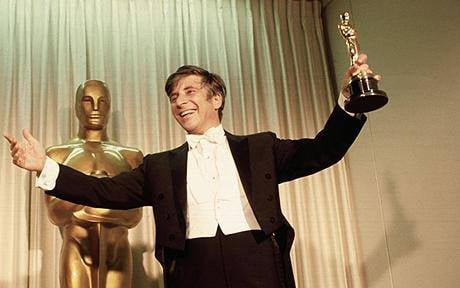
    In all, Bernstein was nominated for 14 Academy Awards, but claimed the Oscar only once, fairly early on, for his work on “Thoroughly Modern Millie” (1967), of all things. His final nomination was for his very last score, for “Far from Heaven” (2002). Bernstein died on August 18, 2004 at the age of 82.

    Elmer will have you glued to the radio, on “Picture Perfect,” music for the movies, this Saturday evening at 6:00 EDT, on WWFM – The Classical Network and wwfm.org.

    PLEASE NOTE: If you were hoping to hear some of Bernstein’s music for “The Ten Commandments” (1956), tune in next week, as we anticipate Passover with selections from Biblical epics from the Old Testament!

  • Elmer Bernstein A Cinematic Promised Land

    Elmer Bernstein A Cinematic Promised Land

    With Passover only days away, simply remembering Elmer Bernstein leads me back through a wilderness of mediocrity that today passes for film music, to a Promised Land of cinematic milk and honey.

    Over the course of an enviable career that spanned some 50 years, Bernstein composed music for dozens of movies, many of them still much-beloved, including “The Ten Commandments” (1956), “The Magnificent Seven” (1960), “To Kill a Mockingbird” (1962), and “The Great Escape” (1963).

    In addition, he was one of the first film composers to incorporate jazz elements into his work for dramatic purposes, in movies like “The Man with the Golden Arm” (1955), “Sweet Smell of Success” (1957), and “Walk on the Wild Side” (1962).

    Coming out of the Swinging Sixties, when the industry clearly favored a more “popular” sound over purely orchestral scores (until John Williams changed everything), Bernstein kept right on working. Thanks to a generation of younger filmmakers who had grown up on his classics, he never lacked for opportunities. Suddenly he found himself much in demand as a comedy composer, providing the underscores for “Animal House” (1978), “The Blues Brothers” (1980), “Airplane!” (1980), “Stripes” (1981), and “Ghostbusters” (1984).

    For Martin Scorsese, he composed music for “The Age of Innocence” (1993), “Bringing Out the Dead” (1999), and “The Gangs of New York” (2002), though his score for the latter was ultimately rejected. He also adapted Bernard Herrmann’s music for Scorsese’s remake of “Cape Fear” (1991).

    Oh yeah, along the way, he also composed the iconic National Geographic theme – clearly by the same man who wrote “The Magnificent Seven.”

    In all, Bernstein was nominated for 14 Academy Awards, but claimed the Oscar only once, fairly early on, for his work on “Thoroughly Modern Millie” (1967), of all things. His final nomination was for his very last score, for “Far from Heaven” (2002). Elmer Bernstein died on August 18, 2004 at the age of 82.

    Here’s a suite from one of his best-loved scores.

    Happy birthday, Elmer Bernstein.

  • Elmer Bernstein a Hollywood Legend

    Elmer Bernstein a Hollywood Legend

    Over the course of an enviable career that spanned some 50 years, Elmer Bernstein composed music for dozens of movies, many of them still much-beloved, including “The Ten Commandments” (1956), “The Magnificent Seven” (1960), “To Kill a Mockingbird” (1962), and “The Great Escape” (1963).

    In addition, he was one of the first film composers to incorporate jazz elements into his work for dramatic purposes, in movies like “The Man with the Golden Arm” (1955), “Sweet Smell of Success” (1957), and “Walk on the Wild Side” (1962).

    Coming out of the Swinging Sixties, when the industry clearly favored a more “popular” sound over purely orchestral scores (until John Williams changed everything), Bernstein kept right on working. Thanks to a generation of younger filmmakers who had grown up on his classics, he never lacked for opportunities. Suddenly he found himself much in demand as a comedy composer, providing the underscores for “Animal House” (1978), “The Blues Brothers” (1980), “Airplane!” (1980), “Stripes” (1981), and “Ghostbusters” (1984).

    For Martin Scorsese, he composed music for “The Age of Innocence” (1993), “Bringing Out the Dead” (1999), and “The Gangs of New York” (2002), though his score for the latter was ultimately rejected. He also adapted Bernard Herrmann’s music for Scorsese’s remake of “Cape Fear” (1991).

    Oh yeah, along the way, he also composed the iconic National Geographic theme – clearly by the same man who wrote “The Magnificent Seven.”

    In all, Bernstein was nominated for 14 Academy Awards, but claimed the Oscar only once, fairly early on, for his work on “Thoroughly Modern Millie” (1967), of all things. His final nomination was for his very last score, for “Far from Heaven” (2002). Elmer Bernstein died on August 18, 2004 at the age of 82.

    No relation to Leonard Bernstein (or “Bern-STINE”), Elmer pronounced his name “Bern-STEEN.” The two were sometimes further differentiated as “East Coast Bernstein” and “West Coast Bernstein.”

    In the year 2000, Elmer Bernstein composed a guitar concerto and expressed regret that he hadn’t contributed more to the concert hall. At least it was good one. David Hurwitz of classicstoday.com describes it as “incontestably the finest piece ever composed for this combination” (i.e. guitar and orchestra), going so far as to hold it up to Joaquin Rodrigo’s “Concierto de Aranjuez.” I don’t know if I’d take it that far, but it is pretty damn good.

    https://www.youtube.com/watch?v=eOxXLDdWZF8&list=PLjRpv3cr2epHnVUvbZhp8v0de0pXaOjkY

    Happy birthday, Elmer Bernstein. You are very much missed!

  • Elmer Bernstein’s Western Film Score Legacy

    Elmer Bernstein’s Western Film Score Legacy

    Elmer Bernstein scored films in just about every genre – from “The Man with the Golden Arm” (1955) to “The Ten Commandments” (1956) to “To Kill a Mockingbird” (1962) to “The Great Escape” (1963) to “Animal House” (1978) to “The Age of Innocence” (1993) to his final project, the Oscar-nominated “Far from Heaven” (2002) – but he had a particular knack for the western.

    His swaggering theme for “The Magnificent Seven” (1960) is just about synonymous with most people’s idea of western adventure. (It also sold a heck of a lot of cigarettes when it was licensed by Marlboro.)

    Not surprisingly, “The Magnificent Seven” put Bernstein much in demand as a western composer, and he wrote scores for many, including most of the films of John Wayne’s final decade. What’s striking is just how much he was able to vary them. His work for “The Comancheros” (1961) is very different from that for “True Grit” (1969), for instance, and “The Shootist” (1976), Wayne’s final film, is different still.

    You’ll be able to sample some of them, when we saddle up for western scores of Elmer Bernstein, on “Picture Perfect” – music for the movies – this Friday evening at 6 ET, with a repeat Saturday morning at 6; or listen to them later on the webcast at wwfm.org.

Tag Cloud

Aaron Copland (92) Beethoven (95) Composer (114) Film Music (120) Film Score (143) Film Scores (255) Halloween (94) John Williams (185) KWAX (229) Leonard Bernstein (100) Marlboro Music Festival (125) Movie Music (135) Opera (198) Philadelphia Orchestra (88) Picture Perfect (174) Princeton Symphony Orchestra (106) Radio (87) Ralph Vaughan Williams (85) Ross Amico (244) Roy's Tie-Dye Sci-Fi Corner (290) The Classical Network (101) The Lost Chord (268) Vaughan Williams (103) WPRB (396) WWFM (881)

DON’T MISS A BEAT

Receive a weekly digest every Sunday at noon by signing up here


RECENT POSTS