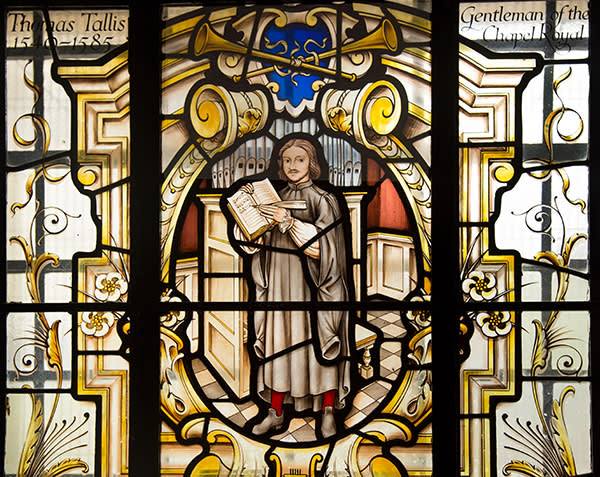
It was on this date, 450 years ago, that Queen Elizabeth I granted license to Thomas Tallis and William Byrd for the exclusive printing of music and ruled music paper in England for 21 years. Naturally, the composers were quick to dedicate their “Cantiones que ab argumento sacrae vocantur,” a collection of 34 Latin motets and one of the first sets of sacred music printed in England, to the queen. Among the motets is Tallis’ “O Nata Lux.” Unfortunately, the volume proved to be a financial flop, and the composers were forced to petition the queen for aid. She responded by granting the leases to certain lands for the period of their musical monopoly.
Interestingly, in an era when different sects within one’s own religion were often regarded with suspicion and subject to discrimination, criminalization, violence, and even death (composer Peter Phillips, a Roman Catholic priest, fled to mainland Europe to escape persecution in England, and was imprisoned by the Dutch authorities, for allegedly plotting the assassination of Elizabeth), the queen, who was Protestant, looked past the fact that both Byrd and Tallis were Catholic.
Tallis, who was clearly either an extremely likeable fellow or a savvy political animal (perhaps both), managed to survive and even thrive, since 1542, as Gentleman of the Chapel Royal, an office for which he composed and performed for Henry VIII, Edward VI, Mary I, and Elizabeth I. Somehow, he always managed to steer clear of religious controversy.
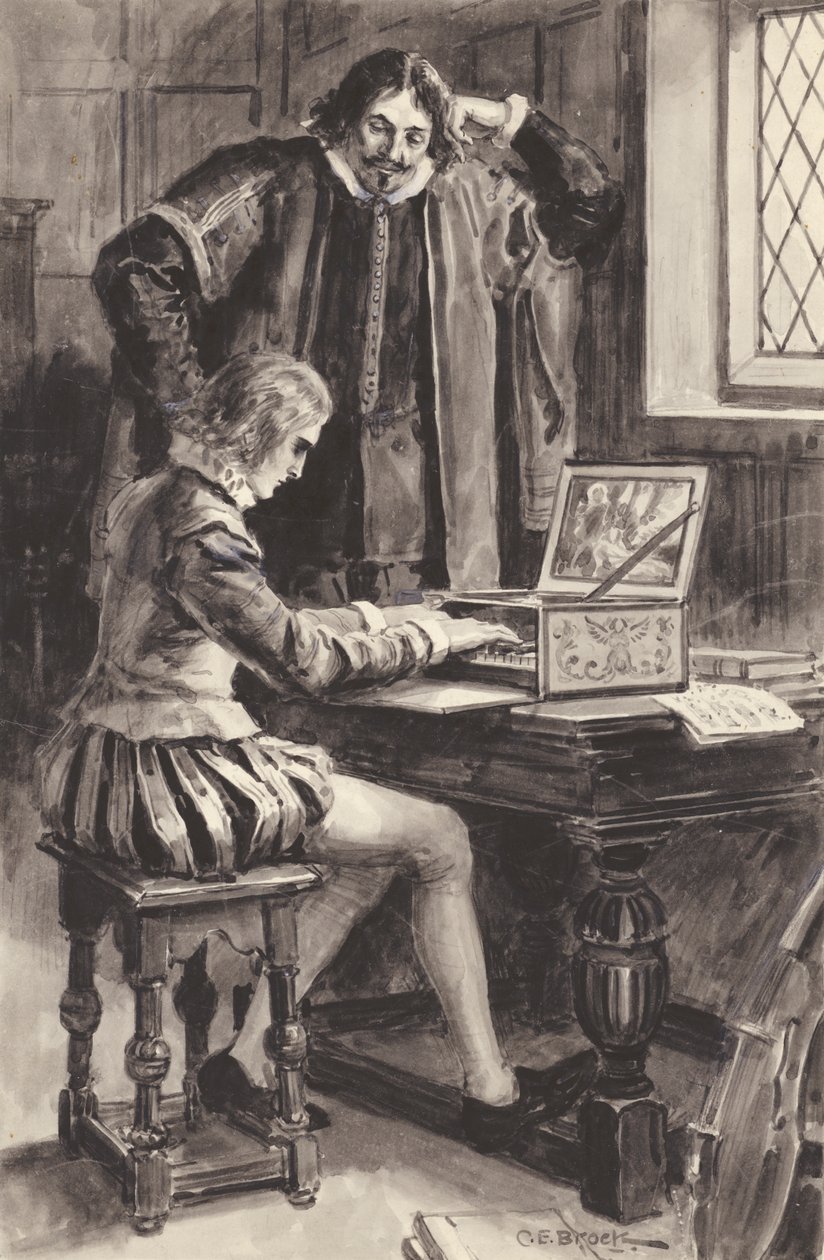
On the other hand, Byrd, Tallis’ pupil, who also served as Gentleman of the Chapel Royal, beginning in 1572, actually converted to Catholicism in the 1570s, and even rubbed shoulders with Robert Catesby, who formulated the Gunpowder Plot to blow up Parliament in 1605, during the reign of James I, for which Guy Fawkes gained his undying notoriety.
Though Byrd was never subject to imprisonment for his religious beliefs, he was involved in numerous lawsuits and subjected to heavy fines. Elizabeth interceded on his behalf at least once. He participated in illegal services, and the texts he chose to set to music could, at times, have a subversive edge. In particular, as a Catholic in a Protestant country, he became fond of texts related to persecution. Comparatively speaking, he went unmolested, because of his record of allegiance to the crown.
A good movie could be made about these two composers and their relationship with the queen. Perhaps Cate Blanchett could be convinced to return for a third time as Elizabeth…
Byrd, “Ne irascaris Domine” (“Do not be angry, Lord”), from his “Cantiones sacrae”
Writing for the Anglican Church: “O Lord make They servant Elizabeth our queen”
It’s not easy being Catholic (in a Protestant country): “Tristitia et Anxietas”
Tallis, “O Nata Lux”
“Why fum’th in sight?” (basis for Vaughan Williams’ “Fantasia on a Theme by Thomas Tallis”)
Tallis’ greatest hit, “Spem in alium”