Trolling Timothée Chalamet for his blithe dismissal of opera and ballet as no longer relevant is so last month. But the media is not done with it. This morning a friend texted me a link to an article from the BBC in which Sir Alex Beard, chief executive of the Royal Ballet and Opera, thanks Chalamet for actually boosting ticket sales. Of course he did! Because this tempest in a teapot actually put opera and ballet in the news. And there’s no such thing as bad publicity.
In case, like most of the world, you’ve already moved on, Chalamet’s misstep occurred during an exchange with Matthew McConaughey about the preservation of cinema, which took place at the University of Texas before a live audience. “I don’t want to be working in ballet or opera, or you know, things where it’s like, ‘Hey, keep this thing alive,” Chalamet let drop, presumably to underline the comparative vitality and relevance of film. Carried away by his own eloquence, he continued, “‘… even though, like, no one cares about this anymore.’”
In all likelihood immediately sensing the remark was a little extreme (his own family includes three generations of ballet dancers), he quickly added, “All respect to the ballet and opera people out there.” Then he actually made it worse with an aside: “I just lost 14 cents in viewership.” Ouch.
Not the end of the world, of course, but in the age of social media, where sharpened knives are no further away than a cell phone or a computer keyboard and everyone is looking for a chance to be offended, Chalamet’s attempts to come across as a regular, relatable dude were received as fightin’ words.
It’s not hard to understand why they would get a rise out of anyone in the arts – who wants to be told that their life’s passion is meaningless? – but the wider backlash irrupted into a dogpile. Yeah, he’s an ignorant jackass, but so what? That’s democracy.
Widespread indignation, naturally, brings out the vultures, carpetbaggers, and trolls, so that following the initial salvo of outrage came all the reactionary posts, articles, and cartoons lampooning everyone for pearl-clutching by asking the rhetorical question, when was the last time any of you have been to an opera or a ballet?
For myself, I can say truthfully that I’ve been to more performing arts events in the past few years than I ever have. But I realize I am not widely representative of John Q. Public.
Actually, some of the arts organizations themselves did some of the best trolling. I’m not sure that any of them outdid Seattle Opera, which immediately responded with a 14-percent discount on tickets when using the promotional code TIMOTHEE. That was savage
.
From a certain point of view, perhaps counterintuitively, the Chalamet kerfuffle is proof that the arts are still powerful. The problem is not relevance, as art will always be relevant; it’s lack of exposure.
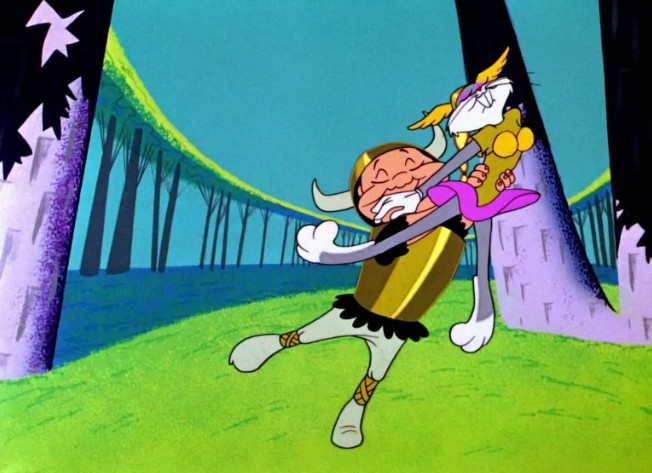
Time was when kids were exposed to the arts at school. At home, they encountered Arthur Fiedler, Yo-Yo Ma, and the Metropolitan Opera on PBS. Pavarotti and Virgil Fox were on talk shows. Rudolf Firkušný and Manuel Barrueco did television commercials. Samuel Ramey was on “Sesame Street,” singing about the letter “L.” Bugs Bunny cross-dressed to Wagner. Danny Kaye, in front of an orchestra, and Victor Borge, at the piano, made our parents laugh, and us too. Classical music was still a part of the conversation.
But somewhere along the way, some fat cats in a boardroom somewhere began to wonder why in the world the media was wasting valuable resources on all this long-hair stuff, when it could be maximizing profits by dumbing down and squeezing juice from the wallets of the lowest common denominator.
In the meantime, there was a longstanding tradition among populist entertainers of mocking the arts. So you have The Three Stooges flipping grapes and bananas into opera singers’ mouths. Not that I don’t love that stuff. Anything with staid traditions and certain protocols is easy to ridicule. Comedy mocks the establishment. It punches up, seldom down. To really enjoy music, you have to sit still and pay attention and actually listen to it. That’s just the way music and theater work. But I admit, it can seem ridiculous to an outsider, especially to one with no experience of it.
That said, the arts are no more “elitist” than rock concerts or sporting events, and they are often a lot less expensive. What’s more, they lend just as much to the economy, as people who attend concerts have to park, they have to eat, they like to shop, and since concerts frequently take place in cities, ticket-holders often come to town early and take in other attractions. A lot of businesses benefit. Also, nobody drinks too much and there’s comparatively little property damage afterward.
I find, once the novelty wears off, that the average sporting event has stretches more boring than anything I’ve ever endured in an opera house. Presumably the fans hang in there for the high points – the adrenaline rush of a touchdown or a homerun, the thrill of a close contest as the clock runs down, the euphoria of victory, the camaraderie of a roaring crowd.
We experience similar sensations in the performing arts: the emotional impact of an acrobatic aria, the grace and physicality of ballet, the spinetingling climax of a grand romantic symphony. Just like with a ballgame, not every experience is a world-beater, but when it’s at its best, there are moments you will carry with you for the rest of your life.
Moreover, it reminds us of the necessity of beauty and keeps us in touch with our shared humanity. That somebody born 150 years ago and lived their life in a foreign land without what we take for modern conveniences can continue to communicate with us, and even move us, in a language that transcends discernible words is miraculous.
If an orchestra plays and no one is there to hear it, does it still make music? Whether or not Chalamet really meant what he said, the performing arts endure for those of us who will have them. The public just needs to be reminded that they’re there. So yes, thank you, Timothée Chalamet.
Tag: Timothee Chalamet
-
Timothée Chalamet and the Performing Arts: No Such Thing as Bad Publicity?
-

Don’t Be Like Chalamet: In Appreciation of the Performing Arts
This was a response to a comment by Dolores Cascarino on my hasty, impressionistic post yesterday about the overwhelming experience of hearing Mahler’s “Resurrection” Symphony on Friday afternoon with the Philadelphia Orchestra, an experience so sublime that for me it defied criticism. (The final performance of the three-concert series will be given at the Kimmel Center for the Performing Arts this afternoon at 2:00.)
Evidently, I warmed to the subject, so much so, that I think it bears repeating as a separate post. I hope you’ll find it worth reading, especially in light of Timothée Chalamet’s recent blithe dismissal of ballet and opera, remarks I have to say were stunning in their ignorance, and so unnecessary, especially from one whose mother and sister danced professionally.
But I am, after all, in radio. As one who has said some pretty boneheaded things off the cuff myself, perhaps I should cut him some slack. It’s just unfortunate that such a prominent figure – a teen heartthrob AND an Academy Award nominee for Best Actor – should make such a widely-seen, unhelpful flub.
——–
Increasingly, I’m realizing how lucky I am to be hearing any of this music live. I mean, I understand from years of concertgoing how rare it is to hear certain pieces performed that you might encounter on recordings or semi-frequently on the radio. If you miss them when they’re played by your local orchestra, they might not turn up again for decades. Of course, that is not the case with Mahler’s “Resurrection” Symphony, which is justifiably popular and guaranteed to pack the hall.
But as the recent remarks of Timothée Chalamet confirm (if you don’t know what I’m talking about, google it), classical music has become so marginalized, at least in terms of “relevance” to the masses, in a society in which education is in the toilet and maximum profit drives everything, performing arts organizations are in perpetual danger of withering and dying. These groups can no longer depend on the moneyed classes or corporations or even the government to help sustain them, and revenue from ticket sales are not enough to cover Mahler, much less a world class production of one of the great operas.
Anyone who hasn’t experienced these live has no idea what they’re missing. I’m not saying all of this music will connect with everyone, but there is nothing in the world of popular music that can make you shudder, shatter you, reduce you to tears, and elevate you, like Mahler’s “Resurrection” Symphony. It’s tragic that there are so many people who dismiss this kind of music without ever having experienced it or even considering it, or most criminally of all, even knowing that it’s out there. For me, life would be so much poorer without it.
The tendency to judge and compare performances is natural, and thoughtful criticism can be informative and helpful. (This part has nothing to do with Chalamet.) I am interested to read the thoughts of a person of some experience and see how they processed what they heard. As time passes, such writing takes on added significance as it becomes part of the historical record. It’s often helpful, or at least interesting, to see how a work or performance was received in the past.
It’s the easiest thing in the world to be supercilious – to nitpick or dismiss something out of hand because we think we know better – but we should never lose sight of just how lucky we are to be able to experience this music at all and how sublime it can be.
——-
PHOTO: Chalamet (right) makes an ass of himself with Matthew MacConaughey
Tag Cloud
Aaron Copland (93) Beethoven (95) Composer (114) Film Music (144) Film Score (143) Film Scores (255) Halloween (94) John Williams (195) KWAX (229) Leonard Bernstein (104) Marlboro Music Festival (125) Movie Music (159) Mozart (90) Opera (212) Philadelphia Orchestra (89) Picture Perfect (174) Princeton Symphony Orchestra (109) Radio (88) Ross Amico (244) Roy's Tie-Dye Sci-Fi Corner (290) The Classical Network (101) The Lost Chord (269) Vaughan Williams (105) WPRB (397) WWFM (881)