The day after 9/11, I’m sure we’re all ready to put it behind us. But 25 years is a landmark, and I didn’t have a show yesterday on which I could share some appropriate music. There’s only so much one can do with a film music program!
The anniversary is especially sobering this year, as I realize that we are now as far away from the World Trade Center attacks as my birth was from Pearl Harbor. That’s the perspective from which younger generations now perceive 9/11. It’s something that happened a long time ago.
While I understood that abstractly, it only really registered a year or two ago, when I noticed all these irreverent 9/11 posts on social media. Now, I can be as irreverent as the next guy, but these are obviously people who were not old enough to remember 9/11. There are still plenty of folks out there, who aren’t all that old, who experienced the terror first hand or continue to suffer loss, debilitating illness, or even lasting trauma just from having witnessed it on TV. All of us are living now with the legacy of 9/11. The world was forever changed that day, and not for the better. September 11, 2001 was the dawn of a new century of anxiety and dark uncertainty. We are living in unkinder times.
There’s really very little I can add to the countless memorials and reflections surrounding the surreal, unforgettable events of that September morning – a morning that, for those of us old enough to have lived through it, still feels like yesterday. But I’m a radio host, and I have a platform, and I would like to use it to try to encourage some reflection and maybe even offer a little solace. To this end, this Saturday on “The Lost Chord,” I will be presenting an hour of music of remembrance and consolation.
Pulitzer Prize winner Kevin Puts addresses the horrendous imprint of the attacks in his Symphony No. 2, which in a single movement traces an emotional arc from comparative innocence of an almost cinematic benignity, shocked by a sudden, violent upheaval, from which emerges a more reflective epilogue of uncertainty and fluctuating hope. It certainly does not leave one feeling uncompromisingly desolate in the manner of Ralph Vaughan Williams’ Symphony No. 6, the last movement of which some have compared to a world laid waste by atomic warfare.
Philadelphia composer Robert Moran wrote his “Trinity Requiem” to mark the tenth anniversary of the attacks. Moran rises to the occasion to provide an ethereal masterpiece, a 30-minute journey into paradise worthy to stand alongside the transcendent Requiem of Gabriel Fauré.
“Trinity Requiem” received its first performance in 2011 at Trinity Wall Street, the so-called “Ground Zero church” in Lower Manhattan. Miraculously, a hundred-year-old sycamore tree preserved the church’s St. Paul Chapel, constructed in 1766, from destruction by debris from the World Trade Center, including what would have been a direct hit from a falling I-beam. A recording of Moran’s work was released on the Innova label, featuring the Trinity Youth Chorus and members of the Trinity Wall Street Choir under the direction of Robert Ridgell.
“Trinity Requiem” is scored for treble voices, four cellos, organ, and harp. Handbells are employed in the “Pie Jesu.” And, following in the steps of Fauré, Moran includes a setting of “In Paradisum,” emphasizing a desire to attain peace at last.
Listen for a remarkable moment that occurs in the “Offertory” – the fourth movement (built on a bass line employed by Johann Pachelbel in his famous Canon) – when a siren appears. It was not written into the score, but rather actual street noise that bled into the recording session – an eerie bit of serendipity, unavoidably conjuring memories of the horror that unfolded outside the venue a decade before. But it is horror recollected in tranquility.
I hope you’ll join me for “The Persistence of Memory,” music of remembrance and consolation to mark the 25th anniversary of 9/11, on “The Lost Chord,” now in syndication on KWAX Classical Oregon.
———-
Clip and save the start times for all three of my recorded shows:
PICTURE PERFECT, the movie music show – Friday at 8:00 PM EDT/5:00 PM PDT
SWEETNESS AND LIGHT, the light music program – Saturday at 11:00 AM EDT/8:00 AM PDT
THE LOST CHORD, unusual and neglected rep – Saturday at 7:00 PM EDT/4:00 PM PDT
Stream them, wherever you are, at the link!
https://kwax.uoregon.edu/
Tag: Trinity Wall Street
-
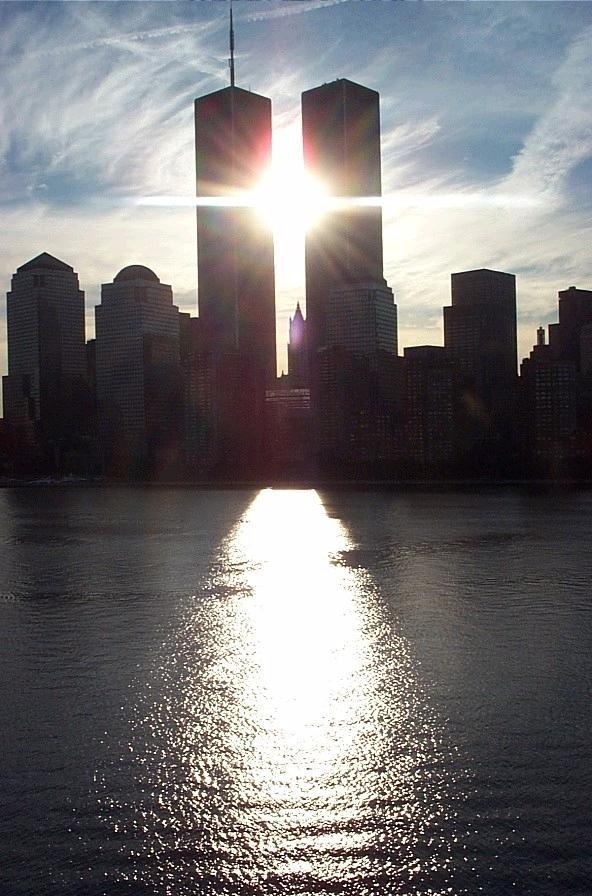
Music of Remembrance and Consolation for the 25th Anniversary of 9/11 on “The Lost Chord”
-
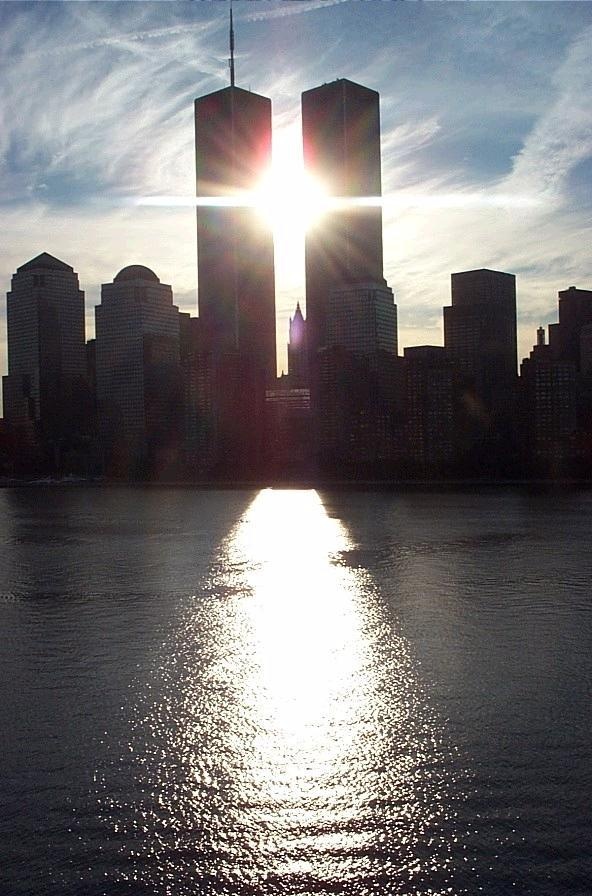
9/11 Reflection Music Solace & Memory
9/11: A morning for reflection. The horror and surreality of that September morning, now 21 years ago, will never be forgotten. When my telephone (a land line!) rang around 9:00, I was already at work on my home computer (a Macintosh!), oblivious to the news. I picked up. A friend was on the line. She said a plane had crashed into the World Trade Center. I imagined the Empire State Building and the B-25 accident, back in the 1940s. I was thinking maybe a piper. Bad enough in itself, certainly, but accidents do happen. Then she said one of the towers “fell over.” That was what sent me to the TV.
I had parents in the air that morning, on the way to China. The first leg of their journey took them west across Pennsylvania. Thankfully, they were not on United States Airlines Flight 93, that crashed near Shanksville, southeast of Pittsburgh, at 10:03.
The phone lines were jammed. Nobody owned a cell phone. It was a long day until I learned that their flight had been grounded in Pittsburgh.
My heart goes out to those who died senselessly, and for their survivors, for whom the day remains most vivid and painful, I’m sure.
It was a dark turning point for America at the start of a new century, and a new millennium. I wonder if we ever fully appreciated how good we had it here in the halcyon days of the late 20th century?
Not surprisingly, there has been a lot of music written in response to the horrific events of that morning, and the pain, heroism, and sacrifice. I’ve heard a lot of it, and for me, none of it as successful as Robert Moran’s “Trinity Requiem,” a masterpiece of solace and consolation.
The work was composed in 2011 for Trinity Wall Street, the so-called “Ground Zero Church” in Lower Manhattan, to mark the tenth anniversary of the attacks.
Here’s an interview I recorded with Bob shortly after the release of the CD (which I tweaked for rebroadcast last year), followed by a complete performance of the piece, a great balm for troubled times. If you’re not in the mood for the chit-chat, jump to the 16-minute mark for some truly lovely, reflective music.
https://www.wwfm.org/webcasts/2021-09-02/the-lost-chord-september-5-the-persistence-of-memory
-
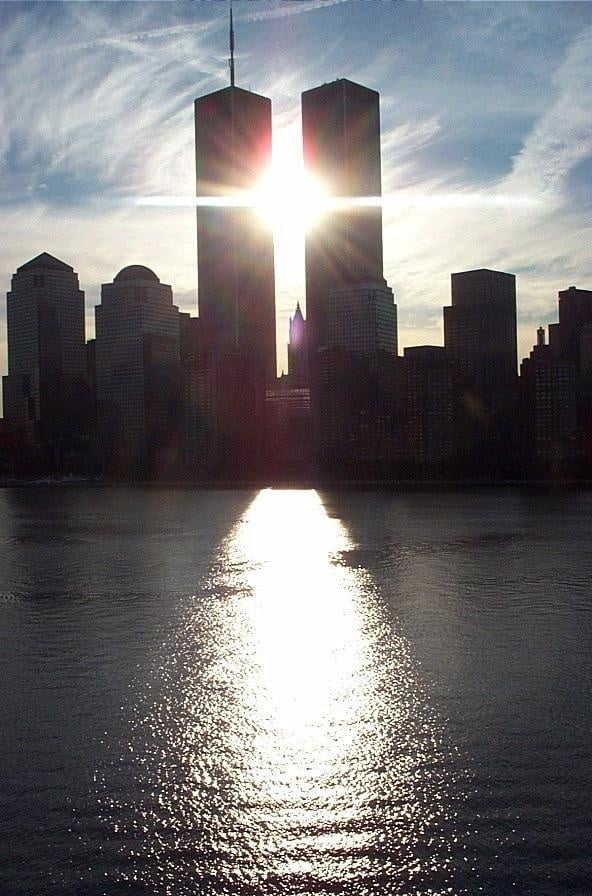
9/11 Trinity Requiem Moran’s Consoling Masterpiece
For the tenth anniversary of the surreal, unforgettable events of September 11, 2001, Philadelphia composer Robert Moran wrote his “Trinity Requiem” for the youth chorus of Trinity Wall Street, the so-called “Ground Zero church” in Lower Manhattan. This Sunday night on “The Lost Chord,” we’ll revisit this beautiful, consoling work and reflect on that September morning of twenty years ago – a morning that still feels like yesterday.
Moran may not be the first artist that would spring to mind for anyone seeking musical solace. The merry prankster ethos runs deep in this pupil of Hans Erich Apostel, Darius Milhaud, and Luciano Berio. Moran gained early notoriety for his compositions on a grand scale, incorporating entire cities (including San Francisco, Graz, Austria, and Bethlehem, Pennsylvania), their automobiles, airplanes, skyscrapers, radio and television stations, marching bands, dancers, theatrical groups, and tens of thousands of performers.
He’s written works for harpsichord and electric frying pan, and any number of performance art pieces, including one, archived on YouTube, that involves musicians walking around a financial district with slide whistles inside giant paper bags.
Flirting with respectability, he collaborated on an opera, “The Juniper Tree,” perhaps the grimmest of Grimm fairy tales, with Philip Glass, and he has composed a number of other works for the stage, including “Desert of Roses” (after Beauty and the Beast), for Houston Grand Opera, and “Alice” (after Lewis Carroll), for the Scottish Ballet. He’s currently at work on a monodrama about God.
Given Moran’s freewheeling reputation, I thought it only appropriate to title this week’s show after one of Salvador Dali’s most famous paintings, “The Persistence of Memory” – both for its surreal associations (a dreamscape of melting watches) and for the deep psychological scars left by the deadliest attacks ever perpetrated on American civilians.
Moran rises to the occasion to provide an ethereal masterpiece, a 30-minute journey to Paradisum, worthy to stand alongside the transcendent Requiem of Gabriel Fauré.
“Trinity Requiem” received its first performance at Trinity Wall Street on September 7, 2011. The second performance took place in St. Paul, Minnesota, on the actual anniversary of the attacks. Locally, it was performed by Mendelssohn Club, at the Basilica of Saints Peter and Paul, on Logan Square in Philadelphia, in 2012.
A compact disc was released on the innova Recordings label, with the Trinity Youth Chorus and members of the Trinity Choir, Trinity Wall Street, under the direction of Robert Ridgell.
Among the handful of miracles that occurred on a day of unthinkable tragedy, a hundred-year-old sycamore tree preserved the church’s St. Paul Chapel, constructed in 1766, from destruction by debris from the World Trade Center, including what would have been a direct hit from a falling I-beam.
On tonight’s broadcast, “Trinity Requiem” will be prefaced by a conversation with the composer. In the time remaining we’ll also hear Moran’s dreamlike “Notturno in Weiss” (“Nocturne in White”), on an aphoristic text by Christian Morgenstern.
Find solace in the purity of music, as we continue to grapple with the legacy of 9/11, this Sunday night at 10:00 EDT, on WWFM – The Classical Network and wwfm.org.
-
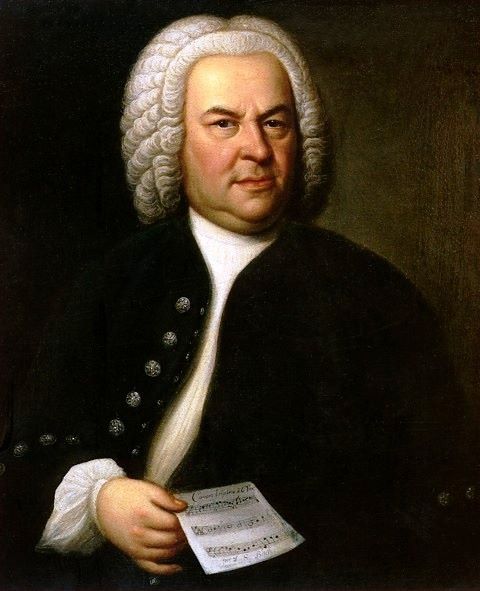
Bach Birthday on The Classical Network Donate Now
Celebrating Bach’s birthday on The Classical Network, while trying to reach our goal of 500 listener donations IN ANY AMOUNT. Be one of the 500 – help us reach that magic number, and we will stop the on-air pitching and enjoy just Bach’s music.
Furthermore, we’ll be sharing a free concert of Bach’s cantatas and organ works, performed by musicians from New York’s Trinity Wall Street, at Miller Chapel on the campus of Princeton Theological Seminary. The concert will be broadcast tonight at 8. If you’re planning to attend, please be there by 7:50!
At 1:00, we’ll have a special guest: Christopher Houlihan, organist, will join us by telephone to talk about Bach. We’ll also share selections from his brand new album on the Azica label, “Christopher Houlihan Plays Bach.”
Just a few of the treats in store for us when you join us today. I hope you’ll join us as one of the 500. Support WWFM – The Classical Network by calling 1-888-232-1212 or contributing online at wwfm.org. And thank you!
-
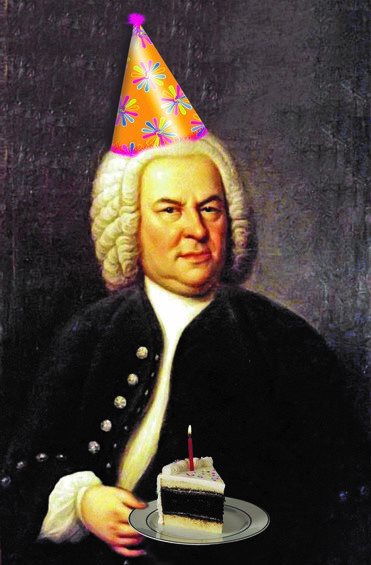
Happy Birthday Bach Celebrate & Support WWFM
Happy birthday, Bach!
The day of reckoning is upon us. Join us as we celebrate Bach’s music and attempt to restock the station’s larder for another season.
Our annual “Bach 500” was designed to encourage 500 listeners just like you to support us in any amount. Once we hit 500 contributions, we will be able to tally in additional money, solicited in advance, from the “Bach Pot,” and then we can all just kick back and enjoy the music.
As a show of thanks, The Classical Network will present a free concert made up of Bach cantatas and organ works, performed by musicians from New York’s Trinity Wall Street. These are the same musicians you enjoy every Monday afternoon on “Bach at 1.” The concert will take place tonight at Miller Chapel on the campus of Princeton Theological Seminary. The program will be broadcast live at 8 p.m., so if you plan to go, please arrive no later than 7:50.
In the meantime, join us for music and membership, today from 8 a.m. to 8 p.m. I’ll be sharing the air waves and programming duties from noon to 3:00 and again from 6:00 to 8:00. I’ll also be manning the board in the studio for the duration of the concert.
We hope you’ll be as generous as you can, but please do donate in whatever amount. Like you, we all prefer Bach to fundraising!
Call now at 1-888-232-1212, or contribute online at wwfm.org. Thank you, as always, for your support of Bach, Beethoven, Britten, and all the rest, on WWFM – The Classical Network.
Tag Cloud
Aaron Copland (94) Beethoven (95) Composer (114) Film Music (149) Film Score (143) Film Scores (255) Halloween (97) John Williams (197) KWAX (232) Leonard Bernstein (105) Marlboro Music Festival (125) Movie Music (164) Mozart (91) Opera (215) Philadelphia Orchestra (90) Picture Perfect (174) Princeton Symphony Orchestra (110) Radio (90) Ross Amico (244) Roy's Tie-Dye Sci-Fi Corner (290) The Classical Network (101) The Lost Chord (269) Vaughan Williams (107) WPRB (397) WWFM (881)