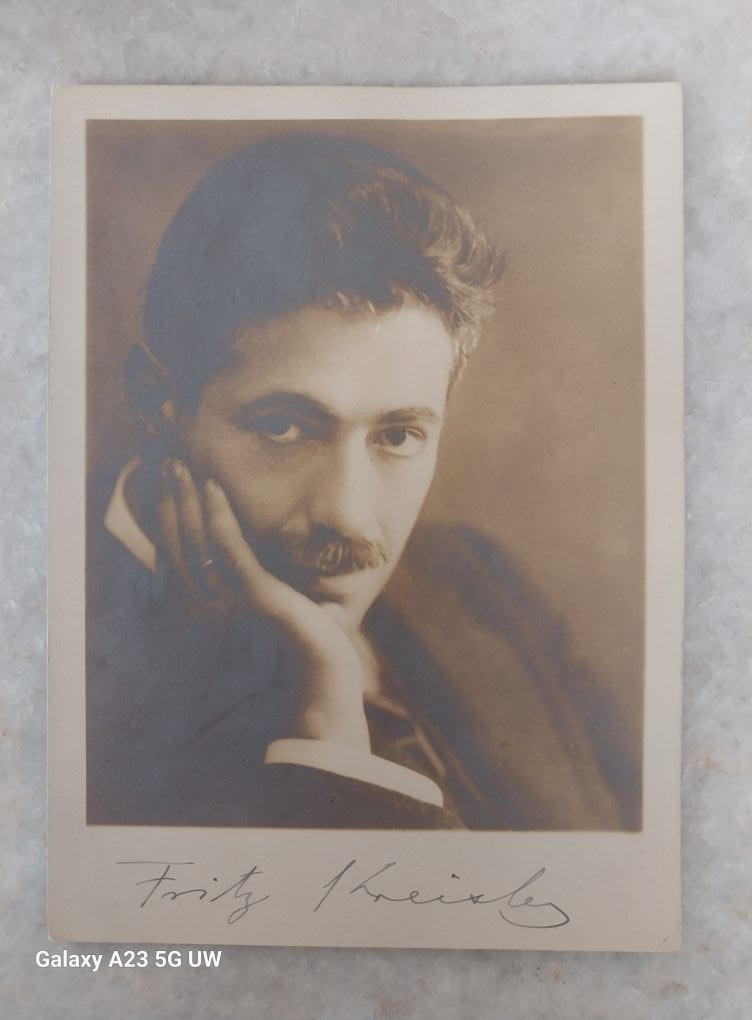
Eesh. I totally forgot I have an autographed photo of Fritz Kreisler.
Tag: Violinist
-

György Pauk Violinist Dies at 88
The violinist György Pauk has died.
Pauk, who lost both his parents in the Holocaust, was haunted by memories of lean times, marked by hunger, cold, and fear, living with his grandmother in the Budapest ghetto. For many years after, he always traveled with emergency food.
Early promise on the violin earned him admission to the Franz Liszt Academy at the age of 9. There, Zoltán Kodály was among his teachers. In 1956, at the age of 22, he defected from his Soviet-controlled homeland. It was Yehudi Menuhin who encouraged him to settle in the U.K, which he did three years later. Pauk became a British citizen in 1967.
An important interpreter of contemporary music, he gave first performances of works by Witold Lutoslawski, Peter Maxwell Davies, Krzysztof Penderecki, Alfred Schnittke, and Michael Tippett. He was also a master interpreter of the music of Béla Bartók.
With pianist Peter Frankl, he recorded the complete violin sonatas of Mozart. Pauk and Frankl had played together since they were children, studying chamber music in Hungary with Leo Weiner. In maturity, they frequently performed trios with cellist Ralph Kirschbaum.
Pauk returned to Budapest for the first time, at the invitation of Annie Fischer, to perform in 1973.
In 1987, he was appointed professor at the Royal Academy of Music. He was a renowned teacher, regarded as the foremost living exemplar of the Hungarian violin school, with a direct connection to Joseph Joachim, one of the most significant violinists of the 19th century. Joachim, also born in Hungary, collaborated with Johannes Brahms and his circle. (He gave the first performance of Brahms’ Violin Concerto in 1879, with the composer conducting.)
Pauk was still teaching as recently as two weeks ago. Reportedly, he took a fall within the past ten days. He died yesterday, in Budapest, at the age of 88.
His instrument was a 1714 Stradivarius, previously owned by the Belgian violinist Lambert Massart. His autobiography, “A Life in Music,” was published in 2021.
R.I.P.
A literal masterclass in how to play Bartók
From a recording of Bartok’s Violin Concerto No. 2
Brahms’ Violin Concerto from 1959
Pauk talks about his life, with musical interludes
-
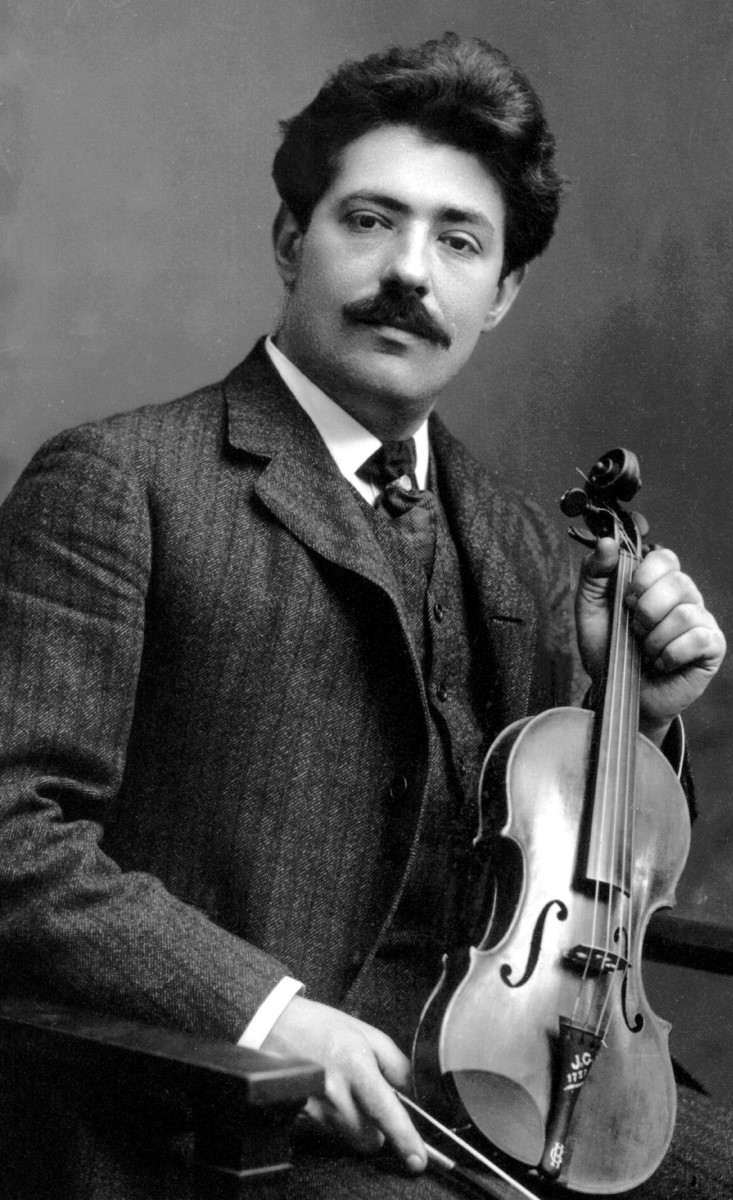
Fritz Kreisler & Jascha Heifetz: Fiddling Legends
February 2 is not just a day for groundhogs. It also marks the anniversaries of the births of two of the world’s greatest fiddlers.
Fritz Kreisler, the sweet-toned confectioner and purveyor of violin bonbons, was born in Vienna on this date in 1875. Jascha Heifetz, the superhuman technician, who imbued perfection with tonal beauty, was born in Vilnius in 1901. Kreisler was warm, gregarious and easygoing. Heifetz acquired a reputation for a certain cool intensity.
At a point, Kreisler ruffled feathers, not with his playing, but because he casually let slip that many of the 18th century “rediscoveries” he had used to charm audiences, critics, and musicologists were not in fact rediscoveries at all. Nor did they date from the 18th century. Rather they were composed by Kreisler himself. When the professionals complained, Kreisler shrugged.
It would be futile to argue against his serious musical credentials. He gave the world premiere of the Elgar concerto and became a favorite recital partner of Sergei Rachmaninoff. A famous anecdote relates that Kreisler and Rachmaninoff were giving a concert in New York. In the middle of a performance, Kreisler suffered a memory lapse, and as he noodled around on his violin, trying to find his way back, he inched closer to his pianist. “Where are we?” Kreisler whispered. To which Rachmaninoff replied, “Carnegie Hall.”
In 1941, Kreisler was crossing the street, when he was hit by a milk truck. The accident fractured his skull and put him in a coma. Like something out of an early Woody Allen comedy, when he awoke, he could communicate only in Latin and Greek. Thankfully, the effect was only temporary.
Kreisler met Heifetz for the first time at a private press party in 1912. After listening to the boy play through the Mendelssohn concerto, he declared, “We can all just break our fiddles over our knees.” Arthur Nikisch, conductor of the Berlin Philharmonic, said he had never heard such an excellent violinist. The year before, Heifetz had played before a crowd of 25,000, and police had to be summoned to prevent the young virtuoso from being mobbed.
A little more collected was Groucho Marx. When Heifetz met Groucho, he mentioned that he had been earning his living as a violinist since the age of seven. Groucho responded, “Before that, I suppose, you were just a bum.”
Aside from his astounding accomplishments on the concert stage, Heifetz appeared as a mess hall jazz musician in Allied camps across Europe during the Second World War. Under a pseudonym, he wrote “When You Make Love to Me (Don’t Make Believe)” for Bing Crosby. In addition, Heifetz and Bing recorded the “Lullaby” from Benjamin Godard’s opera “Jocelyn.”
Heifetz was an advocate for certain socio-political and environmental causes. Decades before it was a thing, he had his Renault converted into an electric vehicle, and he lobbied for the acceptance of 911 as an emergency number.
Once, after a performance in Israel, he was attacked by a man wielding a crowbar for programming a violin sonata by Richard Strauss. Strauss had remained in Germany during World War II and maintained a fraught relationship with the Nazis. Heifetz, by the way, was Jewish.
Composers who wrote music for him, or whose music he premiered, include Mario Castelnuovo-Tedesco, Erich Wolfgang Korngold, and Sir William Walton. Heifetz commissioned Arnold Schoenberg’s Violin Concerto, but he never played it.
His standard of performance was stratospheric, and he subjected himself to a punishing, though strictly secret, regimen of self-discipline. He delivered until he felt he no longer could, retiring from the concert stage in 1972.
Itzhak Perlman reflected, “The goals he set still remain, and for violinists today, it’s rather depressing that they may never really be attained again.”
Here’s a French film about Heifetz. Interestingly, it opens with him playing one of Kreisler’s forgeries, the “Praeludium and Allegro in the Style of Pugnani”
Kreisler plays the “Meditation” from Massenet’s “Thaïs”
Kreisler plays the Mendelssohn concerto
Kreisler, master of the miniature
Two-part radio interview on the occasion of Kreisler’s 80th birthday, with spoken tributes from Elman, Menuhin, Milstein, Stern, Szigeti and others:
Footage of Heifetz performing Grigoras Dinicu’s “Hora Staccato.” The conductor is Donald Vorhees, longtime music director of the Allentown Symphony Orchestra in Allentown, PA.
Heifetz plays the first movement of the Tchaikovsky Violin Concerto in the 1947 film “Carnegie Hall.” That’s Fritz Reiner on the podium.
From back in the day when classical music was still popular entertainment, Heifetz playing Schubert and Mendelssohn in a short film, with Piatigorsky and Rubinstein. The three of them actually get to act (albeit badly).
Heifetz and Jack Benny
Heifetz and Bing Crosby with the “Lullaby” from Godard’s “Jocelyn”
Heifetz’s popular hit (as Jim Hoyle), sung by Bing
Heifetz plays it – on the piano!
-

Biber Salzburg’s Brilliant Violinist
Heinrich Ignaz Franz von Biber had talent – and names – to burn. Arguably Salzburg’s most brilliant musician prior to the birth of Mozart, Biber was an outstanding violinist – perhaps the best of his age (at least music historian Charles Burney thought so) – and an innovative composer.
Born in Bohemia in 1644, Biber settled in Salzburg at the age of 16, when during a trip to negotiate the purchase of some instruments on behalf of his employer, Karl II von Liechtenstein-Kastelkorn, Bishop of Olmütz, based in Kroměříž (where much of “Amadeus” would later be filmed), he found a better job working for Maximilian Gandolph von Kuenberg, Archbishop of Mozart’s future home town. Fortunately, the bishops were friends, so Biber avoided any serious repercussions.
Some of Biber’s experiments with clashing rhythms and layers of sound – most famously in his programmatic battle piece, “Battalia” – anticipate those of Charles Ives by several centuries. In fact, a number of his works are programmatic, with musical effects intended to convey extra-musical objects and ideas.
He also experimented with scordatura, the tuning of stringed instruments to unconventional intervals. His “Mystery Sonatas” (sometimes referred to as the “Rosary Sonatas”) have featured increasingly in concerts and recordings. Its monumental passacaglia for solo violin is one of the earliest known pieces of its kind.
We’ll hoist a Heineken for Heinrich today, among our featured composers, between 4 and 7 p.m. EDT on WWFM – The Classical Network and wwfm.org.
-
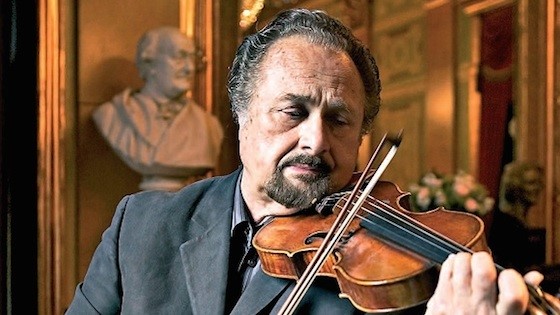
Aaron Rosand Violin Virtuoso Dies at 92
“I never let setbacks put me down for long,” said Aaron Rosand. “I bounce back, and I fight back, and my inner confidence takes over. I know what I have to offer, and I am going to do it to the end of my days.”
The inspirational violinist died on Tuesday.
Rosand studied at the Curtis Institute with Efrem Zimbalist and later taught there, from 1981 until his retirement only months ago. Rosand also taught at the Mannes School of Music.
He recorded prolifically and had a fine career, but it could have been even better. Late in life, he went on record to confirm rumors that he had been undercut repeatedly by a jealous and powerful rival.
At one point, Rosand had 75 concertos in his active repertoire. He claimed never to have forgotten a note. He singled out the Walton and Korngold concertos as two of his favorites. He was particularly proud of his recordings of Beethoven’s complete works for violin and his early recording of Sarasate showpieces.
A great teacher and a great musician, he disliked exercise, but loved scotch, ice cream, and classic movies. Rosand was 92 years-old.
Rosand plays Sarasate:
https://www.youtube.com/watch?v=cyx4yFtyHU8
Rosand the teacher:
The secret of his success. Still sounding great at 80.
Tag Cloud
Aaron Copland (94) Beethoven (95) Composer (114) Film Music (150) Film Score (143) Film Scores (255) Halloween (102) John Williams (198) KWAX (233) Leonard Bernstein (105) Marlboro Music Festival (125) Movie Music (165) Mozart (91) Opera (215) Philadelphia Orchestra (90) Picture Perfect (174) Princeton Symphony Orchestra (110) Radio (90) Ross Amico (244) Roy's Tie-Dye Sci-Fi Corner (290) The Classical Network (101) The Lost Chord (269) Vaughan Williams (107) WPRB (397) WWFM (881)