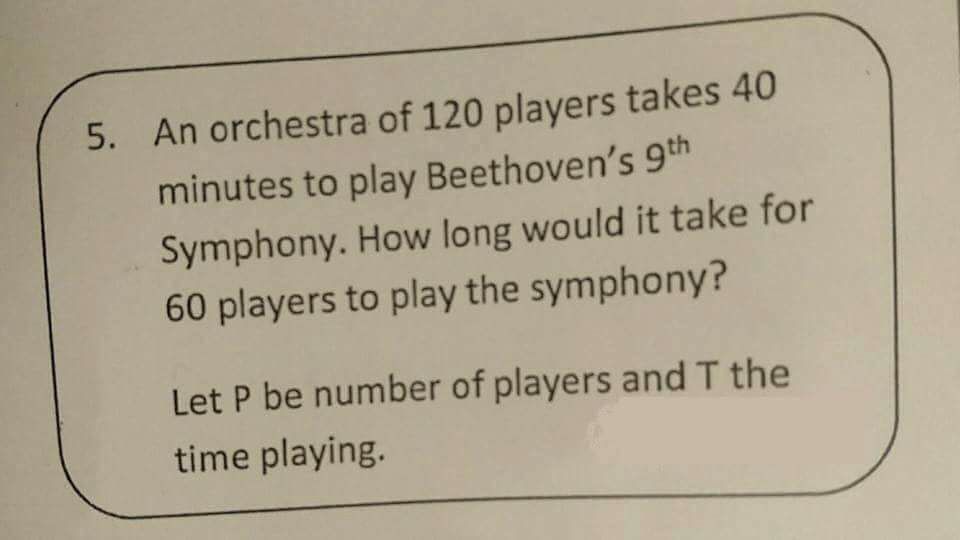
Careful! It’s a trick question, and not for the reason you might think. In 1980, the compact disc was actually standardized at 74 minutes to accommodate the length of Beethoven’s 9th Symphony – specifically using Wilhelm Furtwängler’s 1951 Bayreuth Festival performance as a template. No orchestra in the world would be able to get through it in 40 minutes – not even conducted by Charles Munch, as in this astonishing recording:
Yet one more way, albeit it unintended on the part of the composer, in which Beethoven caused the world to hear music differently.
I’m sure we’ve all wondered what we’d do if we found ourselves living under a totalitarian regime. Would we speak out against injustice and atrocity, even if it meant arrest or execution? Would we flee, even if it meant never seeing our homes or loved ones again? Or would we keep our heads down, hoping not to be denounced, and pray for better days?
I don’t think any of us who haven’t actually lived through it can understand the fear, the courage, and the sacrifices that were experienced every day by those who remained in Hitler’s Germany. So try not to be too hard on Wilhelm Furtwängler, indisputably one of the greatest conducting talents of the 20th century.
Furtwängler, who succeeded Arthur Nikisch and Richard Strauss as director of Germany’s finest orchestras – including, most notably, the Berlin Philharmonic, from 1922 to 1945 and again from 1952 to 1954 – remained in Germany throughout the National Socialist regime.
Widely perceived as politically naïve, Furtwängler engaged in a dangerous game with the Third Reich, arguing vociferously in favor of Jewish musicians within his orchestra, those who could be considered his rivals (Bruno Walter, Otto Klemperer), and even those who were long dead (Joseph Joachim, Felix Mendelssohn). He went so far as to threaten to tender his resignation should the Nazis insist on the removal of Jews from the cultural sphere. Goebbels complained, “Can you name me a Jew on whose behalf Furtwängler has not intervened?”
Either he possessed an accurate grasp of his own worth to German culture, or he didn’t realize how close he trod to the flame. Himmler wanted to send him to a concentration camp. Goebbels and Göring were in favor of concessions. Encouraged, the conductor felt himself to be a force for positive change. But of course, he was just being played. The Nazi racial policies remained in place and the situation only grew worse.
What Furtwängler didn’t seem to realize was that he was being used as a propaganda tool, held up to the world as a paragon of Teutonic superiority. Wishing to appease one of the country’s most visible artists, the authorities allowed Jews to remain in the Berlin Philharmonic, though privately they grumbled about Furtwängler lacking “national sentiment.”
Revealingly, Furtwängler never joined the Nazi Party. He refused to conduct Nazi anthems, and while he retained a semblance of authority he would not appear in halls adorned with swastikas. He did not give the Nazi salute, even in his private dealings with Hitler. He rejected the Führer’s gifts and was able to get around shaking his hand by always having a baton at the ready. It was only after getting into a shouting match with Hitler himself that Furtwängler realized the enormity of the struggle. When Hitler finally was able to engineer a handshake, the Nazi photographers were all over it.
In 1934, he publicly declared Hitler an “enemy of the human race” and referred to the political situation in Germany as a pigsty. He conducted Hindemith’s “Mathis der Maler,” which had been banned by the Nazis on account of the composer’s allegedly “degenerate” (modernist) tendencies. The concert created a sensation and triggered a political firestorm. Furtwängler was forced to resign from his artistic posts, and the authorities seized the opportunity to Aryanize the Berlin Philharmonic. Fortunately, Furtwängler had already found positions for most of the Jewish personnel in foreign orchestras.
He was told that if he himself were to leave the country, he would never be allowed back in. Not wanting to be separated from his family, he decided to remain. What followed was a years-long game of cat-and-mouse between the conductor and the Reich. Furtwängler was publicly granted privileges, while penalized in ways never apparent to the foreign press. It was only through political sleight-of-hand that the Reich could get anything worthy of pro-German propaganda out of him.
With the rise of an opportunistic young conductor by the name of Herbert von Karajan, Furtwängler became marginalized. Karajan did everything for himself; Furtwängler had done everything for the sake of culture and humanity.
It’s so easy for biographical details to get in the way of a proper appreciation of Furtwängler’s art. For him, music was something that existed beyond the notes on the page and involved active, subjective intervention on the part of the conductor in order to be realized. More than most, a Furtwängler interpretation rises and falls on the strength of the performer.
“He once said to me that the most important thing for a performing artist was to build up a community of love for the music with the audience, to create one fellow feeling among so many people who have come from so many different places and feelings. I have lived with that ideal all my life as a performer.”
— Dietrich Fischer-Dieskau
Happy birthday, Wilhelm Furtwängler.
One of the great performances of the Schumann 4th
Brahms, Symphony No. 3
Bruckner, Symphony No. 5
Nazi 9th: fiery Beethoven for the Führer’s birthday in 1942, complete with swastika banners and Goebbels handshake
Wilhelm Furtwängler is one of those conductors who seems to inspire near-fanaticism in many of his admirers. Set up as the polar opposite of Arturo Toscanini, who loved to declare absolute devotion to the score (whether it happened to be true or not), Furtwängler took what was on the page as the mere foundation on which to erect towering cathedrals in the sound.
This Thursday morning on WPRB, we’ll get to hear what happens when the architect and builder happen to be the same, as Wilhelm Furtwängler conducts his Symphony No. 2. We’ll enjoy it on the anniversary of Furtwängler’s birth.
In addition, there will be original compositions by other musicians best recognized by posterity as conductors – people like Antal Doráti, Otto Klemperer, Igor Markevitch, Paul Paray, André Previn, Evgeny Svetlanov, and George Szell.
I hope you’ll join me, as conductors compose themselves, this Thursday morning from 6 to 11 EST, on WPRB 103.3 FM and wprb.com. The composers’ conduct will definitely be most becoming, on Classic Ross Amico.
Though he continues to stir controversy, Wilhelm Furtwängler was, indisputably, one of the greatest conducting talents of the 20th century.
Furtwängler, who succeeded Arthur Nikisch and Richard Strauss as director of Germany’s greatest orchestras – including, most notably, the Berlin Philharmonic, from 1922 to 1945 and again from 1952 to 1954 – remained in Germany throughout the National Socialist regime.
Widely perceived as politically naïve, Furtwängler engaged in a dangerous game with the Third Reich, arguing vociferously in favor of Jewish musicians within his orchestra, those who could be considered his rivals (Bruno Walter, Otto Klemperer), and even those who were long dead (Joseph Joachim, Felix Mendelssohn). He went so far as to threaten to tender his resignation should the Nazis insist on the removal of Jews from the cultural sphere. Goebbels complained, “Can you name me a Jew on whose behalf Furtwängler has not intervened?”
Either he had an accurate grasp of his own worth to German culture, or he didn’t realize how close he trod to the flame. Himmler wanted to send him to a concentration camp. Goebbels and Göring were in favor of concessions. Encouraged, the conductor felt himself to be a force for positive change. But of course, he was just being played. The Nazi racial policies remained in place and the situation only grew worse.
What Furtwängler didn’t seem to realize was that he was being used as a propaganda tool, held up to the world as a paragon of Teutonic superiority. Wishing to appease one of the country’s most visible artists, the authorities allowed Jews to remain in the Berlin Philharmonic, though privately they grumbled about Furtwängler lacking “national sentiment.”
Revealingly, Furtwängler never joined the Nazi Party. He refused to conduct Nazi anthems, and while he retained a semblance of power he would not appear in halls adorned with swastikas. He did not give the Nazi salute, even in his private dealings with Hitler. It was only after getting into a shouting match with the Führer himself that Furtwängler realized the enormity of the fight.
In 1934, he publicly declared Hitler an “enemy of the human race” and referred to the political situation in Germany as a pigsty. He conducted Hindemith’s “Mathis der Maler,” which had been banned by the Nazis on account of the composer’s allegedly “degenerate” (modernist) tendencies. The concert created a sensation and triggered a political firestorm. Furtwängler was forced to resign from his artistic posts, and the authorities seized the opportunity to Aryanize the Berlin Philharmonic. Fortunately, Furtwängler had already found positions for most of the Jewish personnel in foreign orchestras.
He was told that if he himself were to leave the country, he would never be allowed back in. Not wanting to be separated from his family, he decided to remain. What followed was a years-long game of cat-and-mouse between the conductor and the Reich. Furtwängler was publicly granted privileges, while penalized in ways never apparent to the foreign press. It was only through political sleight-of-hand that the Reich could get anything worthy of pro-German propaganda out of him.
With the rise of an opportunistic young conductor by the name of Herbert von Karajan, Furtwängler became marginalized. Karajan did everything for himself; Furtwängler had done everything for the sake of art and humanity.
It’s so easy for biographical details to get in the way of a proper appreciation of Furtwängler’s art. For him, music was something that existed beyond the notes on the page and involved active, subjective intervention on the part of the conductor in order to be realized. More than most, a Furtwängler interpretation rises and falls on the strength of the performer.
I hope you’ll join me, as we observe Furtwängler’s birthday with an electrifying recording of Schumann’s Symphony No. 4, this afternoon between 4 and 7 p.m. EST, on WWFM – The Classical Network and at wwfm.org.
“He once said to me that the most important thing for a performing artist was to build up a community of love for the music with the audience, to create one fellow feeling among so many people who have come from so many different places and feelings. I have lived with that ideal all my life as a performer.”