Tag: Women Composers

  • Celebrating Women Composers

    Celebrating Women Composers

    September 13th marks the 200th anniversary of the birth of Clara Schumann. In celebration of this remarkable pianist, teacher, composer, wife, and mother of eight, I’ll be especially conscious of honoring the achievements of women in music all month long on The Classical Network, with works by female composers, ranging from the 12th century to the present.

    Of course, with few exceptions, women did not enjoy the same advantages as men, in terms of education and acceptance, so it is unlikely that many fulfilled their natural promise.

    Barbara Strozzi (1619-1677) and Francesca Caccini (1587-after 1641) were notable exceptions, at least to some extent.

    Today’s Noontime Concert on The Classical Network will be devoted to music by these two remarkable women. “Enchanting Voices: Music of Barbara Strozzi & Francesca Caccini” will be performed by the Canzonetta Duo, Elissa Edwards, soprano, and Richard Kolb, theorbo and archlute.

    The concert was presented on November 15, 2018, at St. Bartholomew’s Church, 325 Park Avenue, in Midtown Manhattan, where free concerts are held every Thursday at 1:15 p.m. The 2019-2020 season gets underway this Thursday, as The Vivaldi Project will perform a program of classical string trios.

    These concerts are made possible in part by Gotham Early Music Scene, or GEMS. GEMS is a non-profit corporation that supports and promotes artists and organizations in New York City devoted to Early Music. For more information and a look at GEMS’ events calendar, visit gemsny.org.

    Following today’s broadcast concert, stick around for an afternoon of works by musical women.

    Julia Wolfe was awarded the Pulitzer Prize for Music for “Anthracite Fields” in 2015. The oratorio, composed for the Bang on a Can All-Stars and the Mendelssohn Club Chorus, was given its premiere in Philadelphia the previous year. “Anthracite Fields” examines the plight of Northeastern Pennsylvania coal miners, a topic of particular interest to me, since my father’s father’s family labored in the mines of Pittston. The work was presented at the Roebling Wire Works in Trenton by Westminster Choir in 2017. On this day after Labor Day, we’ll hear a complete performance of the piece in its world premiere recording.

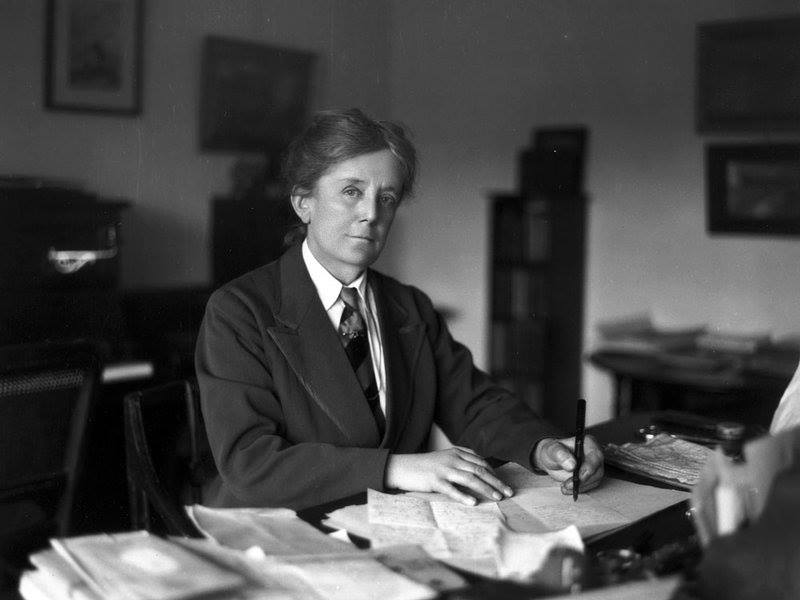
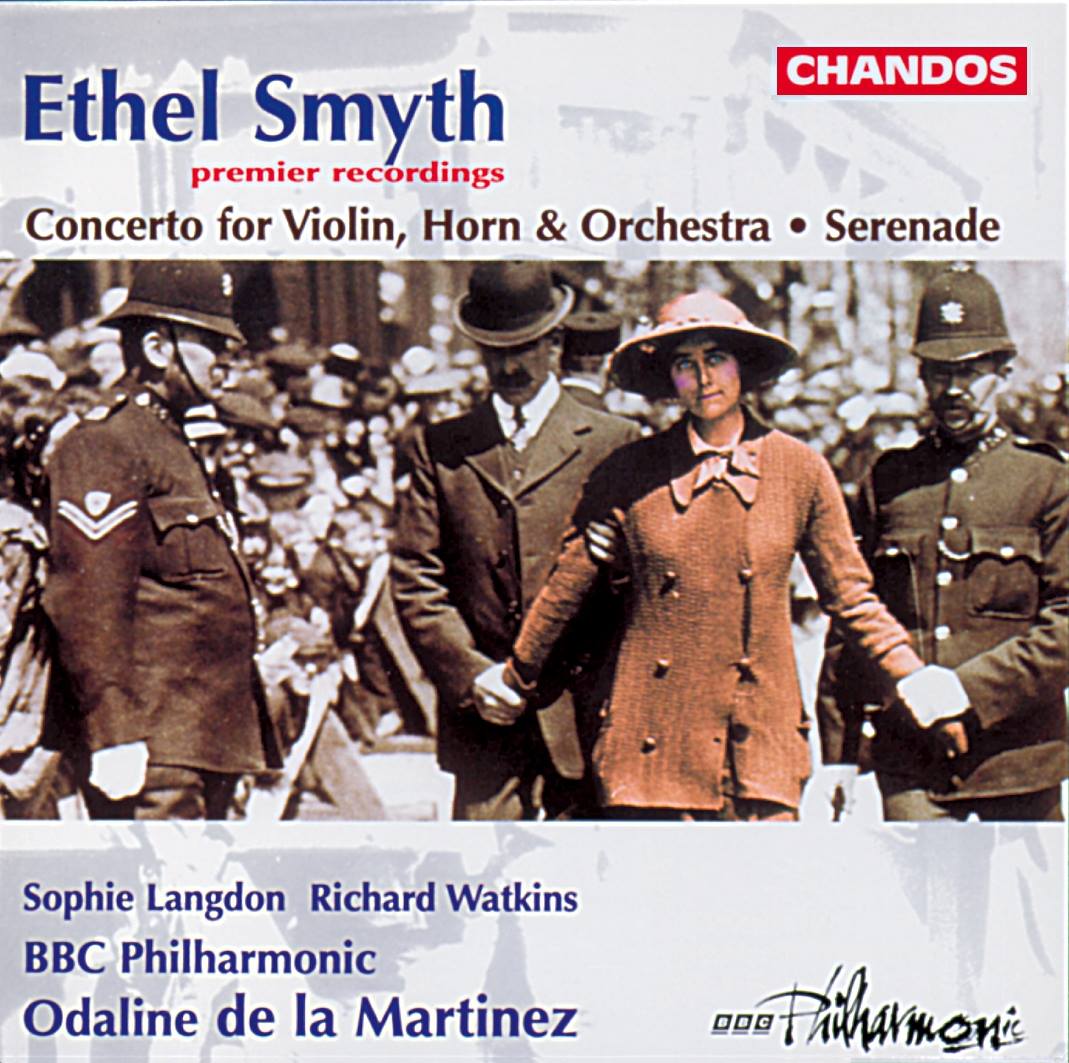
    We’ll also enjoy a very impressive Serenade in D – really more of a symphony – by composer and hell-raising suffragette Dame Ethel Smyth. Smyth served time in prison for putting out the windows of politicians who opposed a woman’s right to vote. When Sir Thomas Beecham went to visit her in jail, he found her conducting her associates through the bars of her window with a toothbrush as they sang “The March of the Women,” also composed by Smyth, while gathering for exercise in the prison courtyard.

    These women were nothing if not composed. Join me for musical contributions by women, all month long. They’ll punctuate my programming, beginning this afternoon from 12 to 4 p.m. EDT, on WWFM – The Classical Network and wwfm.org.


    CLOCKWISE FROM LEFT: Clara Schumann, Barbara Strozzi, Julia Wolfe, and Ethel Smyth (under arrest)
  • Celebrating Kapralova and Smyth on WWFM

    Celebrating Kapralova and Smyth on WWFM

    In all likelihood you’ll be asleep by that time, thanks to the clock change, but in the event that you’ve overcompensated with too much caffeine, consider joining me tonight for “The Lost Chord,” when the focus will be on outstanding works by two extraordinary female composers.

    Vitězslava Kápralová (1915-1940) was one of the great hopes of Czech music, a figure who undoubtedly would be much better known had she not died of tuberculosis at the age of 25. As it stands, her reputation is only beginning to emerge from the shadow of her teacher and lover, Bohuslav Martinu.

    Kápralová’s String Quartet was written while she was yet a student at the Prague Conservatory, where her teachers included Vitězslav Novák and Václav Talich. (She studied with Martinu later in Paris.) The work was completed in 1936, when Kápralová was about 21 years-old.

    More about Kápralová here, in this article written to mark her centenary in 2015:

    https://www.telegraph.co.uk/culture/music/classicalmusic/11365848/The-tragedy-of-Europes-great-forgotten-female-composer.html

    Ethel Smyth (later DAME Ethel Smyth, 1858-1944) was one of the most vocal advocates of the women’s suffrage movement in England. She overcame early opposition to a career in music on the part of her father to receive the praise of George Bernard Shaw, who called her Mass “magnificent.”

    However, her works were often better-appreciated abroad. Her operas, in particular, were embraced in Germany. One of them, “Der Wald,” was the only opera by a woman composer mounted by New York’s Metropolitan opera for over a century!

    Smyth served time in prison for putting out the windows of politicians who opposed a woman’s right to vote. She also wrote for the cause “The March of the Women.” When Sir Thomas Beecham went to visit her in jail, he witnessed her conducting through the bars of her window with a toothbrush as her associates gathered for exercise in the courtyard.

    Smyth’s “Serenade in D” – a symphony in all but name – was her first orchestral score, composed in 1890, when she was about 32 years-old. In my opinion, it’s better than just about anything composed by her contemporary, Sir Hubert Parry, and much more compelling than the symphonies of Sir Charles Villiers Stanford.

    More about Smyth here, in this piece put together in connection with a revival of her opera, “The Wreckers,” by the great Leon Botstein:

    https://www.npr.org/sections/deceptivecadence/2015/07/23/410033088/one-feisty-victorian-womans-opera-revived

    I hope you’ll join me for music by these two extraordinary women – “A Woman’s Place is in the Concert Hall” – this Sunday night at 10:00 EDT, on WWFM – The Classical Network and wwfm.org.


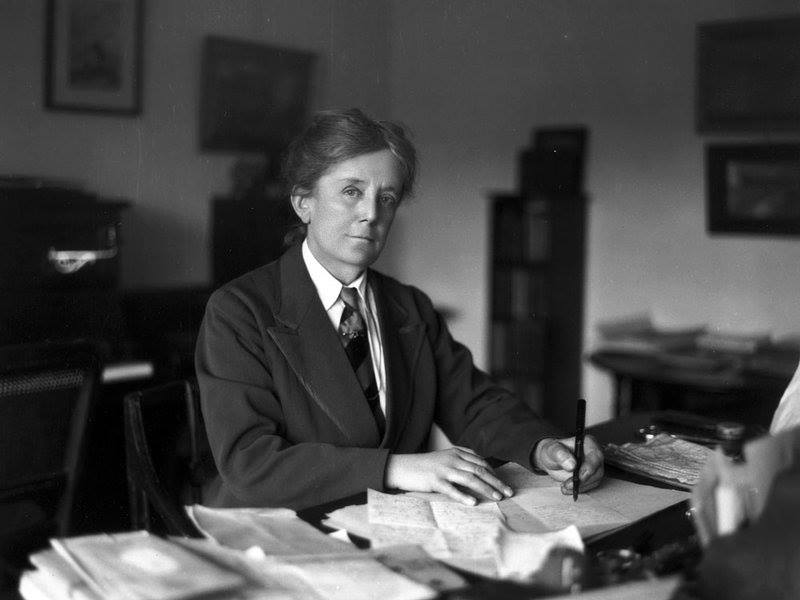
    PHOTOS: Ethel Smyth at her desk (top); Vitězslava Kápralová taking up the baton (she studied conducting in Prague with Václav Talich and in Paris with Charles Munch)

  • NBCO Women Composers Concert This Sunday

    NBCO Women Composers Concert This Sunday

    Thanks to Mark Hyczko, artistic director of the New Brunswick Chamber Orchestra, for stopping by WWFM – The Classical Network for today’s Noontime Concert. If you’re interested in attending the next NBCO@Zimmerli salon at the Zimmerli Art Museum at Rutgers University this Sunday at 2 p.m., be sure to reserve your space. It’s a fascinating program made up of works by women composers – Fanny Mendelssohn, Amy Beach, Libby Larsen, Jennifer Higdon and Caroline Shaw. The event is free, but the room fills up fast. Reservations are available at newbrunswickchamberorchestra.org.

  • Celebrating Women Composers Kápralová and Smyth

    Celebrating Women Composers Kápralová and Smyth

    It’s the first day of spring – and Palm Sunday, to boot. With March already slipping away, on this week’s edition of WWFM’s “The Lost Chord,” I’ve opted to focus on contributions of two female composers in honor of Women’s History Month. Both were featured on my earlier, WPRB salute.

    However, I feel in some way that I could have made a stronger case for Vitězslava Kápralová (1915-1940). While I called her one of the great hopes of Czech music, a figure who undoubtedly would be much better known had she not died of tuberculosis at the age of 25, I opted to play her “Partita for Strings and Piano.” While impressive, the work was written very much under the influence of her teacher and lover, Bohuslav Martinu. Martinu’s fingerprints are all over the piece.

    Her String Quartet, on the other hand, was written while she was yet a student at the Prague Conservatory, where her teachers included Vitězslav Novák and Václav Talich. (She studied with Martinu later in Paris.) The work was completed in 1936, when Kápralová was about 21 years-old. In many ways it is a more distinctive and appealing creation. Judge for yourself tonight.

    More about Kápralová here, in this article written to mark her centenary in 2015:

    http://www.telegraph.co.uk/culture/music/classicalmusic/11365848/The-tragedy-of-Europes-great-forgotten-female-composer.html

    Then we’ll have a chance to enjoy a second hearing of Ethel Smyth’s “Serenade in D” – a symphony in all but name – which brought such a positive response when I played it a few weeks ago on WPRB. What I neglected to mention on that occasion was that the piece was Smyth’s first orchestral score, composed in 1890, when she was about 32 years-old.

    I did state that the “Serenade” is better than just about anything composed by her contemporary, Sir Hubert Parry, and much more compelling than the symphonies of Sir Charles Villiers Stanford, and I stand by those assessments. It’s a remarkably assured work, and one that deserves to be far better known.

    Smyth (later DAME Ethel Smyth, 1858-1944) was one of the most vocal advocates of the women’s suffrage movement in England. She overcame early opposition to a career in music on the part of her father to receive the praise of George Bernard Shaw, who called her Mass “magnificent.”

    However, her works were often better-appreciated abroad. Her operas, in particular, were embraced in Germany. One of them, “Der Wald,” was the only opera by a woman composer mounted by New York’s Metropolitan opera for over a century!

    Smyth served time in prison for putting out the windows of politicians who opposed a woman’s right to vote. She also wrote for the cause “The March of the Women.” When Sir Thomas Beecham went to visit her in jail, he witnessed her conducting through the bars of her window with a toothbrush as her associates gathered for exercise in the courtyard.

    More about Ethyl Smyth here, in this piece put together in connection with a revival of her opera, “The Wreckers,” by the great Leon Botstein:

    http://www.npr.org/sections/deceptivecadence/2015/07/23/410033088/one-feisty-victorian-womans-opera-revived

    I hope you’ll join me tonight on “The Lost Chord” for music by these two extraordinary women – “A Woman’s Place is in the Concert Hall” – this Sunday night at 10 ET, with a repeat Wednesday evening at 6; or that you’ll listen to it later as a webcast at wwfm.org.


    PHOTOS: Ethel Smyth at her desk (top); Vitězslava Kápralová taking up the baton (she studied conducting in Prague with Václav Talich and in Paris with Charles Munch)

  • Women Composers on WPRB

    Women Composers on WPRB

    Works by women composers permeate my record collection like so many veins of ore. Women’s History Month provides the perfect excuse to mine some of these and share them with a listening audience, which I will endeavor to do tomorrow morning on WPRB.

    However, until the start of the March, I had forgotten all about Marvin Rosen’s annual, month-long “In Praise of Woman” celebration, presented over four Wednesdays on his show Classical Discoveries. In putting together tomorrow’s playlist, I will plan to avoid as much as possible composers from the eras which are Marvin’s principle focus – that is to say, the medieval and Renaissance periods and music of our own time.

    All of the composers we’ll hear will have shuffled off this mortal coil, with a great emphasis on artists who lived and worked during the Romantic Era and into the first half of the 20th century. There may be one or two exceptions, but they will all be quite dead.

    This will allow me to supplement Marvin with music by a broad array of truly talented and neglected figures that have been eclipsed by even third-rate composers among their male contemporaries. For example, I took down from the shelf yesterday an orchestral serenade by Dame Ethel Smyth that knocked me sideways.

    Smyth, born in 1858, was a world-class rabble-rouser who became one of the most vocal advocates of the women’s suffrage movement in England. She overcame early opposition to a career in music on the part of her father to receive the praise of George Bernard Shaw, who called her Mass “magnificent.”

    However, her works were often better-appreciated abroad. Her operas, in particular, were embraced in Germany. One of them, “Der Wald,” was the only opera by a woman composer mounted by New York’s Metropolitan Opera for over a century! (Next season, the Met has finally decided to take a chance on another, when it will stage Kaija Saariaho’s “L’Amour de loin.”)

    Smyth served time in prison for putting out the windows of politicians who opposed a woman’s right to vote. She also wrote for the cause “The March of the Women.” When Sir Thomas Beecham went to visit her in jail, he witnessed her conducting through the bars of her window with a toothbrush as her associates gathered for exercise in the courtyard.

    To my ears, her “Serenade in D” is better than just about anything composed by Sir Hubert Parry (whose music I happen to enjoy) and much more compelling than the symphonies of Sir Charles Villiers Stanford.

    Tune in tomorrow morning to see if you agree. It’s all music by female composers, from 6 to 11 ET, on WPRB 103.3 FM and at wprb.com. We take a walk on the distaff side, on Classic Ross Amico.

Tag Cloud

Aaron Copland (92) Beethoven (95) Composer (114) Film Music (120) Film Score (143) Film Scores (255) Halloween (94) John Williams (185) KWAX (229) Leonard Bernstein (100) Marlboro Music Festival (125) Movie Music (135) Opera (198) Philadelphia Orchestra (88) Picture Perfect (174) Princeton Symphony Orchestra (106) Radio (87) Ralph Vaughan Williams (85) Ross Amico (244) Roy's Tie-Dye Sci-Fi Corner (290) The Classical Network (101) The Lost Chord (268) Vaughan Williams (103) WPRB (396) WWFM (881)

DON’T MISS A BEAT

Receive a weekly digest every Sunday at noon by signing up here


RECENT POSTS