Tag: Zdeněk Fibich

  • Czech Composers’ Illicit Love Affairs

    Czech Composers’ Illicit Love Affairs

    After 28 years of intimacy, I imagine there are moments when any relationship can feel strained. Without proper maintenance, even the strongest edifice can develop fissures. Lack of appreciation, lack of trust, unapologetic exploitation, and downright condescension hasten the erosion of kindly feelings.

    I’m not saying that was the case with these Czech composers, but only just emerging from the slight regard I experienced at WWFM, after nearly three decades of sharing my life’s blood, I feel an especial sympathy for those who were compelled to move on.

    Happily, I have found a loving home at KWAX, the radio station of the University of Oregon, where my shows continue to air in syndication, while I regroup, record, and reestablish my presence.

    All this is preamble to my thesis this week on “The Lost Chord,” on which I’ll present two examples of Czech composers whose newfound love resulted in flowering creativity.

    Anyone at all acquainted with the life story of Leoš Janáček knows about his relationship with Kamila Stasslova. Stasslova was the married woman, 38 years Janáček’s junior, who was the recipient of his “intimate letters” (hence, the subtitle of his autobiographical String Quartet No. 2). Though the relationship was a chaste one, she instilled in the composer an ardor that propelled him to the creation of a series of masterworks that spanned his final decade. This is the music that essentially made Janáček’s reputation.

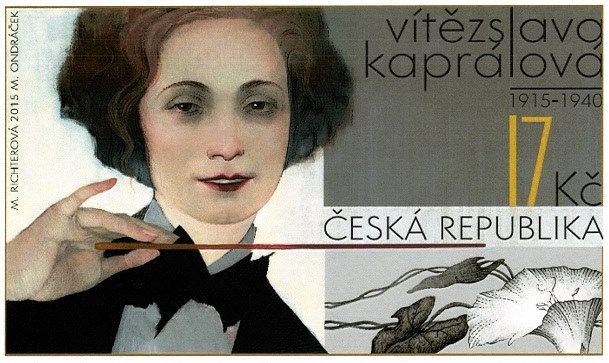
    Less well-known perhaps is the case of Vitězslava Kaprálová. As both a composer and a conductor, Kaprálová undoubtedly would have achieved much greater things had her life not been cut short by tuberculosis at the age of 25. Among her teachers were Vitězslav Novák, Václav Talich, Charles Munch, Nadia Boulanger and Bohuslav Martinů.

    Her relationship with Martinů deepened into one of romantic love, which fueled some of the older composer’s most powerful works, even as he grappled with his emotional turmoil, caught as he was between his wife and an irresistible attraction to his star pupil.

    Kaprálová reciprocated, producing a number of pieces under Martinů’s influence, generally submitting them for his approval. One such work was the “Partita for Piano and String Orchestra,” composed in 1938 and 1939. Martinů is said to have made a substantial contribution to its final version.

    But really the idea for this particular topic grew out of a consideration of Zdeněk Fibich, the unsung Czech master who was roughly nine years younger than Dvořák. Fibich lived something of a turbulent emotional life. When his first wife was about to give birth to twins, one of her sisters came to help out with the delivery. The sister and one of the newborns fell ill and died. They were followed within two years by the other child and Fibich’s wife.

    Fibich promptly married another of his wife’s sisters, only to abandon her and the son she bore him, in favor of one of his pupils, Anežka Schulzová. He documented the affair, musically, in his collection of piano pieces, “Moods, Impressions and Reminiscences,” composed between 1892 and 1899. He referenced material therein in a number of works written during the last decade of his life.

    One of these was the Symphony No. 2, which incorporates the musical reminiscence about the day he declared his love to Schulzová. This occurs in the second movement of the symphony, with another full-blown statement in the finale.

    Alas, these Czechs are not alone in having bounced. I hope you’ll join me for “Bohemian Lifestyle: Illicit Love in Czech Music,” now exclusively in syndication. You’ll find my shows on KWAX, with a link to the times of their streaming below.


    Keep in mind, the station is on the West Coast, so there’s a three-hour time difference – actually rather convenient for those of us located in the vicinity of WWFM. Here are the conversions of the respective air-times:

    PICTURE PERFECT – Fridays on KWAX at 5:00 PACIFIC TIME (8:00 PM EDT)

    THE LOST CHORD – Saturdays on KWAX at 4:00 PACIFIC TIME (7:00 PM EDT)

    https://kwax.uoregon.edu/


    In radio as in life: Vítězslava Kaprálova finds new love with Bohuslav Martinů
  • Sibelius Beethoven & Starry Inspiration

    Sibelius Beethoven & Starry Inspiration

    It’s easy to be seduced by a platitude of one’s own creation, especially when it also happens to double as a bon mot. Cassius must have been rather puffed up at his own cleverness when he observed, “The fault, dear Brutus, is not in our stars, but in ourselves.” Yet just because something sounds good or has the ring of truth doesn’t necessarily mean that it’s so.

    When you join me for today’s Noontime Concert on The Classical Network, you will learn that the impetus for the creation of both Jean Sibelius’ Sonatina for Violin and Piano, Op. 80, and Beethoven’s “Razumovsky” Quartet, Op. 59, No. 2, lay at least in part in their composers’ fascination with the heavens.

    Though Sibelius was enthralled by the violin from an early age – he even entertained thoughts for a time of becoming a concert virtuoso – he was 50 years-old by the time he composed his sonatina in 1915. According to an entry in his diary, his nights were filled with dreams of his childhood and his youthful ambitions to become a world-class violinist. He notes that these childhood memories were very much tied up with “the sky of my childhood and stars… lots of stars.”

    If we’re to believe Beethoven pupil Carl Czerny, stars are also at the heart of Beethoven’s quartet of 1806. Allegedly, the composer was inspired to write the slow movement while contemplating the heavens.

    If stars had any influence over neglected Czech composer Zdenek Fibich, it was in the form of star-crossed love, at least for a time. Fibich’s wife died in childbirth when he was in his early 20s. He then married her sister, and though the union lasted for 20 years, he ultimately found true happiness only with a former student, who became the inspiration for many of his mature works. Fibich’s Piano Quintet in D major, Op. 42, of 1893 actually dates from the waning years of his second marriage.

    Fibich was also star-crossed in that he failed to embrace the Czech nationalism of his older contemporaries, especially Antonin Dvořák, and it is probably for this reason more than any other that his music tends not to be remembered. I think you’ll be very pleased to make the acquaintance of Fibich’s quintet. The work exists in two versions: the more frequently encountered instrumentation for piano and strings, and the version we’ll hear this afternoon for the striking combination of piano, violin, clarinet, horn, and cello.

    The heavenly performances will be by superstars of the Lenape Chamber Ensemble: violinists Cyrus Beroukhim and Emily Daggett Smith, violist Catherine Beeson, cellist Arash Amini, clarinetist Alan R. Kay, hornist David Jolley, and pianist Marcantonio Barone. To learn more about this Bucks County-based institution (established by Mary Pitcairn in 1975), visit Lenape’s website, at lenapechamberensemble.org.

    There will be plenty of time – and of course space – for more stellar music following today’s Noontime Concert broadcast. We’ll probe a galaxy of cosmic selections, from 12 to 4 p.m. EST, on WWFM – The Classical Network and wwfm.org.


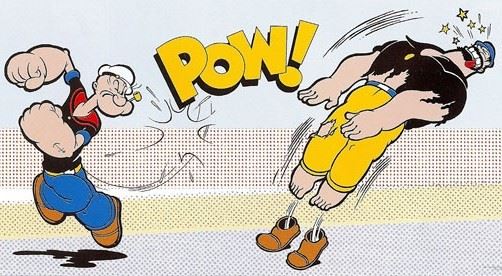
    IMAGE: Brutus sees stars

  • Czech Composers Love and Masterpieces

    Czech Composers Love and Masterpieces

    Anyone at all acquainted with the life story of Leoš Janáček knows about his relationship with Kamila Stasslova. Stasslova was the married woman, 38 years Janáček’s junior, who was the recipient of his “intimate letters” (hence, the subtitle of his autobiographical String Quartet No. 2). Though the relationship was chaste one, she instilled in the composer an ardor which propelled him into the creation of a series of masterworks that spanned his final decade. This is the music which essentially made Janáček’s reputation.

    This Sunday night on “The Lost Chord,” we’ll have two more examples of Czech extramarital love that resulted in flowering creativity. Vitězslava Kaprálová undoubtedly would be much better known had she not died of tuberculosis at the age of 25. The brilliant Kaprálová seemed poised to become the best-known woman composer and conductor in Europe. Her teachers included Vitězslav Novák, Václav Talich, Charles Munch, Nadia Boulanger and Bohuslav Martinů.

    Her relationship with Martinů deepened into one of romantic love, which fueled some of the older composer’s most powerful works, as he grappled with his emotional turmoil, caught as he was between his wife and an irresistible attraction to his star pupil.

    Kaprálová reciprocated, producing a number of pieces under Martinů’s influence, generally submitting them for his approval. One such work was the “Partita for Piano and String Orchestra,” composed in 1938 and 1939. Martinů is said to have made a substantial contribution to its final version.

    The idea for this particular thesis came from a consideration of Zdeněk Fibich, the unsung Czech master who was roughly nine years younger than Dvořák. Fibich led something of a turbulent emotional life. When his first wife was about to give birth to twins, one of her sisters came to help out with the delivery. The sister and one of the newborns fell ill and died. They were followed within two years by the other child and Fibich’s wife.

    Fibich promptly married another of his wife’s sisters, only to abandon her and the son she bore him, in favor of one of his pupils, Anežka Schulzová. He documented the affair, musically, in his collection of piano pieces, “Moods, Impressions and Reminiscences,” composed between 1892 and 1899. He referenced material therein in a number of works written during the last decade of his life.

    One of these was the Symphony No. 2, which incorporates the musical reminiscence about the day he declared his love to Schulzová. This occurs in the second movement of the symphony, with another full-blown statement in the finale.

    Join me for this hour of unbalanced Czechs – “Bohemian Lifestyle: Illicit Love in Czech Music” – this Sunday night at 10 EDT on WWFM – The Classical Network; or listen to it later as a webcast, at wwfm.org.


    PHOTOS: The woman who stole Martinů’s heart gets her own postage stamp (top); and Zedněk Fibich, lady killer

  • Spring Music to the Rescue on WPRB

    Spring Music to the Rescue on WPRB

    Spring needs our help! A good part of the season so far has been cloaked, in the Philadelphia-Princeton area, in temperatures in the 50s and 60s. I’d have no complaints, except for the fact that a month from now, you know it is going to be 90 degrees!

    This Thursday morning on WPRB, we’ll stop short of human sacrifice, but we will try to breathe life into the season with music of a vernal inclination. Among possible candidates for the playlist are “Enter Spring” by Frank Bridge, the cantata “The Romance of Spring” by Zdeněk Fibich, “The Myth of Spring” by Lodewijk Mortelmans, “A Spell for Green Corn” by the late Sir Peter Maxwell Davies, Joachim Raff’s “Ode to Spring,” and the most thrilling performance of Robert Schumann’s “Spring Symphony” you have never heard.

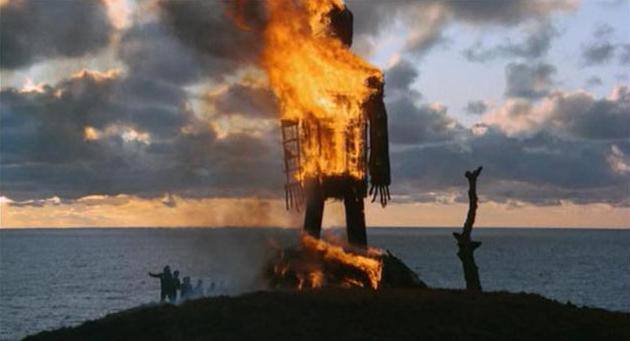
    Failing that, we’ll start locking people in the Wicker Man, tomorrow morning from 6 to 11 EDT, on WPRB 103.3 FM and at wprb.com. One way or another we’ll be lolling in the daffodils, on Classic Ross Amico.

  • Czech Composers’ Forbidden Love Affairs

    Czech Composers’ Forbidden Love Affairs

    Anyone at all acquainted with the life story of Leoš Janáček knows about his relationship with Kamila Stasslova. Stasslova was the married woman, 38 years Janáček’s junior, who was the recipient of his “intimate letters” (hence, the subtitle of his autobiographical String Quartet No. 2). Though the relationship was chaste one, she instilled in the composer an ardor which propelled him into the creation of a series of masterworks that spanned his final decade. This is the music which essentially made Janáček’s reputation as a composer for the ages.

    This Sunday night on “The Lost Chord,” we’ll have two more examples of Czech extramarital love that resulted in flowering creativity. Vitězslava Kaprálová undoubtedly would be much better known had she not died of tuberculosis at the age of 25. The brilliant Kaprálová seemed poised to become the best-known woman composer and conductor in Europe. Her teachers included Vitězslav Novák, Václav Talich, Charles Munch, Nadia Boulanger and Bohuslav Martinů.

    Her relationship with Martinů deepened into one of romantic love, which fueled some of the older composer’s most powerful works, as he grappled with his emotional turmoil, caught as he was between his wife and an irresistible attraction to his star pupil.

    Kaprálová reciprocated, producing a number of pieces under Martinů’s influence, generally submitting them for his approval. One such work was the “Partita for Piano and String Orchestra,” composed in 1938 and 1939. Martinů is said to have made a substantial contribution to its final version.

    The idea for this particular thesis came from a consideration of Zdeněk Fibich, the unsung Czech master who was roughly nine years younger than Dvořák. Fibich led something of a turbulent emotional life. When his first wife was about to give birth to twins, one of her sisters came to help out with the delivery. The sister and one of the newborns fell ill and died. They were followed within two years by the other child and Fibich’s wife.

    Fibich promptly married another of his wife’s sisters, only to abandon her and the son she bore him, in favor of one of his pupils, Anežka Schulzová. He documented the affair, musically, in his collection of piano pieces, “Moods, Impressions and Reminiscences,” composed between 1892 and 1899. He referenced material therein in a number of works written during the last decade of his life.

    One of these was the Symphony No. 2, which incorporates the musical reminiscence about the day he declared his love to Schulzová. This occurs in the second movement of the symphony, with another full-blown statement in the finale.

    I hope you’ll join me for “Bohemian Lifestyle: Illicit Love in Czech Music,” this Sunday night at 10 ET. “The Lost Chord” repeats Friday morning at 3, or you can listen to it later as a webcast, at http://www.wwfm.org.

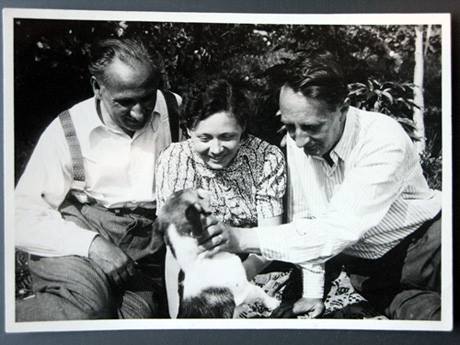
    PHOTO: (left to right) Václav Kaprál, Vítězslava Kaprálová аnd Bohuslav Martinů, with friend

Tag Cloud

Aaron Copland (92) Beethoven (95) Composer (114) Film Music (120) Film Score (143) Film Scores (255) Halloween (94) John Williams (185) KWAX (229) Leonard Bernstein (100) Marlboro Music Festival (125) Movie Music (135) Opera (198) Philadelphia Orchestra (88) Picture Perfect (174) Princeton Symphony Orchestra (106) Radio (87) Ralph Vaughan Williams (85) Ross Amico (244) Roy's Tie-Dye Sci-Fi Corner (290) The Classical Network (101) The Lost Chord (268) Vaughan Williams (103) WPRB (396) WWFM (881)

DON’T MISS A BEAT

Receive a weekly digest every Sunday at noon by signing up here


RECENT POSTS