Tonight, it’s a tribute to endurance and “cama-der-oddity,” as we celebrate the 100th episode of Roy’s Tie-Dye Sci-Fi Corner.
What began during the pandemic as a lifeline to sanity and community, has become a weekly institution, with classic sci-fi movie and television fans joining us from around the globe – the U.S., Canada, the U.K., Australia, and (most notoriously) Hell, Norway – to weigh in on subjects ranging from “The War of the Worlds” to “Santa Claus Conquers the Martians.”
Did you know: I was not actually Roy’s first cohost? Tune in for lots more trivia, hosannas, and audience participation. Highlights will be shared, prizes will be awarded, and my annual birthday card to Roy will be posted.
Put on your monkey suit, get all dolled up, and join us in the comments section. It will be 100 toasts to Roy, when we livestream on Facebook, this Friday evening at 7:00 EDT!
Does anybody remember Jack Beeson (1921-2010)? I mean, do his works get performed anymore? Maybe in opera departments in music conservatories. He was part of that whole movement by mid-century American composers to write tonal, accessible opera, frequently on American themes. Carlisle Floyd and Dominick Argento were among the most successful. And Beeson was no slouch.
By disposition, Beeson was an easygoing Midwesterner, a transplant from Muncie, Indiana, to New York City, where he taught at Columbia University for 20 years. Somehow he managed not to be squeezed between the warring artistic factions of uptown academics and downtown avant-gardists. Throughout the contentious ‘60s, Beeson kept right on composing well-crafted music that spoke directly to his audiences. He also gave free rein to his pupils to pursue their own voices, offering guidance only when he deemed it necessary. Strictly speaking, he thought it was impossible to teach composition. One could only teach technique.
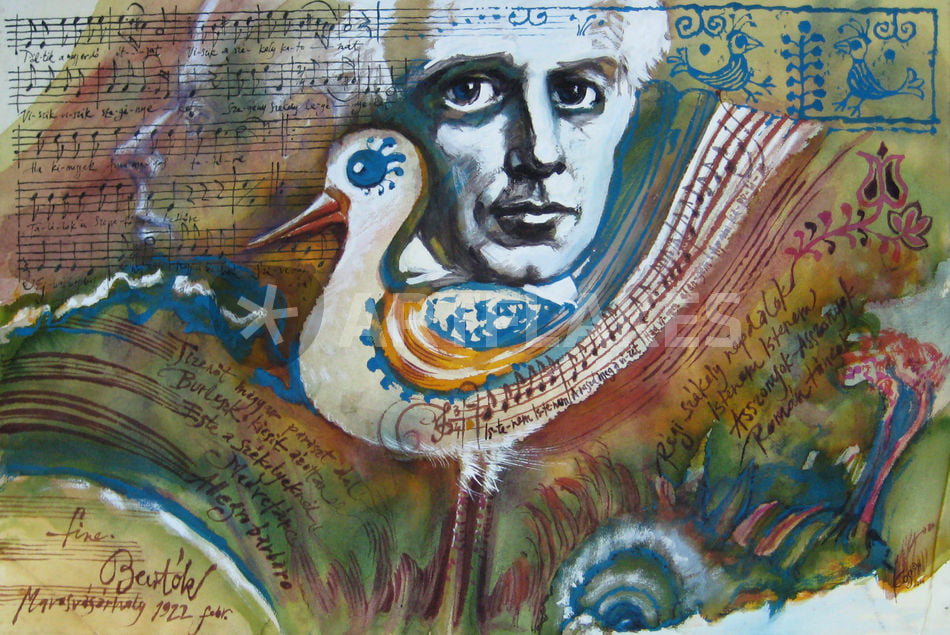
He himself had been inspired to write opera because of early exposure to radio broadcasts of the Metropolitan Opera. He claimed to be the only American composition student of Béla Bartók, whose reservations he overcame with the observation that it might be possible to learn something from someone who thought he couldn’t teach. Bartók spent his last years in New York, where he was supported by a research fellowship from Columbia.
Among Beeson’s operas are “Hello Out There!” (1953), “The Sweet Bye and Bye” (1956, revised 1958), and “Lizzie Borden” (1965).
Borden, of course, entered American folklore after she was acquitted of the axe murders of her father and stepmother in Fall River, Massachusetts, in August 1892. The lurid details and the fact that no one else was ever charged with the crimes have only cemented the story in the American consciousness. The story also became the subject of Morton Gould’s ballet, “Fall River Legend.”
Here’s “Lizzie Borden” from the New York City Opera (introduced by Martin Bookspan and Beverly Sills):
Beeson’s Symphony No. 1
Peter G. Davis remembers Beeson in the New York Times:
It’s Bastille Day. A French toast for breakfast, and a nod to two of France’s greatest composers of the Revolutionary Era.
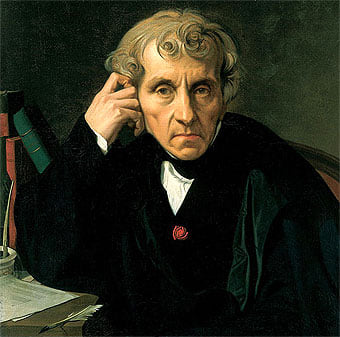
On top of the usual burden of trying to cobble together a living as working musicians, both Étienne-Nicolas Méhul (1763-1817) and Luigi Cherubini (1760-1842) bore the additional stress of having to navigate an incendiary political environment.
When Méhul’s opera “Adrien” was banned, he quickly figured out which side his baguette was buttered on and began writing propaganda pieces and patriotic songs. Vive la France! He was rewarded by being the first composer named to the newly-established Institute de France in 1795. He was also installed as an inspector at the Paris Conservatory.
Allegedly, he was one of the favorite composers of Napoleon, with whom he was on friendly terms. He became one of the first recipients of Napoleon’s Légion d’honneur. According to musicologist and Berlioz biographer David Cairns, Méhul was also the first composer to be classified as “Romantic.”
Cherubini was born in Florence. He arrived in France in 1785. There, he was introduced to Marie Antoinette and, of necessity, as a musician, had many interactions with the aristocracy – which likely caused sweat to bead on his forehead in 1789.
Following the Revolution, Cherubini (born Maria Luigi Carlo Zenobio Salvatore Cherubini) adopted the French version of his name (Marie-Louis-Charles-Zénobi-Salvador Cherubini). It was during this period that his music began to really take flight. His works became more adventurous, more dynamic, more heroic. It’s not for no reason that Beethoven claimed him as an influence. His rescue opera “Lodoiska” served as a model for Beethoven’s “Fidelio.” Beethoven is also said to have found inspiration in Cherubini for the writing of his Fifth Symphony.
Following the Revolution, Cherubini took great care to play down his former aristocratic connections and cleave to the prevailing government. Every year for over a decade, he was mindful of composing at least one overtly patriotic work.
While Napoleon is said to have disliked Cherubini’s music, finding it “too complex,” he did appoint him director of music in Vienna. Perhaps Cherubini’s best-known work, the comic opera “Les deux journée” (“The Two Days”), was written in an intentionally simplified style and became an enormous hit. Beethoven kept Cherubini’s score on his desk at the time he was engaged in the writing of “Fidelio.” The incident upon which the opera is based allegedly occurred during the time of the Revolution, but again, treading lightly, Cherubini and his librettist, Jean-Nicolas Bouilly, erred on the side of caution, setting the action in a safely remote 1647.
Gradually, as Cherubini’s operas began to fall out of fashion, he transitioned to writing church music. His Requiem in C minor, again, was particularly admired by Beethoven (also Schumann and Brahms).
In 1822, Cherubini became director of the Paris Conservatory. There he came into conflict with a young firebrand by the name of Hector Berlioz. Berlioz’s withering and amusing portrayal of Cherubini in his “Mémoires,” as a hidebound pedant, has colored the elder composer’s reputation to the present day, more indelibly than has any of Cherubini’s own music.
However, during his lifetime, the composer enjoyed fame and fortune and was the recipient of France’s highest and most prestigious honors.
Méhul, Symphony No. 3
Méhul, “Le chant du départ”
Cherubini, “Anacréon” Overture
Cherubini, “Hymn du Panthéon”
Berlioz’s arrangement of “La Marseillaise”
They kept their heads: Luigi Cherubini (top) and Étienne-Nicolas Méhul
While Ernest Gold embarked on his career as a composer of symphonies, his heart was always in the world of Max Steiner. Gold was born Ernst Sigmund Goldner, in Vienna, 100 years ago today.
If you missed my tribute to Gold Sunday night on “The Lost Chord,” on WWFM – The Classical Network, the show is now posted as a webcast. On the program is his String Quartet No. 1, his song cycle “Songs of Love and Parting,” and two of his most famous film themes – those for “Exodus” and “It’s a Mad, Mad, Mad, Mad World.” The songs are performed by Gold’s wife of 19 years, Marni Nixon, the soprano who “ghost voiced” for a number of the musicals’ leading ladies, in films like “The King and I,” “My Fair Lady,” and “West Side Story.”
As an addendum, it’s only within the last year or so that I discovered Gold’s Piano Concerto, written when he was 17 years-old. The recording appeared on a CD with George Antheil’s music for the film “Dementia.” Gold worked as an orchestrator on a number of Antheil’s films. When Antheil fell ill and was unable to follow through on a commitment to score “On the Beach,” Gold stepped up. The music earned Gold an Academy Award nomination and a Golden Globe.
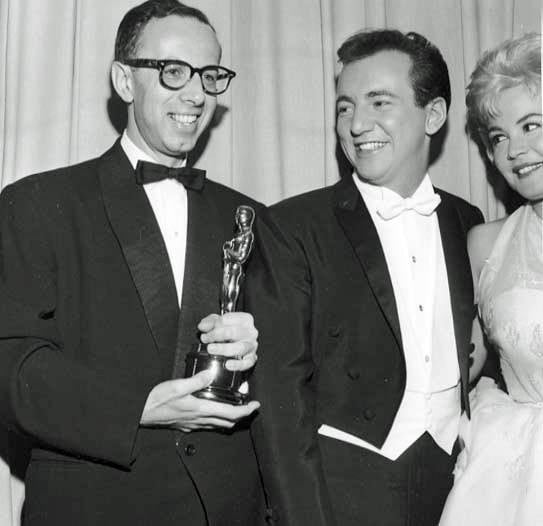
In all, Gold would be nominated by the Academy four times. He was recognized with an Oscar for his powerful contribution to “Exodus” in 1960. Here’s another nice Gold tribute:
Eddie Harris riffs on “Exodus”:
Not really my cup of tea, but “Fight for Survival” from “Exodus” was sampled (a string passage, reversed) by Moby, great-great-great nephew of Herman Melville (!), for his song “Porcelain.”
All that glitters is Gold. Happy birthday, Ernest Gold!
PHOTO: With Bobby Darin, Sandra Dee, and his “Exodus” Oscar