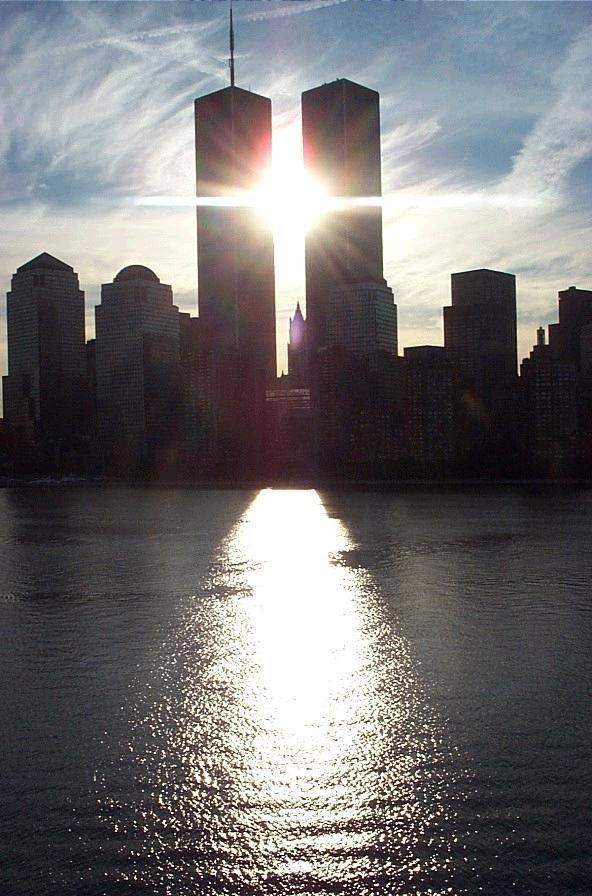
9-11: A morning for reflection. It may have been 19 years ago today, but everything about it is still so vivid.
When my telephone rang around 9:00 that morning, I was already at work, at home, on my computer, oblivious to the news. I picked up. A friend was on the line. She said a plane had crashed into the World Trade Center. I imagined the Empire State Building and the B-25 accident, back in the 1940s. I’m thinking maybe a piper. Terrible in itself, but accidents do happen. Then she said one of the towers “fell over.” That was what propelled me to the TV.
Nothing could have prepared us for the spectacle and terror of that morning. Nothing would ever be the same.
I was one of the lucky ones. My parents happened to be in the air at that time, on the way to China. They were traveling west across Pennsylvania. At 10:03, United States Airlines Flight 93 crashed near Shanksville, southeast of Pittsburgh. The phone lines were jammed. Nobody owned a cell phone. It was a long day until I learned that my parents’ flight had been grounded in Pittsburgh.
My heart goes out to those who died senselessly, and for their survivors, for whom the day remains vivid and painful, I’m sure.
Here’s a work of solace and consolation: Robert Moran’s “Trinity Requiem” (2011), named for Trinity Wall Street, the so-called “Ground Zero church” in Lower Manhattan, composed to mark the attacks’ tenth anniversary:
The horror and surreality of the day are perfectly reflected in Gloria Coates’ String Quartet No. 8 (2001-02), with its eerie approximations not only of plane engines but also a kind of emotional instability. I know it gives me a sinking feeling, and that’s pretty much how it was to experience 9/11. If you’re looking for solace, do not go here:
Kevin Puts processes expectancy, uncertainty, and hope in his Symphony No. 2 (2002):
Dona nobis pacem.