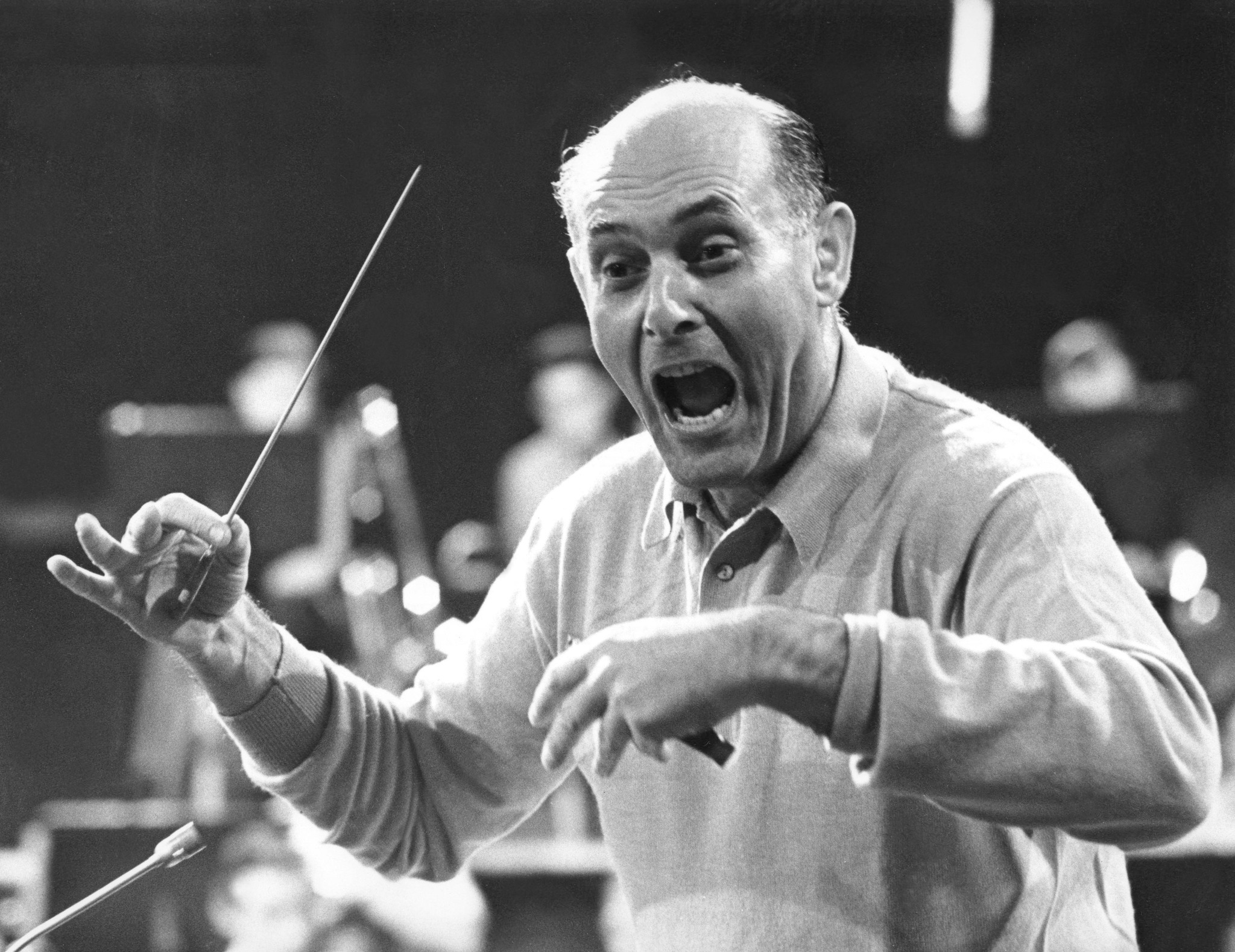
I don’t know about you, but if I were a kid I’d be all over my parents to be able to attend a program called “Liszt and the Devil.”
In one of his celebrated “Young People’s Concerts,” from 1970, Leonard Bernstein makes the bold assertion that “A Faust Symphony” is Franz Liszt’s greatest work. I think “grandest” would be less controversial. I mean, Liszt was the composer of probably the most revolutionary piano sonata of the 19th century.
Despite Bernstein’s effusion that “A Faust Symphony” is one of the monumental works of the whole Romantic Movement, it is hardly the most frequently programmed of his compositions. His piano concertos are heard much more frequently. So are some of his symphonic poems, at least on the radio. (When was the last time you heard “Les Preludes” in concert?) He wrote oratorios, masses, organ works, songs, and even an opera. His later works are on another plane entirely, as he hurled his lances into a future he would never live to see.
As a pianist, he is frequently cited as a kind of proto-rock star, whipping his audiences into extravagant displays of emotion. Men wept and women fainted. Some fought over carelessly abandoned gloves or cigar butts or even his coffee dregs. Doctors seriously debated the causes and effects of “Lisztomania,” as it was described, and it remains a topic of speculation in academic and medical circles today.
Liszt was a peculiar mix of prophet and showman. He could be flashy or profound, fiendishly difficult or insistently memorable, offputtingly vulgar or transcendentally beautiful. Interestingly, in his mid-30s, he retired from public life as a recitalist (recital, by the way, was a term he coined), shifting his focus instead to composition, conducting, teaching, and philanthropic efforts. In his mid-50s, he took the cloth. As the Abbé Liszt, he was, among other things, a licensed exorcist. Which takes us back to the matter at hand.
I happen to share Bernstein’s enthusiasm for “A Faust Symphony.” It’s always been a great favorite of mine. Sadly, you don’t really see it programmed very often anymore – if it ever was. But back in the day, Bernstein and Solti and maybe a few others kept it alive. Bernstein recorded it twice: with the New York Philharmonic for Columbia Records in 1960 and with the Boston Symphony Orchestra for Deutsche Grammophon in 1976. Riccardo Muti conducted it in Philadelphia, back in 1982 – sadly two years before my arrival in the City of Brotherly Love – and recorded it for EMI. The recording is very good. Come to think of it, I don’t think I’ve ever heard “A Faust Symphony” live. This must be rectified!
I love that Bernstein doesn’t talk down to the kids and lays some pretty heavy, adult concepts on them. Not only in the philosophical examination of the essential dichotomy of the human character, but also the nitty gritty of debauched adult behavior. I’m sure there are moments when the moms and dads in the audience are wondering whether maybe they should have taken the young ones to Radio City Music Hall instead. Around 28 minutes in, Bernstein delves into the Devil, the seduction of Gretchen, and “the wages of sin.”
It’s fun that Bernstein can go to the piano to illustrate so many of his musical points and that he’s got so much Liszt under his fingers.
This is the second “Young Person’s Concert” I’ve seen in which Bernstein gets so carried away conducting that he loses his baton (at 44 minutes in). The other was during a Sibelius program from 1965, in which he conducts the Symphony No. 2. In that instance, a moment after the baton takes flight, he reaches beneath the lectern and actually produces a spare! Here he rides it out with his bare hands, as Mephisto’s spirit of negation is itself negated by Gretchen’s innocence.
This is Liszt’s original version, by the way. Three years later, he appended a coda for chorus and tenor. That’s the version Bernstein recorded.
Bernstein knows a thing or two in comparing Liszt to Faust. He had a little bit of Faust in his own character, as well. But then, don’t we all?
Happy birthday, Franz Liszt!
“Young People’s Concert: Liszt and the Devil.” All in all, an intelligently presented, entertainingly delivered lecture and performance. I hope you enjoy it.
Bernstein’s classic 1960 recording with the New York Philharmonic
Also fun to hear “A Faust Symphony” turn up among the musical selections on the soundtrack to this restoration of the 1926 silent film “Masciste in Hell”