Tag: Afro-American Symphony

  • William Grant Still’s “Afro-American Symphony”

    William Grant Still’s “Afro-American Symphony”

    It’s hard to believe I made the following observations as recently as 2019, prior to this show’s first airing. So much has changed since then. William Grant Still has gone from a neglected master to probably one of the most frequently programmed American symphonists of his generation. The change may have been propelled by social and political trends, but if ever anyone deserved more notice, it’s this composer.


    As someone with an insatiable appetite for American symphonies composed during the first half of the 20th century, I try not to miss a performance or even a radio broadcast of music by Roy Harris, William Schuman, or Aaron Copland. But for as much as I adore these composers, the American symphonies that delight me the most, off the top of my head, are Charles Ives’ 2nd, Howard Hanson’s 2nd (the “Romantic”), and William Grant Still’s 1st (the “Afro-American”). I never get tired of listening to these, and they move me like few others.

    I am only too happy to include Still’s symphony, then, as a kind of capstone to my four-part survey of the landmark Black Composer Series of the 1970s – reissued on Sony Classical as a 10-CD boxed set – this week on “The Lost Chord.”

    The “Afro-American Symphony,” composed in 1930, is informed by African-American spirituals, the blues, and syncopated banjo-like riffs. Indeed, a banjo actually turns up in the work’s third movement.

    To me, the symphony has always been a kind of “portrait of the artist as a young man.” (Still was born in Woodville, Mississippi, and grew up in Little Rock, Arkansas.) In this respect, it puts me in the mind somewhat of Virgil Thomson “Symphony on a Hymn Tune,” which similarly draws on hymns and folk songs of his boyhood in Kansas City, Missouri.

    But Still’s music comes across as more personal, more sincere, and certainly less self-consciously “modernist.” It goes straight to my heart and then gets in my head so that it literally disturbs my sleep. It’s one of the great American symphonies. The concert suites from George Gershwin’s “Porgy and Bess” remain popular, but some enterprising music director should give the “Afro-American Symphony” a shot, because I know audiences will love it. (NOTE: Again, since I wrote this, the work has gone on to be played by seemingly every major American orchestra.)

    There is a solid Gershwin connection. Still quotes the melody of “I Got Rhythm” in the third movement of his symphony. And for good reason. It’s actually his! According to Eubie Blake, Gershwin was in the audience during one of Still’s performances in the pit band for Blake’s revue “Shuffle Along.” Still’s improvisation became the basis for Gershwin’s hit tune. (Blake was quick to add that the appropriation was probably inadvertent.)

    The “Afro-American Symphony” is now the best-known piece in the Black Composers Series, which originally appeared on vinyl between 1974 and 1978. But at the time of the recording’s original release that was by no means definitively the case. The only previous recording of the work, made by Karl Krueger and the Royal Philharmonic Orchestra, was available only through mail-order subscription. Exposure to this gem of a symphony, then, was comparatively limited.

    Thankfully, there have been a number of recordings since, but for me none match the commitment and loving attention to detail of the performance in this set, with Paul Freeman conducting the London Symphony Orchestra.

    Also included on today’s program will be “Markings,” by Ulysses Kay, composed in 1966 to the memory of Dag Hammerskjöld, secretary general of the United Nations. Called “the greatest statesman of our century” by John F. Kennedy, Hammarskjöld was killed in a plane crash in Zambia en route to ceasefire negotiations during the Congo Crisis of 1961. Hammarskjöld was awarded a posthumous Nobel Peace Prize.

    We’ll conclude on an “up” note, with the lively “Danse Nègre” from the “African Suite” of 1898, by Afro-English composer Samuel Coleridge-Taylor.

    I hope you’ll join me for the grand finale of my month-long survey of highlights from CBS Records’ forward-looking Black Composers Series – that’s “Black to the Future, Part IV,” on “The Lost Chord,” now in syndication on KWAX, the radio station of the University of Oregon!


    Clip and save the start times for all three of my recorded shows:

    PICTURE PERFECT, the movie music show – Friday at 8:00 PM EST/5:00 PM PST

    SWEETNESS AND LIGHT, the light music program – ALL NEW! – Saturday at 11:00 AM EST/8:00 AM PST

    THE LOST CHORD, unusual and neglected rep – Saturday at 7:00 PM EST/4:00 PM PST

    Stream them, wherever you are, at the link!

    https://kwax.uoregon.edu/

  • William Grant Still Afro-American Composer

    William Grant Still Afro-American Composer

    They say that still waters run deep.

    William Grant Still, frequently described as the “Dean of Afro-American Composers,” wrote a lot of attractive music, much of it informed by the black experience. This week on “The Lost Chord,” to coincide with Still’s birthday anniversary (born on this date in 1895), we’ll hear some of it, including the delightful Symphony No. 2, subtitled “Song of a New Race.” Also, a more serious work fueled by racial injustice, “And They Lynched Him on a Tree,” for double-choir, narrator and orchestra.

    Still, who died in 1978, emerged from unlikely circumstances – born in Woodville, Mississippi and raised in Little Rock, Arkansas – to become a major force in American music. Having abandoned a career in medicine for studies at the Oberlin Conservatory of Music and the New England Conservatory in Boston, where he studied with George Whitefield Chadwick, Still was a “first” in many respects.

    His Symphony No. 1, the “Afro-American Symphony” was the first written by a black composer to be performed by a major orchestra (the Rochester Philharmonic). He was the first to be given the opportunity to conduct a major orchestra (the Los Angeles Philharmonic, at the Hollywood Bowl). His opera, “Troubled Island,” became the first to be produced by a major company (the New York City Opera). Another of his operas, “A Bayou Legend,” was the first to be performed on national television (as late as 1981). His works were performed internationally by the Berlin Philharmonic, the London Symphony Orchestra, the BBC Symphony, and the Tokyo Philharmonic.

    Perhaps the least likely pupil of Edgard Varèse, Still incorporated jazz and blues elements into his concert music. He cut his teeth writing arrangements for Paul Whiteman, W.C. Handy, and Artie Shaw. According to Eubie Blake, one of Still’s improvisations in the pit during Blake’s revue “Shuffle Along” became the basis for Gershwin’s hit tune “I Got Rhythm.” (Blake conceded the appropriation was probably inadvertent.) Still and Gershwin were on friendly terms and made it a point to attend one and another’s performances.

    Listen to Still’s Symphony No. 2 – first performed in 1936 by Leopold Stokowski and the Philadelphia Orchestra – and see if you don’t agree that Gershwin could only wish that he had composed its elegant second movement.

    We’ll follow that with a very different piece, Still’s choral ballad “And They Lynched Him on a Tree,” composed in 1940. Poet Katherine G.C. Biddle, niece of Charlotte Mason, “Godmother of the Harlem Renaissance,” provided the libretto. The work is scored for contralto soloist, as mother of the victim, a “white chorus” to depict the mob, a “black chorus” to discover the lynching, a narrator (William Warfield in this recording), and small orchestra. The piece is almost exactly contemporary with Abel Meeropol’s “Strange Fruit.” It was given its first performance by the New York Philharmonic, conducted by Artur Rodzinski.

    Finally, at the end of the hour, we’ll decompress with Still’s beautiful and contemplative “Summerland.”

    I hope you’ll join me for “Still Runs Deep” – music by William Grant Still – this week on “The Lost Chord,” now in syndication on KWAX, the radio station of the University of Oregon!


    Remember, KWAX is on the West Coast, so there’s a three-hour difference for those of you listening in the East. Here are the respective air-times for all three of my recorded shows (with East Coast conversions in parentheses):

    PICTURE PERFECT, the movie music show – Friday on KWAX at 5:00 PM PACIFIC TIME (8:00 PM EASTERN)

    SWEETNESS AND LIGHT, the light music program – ALL NEW! – Saturday on KWAX at 8:00 AM PACIFIC TIME (11:00 AM EASTERN)

    THE LOST CHORD, unusual and neglected rep – Saturday on KWAX at 4:00 PM PACIFIC TIME (7:00 PM EASTERN)

    Stream all three, at the times indicated, by following the link!

    https://kwax.uoregon.edu/

  • William Grant Still: A Long-Awaited Revival

    William Grant Still: A Long-Awaited Revival

    Can it be that William Grant Still’s time has finally come?

    Whereas in the past, I would be lucky ever to encounter his works outside of recordings, within the last few months, I was able to hear “Ennanga,” for piano, harp and strings, with the Allentown Symphony Orchestra, the Symphony No. 2 with the New York Philharmonic, and the “Afro-American Symphony” (the Symphony No. 1) with the New Jersey Symphony.

    In October, on its first subscription concert of the 2023-24 season, The Philadelphia Orchestra will perform the Symphony No. 4. The New Jersey Symphony will open its season with Still’s “Out of the Silence.” And how appropriate that title has turned out to be.

    Still is on the move. And it’s about time.

    The “Afro-American Symphony” is one of my favorite American symphonies ever. And it’s been so for decades. I’ve been in love with it ever since I first heard it on record nearly 40 years ago. It’s poetic, nostalgic, celebratory, genuinely reflective, beautiful, and brimming with great tunes. It’s congenial, and in the end quite moving. Not to take anything away from the noisy wartime symphonies of Copland, Harris, Schuman, and the rest, but surely there’s room in the pantheon for other points of view.

    Any discussion of Still must include a litany of “firsts.” His “Afro-American Symphony” was the first written by a black composer to be performed by a professional orchestra (the Rochester Philharmonic in 1931). He was the first black composer to be given the opportunity to conduct a major orchestra (the Los Angeles Philharmonic at the Hollywood Bowl in 1936). His opera, “Troubled Island,” became the first to be produced by a major company (the New York City Opera in 1949). Another of his operas, “A Bayou Legend,” was the first to be performed on national television (as late as 1981). His works were performed internationally by the Berlin Philharmonic, the London Symphony Orchestra, the BBC Symphony, and the Tokyo Philharmonic.

    Yet in nearly 40 years of attending concerts, until recently, the only times I ever encountered Still “live” were when the Westminster Community Orchestra played “Wood Notes,” in 2015, and the New Jersey Capital Philharmonic Orchestra performed the Symphony No. 4, on a program with Florence Price’s Violin Concerto No. 1, in 2019. Both were before the death of George Floyd spurred arts organizations to get with it, already. So bravo, local orchestras!

    Otherwise, all of my familiarity with Still’s work has been gleaned from recordings.

    Price, in particular – the first black woman to have her music played by a major orchestra (the Chicago Symphony in 1933) – is undergoing quite a revival. It’s too bad neither she nor Still are around to see it. It’s not a matter of skin color that makes the music worthwhile, but unfortunately, it has been the case that because of it, their music was perhaps not always taken as seriously as it might have been.

    We are now in the enviable position to be able to address some of the injustices of the past, in resurrecting this music, giving it the exposure it deserves, and allowing posterity to sort it out. Just because music is not played doesn’t always mean it is not worthwhile. A lot of very talented, very qualified people are finally getting their chance to be heard.

    And you don’t have to be a minority to reap the rewards.

    Happy birthday, William Grant Still.


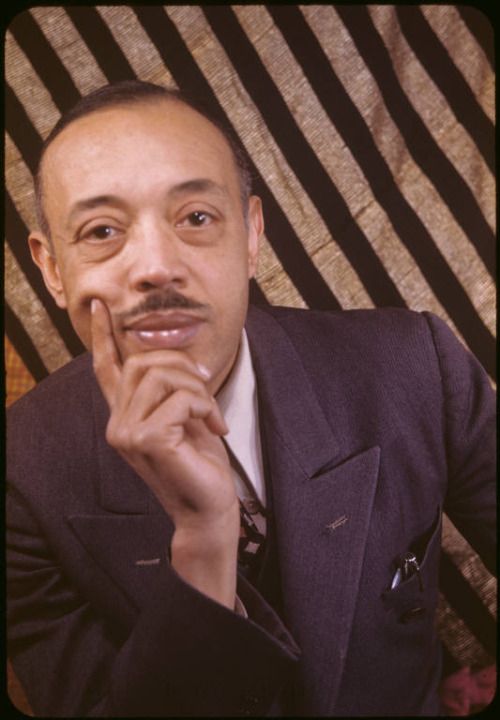
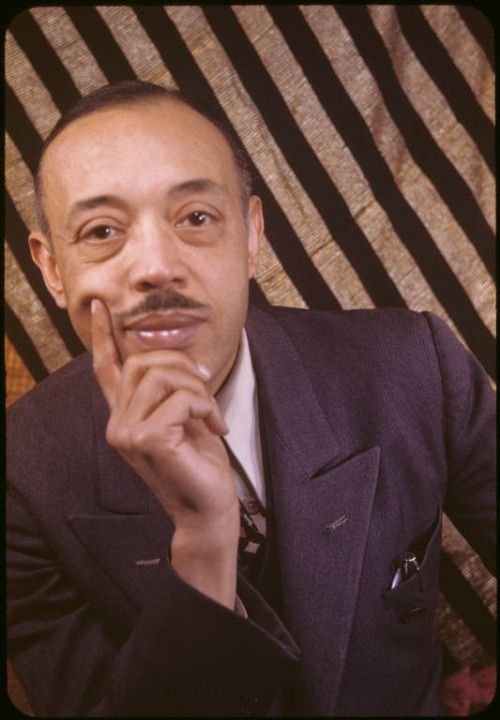
    PHOTO: In living color – my heart be Still!

  • William Grant Still: An American Voice

    William Grant Still: An American Voice

    Perhaps it’s not “The Great American Symphony,” self-consciously aspirational, oratorical, or grandiose in the manner the third symphonies of Roy Harris, William Schuman, or Aaron Copland; but it does go straight to the heart, which is something none of the composers of that great American triumvirate do, at least in those particular works.

    William Grant Still’s “Afro-American Symphony” is poetic, it’s genuinely reflective, it’s beautiful, and it brims with great tunes. It’s congenial, and in the end quite moving. It remains one of my favorite symphonies by an American composer.

    When I want “big statements” made on a colossal scale, I will turn to those Lincoln Center composers, who would have us believe they are eating out of lunch pails in their spare time, and riveting skyscrapers, or busting sod in denim overalls. But let’s face it, they are mostly hobnobbing in suits, jostling to get their music conducted by “Lenny.”

    Still is a composer in the mold, if not the manner, of Charles Ives. He’s a perpetual outsider, and always true to himself. His music grows directly out of his autobiographical experience, the blues, ballads, and spirituals of his childhood, in Woodville, Mississippi and Little Rock, Arkansas, and later his experience playing in pit bands during the Harlem Renaissance.

    He also studied at the Oberlin Conservatory and privately with George Whitefield Chadwick and Edgard Varèse, of all people. There is no Varèse to be found in Still’s music.

    He composes with the directness of a Virgil Thomson, but with none of Thomson’s affected naiveté. He shares with George Gershwin a refreshing lack of pretention – or at any rate his music does (he did, after all, subtitle one of his symphonies “Autochthonous”) – and a wonderful facility with melody.

    Of course, any discussion of Still must come with a litany of “firsts.” His “Afro-American Symphony” was the first written by a black composer to be performed by a major orchestra (the New York Philharmonic at Carnegie Hall). He was the first to be given the opportunity to conduct a major orchestra (the Los Angeles Philharmonic, at the Hollywood Bowl). His opera, “Troubled Island,” became the first to be produced by a major company (the New York City Opera). Another of his operas, “A Bayou Legend,” was the first to be performed on national television (as late as 1981). His works were performed internationally by the Berlin Philharmonic, the London Symphony Orchestra, the BBC Symphony, and the Tokyo Philharmonic.

    For years, all I could locate was the “Afro-American Symphony,” and that only in two out-of-print, albeit very fine recordings (with Karl Krueger and the Royal Philharmonic, and Paul Freeman and the London Symphony Orchestra). It wasn’t until the digital era that the other four symphonies gradually – very gradually – became available. Thankfully, all of them have now been recorded and are available for purchase.

    Furthermore, in all these years, I’ve only ever come across a single modern recording of any of his nine operas, “Highway One U.S.A,” with Philip Brunelle and Vocal Essence. This especially is a shame, since, as an opera lover himself, Still so wanted to add something significant to the repertoire.

    For all the love Florence Price has had lavished on her as a woman of color (the Philadelphia Orchestra was recently awarded a Grammy for its excellent recording of two of her symphonies, for the Deutsche Grammophon label), it would be great if a world-class, American ensemble would take up the cause of Still.

    Let’s face it, most American orchestras are pretty terrible about recording even the white guys that were once so revered during that era. Unless you’re Copland, Gershwin, or Barber, you’re pretty much out of luck with the majors. Must so many of our American composers be documented by less-costly orchestras abroad?

    Fashion would seem to favor a Still revival. At least play his music in concert, Americans!

    Happy birthday, WGS (1895-1978).


    “Afro-American Symphony”

    “Danzas de Panama”

    A little more severe, “Dismal Swamp” for piano and orchestra

    “Lenox Avenue,” conducted by Still

    “Troubled Island,” still awaiting a modern recording

  • William Grant Still: An American Original

    William Grant Still: An American Original

    I am proud to say I was a William Grant Still advocate before it was cool to be so. When I first encountered his “Afro-American Symphony” in the early 1980s, it was love at first sound. It remains one of my favorite symphonies by an American composer.

    Perhaps it’s not “The Great American Symphony,” self-consciously aspirational, oratorical, or grandiose in the manner the third symphonies of Roy Harris, William Schuman, or Aaron Copland; but it does go straight to the heart, which is something none of the composers of that great American triumvirate do, at least in those particular works.

    Still’s symphony is poetic, it’s genuinely reflective, it’s beautiful, and it brims with great tunes. It’s congenial, and in the end quite moving. When I want “big statements” made on an Olympian scale, I will turn to those Lincoln Center composers, who would have us believe they are eating out of lunch pails, in their spare time, and riveting skyscrapers, or busting sod in denim overalls. But let’s face it, they are mostly hobnobbing in suits, jostling to get their music conducted by “Lenny.”

    Still is a composer in the mold, if not the manner, of Charles Ives. He’s a perpetual outsider, and always true to himself. His music grows directly out of his autobiographical experience, the blues, ballads, and spirituals of his childhood, in Woodville, Mississippi and Little Rock, Arkansas, and later his experience playing in pit bands during the Harlem Renaissance.

    He also studied at the Oberlin Conservatory and privately with George Whitefield Chadwick and Edgard Varèse, of all people. There is no Varèse to be found in Still’s music.

    He composes with the directness of a Virgil Thomson, but with none of Thomson’s affected naiveté. He shares with George Gershwin a refreshing lack of pretention – or at any rate his music does (he did, after all, subtitle one of his symphonies “Autochthonous”) – and a wonderful facility with melody.

    Of course, any discussion of Still must come with a litany of “firsts.” His “Afro-American Symphony” was the first written by a black composer to be performed by a major orchestra (the New York Philharmonic at Carnegie Hall). He was the first to be given the opportunity to conduct a major orchestra (the Los Angeles Philharmonic, at the Hollywood Bowl). His opera, “Troubled Island,” became the first to be produced by a major company (the New York City Opera). Another of his operas, “A Bayou Legend,” was the first to be performed on national television (as late as 1981). His works were performed internationally by the Berlin Philharmonic, the London Symphony Orchestra, the BBC Symphony, and the Tokyo Philharmonic.

    For years, all I could find was the “Afro-American Symphony,” and that only in two out-of-print, albeit very fine recordings (with Karl Krueger and the Royal Philharmonic, and Paul Freeman and the London Symphony Orchestra). It wasn’t until the digital era that the other four symphonies gradually – very gradually – became available. Thankfully, all of them now have been recorded and are available for purchase.

    It was only a couple of months ago that I discovered the official William Grant Still website, williamgrantstillmusic.com, run by the composer’s family. Through them, many of his scores, recordings, and written material may be acquired. I purchased a book about Still’s opera, “Troubled Island,” and its troubled history, combined with a CD-R of a live recording of the piece at its world premiere performance, a fascinating historical document. In all these years, I’ve only ever come across a single modern recording of any of his nine operas, “Highway One U.S.A,” with Philip Brunelle and Vocal Essence. This is a particular shame, since, as an opera lover himself, Still so wanted to add something significant to the repertoire.

    For all the love Florence Price has had lavished on her recently (the Philadelphia Orchestra just announced it will be recording her complete symphonies for Deutsche Grammophon), it would great if a world-class American band would take up the cause of Still.

    For me, William Grant Still is still the one.

    Happy birthday, WGS (1895-1978).


    “Afro-American Symphony”

    “Troubled Island”

    “Joe Hill” by Earl Robinson, sung by Paul Robeson


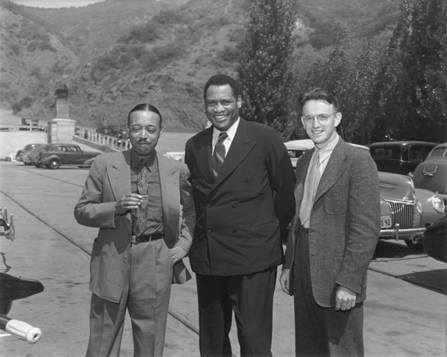
    PHOTO: Still (left), with Paul Robeson and Earl Robinson

Tag Cloud

Aaron Copland (92) Beethoven (95) Composer (114) Film Music (120) Film Score (143) Film Scores (255) Halloween (94) John Williams (185) KWAX (229) Leonard Bernstein (100) Marlboro Music Festival (125) Movie Music (135) Opera (198) Philadelphia Orchestra (88) Picture Perfect (174) Princeton Symphony Orchestra (106) Radio (87) Ralph Vaughan Williams (85) Ross Amico (244) Roy's Tie-Dye Sci-Fi Corner (290) The Classical Network (101) The Lost Chord (268) Vaughan Williams (103) WPRB (396) WWFM (881)

DON’T MISS A BEAT

Receive a weekly digest every Sunday at noon by signing up here


RECENT POSTS