Tag: André Caplet

  • French Orchestrators Behind the Music

    French Orchestrators Behind the Music

    Vive les orchestrateurs de musique classique français!

    This week on “The Lost Chord,” for Bastille Day, enjoy original works by figures who employed their skills as orchestrators in the service of more celebrated French composers.

    Henri Rabaud (1873-1949) was, variously, conductor at the Paris Opéra Comique, director of the Paris Opera, and director of the Paris Conservatory. For a season, he even led the Boston Symphony Orchestra. Though he wrote several operas and two symphonies, as well as choral, chamber and instrumental music, Rabaud’s own original output is very seldom heard. However, his orchestration of Gabriel Fauré’s charming “Dolly Suite,” originally for piano four-hands, endures. We’ll hear Rabaud’s symphonic poem “La Procession nocturne,” inspired by Nicolas Lenau’s “Faust.”

    André Caplet (1878-1925) directed the Boston Opera from 1910 to 1914. He was gassed while serving in the First World War, which resulted in the pleurisy that plagued him for the remainder of his short life. Caplet died at the age of 44. His harp quintet, “Conte fantastique,” after Edgar Allan Poe’s “The Masque of the Red Death” is occasionally heard. But his tenuous grip on fame is really through his association with another composer, Claude Debussy, for whom he orchestrated “Children’s Corner,” “Clair de lune,” “Le Martyrdom de saint Sébastien,” and “La boîte à joujoux.” Today, we’ll have the opportunity to enjoy Caplet’s lovely Septet for Voices and String Quartet.

    Henri Büsser (1872-1973) acted as secretary to Charles Gounod. He also became a protégé and friend of Jules Massenet. At Debussy’s request, Büsser conducted the fourth performance of “Pélleas and Mélisande” and numerous performances thereafter. He died in Paris less than three weeks shy of his 102nd birthday! Büsser’s own output includes much music for the stage, including 14 operas, a ballet, and incidental music. Yet his name is kept alive principally as the orchestrator of Debussy’s “Petite Suite” and “Printemps.” He’ll be represented today’s program by “Andalucia,” an original work for flute, on Spanish themes.

    Charles Koechlin (1867-1950) had many enthusiasms: medieval music, Bach, travel, stereoscopic photography, communism, pantheism, sports. He was especially interested in early film stars (he wrote works in tribute to Ginger Rogers, Douglas Fairbanks, Charles Chaplin, and Lillian Harvey) and the “Jungle Books” of Rudyard Kipling. Despite enjoying an astonishingly prolific career as a composer himself, Koechlin is associated in most people’s minds with his orchestration of Fauré’s “Pélleas and Mélisande.” He also worked as an orchestrator on Debussy’s “Khamma.”

    Koechlin’s series of orchestral works, inspired by Kipling, span most of his creative life. These were composed in a broad array of styles, encompassing impressionism, neo-classicism, polytonality, and even quasi-serialism. We’ll hear the last of his Kipling cycle, “Les Bandar-Log,” ostensibly about a barrel of chattering monkeys, but the term has also come to be used to describe anyone who irresponsibly prattles.

    I hope you’ll join me in liberating these overlooked composers from the Bastille of neglect on “French Connections,” on “The Lost Chord,” now in syndication on KWAX, the radio station of the University of Oregon!


    Clip and save the start times for all three of my recorded shows:

    PICTURE PERFECT, the movie music show – Friday at 8:00 PM EDT/5:00 PM PDT

    SWEETNESS AND LIGHT, the light music program – ALL NEW! – Saturday at 11:00 AM EDT/8:00 AM PDT

    THE LOST CHORD, unusual and neglected rep – Saturday at 7:00 PM EDT/4:00 PM PDT

    Stream them, wherever you are, at the link!
    https://kwax.uoregon.edu/

  • French Orchestral Masters Rediscovered

    French Orchestral Masters Rediscovered

    Vive les orchestrateurs de musique classique français!

    This Sunday night on “The Lost Chord,” we’ll hear original works by musicians who employed their skills as orchestrators in the service of more celebrated French composers.

    Henri Rabaud (1873-1949) was, variously, conductor at the Paris Opéra Comique, director of the Paris Opera, and director of the Paris Conservatory. For a season, he ever led the Boston Symphony Orchestra. Though he wrote several operas and two symphonies, as well as choral, chamber and instrumental music, Rabaud’s own original output is very seldom heard. However, his orchestration of Gabriel Fauré’s charming “Dolly Suite,” originally for piano four-hands, endures. We’ll hear Rabaud’s symphonic poem “La Procession nocturne,” inspired by Nicolas Lenau’s “Faust.”

    André Caplet (1878-1925) directed the Boston Opera from 1910 to 1914. He was gassed while serving in the First World War, which resulted in the pleurisy that plagued him for the remainder of his short life. Caplet died at the age of 44. His harp quintet, “Conte fantastique,” after Edgar Allan Poe’s “The Masque of the Red Death,” is occasionally heard. But his tenuous grip on fame is really through his association with another composer, Claude Debussy, for whom he orchestrated “Children’s Corner,” “Clair de lune,” “Le Martyrdom de saint Sébastien” and “La boîte à joujoux.” Tonight we’ll have the opportunity to enjoy Caplet’s lovely Septet for Voices and String Quartet.

    Henri Büsser (1872-1973) acted as secretary to Charles Gounod. He also became a protégé and friend of Jules Massenet. At Debussy’s request, Büsser conducted the fourth performance of “Pélleas and Mélisande” and numerous performances thereafter. He died in Paris less than three weeks shy of his 102nd birthday! Büsser’s own output includes much music for the stage, including 14 operas, a ballet, and incidental music. Yet his name is kept alive principally as the orchestrator of Debussy’s “Petite Suite” and “Printemps.” He’ll be represented tonight by “Andalucia,” an original work for flute, on Spanish themes.

    Charles Koechlin (1867-1950) had many enthusiasms: medieval music, Bach, travel, stereoscopic photography, communism, pantheism, sports. He was especially interested in early film stars (he wrote works in tribute to Ginger Rogers, Douglas Fairbanks, Charles Chaplin, and Lillian Harvey) and the “Jungle Books” of Rudyard Kipling. Despite having enjoyed an astonishingly prolific career as a composer himself, Koechlin is associated in most people’s minds with his orchestration of Fauré’s “Pélleas and Mélisande.” He also worked as an orchestrator on Debussy’s “Khamma.”

    Koechlin’s series of orchestral works inspired by Kipling span most of his creative life. These were composed in a broad array of styles, encompassing impressionism, neo-classicism, polytonality, and even quasi-serialism. We’ll hear the last of his Kipling cycle, “Les Bandar-Log,” ostensibly about a barrel of chattering monkeys, but the term has also come to be used to describe anyone who irresponsibly prattles.

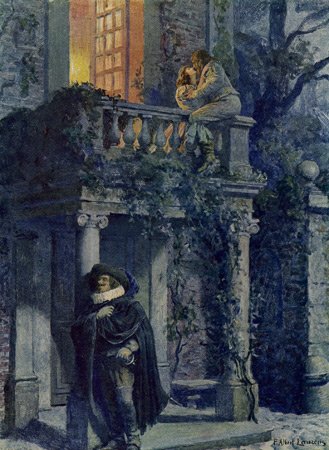
    I hope you’ll join me as these musical Cyranos emerge from the shadow of Roxane’s balcony, on “French Connections,” this Sunday night at 10:00 EDT, on WWFM – The Classical Network and wwfm.org.

  • Sibelius Rediscovered Avanti Orchestra Concert

    Sibelius Rediscovered Avanti Orchestra Concert

    Earlier this week, the Avanti Chamber Orchestra shared the modern premiere of a rediscovered Sibelius “Concert Overture” on its Facebook page.

    Today the complete concert will stream at 12 pm (EDT). Also on the program will be other Sibelius rarities (a suite from his incidental music to “Belshazzar’s Feast” and the melodrama “The Countess’ Portrait”) and the “Conte fantastique” for harp and string orchestra by André Caplet, after Edgar Allan Poe’s “The Masque of the Red Death.” If you miss it, I assume the concert will be archived on Avanti’s Facebook page.

    For more information:

    Avanti! conducted by Tuomas Hannikainen resurrects Sibelius work dormant for 120 years

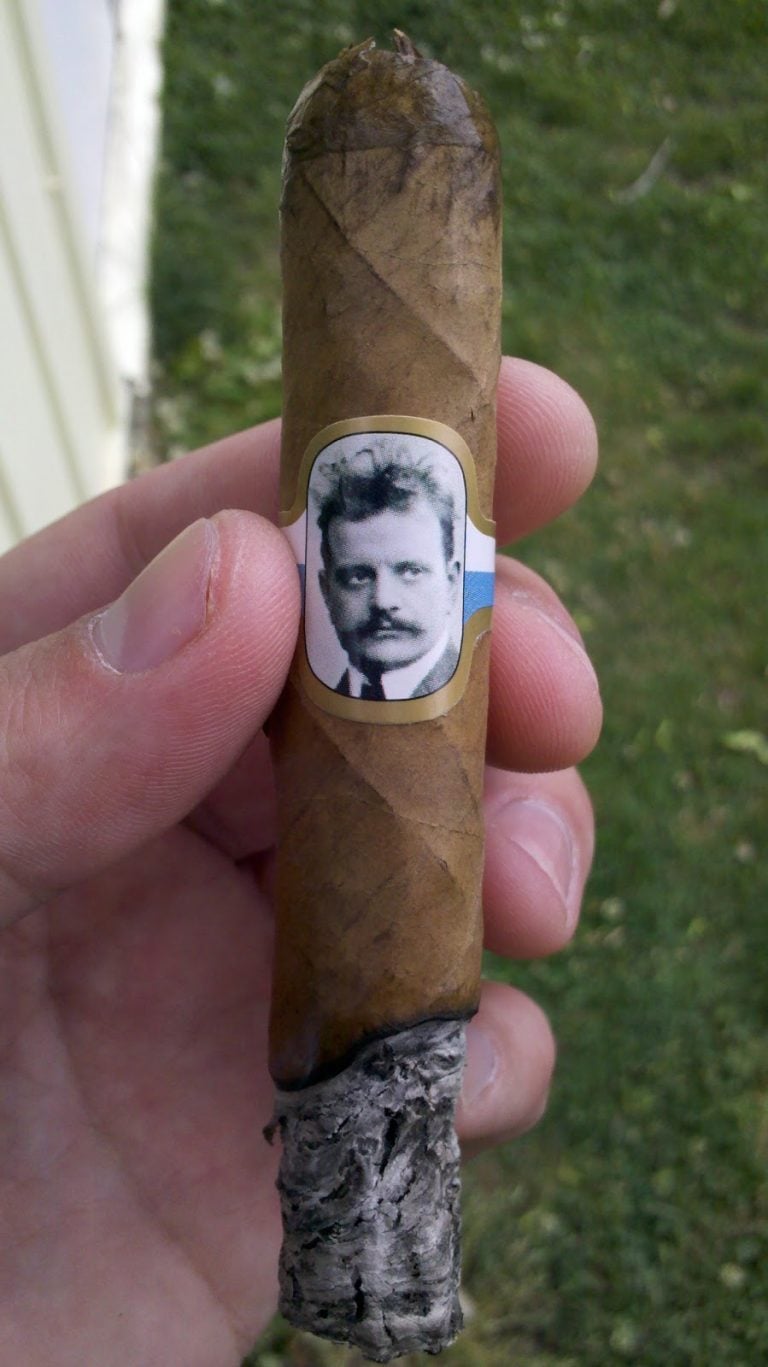
    While you’re waiting, enjoy this brief review of a Sibelius cigar by Zack the Stogie Man!

    http://zackthestogieman.blogspot.com/2012/04/jean-sibelius-review.html

  • Happy Birthday Poe Masque of Red Death & Music

    Happy Birthday Poe Masque of Red Death & Music

    Today is the birthday of Edgar Allan Poe.

    Poe’s classic story, “The Masque of the Red Death,” has particular resonance in this time of COVID, with the seemingly blithe indifference of a decadent ruler to the sufferings of his people. Instead, Prince Prospero invites those loyal to him to party on the brink of disaster, with inevitably horrifying consequences. The hour of reckoning arrives as the ebony clock strikes twelve.

    The story, first published in 1842, has inspired a number of pieces of music over the years, but this one is new to me. Christopher Rouse was composer-in-residence with the New York Philharmonic when he wrote “Prospero’s Rooms” in 2011. Rouse was the recipient of the Pulitzer Prize for Music for his Trombone Concerto in 1993. He died in 2015 at the age of 70.

    Rouse talks about the story and his music:

    My favorite setting of the piece is still the “Conte fantastique” (“Fantastic Tale”) by Debussy associate André Caplet:

    Raise a glass of amontillado to Edgar Allan Poe.

  • Support Classical Music WWFM ListentoMarlboro

    Support Classical Music WWFM ListentoMarlboro

    It may be a day early for trick-or-treat, but it’s always a treat to hear from you. Have you taken a moment yet to support The Classical Network? We’re in the midst of our fall membership campaign. That means it’s renewal time. We’re also always happy to welcome new members!

    Our featured highlight on this week’s “Music from Marlboro,” coming your way at 6:00 EDT, will be André Caplet’s “Conte fantastique,” inspired by Edgar Allan Poe’s “The Masque of the Red Death.”

    Prince Prospero may have come to a bad end, but you can help us prosper, by calling us right now at 1-888-232-1212 or joining us online at wwfm.org.

    Thank you for supporting WWFM – The Classical Network!

    Marlboro School of Music and Festival: Official Page

Tag Cloud

Aaron Copland (92) Beethoven (95) Composer (114) Film Music (120) Film Score (143) Film Scores (255) Halloween (94) John Williams (185) KWAX (229) Leonard Bernstein (100) Marlboro Music Festival (125) Movie Music (135) Opera (198) Philadelphia Orchestra (88) Picture Perfect (174) Princeton Symphony Orchestra (106) Radio (87) Ralph Vaughan Williams (85) Ross Amico (244) Roy's Tie-Dye Sci-Fi Corner (290) The Classical Network (101) The Lost Chord (268) Vaughan Williams (103) WPRB (396) WWFM (881)

DON’T MISS A BEAT

Receive a weekly digest every Sunday at noon by signing up here


RECENT POSTS