Tag: André Caplet

  • Support Classical Music WWFM ListentoMarlboro

    Support Classical Music WWFM ListentoMarlboro

    It may be a day early for trick-or-treat, but it’s always a treat to hear from you. Have you taken a moment yet to support The Classical Network? We’re in the midst of our fall membership campaign. That means it’s renewal time. We’re also always happy to welcome new members!

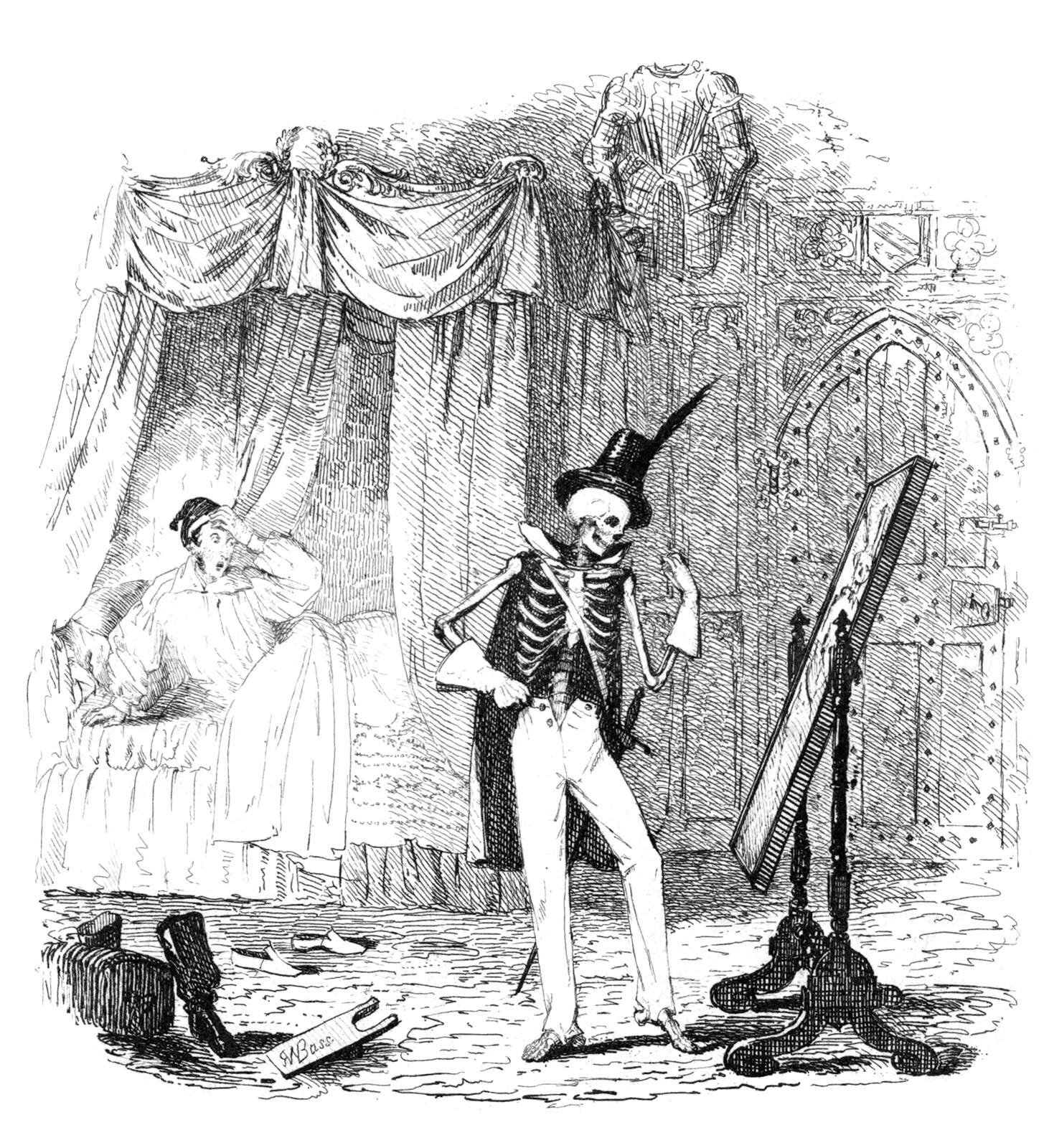
    Our featured highlight on this week’s “Music from Marlboro,” coming your way at 6:00 EDT, will be André Caplet’s “Conte fantastique,” inspired by Edgar Allan Poe’s “The Masque of the Red Death.”

    Prince Prospero may have come to a bad end, but you can help us prosper, by calling us right now at 1-888-232-1212 or joining us online at wwfm.org.

    Thank you for supporting WWFM – The Classical Network!

    Marlboro School of Music and Festival: Official Page

  • Forgotten French Orchestral Masters

    Forgotten French Orchestral Masters

    Vive les orchestrateurs de musique classique français!

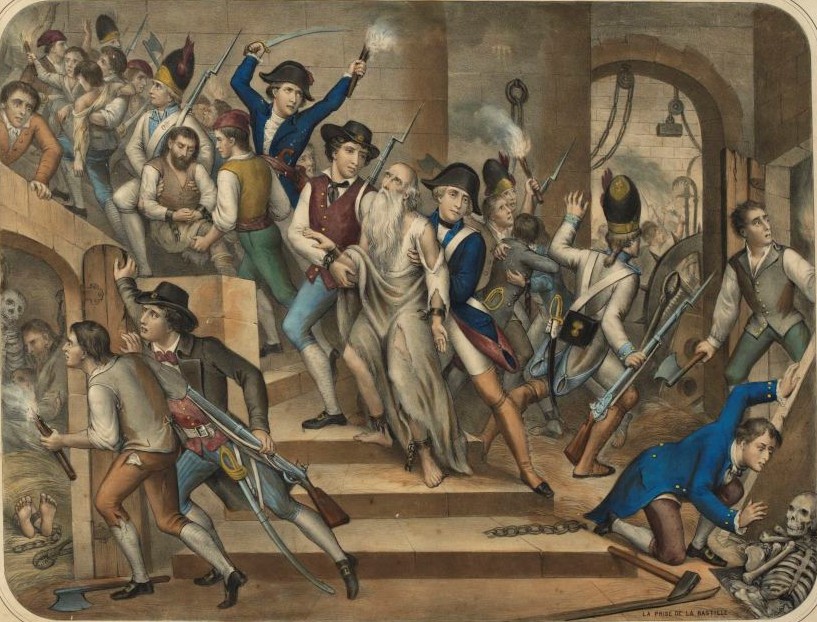
    This Sunday night on “The Lost Chord,” for Bastille Day, enjoy original works by figures who employed their skills as orchestrators in the service of more celebrated French composers.

    Henri Rabaud (1873-1949) was, variously, conductor at the Paris Opéra Comique, director of the Paris Opera, and director of the Paris Conservatory. For a season, he ever led the Boston Symphony Orchestra. Though he wrote several operas and two symphonies, as well as choral, chamber and instrumental music, Rabaud’s own original output is very seldom heard. However, his orchestration of Gabriel Fauré’s charming “Dolly Suite,” originally for piano four-hands, endures. We’ll hear Rabaud’s symphonic poem “La Procession nocturne,” inspired by Nicolas Lenau’s “Faust.”

    André Caplet (1878-1925) directed the Boston Opera from 1910 to 1914. He was gassed while serving in the First World War, which resulted in the pleurisy that plagued him for the remainder of his short life. Caplet died at the age of 44. His harp quintet, “Conte fantastique,” after Edgar Allan Poe’s “The Masque of the Red Death” is occasionally heard. But his tenuous grip on fame is really through his association with another composer, Claude Debussy, for whom he orchestrated “Children’s Corner,” “Clair de lune,” “Le Martyrdom de saint Sébastien” and “La boîte à joujoux.” Tonight we’ll have the opportunity to enjoy Caplet’s lovely Septet for Voices and String Quartet.

    Henri Büsser (1872-1973) acted as secretary to Charles Gounod. He also became a protégé and friend of Jules Massenet. At Debussy’s request, Büsser conducted the fourth performance of “Pélleas and Mélisande” and numerous performances thereafter. He died in Paris less than three weeks shy of his 102nd birthday! Büsser’s own output includes much music for the stage, including 14 operas, a ballet, and incidental music. Yet his name is kept alive principally as the orchestrator of Debussy’s “Petite Suite” and “Printemps.” He’ll be represented tonight by “Andalucia,” an original work for flute, on Spanish themes.

    Charles Koechlin (1867-1950) had many enthusiasms: medieval music, Bach, travel, stereoscopic photography, communism, pantheism, sports. He was especially interested in early film stars (he wrote works in tribute to Ginger Rogers, Douglas Fairbanks, Charles Chaplin, and Lillian Harvey) and the “Jungle Books” of Rudyard Kipling. Despite enjoying an astonishingly prolific career as a composer himself, Koechlin is associated in most people’s minds with his orchestration of Fauré’s “Pélleas and Mélisande.” He also worked as an orchestrator on Debussy’s “Khamma.”

    Koechlin’s series of orchestral works, inspired by Kipling, span most of his creative life. These were composed in a broad array of styles, encompassing impressionism, neo-classicism, polytonality, and even quasi-serialism. We’ll hear the last of his Kipling cycle, “Les Bandar-Log,” ostensibly about a barrel of chattering monkeys, but the term has also come to be used to describe anyone who irresponsibly prattles.

    I hope you’ll join me in liberating these overlooked composers from the Bastille of neglect on “French Connections,” this Sunday night at 10:00 EDT, on WWFM – The Classical Network and wwfm.org.

  • Marlboro’s Haunting Chamber Music Classics

    Marlboro’s Haunting Chamber Music Classics

    For obvious reason, the ghost story is inextricably linked in many people’s thoughts with Hallowe’en. But there was a time when reading and sharing eldritch tales were common pastimes even at Christmas. I suppose it makes sense that during a time of year when there is less light, the skies are bleak, and the landscapes withered – a time when people are essentially housebound and comparatively isolated – the mind would be most susceptible to chilling thoughts of something sinister underlying a gust of wind or a creak on the cellar stairs.

    I thought it rather appropriate, then, to revisit a couple of chamber music classics with a supernatural bent on this week’s “Music from Marlboro.”

    French composer André Caplet was winner of the esteemed Prix de Rome in 1901, placing ahead of Maurice Ravel. He played percussion with the Colonne Orchestra and trained as a conductor under Arthur Nikisch. From 1910 to 1914, he served as director of the Boston Opera. While serving in the First World War, he was engulfed in poisonous gas, which resulted in the pleurisy that plagued him for the remainder of his short life. Caplet died in 1925, at the age of 44.

    As the Prix de Rome would suggest, Caplet composed music of considerable merit. Nonetheless, he was fated to be remembered for his work as an orchestrator for Claude Debussy. Debussy’s “Children’s Corner,” “The Martyrdom of Saint Sebastian,” “La Boiîte à joujoux,” and “Clair de lune” would all be draped in Caplet’s finery.

    Of Caplet’s original music, only his “Conte fantastique” (“Fantastic Tale”), after Edgar Allan Poe’s “The Masque of the Red Death,” retains a foothold on the repertoire. Composed in 1908 for harp and string orchestra, it was arranged for harp and string quartet in 1922. The work crackles with atmosphere, invention and suspense. In fact, the program is brought so vividly to life that one can’t help but think that Caplet would have made an excellent film composer. Savor the chill as Prince Prospero’s decadent revels are curtailed by the implacable chimes of midnight!

    The Marlboro performance, which dates from 2009, features Sivan Magen, harp; Liana Gourdjia and Bella Hristova, violins; Sally Chisolm, viola; and Paul Wiancko, cello. As an added bonus, the music will be prefaced by a reading from Poe’s creepy classic.

    Fifteen years after the death of Beethoven, the composer’s star pupil, Carl Czerny, noted that the slow movement of his Piano Trio in D, Op. 70, No.1, reminded him of the ghost of Hamlet’s father. Czerny may not have been all that far off the mark.

    Actually, at the time of the work’s composition, in 1808, Beethoven had been kicking around the idea for opera on the subject of Macbeth. The words “Macbett” and “Ende” appear near sketches for the Largo. It’s been speculated that the music may have been a working out of ideas for a proposed scene featuring the three witches. The ominous mood is heightened by eerie and mournful touches, sudden pauses and outbursts, and the use of a ghostly tremolo. The operatic project collapsed when Beethoven’s librettist, Heinrich Joseph von Collin (to whom Beethoven had dedicated the “Coriolan Overture”), begged off of the project, thinking it was too dark.

    We’ll hear Marlboro musicians Dénes Várjon, piano; Michelle Ross, violin; and Brook Speltz, cello, captured on tour in Washington, D.C., in 2015. You can learn more about this season’s tours (the next two are coming up in March) by visiting marlboromusic.org.

    Turning up your radio has been proven to drown out bumps in the night. Join me for “haunting” performances from the legendary Marlboro Music Festival, this Wednesday evening at 6:00 EST, on WWFM – The Classical Network and wwfm.org.

    Marlboro School of Music and Festival: Official Page

  • Halloween Hauntings from Marlboro Music

    Halloween Hauntings from Marlboro Music

    The end of October is marked by deepening shadows, withered cornstalks, and the leer of carved pumpkins. On this week’s “Music from Marlboro,” with Halloween right around the corner, we’ll get into the spirit of things with chamber music of a supernatural bent.

    French composer André Caplet was winner of the esteemed Prix de Rome in 1901, placing ahead of Maurice Ravel. He played percussion with the Colonne Orchestra and trained as a conductor under Arthur Nikisch. From 1910 to 1914, he served as director of the Boston Opera. While serving in the First World War, he was engulfed in poisonous gas, which resulted in the pleurisy that plagued him for the remainder of his short life. Caplet died in 1925, at the age of 44.

    As the Prix de Rome would suggest, Caplet composed music of considerable merit. Nonetheless, he was fated to be remembered for his work as an orchestrator for Claude Debussy. Debussy’s “Children’s Corner,” “The Martyrdom of Saint Sebastian,” “La Boiîte à joujoux,” and “Clair de lune” would all be draped in Caplet’s finery.

    Of Caplet’s original music, only his “Conte fantastique” (Fantastic Tale), after Edgar Allan Poe’s “The Masque of the Red Death,” retains a foothold on the repertoire. Composed in 1908 for harp and string orchestra, it was arranged for harp and string quartet in 1922. The work crackles with atmosphere, invention and suspense. In fact, the program is brought so vividly to life that one can’t help but think that Caplet would have made an excellent film composer. Savor the chill as Prince Prospero’s decadent revels are curtailed by the implacable chimes of midnight!

    The Marlboro performance, which dates from 2009, features Sivan Magen, harp; Liana Gourdjia and Bella Hristova, violins; Sally Chisolm, viola; and Paul Wiancko, cello. As an added bonus, the music will be prefaced by a reading from Poe’s creepy classic.

    Fifteen years after death of Beethoven, the composer’s star pupil, Carl Czerny, noted that the slow movement of his Piano Trio in D, Op. 70, No.1, reminded him of the ghost of Hamlet’s father. Czerny may not have been all that far off the mark.

    Actually, at the time of the work’s composition, in 1808, Beethoven had been kicking around the idea for opera on the subject of Macbeth. The words “Macbett” and “Ende” appear near sketches for the Largo. It’s been speculated that the music may have been a working out of ideas for a proposed scene featuring the three witches. The ominous mood is heightened by eerie and mournful touches, sudden pauses and outbursts, and the use of a ghostly tremolo. The operatic project collapsed when Beethoven’s librettist, Heinrich Joseph von Collin (to whom Beethoven had dedicated the “Coriolan Overture”), begged off of the project, thinking it was too dark.

    We’ll hear Marlboro musicians Dénes Várjon, piano; Michelle Ross, violin; and Brook Speltz, cello. The performance was captured on tour in Washington, D.C., in 2015. The first of this season’s Marlboro tours will take place November 11-19, with concerts scheduled for D.C., Boston, Brattleboro, Greenwich, New York City, and Philadelphia. You can learn more at marlboromusic.org.

    Join me, if you dare, for “haunting” performances from the legendary Marlboro Music Festival, this Wednesday evening at 6 EDT, on WWFM – The Classical Network and wwfm.org.

    Marlboro School of Music and Festival: Official Page


    Daniel Gardner, “The Three Witches from Macbeth” (1775)

  • French Composers Beyond Orchestration

    French Composers Beyond Orchestration

    This Sunday night on “The Lost Chord,” it’s music by French composers better known for their skill as orchestrators of others’ works. We’ll hear original compositions by Henri Rabaud (orchestrator of Gabriel Fauré’s “Dolly Suite”), André Caplet (orchestrator of Claude Debussy’s “Children’s Corner,” “Clair de lune,” “Le Martyre de saint Sébastien,” and “La Boite à joujoux”), Henri Büsser (orchestrator of Debussy’s “Petite Suite” and “Printemps”) and Charles Koechlin (orchestrator of Fauré’s “Pelléas et Mélisande” and Debussy’s “Khamma”).

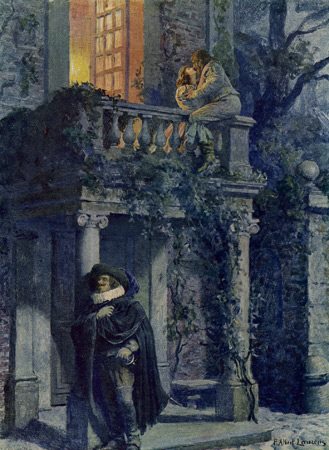
    These musical Cyranos emerge from the shadow of Roxane’s balcony, on “French Connections,” this Sunday night at 10:00 EDT, on WWFM – The Classical Network and wwfm.org.

Tag Cloud

Aaron Copland (92) Beethoven (95) Composer (114) Film Music (120) Film Score (143) Film Scores (255) Halloween (94) John Williams (185) KWAX (229) Leonard Bernstein (100) Marlboro Music Festival (125) Movie Music (135) Opera (198) Philadelphia Orchestra (88) Picture Perfect (174) Princeton Symphony Orchestra (106) Radio (87) Ralph Vaughan Williams (85) Ross Amico (244) Roy's Tie-Dye Sci-Fi Corner (290) The Classical Network (101) The Lost Chord (268) Vaughan Williams (103) WPRB (396) WWFM (881)

DON’T MISS A BEAT

Receive a weekly digest every Sunday at noon by signing up here


RECENT POSTS