Tag: Anthony Payne

  • Elgar’s Third Symphony A Lost Chord Rediscovered

    Elgar’s Third Symphony A Lost Chord Rediscovered

    This Sunday night on “The Lost Chord,” we mark the passing of an era in English history with music that had its origin in the twilight of another.

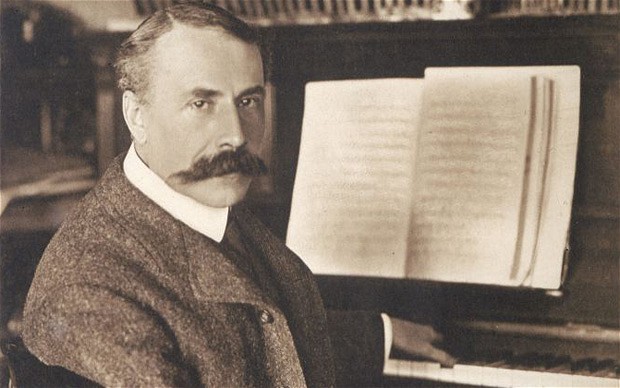
    Sir Edward Elgar produced no major works following the death of his wife in 1920. It was his friend and champion, George Bernard Shaw, who, in an attempt to keep one of England’s greatest composers from withering on the vine, persuaded the BBC to commission from Elgar a Third Symphony.

    Elgar, who died in 1934, worked at the piece during the last year of his life, jotting down his ideas – some merely a few bars in length; others, pages in full score. As his health deteriorated, he realized he would never be able to complete the work, and he made contradictory remarks concerning his intentions over the fate of the sketches.

    Another of his friends, the violinist W.H. Reed, passed many hours playing through what existed of the piece, with the composer at the piano. After Elgar’s death, Reed published 40 pages’ worth of sketches into a memoir, which kept the work at the periphery of the public consciousness.

    Several attempts were made over the decades to make something more of the sketches, but musicians and musicologists have always been stopped short by the Elgar estate.

    The composer Anthony Payne became interested in the fragments in 1972. For many years, he worked at a realization of the symphony, again meeting resistance from Elgar’s heirs, until it became apparent that, due to the publication of the sketches in Reed’s book, the material would soon fall into the public domain. The family opted to capitalize on what control it had left and finally authorized Payne’s efforts.

    Payne’s realization was given its premiere in 1998 and granted broad exposure through performances by major orchestras, particularly in England and the United States (including the Philadelphia Orchestra), and the piece has been recorded at least four times.

    The formal title is “Edward Elgar: The Sketches for Symphony No. 3 Elaborated by Anthony Payne,” or the “Elgar/Payne Symphony No. 3,” for short. It’s an uncanny piece of work, and you’ll have a chance to hear it tonight.

    It’s hard to believe, but the lives of Elgar and the long-lived Elizabeth actually did overlap. In 1930, the composer was commissioned to write a “Nursery Suite” for then-Princess Elizabeth and her sister Margaret. And what do you know, Payne actually quotes from one of the suite’s movements, “The Waggon Passes,” to conclude what would have been Elgar’s valedictory symphony. There are also quotations from the composer’s incidental music to Laurence Binyon’s dramatic account of “King Arthur.”

    Lots of history packed into this piece, then, which serves as a musical farewell – from our perspective, in more ways than one.

    I hope you’ll join me for “No Payne, No Gain,” this Sunday night at 10:00 EDT, on WWFM – The Classical Network and wwfm.org.

  • Elgar’s Third: A Symphony Realized

    Elgar’s Third: A Symphony Realized

    What can I say? I’m a man of contradictions.

    Still fairly close on the heels of last Saturday’s post in which I expressed my reservations surrounding the completion of Mahler’s Tenth Symphony, here I am, celebrating the realization of Elgar’s sketches for an unfinished Third.

    This Sunday night on “The Lost Chord,” we’ll have a remarkably vivid piece of wishful thinking.

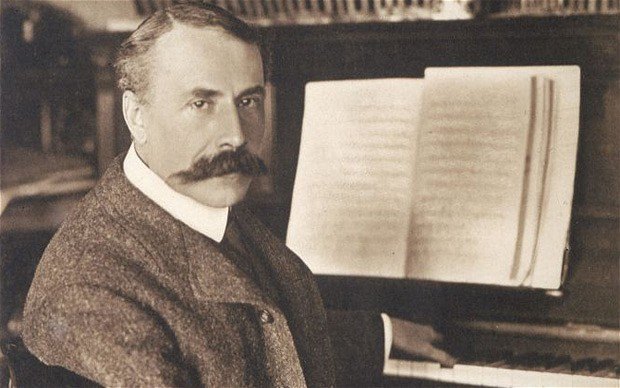
    Sir Edward Elgar produced no major works following the death of his wife in 1920. It was his friend and champion, George Bernard Shaw, who, in an attempt to keep one of England’s greatest composers from withering on the vine, persuaded the BBC to commission from Elgar a Third Symphony.
    Elgar, who died in 1934, worked at the piece during the last year of his life, jotting down his ideas – some merely a few bars in length; others, pages in full score. As his health deteriorated, he realized he would never be able to complete the work, and he made contradictory remarks concerning his intentions over the fate of the sketches.

    Another of his friends, the violinist W.H. Reed, passed many hours playing through what existed of the piece, with the composer at the piano. After Elgar’s death, Reed published 40 pages worth of sketches into a memoir, which kept the work at the periphery of the public consciousness.

    Several attempts were made over the decades to make something more of the sketches, but musicians and musicologists were always stopped short by the Elgar estate.

    The composer Anthony Payne became interested in the fragments in 1972. For many years, he worked at a realization of the piece, again meeting resistance from Elgar’s heirs, until it became apparent that, due to the publication of the sketches in Reed’s book, the material would soon fall into the public domain. The family opted to capitalize on what control it had left and finally authorized Payne’s efforts.

    His realization was given its premiere in 1998 and granted broad exposure through performances by major orchestras, particularly in England and the United States (including the Philadelphia Orchestra), and the piece has been recorded at least four times.

    The formal title is “Edward Elgar: The Sketches for Symphony No. 3, Elaborated by Anthony Payne” – known for short as the “Elgar/Payne Symphony No. 3.” You’ll have a chance to hear it tonight.

    I guess the reason I am so forgiving of Elgar’s Third is because at no level is anyone trying to pass it off as Elgar’s actual symphony. Rather, it is a fascinating amalgam that manages both to recall Elgar and bring out the best in Payne. The two creative voices mix remarkably well to form a cohesive work of art.

    I hope you’ll join me for “No Payne, No Gain,” this Sunday night at 10:00 EDT, on WWFM – The Classical Network and wwfm.org.


    PHOTOS: A Payne on Elgar’s side

  • Elgar’s Symphony No 3 Celebrated Today

    Elgar’s Symphony No 3 Celebrated Today

    No Payne, no gain!

    I hope you’ll join me this afternoon, as we celebrate the 80th birthday of composer and musicologist Anthony Payne. Payne did an uncanny job channeling the spirit of one of England’s most celebrated composers in bringing about the completion of sketches for Sir Edward Elgar’s Symphony No. 3. The resultant work, judiciously titled “Edward Elgar: Sketches for the Symphony No. 3 elaborated by Anthony Payne,” will be heard in the 1:00 hour.

    We’ll also honor a former Master of the Queen’s Music, Sir Arthur Bliss, on his birthday, and I wouldn’t be the least bit surprised if music by Karl Amadeus Hartmann will turn up at some point, as well.

    Hartmann was an anti-fascist German composer who played the dangerous game of remaining in Nazi Germany during World War II. He withdrew completely from musical life there and refused to allow his works to be performed. However, his symphonies continued to be championed abroad. Though still very much underrated, Hartmann was one of the great composers of the 20th century. We’ll be listening to his Symphony No. 6.

    Experience these and more today, when you tune in from noon to 4 p.m. EDT, on WWFM – The Classical Network and at wwfm.org.


    PHOTOS: Elgar (top) and Payne

  • Elgar’s Third: A Symphony Reborn

    Elgar’s Third: A Symphony Reborn

    The greatest pieces of music are universes in themselves. Just when you think you know everything about a given work or its composer, along comes a fresh interpretation, or you listen to a cherished recording in a different frame of mind, and you’ll notice details you never heard before. Even so, it is sometimes tempting to crave more.

    A composer dies. Over the years, we absorb his canon. We think, wistfully, why couldn’t he have composed eight symphonies, as opposed to seven (Sibelius)? Or ten, as opposed to nine (Mahler and Beethoven)? Sibelius, Mahler and Beethoven all left behind tantalizing sketches of unrealized projects.

    This Sunday night on “The Lost Chord,” we’ll have a remarkably vivid piece of wishful thinking.

    Sir Edward Elgar produced no major works following the death of his wife in 1920. It was his friend and champion, George Bernard Shaw, who, in an attempt to keep one of England’s greatest composers from withering on the vine, persuaded the BBC to commission from Elgar a Third Symphony.

    Elgar, who died in 1934, worked at the piece during the last year of his life, jotting down his ideas – some merely a few bars in length, others, pages in full score. As his health deteriorated, he realized he would never be able to complete the work, and he made contradictory remarks concerning his intentions over the fate of the sketches.

    Another of his friends, the violinist W.H. Reed, passed many hours playing through what existed of the piece, with the composer at the piano. After Elgar’s death, Reed published 40 pages worth of sketches into a memoir, which kept the work at the periphery of the public consciousness.

    Several attempts have been made over the decades to make something more of the sketches, but musicians and musicologists have always been stopped short by the Elgar estate.

    The composer Anthony Payne became interested in the fragments in 1972. For many years, he worked at a realization of the piece, again meeting resistance from Elgar’s heirs, until it became apparent that, due to the publication of the sketches in Reed’s book, the material would soon fall into the public domain. The family opted to capitalize on what control it had left and finally authorized Payne’s efforts.

    His realization was given its premiere in 1998 and granted broad exposure through performances by major orchestras, particularly in England and the United States (including the Philadelphia Orchestra), and the piece has been recorded at least four times.

    The formal title is “Edward Elgar: The Sketches for Symphony No. 3 Elaborated by Anthony Payne,” or the “Elgar/Payne Symphony No. 3,” for short. You’ll have a chance to hear it tonight.

    I hope you’ll join me for “No Payne, No Gain,” this Sunday night at 10 ET, with a repeat Wednesday evening at 6; or that you’ll listen to it later as a webcast at wwfm.org.

    Also, of perhaps related interest, here’s an article about Payne’s completion of Elgar’s “Pomp and Circumstance March No. 6″:

    http://www.telegraph.co.uk/culture/music/classicalmusic/3654077/Finishing-touches.html

    PHOTOS: A Payne on Elgar’s side

Tag Cloud

Aaron Copland (92) Beethoven (94) Composer (114) Film Music (117) Film Score (143) Film Scores (255) Halloween (94) John Williams (185) KWAX (228) Leonard Bernstein (99) Marlboro Music Festival (125) Movie Music (132) Opera (197) Philadelphia Orchestra (86) Picture Perfect (174) Princeton Symphony Orchestra (106) Radio (86) Ralph Vaughan Williams (85) Ross Amico (244) Roy's Tie-Dye Sci-Fi Corner (290) The Classical Network (101) The Lost Chord (268) Vaughan Williams (101) WPRB (396) WWFM (881)

DON’T MISS A BEAT

Receive a weekly digest every Sunday at noon by signing up here


RECENT POSTS