Tag: Anton Bruckner

  • Bruckner Milhaud Same Birthday Opposites

    Bruckner Milhaud Same Birthday Opposites

    I never had much truck with astrology. Otherwise, how do you explain Anton Bruckner and Darius Milhaud being born on the same date?

    Bruckner (b. 1824), socially awkward and profoundly devout, always aspiring to the sublime in his music, mostly through grand forms such as the symphony and the mass; and Milhaud (b. 1892), bon vivant, a member of Les Six, churning out hundreds of pieces, against the better judgment of classical greybeards embracing a wide variety of often “lowly” influences (café music, jazz, folk song).

    These are generalizations, of course – Bruckner dabbled in piano quadrilles and Milhaud wrote some pieces inspired by the Jewish liturgy – but by the most casual assessment, the men and artists were opposites. And thank goodness for it. The world of music would be a colorless place, if it were all church pews or boeufs-sur-les-toits.

    Artistic temperament, dear Brutus, is not in our stars, but in ourselves.

    Happy birthday, Anton Bruckner and Darius Milhaud.


    Barenboim’s brassy Bruckner in Chicago

    Buoyant, bearded Bernstein conducts “Le boeuf sur le toit”

  • My First Bruckner Easton PA

    My First Bruckner Easton PA

    I remember the first time I encountered the music of Anton Bruckner. It was in the middle of the night in an attic bedroom in Easton, Pennsylvania.

    While growing up in Easton in the 1970s and ‘80s, I always regarded it as a small town. Technically, it’s classified as a city, the third largest in the Lehigh Valley, but the downtown is not all that large and most of the population was distributed across what was then several semi-rural townships. A drifting snow would be enough to close the schools for days.

    Easton is about 70 miles outside Philadelphia. In the car, WFLN, Philadelphia’s 24-hour classical music station, when it still existed, would sometimes cut in and out, depending on where you were driving. But I always had the radio antennae in the house trained to pick up 95.7 FM. And as a teenager, my brain was absorbent enough that I internalized most of the standard repertoire.

    Back in the day, WFLN used to broadcast its overnights ad-free. So other than the distinctive voice of Henry Varlack, it was non-stop music from midnight to 6 a.m. This made it easy to sleep with the radio on, and I did so out of habit in those days, my consciousness rising to the surface now and again to take note of the music.

    On one of those occasions, I emerged right in the middle of an insinuating, sinister scherzo. It made such an impression that I hung around to hear the back-announcement: Bruckner’s Symphony No. 9.

    The word “scherzo” literally means “joke.” In Bruckner, there are no jokes. The early symphonies may flirt with folksy ländler. But once Bruckner knows what he’s about, these are transmogrified into supernatural gallops across moonless skies, Odin leading his warrior band in the Wild Hunt. The symphonies are often compared to “cathedrals in sound.” Bruckner was an organist; once you know that, it’s easy to imagine his structures and textures elucidated on the King of Instruments. But there is nothing sacred about the scherzos.

    From that first encounter, I’ve always been fond of them. So ferocious can these become, so terrible in their sublimity, that it’s hard to associate them with the man who, on the one hand, aspired to convey the ineffable in his heavenly adagios, and on the other, could be so malleable as to allow anyone to make changes to “improve” his music. He was almost perversely humble. Because of this, there are multiple Bruckner performance traditions, with some conductors and scholars divided between the Haas and Nowak editions and others groping toward elusive Brucker urtexts.

    For the Bruckner faithful, no matter how it’s been processed, the music transcends human tampering. With its hypnotic repeating cells, its punctuating silences, its spiritual depth, and its breathtaking grandeur, Bruckner’s art communicates with an unwavering clarity. But as with his instrument of choice, there’s always a lot going on behind the scenes and beneath the surface.

    Still, I’m aware not everyone is a convert. I think wryly back on Simon Roberts, who stocked and held court in the basement of Nathan Muchnick’s (a Philadelphia audio store with a superb classical music compact disc selection), and his withering dismissal of “deranged Bruckner fanatics,” which I recall now, even decades after he uttered it.

    Gustav Mahler, who took lessons with Bruckner at the Vienna Conservatory and considered him his precursor and friend, described him as “half simpleton, half God.”

    Those who love Mahler don’t necessarily feel the same way about Bruckner, and vice versa. So if Grandpa loves his cycle of Bernstein Mahler symphonies (Sony or DG), don’t expect him to turn handsprings for your generous gift of Eugen Jochum’s Bruckner set (EMI or DG). Unless Grandpa happens to be me. I love all these recordings!

    I can’t believe that today marks the 200th anniversary of Bruckner’s birth. I remember when 200 years ago meant powdered wigs.

    In any case, thank you, WFLN, God rest Henry Varlack, and happy bicentennial, Anton Bruckner!


    Bruno Walter conducts Bruckner’s 9th (my first Bruckner recording). The scherzo begins about 24 minutes in.


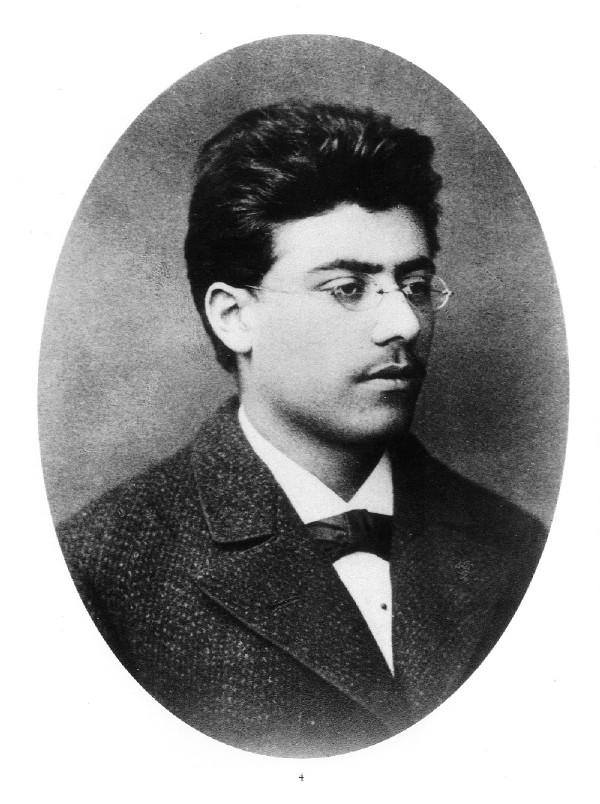
    PHOTO: Anton Bruckner, babe magnet

  • Bruckner’s Triumph Phones and All

    Bruckner’s Triumph Phones and All

    Johannes Brahms described the mighty musical edifices of Anton Bruckner as “symphonic boa constrictors.” But at last night’s concert of The Philadelphia Orchestra, it was the audience that put on the squeeze.

    Music and artistic director Yannick Nézet-Séguin conducted a fascinating experiment, presenting a joint concert, without break, of Bruckner’s valedictory Symphony No. 9 and his almighty “Te Deum” (literally a dedication to God).

    He was not the first to do so. The symphony was presented that way at its first performance, in 1903, six years after the composer’s death. Bruckner, sensing the end was near, sanctioned the “Te Deum” as a makeshift finale for his symphony, the fourth movement of which he ultimately left unfinished – though most conductors, in their mature wisdom, grasp the poetic justness of simply letting the third movement trail away like incense on a reflective note. (Bruckner’s Roman Catholic faith was central to his life and work.)

    But it was Yannick’s own inspired idea to also affix one of Bruckner’s motets for a cappella chorus, “Christus factus est,” as a kind of preamble to the whole. The motet quotes material from the “Te Deum” and, thanks to a fortuitous key relationship, happens to dissolve seamlessly into the opening of the symphony. Then, on the other side, just as the mystic atmosphere of the symphony’s third movement is about to dissipate, the cathedral doors are blown wide open by the heaven-storming eruption that launches the sublime “Te Deum.”

    This conception of the three works as a kind of Holy Trinity transformed the evening into an epic parallel of Beethoven’s 9th Symphony, a work Bruckner clearly admired. And what a journey it was!

    Yannick’s evident mastery was all the more remarkable in that yesterday afternoon, he had just conducted his first ever “La bohème” – under the scrutiny of an international radio audience, no less – at New York’s Metropolitan Opera. The opera ended around 4 p.m. Yannick is well-known for his phenomenal energy. At 48, he goes and goes and goes until he can’t do it anymore, and then once in a blue moon he takes time off to recuperate from exhaustion – which is why he is one of the few conductors who can oversee both the Met and a major symphony orchestra – and yesterday was quite the demonstration of his superhuman stamina.

    The orchestra played like gods, and Yannick guided them like a diminutive Zeus, with a strength and an authority belying his 5-foot-five frame. The conductor later wore a wry, self-deprecating expression, acknowledging the physical contrast with choral director Joe Miller, who towered over him as the two took their bows during the rapturous ovations at the end of the concert.

    But before they could get there, there was some unexpected turbulence.

    Yannick and the orchestra were about half-way through the evening and totally in the zone – in the middle of what was shaping up to be the musical equivalent of a no-hitter – when, only about a minute into the symphony’s lofty third movement, at a particularly ethereal moment, someone in the row behind me and off to one side cried out. (I was sitting in row B in the orchestra tier.) Whether he was displeased with something he heard onstage or had a beef with somebody else in the audience or was unable to contain himself during a moment of personal disturbance is unclear, but it was disruptive enough that Yannick stopped the orchestra and began the movement over.

    A little uncomfortable, to be sure, but everyone was determined to carry on as if nothing had happened. Then, wouldn’t you know it, when the musicians arrived at the very same passage, from the other side of the hall, someone’s cell phone ringer went off. Loudly.

    At that point, Yannick let his baton arm drop to his side, his body went limp, and he turned resignedly to face that portion of the audience from which the disruption had originated. With evident exasperation, he remarked, “Can we just spend one hour of our lives without our DAMN PHONES????” To this, he added another sentence or two, while a large segment of the audience applauded. I wholeheartedly agree with the sentiment, but the applause only further served to break the spell cast by Bruckner.

    Nevertheless, Yannick raised his wand and the orchestra attempted to weave its magic a third time. Of course, by then the sustained atmosphere had been spoiled. I’m not sure if the musicians had difficulty regaining their involvement or if it was the natural aftermath of the disturbance that altered the mood in the hall, but it took a few minutes for everyone to slip back into Bruckner’s spiritual world.

    Thankfully, they did. It was a gorgeous performance. More fiery than usual, perhaps, in the ferocious scherzo (the symphony’s second movement), but if you’ve got it, flaunt it. This was young man’s Bruckner.

    I held my breath as the orchestra neared the transcendent final bars – the symphony ends quietly – feeling myself grow tense against the possibility of an overeager listener stomping the mood with a premature bravo, but after a mere pause, the Philadelphia Symphonic Choir again rose to its feet, on the tiered balcony behind the stage, where it had been sitting unobtrusively throughout the duration of the symphony, to join orchestra and organist in the explosive opening of the sublime “Te Deum.”

    It couldn’t have been easy for the soloists – soprano Elza van den Heever, mezzo-soprano Michelle DeYoung, tenor Sean Panikkar, and bass-baritone Ryan Speedo Green – who had also been sitting quietly. An awfully long time had passed since backstage warm-ups. Some of the singers drew water from metal thermoses, no doubt to ensure their voices wouldn’t catch in their throats. They sang beautifully, the individual and combined voices alternately blending and ringing out like silver clarions. The evening ended on a hair-raising tutti, with soloists, chorus, orchestra, and organ blazing. Goosebumps were palpable all across the auditorium. The audience reception was long, thunderous, and much deserved. The orchestra had overcome a double disruption in the symphony’s third movement to attain a lasting triumph.

    It is too bad that this rare Brucknerian experiment couldn’t be sustained quite as planned, as it really was something magnificent to experience. But looking back this morning, I find a touch of irony in Yannick’s wholly understandable expression of consternation at the disruption of a cell phone, as 15 minutes before the concert was scheduled to begin, I spotted him entering the lobby (as opposed to the stage door around the back of the building), smiling in a powder blue track suit and trailed by an assistant – or perhaps his husband – who was filming him, yes, on his phone.

    Hey, I’ve got no beef with that. Just noting that the damn phones are with us everywhere. But no doubt put to better use documenting Yannick, mid-marathon, on his way from the pit of the Metropolitan Opera to the podium of the Philadelphia Orchestra, than in the middle of Bruckner’s Ninth Symphony.

    Not all the drama was onstage, then, but all’s well that ends well. Flaws and all, this was one of the great Bruckner concerts of my life. Bravo, Philadelphia!
  • Hans Rott: Mahler’s Lost Symphony Pioneer

    Hans Rott: Mahler’s Lost Symphony Pioneer

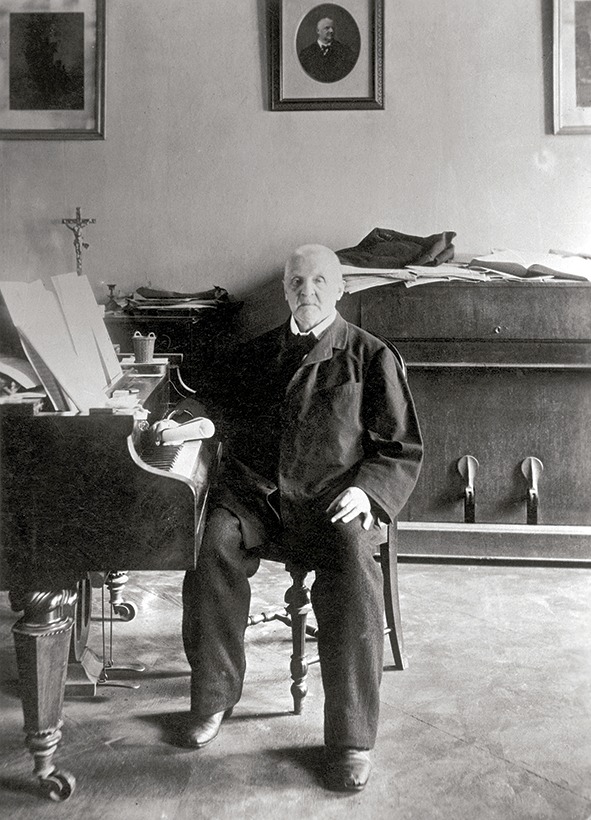
    He was a brilliant improviser on the organ, Anton Bruckner’s favorite student. Gustav Mahler, his roommate, declared him “the founder of a new symphony.”

    It must have seemed very new at the time. When he submitted the first movement to a composition contest, the jury (with the exception of Bruckner) was beyond dismissive, even condescending, in its remarks. When he showed Johannes Brahms the manuscript, Brahms told him he had no talent and that he should give up composing.

    Hans Rott (1858-1884) lacked Mahler’s resolve, and his productivity was further hampered by encroaching mental illness. In 1880, while traveling, Rott pulled a revolver on a fellow passenger, convinced that Brahms had filled his train with dynamite. He was diagnosed with hallucinatory insanity and persecution mania. He died in an asylum, of tuberculosis, at the age of 25.

    Had fate dealt him a different hand, it’s entirely possible Rott would have developed into a composer as well-known as his contemporaries. It’s obvious from his only symphony, which dates from the final year of his studies, 1878, that Mahler was greatly influenced by his classmate. In fact, it’s startling to find so many “Mahlerian” characteristics already in evidence in this work that predated Mahler’s 1st.

    Hear it this afternoon, on Hans Rott’s birthday. Rott’s symphony will be among my featured works, from noon to 4 p.m. EDT. We’ll also observe the anniversary of the births of composers Benedetto Marcello and Jerome Moross, and conductor William Steinberg, on WWFM – The Classical Network and wwfm.org.


    PHOTOS: Future master of the fin-de-siècle symphony, Gustav Mahler (left), and his roommate, who showed him the way

Tag Cloud

Aaron Copland (92) Beethoven (95) Composer (114) Film Music (120) Film Score (143) Film Scores (255) Halloween (94) John Williams (185) KWAX (229) Leonard Bernstein (100) Marlboro Music Festival (125) Movie Music (135) Opera (198) Philadelphia Orchestra (88) Picture Perfect (174) Princeton Symphony Orchestra (106) Radio (87) Ralph Vaughan Williams (85) Ross Amico (244) Roy's Tie-Dye Sci-Fi Corner (290) The Classical Network (101) The Lost Chord (268) Vaughan Williams (103) WPRB (396) WWFM (881)

DON’T MISS A BEAT

Receive a weekly digest every Sunday at noon by signing up here


RECENT POSTS