Tag: Arrigo Boito

  • Boito’s Devilish “Mefistofele”

    Boito’s Devilish “Mefistofele”

    Richard Strauss’ final opera, “Capriccio,” is an extended, if lighthearted debate on the relative merits of words and music. But for Arrigo Boito, the two never really came into conflict.

    As one of the great librettists, Boito provided the texts for Verdi’s late masterpieces, “Otello” and “Falstaff.” He also worked up a revision of “Simon Boccanegra” and – under the anagram Tobia Gorrio – provided the libretto for Ponchielli’s “La Gioconda.” That should be enough to guarantee his place in music history, right?

    But Boito himself was also a composer of merit, if not a prolific one. Although he destroyed his first opera, “Ero e Leandro,” and his last, “Nerone,” was left incomplete at the time of his death (to be finished by Arturo Toscanini and Vincenzo Tommasini), he totally nailed it with “Mefistofele.”

    There may be those who look down their noses at Boito’s take on Goethe’s “Faust,” yet the work stubbornly clings to the outskirts of the standard repertoire. Audiences love it. For me it is much more entertaining than anything in Verdi (I know, them’s fightin’ words), and I personally find the melodic invention much richer than that in the more popular version by master melodist Charles Gounod.

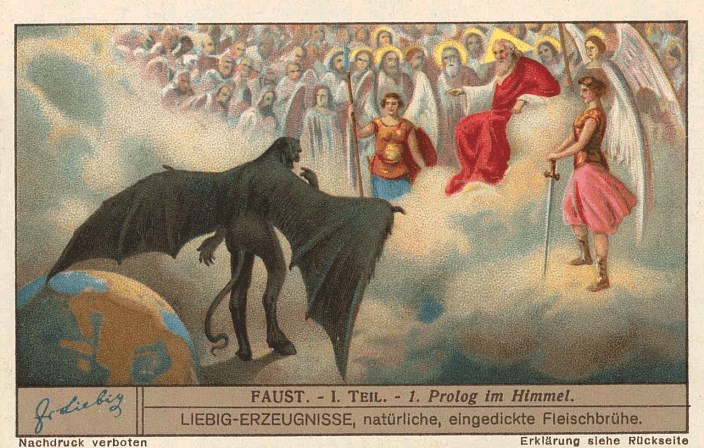
    Sure, as narrative it’s a little clunky – it’s as if Boito presents the story as a series of tableaux that are just kind of stitched together – and the most hair-raising set piece, the prologue in Heaven, comes right at the beginning. How could it not be all downhill from there? But the composer has the good sense to bring it all back at the end.

    What the opera really demands is a strong personality at its core, someone who, through his magnetic stage presence and sheer force of will, can tow the circus parade of wonders, wagon after wagon, before our astonished eyes and ears.

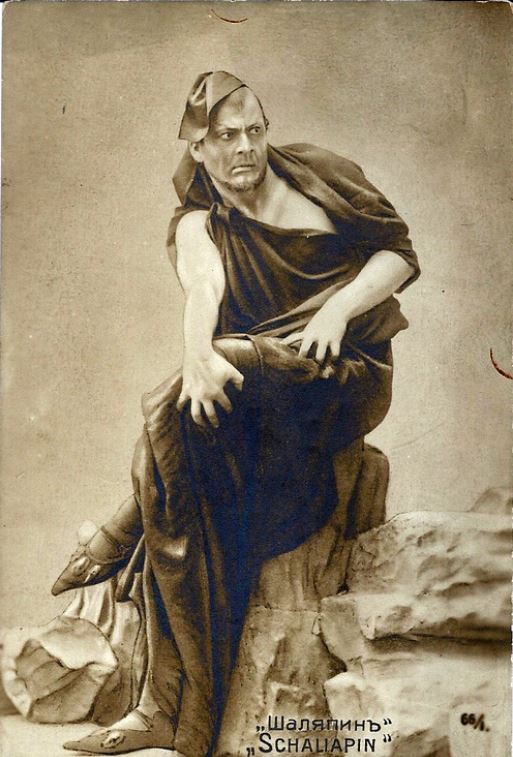
    Feodor Chaliapin, by all accounts, was just such a force. He gained wide notoriety in the title role, for his earthy interpretation and his insistence on playing it half-naked.

    In the recent past, Samuel Ramey owned the piece. He too preferred to show a fair amount of skin (though less than Chaliapin) – but really, couldn’t that be said for just about any of Ramey’s roles?

    Here’s the stunning – and cheeky – Robert Carson production first presented by San Francisco Opera in 1989, which I belatedly caught up with in New York, unfortunately after Ramey retired. The first 26 minutes will knock your socks off.

    Chaliapin in 1927

    https://www.youtube.com/watch?v=uVfjMHOeOVA

    Happy birthday, Arrigo Boito (1842-1918). Whether in words or in music, you gave the devil his due!


    DEVILED HAMS: Feodor Chaliapin (left) and Samuel Ramey

  • Arrigo Boito’s Mefistofele Still Thrills

    Arrigo Boito’s Mefistofele Still Thrills

    Richard Strauss’ final opera, “Capriccio,” is an extended, though lighthearted debate on the relative merits of words and music. In the case of Arrigo Boito, the two never really came into conflict.

    As one of the great librettists, Boito provided the texts for Verdi’s late masterpieces, “Otello” and “Falstaff.” He also worked up a revision of “Simon Boccanegra” and – under the anagram Tobia Gorrio – provided the libretto for Ponchielli’s “La Gioconda.”

    But Boito himself was also a composer of merit, if not a prolific one. Although he destroyed his first opera, “Ero e Leandro,” and his last, “Nerone,” was left incomplete at the time of his death (to be finished by Arturo Toscanini and Vincenzo Tommasini), he totally nailed it with “Mefistofele.”

    There may be those who look down their noses at Boito’s take on Goethe’s “Faust,” yet the work stubbornly clings to the outskirts of the standard repertoire. Audiences love it. For me it is much more entertaining than anything in Verdi (I know, them’s fightin’ words) and I personally find the melodic invention much richer than that in the more popular version by master melodist Charles Gounod.

    Sure, as narrative it’s a little clunky – it’s as if Boito presents the story as a series of tableaux that are just kind of stitched together – and the most hair-raising set piece, the prologue in Heaven, comes right at the beginning. How could it not be all downhill from there? But the composer has the good sense to bring it all back at the end.

    What the opera really demands is a strong personality at its core, someone who, through his magnetic stage presence and sheer force of will, can haul the circus train of wonders, boxcar after boxcar, before our astonished ears and eyes.

    Feodor Chaliapin, by all accounts, was just such a force. He gained wide notoriety in the title role, for his earthy interpretation and his insistence on playing it half-naked.

    In the recent past, Samuel Ramey owned the piece. He too preferred to show a fair amount of skin (though less than Chaliapin) – but really, couldn’t that be said for just about any of Ramey’s roles?

    Here are some scenes from the stunning – and fun – Robert Carsen production from San Francisco Opera in 1989. The first 26 minutes would knock your socks off. Unfortunately, the full video is not currently posted on YouTube.

    Son lo spirito che nega sempre tutto (I am the spirit that denies):

    Ecco il mondo (Behold the world):

    The finale, with Mephisto drinking Johnny Walker Red and tossing cards into a hat:

    Happy birthday, Arrigo Boito (1842-1918)!

  • Michel Legrand Birthday Broadcast on WWFM

    Michel Legrand Birthday Broadcast on WWFM

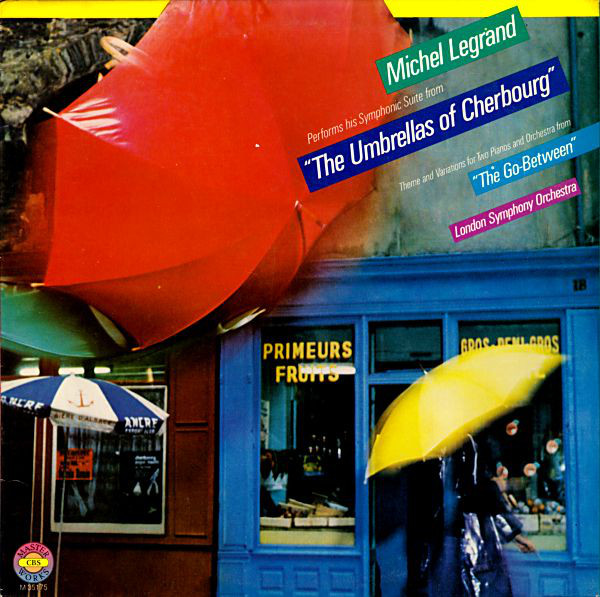
    It’s Michel Legrand’s birthday. I will wait for you, with music from “The Umbrellas of Cherbourg,” among others – including works by Arrigo Boito, Johann Baptist Cramer, Rudolf Ganz, Ingvar Lindholm, Wolfgang Amadeus Mozart, Giacomo Puccini, and more – from 4 to 7 p.m. EST. It never rains but it pours, on WWFM – The Classical Network and wwfm.org.

  • OperaDelaware’s “Amleto” on WRTI Today

    OperaDelaware’s “Amleto” on WRTI Today

    Tune in to WRTI this afternoon at 1:00 EDT to enjoy a broadcast of OperaDelaware’s acclaimed production of Franco Faccio’s “Amleto.” The 1865 opera, on a libretto of Arrigo Boito after Shakespeare’s “Hamlet,” lay unheard for over 130 years after its only revival in 1871. Boito, of course, would go on to provide Shakespeare-inspired libretti for Giuseppe Verdi’s “Otello” (1887) and “Falstaff” (1893).

    Learn more about the opera and its remarkable reconstruction here:

    http://wrti.org/post/19th-century-opera-making-21st-century-comeback-june-11th-1-pm-wrti

    WRTI can be heard in Philadelphia at 90.1 FM. Find a complete list of frequencies here: http://wrti.org/wrti-coverage-map; or listen online at wrti.org.


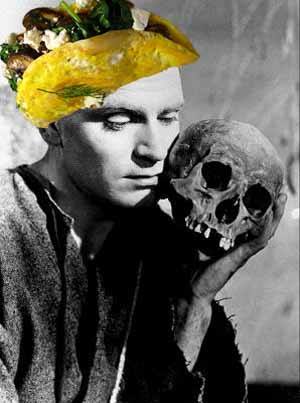
    PHOTO: Amleto with omelet

  • WPRB Celebrates Goethe with Faust & Mefistofele

    WPRB Celebrates Goethe with Faust & Mefistofele

    Right now, we’re enjoying music by the Polish violin virtuoso Henryk Wieniawski on themes from Gounod’s “Faust.”

    Coming up in the next hour, we’ll have highlights from Arrigo Boito’s opera “Mefistofele.” Perhaps better known as the outstanding librettist for Verdi’s “Otello” and “Falstaff,” Boito could be quite the composer himself.

    We’re celebrating Goethe until 11:00 this morning on WPRB 103.3 FM and at wprb.com.

Tag Cloud

Aaron Copland (93) Beethoven (95) Composer (114) Film Music (126) Film Score (143) Film Scores (255) Halloween (94) John Williams (189) KWAX (229) Leonard Bernstein (101) Marlboro Music Festival (125) Movie Music (141) Mozart (87) Opera (203) Philadelphia Orchestra (89) Picture Perfect (174) Princeton Symphony Orchestra (107) Radio (87) Ross Amico (244) Roy's Tie-Dye Sci-Fi Corner (290) The Classical Network (101) The Lost Chord (268) Vaughan Williams (103) WPRB (396) WWFM (881)

DON’T MISS A BEAT

Receive a weekly digest every Sunday at noon by signing up here


RECENT POSTS