Tag: art

  • 9/11, Art, and a World in Crisis

    9/11, Art, and a World in Crisis

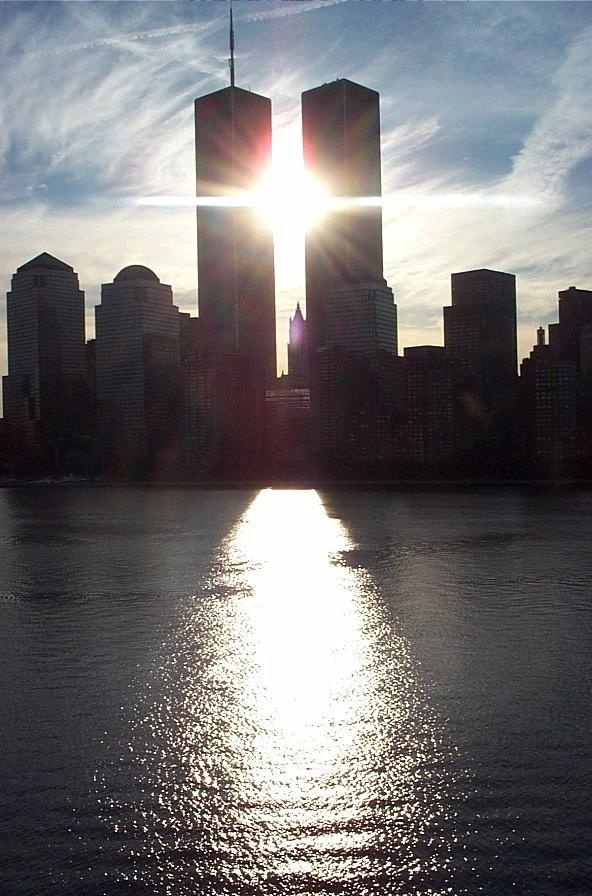
    There was some debate at the time as to whether 2000 or 2001 was the proper start of the new millennium. And in 2000, there was a scramble for generators, as anxiety mounted over whether shortsighted computer programming would cause elevators to plummet and airplanes to drop from the skies for Y2K. Whether or not you felt a touch of annoyance at all the knuckleheads in their New Year’s Eve “2000” novelty glasses who believed they really were welcoming in a new millennium (a year early, in fact), in the end it proved to be as immaterial as a lover’s quarrel. Because the 21st century really began on September 11, 2001.

    22 years on, we live in the world 9/11 made, or at any rate embodied. We continue to grapple with uncertainty, and anxiety, and hopelessness, as humankind gives in to its baser instincts and lessons seemingly are never learned. War, terrorism, nuclear weapons, disease, heedless technology, and shady politics had been with us already in the 20th century, of course; but with the destruction of the World Trade Center, and the horror of the attacks, brought to us live, in real time, it really did seem as if everything was running off the rails.

    In a society where the arts and education are marginalized and brutishness and nihilism are celebrated and exploited as means to power and economic gain, injustice and aggression are on the rise, and we all pay the price.

    This is not to diminish the horror and suffering of those who perished in the attacks or their survivors. Nothing I could write could ever do honor to those who died or convey enough sympathy or solace to their families. But none of us who lived through 9/11 emerged unscathed.

    In response to the assassination of John F. Kennedy in 1963, Leonard Bernstein famously declared, “This will be our reply to violence: to make music more intensely, more beautifully, more devotedly than ever before.”

    But you know the old philosophical thought experiment: if a tree falls in the woods and no one is around to hear it, does it still make a sound?

    If beautiful music is made intensely and devotedly, will it still reach those for whom it might prove transformative in a world where it has been dismissed and even denigrated?

    In Bernstein’s day, classical music was still on television. It was on the radio. It was not chopped up and presented as a string of pretty tunes to be promoted as “relaxing.” Beethoven, Mahler, and Shostakovich did not write elevator music. These were soulful outpourings of people with their own struggles. Now, outside the concert hall, lamentably, they are mostly silent.

    Would classical music have prevented 9/11? Of course not. But anything that promotes reflection and beauty and solace and empathy can only help. Our artistic monuments are what connect us to one another and reassure us and encourage us in how we relate to our fellow human beings. And you don’t have to be a dead white European male to benefit.

    The years pass quickly and it doesn’t take long for people to forget. A generation has already reached adulthood that has no firsthand memory of 9/11. Nor of Leonard Bernstein for that matter.

    Horror and human tragedy can always be found in abundance, whether the cause be natural, as in the recent earthquake in Morocco, or the wildfires in Maui, or manmade, as in the misery of the war in Ukraine, or any number of mass shootings in public places. At home, in the United States, there are dangerous undercurrents of social and political unrest.

    Classical music is not simply the means to a lofty escape. There is a difference between elitism and elevation. The arts are not all ivory tower, after all; they also have a practical application. With the ever-present threat of injustice, oppression, and violence, they are evidence of our shared humanity at its most transcendent.

    Also, I expect they make you feel a hell of a lot better about everything than would an empty diet of soul-crushing noise, vapid flash, and glorified violence.

  • Loving the Tedious: “Parsifal” and Art’s Slow Burn

    Loving the Tedious: “Parsifal” and Art’s Slow Burn

    Is there an opera, or even a movie, that you find boring as hell, and yet somehow you also love it?

    For me, it’s Wagner’s “Parsifal.” A music drama steeped in Christian symbolism involving the Knights of the Grail and their redeemer (a “pure fool, enlightened by compassion”), the opera can be ponderous in the extreme. But it took a cinematic genius like Hans-Jürgen Syberberg to turn it into, at times, an even more tedious 4-hour-plus movie (short by Syberberg standards) in 1982. I finally sat down to revisit the film on Saturday for the first time in 40 years. You can read all about my first viewing, in the early ‘80s, here:

    https://www.facebook.com/photo/?fbid=1074150483504014&set=a.883855802533484

    In Syberberg’s telling, Act I is especially stagnant, at nearly two hours (the length of a movie in itself), for most of it Gurnemanz supplying his prolix exposition while seated on a boulder. Amusingly – and I didn’t pick up on this when I was a teenager – the long-suffering Amfortas, afflicted with a wound that will not heal, is played by the conductor, Armin Jordan – an interesting casting choice, with a subtext (intended?) of martyrdom for one’s art.

    Most of the singers on the soundtrack are doubled by actors, who lip-sync. A fresh performance was recorded for the film, since Syberberg managed to alienate descendants of the Bayreuth Circle with his earlier, five-hour documentary about unabashed Hitler-sympathizer Winifred Wagner (the composer’s daughter-in-law, who confided things like “For us, he was not the Führer; just a wonderful family friend”).

    Two of the singers actually do appear in the film: Robert Lloyd as Gurnemanz, elder knight of the Grail, and Aage Hauglund as the magician Klingsor, who castrates himself because of his inability to stay chaste. Act II is full of hilarious phallic imagery. Also, some of the action is carried by marionettes (brought back from the opera’s Prelude).

    Edith Clever is excellent, the most intense and invested of the onscreen actors, even as she mouths Yvonne Minton’s vocals, as Kundry. But it is Karin Krick who truly mesmerizes, when she takes over the title role, midway into Act II, lip-syncing to the unmistakably male tenor voice of Rainer Goldberg. Syberberg has his reasons, I’m sure, but I notice she appears at the moment that Parsifal experiences the epiphany that awakens him to compassion. Is compassion then, to be considered a feminine trait? In a work of art that’s built on the iconography of Jesus’ sacrifice, it’s a peculiar observation. Perhaps in his denial of Kundry, sidestepping the snare that claimed Amfortas, the character attains a kind of androgyny. Or perhaps the director was aiming for some sort of statement about Parsifal’s universality?

    Whatever Syberberg’s rationale for the gender-swap, Krick is superb. I find her riveting in a way her male counterpart in the role (Michael Kutter) is not – even though they both portray the character as a kind of disembodied dreamer – and I am very curious to know what became of her. Numerous Google searches yield nothing beyond her participation in this film. If she’s still alive, she couldn’t be any older than about 60.

    The mystery remains unresolved, even as Syberberg’s Mystery has run its course. It took me six hours, but once again I managed to get through his vision of “Parsifal.” Now I can set the opera aside for another year. Since the last act is set on Good Friday, and the legacy of Christ infuses the entire work, understandably I associate it with Easter.

    Of course, art exists outside of time. Part of what makes it so frustrating to be trapped in a world of texting and soundbites is their incompatibility with a spirit of reflection. Art requires space to breathe. Equally, one needs space in order to prepare oneself to enter into an alternate reality that reflects and yet somehow transcends our own. The noise, pace, and distractions of contemporary life are totally at odds with the needs of the spirit.

    I think of the current state of our classical music stations, many of which no longer play complete works over a certain length, except occasionally perhaps, if they happen to be the most famous. As if music is nothing more than a string of pretty tunes. There’s no opportunity to get lost in the imagination, the fantasy, or even the logic of the music. You’re drawn into the first movement of a symphony and then, bam, you’re yanked back into the prosaic world by some inanity being spouted by the announcer. What about the rest of the piece? When I was in a position to do so, I fought this trend for a long, long time.

    For me, “Parsifal” is like a narcotic. Undoubtedly there are some who believe I should enter a 12-step program. But the high is too good, even if it sometimes puts me through hell to get to heaven.

    I’m curious, are there any works of art, in whatever medium, that affect you like that? If so, I would be curious to hear about them. Don’t just sit there. That’s what the comments are for!


    PHOTO: The duality of Parsifal – Karin Krick and Michael Kutter – presented before Wagner’s death mask

  • Couscous Art Viral Bow Plate Patterns

    Couscous Art Viral Bow Plate Patterns

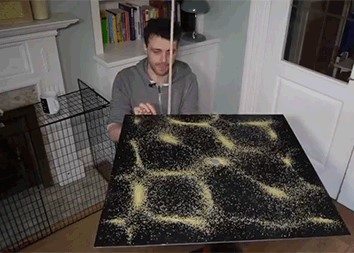
    All I need is couscous, a metal plate, and a bow, and I am never bored. This video has been bouncing around the internet for a few years now, but somehow, just this week, climbed aboard the Twitter Express.

    https://nerdist.com/couscous-transforms-into-beautiful-patterns-with-the-strum-of-a-bow/?fbclid=IwAR1qt51qQNWQ0ITw2p8-J_za7xP4G9NmIFc18e8yRv0LO_X5ph4rUbXg2B4

  • Facebook Images are Back Ross Amico

    Facebook Images are Back Ross Amico

    I am happy to report that my blood sacrifice to the Facebook gods must have had its desired effect, since I am once again able to upload images to my page every which way. Look forward to plenty more inane illustrations of the kind you’ve always come to expect from cuddly Classic Ross Amico.

  • Maxfield Parrish Autumn Art & Inspiration

    Maxfield Parrish Autumn Art & Inspiration

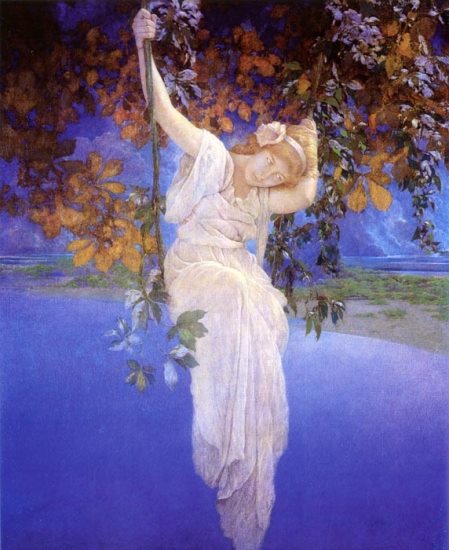
    Autumn at last! Is there an artist who captures the spirit of the season better than Maxfield Parrish?

Tag Cloud

Aaron Copland (92) Beethoven (94) Composer (114) Film Music (117) Film Score (143) Film Scores (255) Halloween (94) John Williams (185) KWAX (228) Leonard Bernstein (99) Marlboro Music Festival (125) Movie Music (132) Opera (197) Philadelphia Orchestra (86) Picture Perfect (174) Princeton Symphony Orchestra (106) Radio (86) Ralph Vaughan Williams (85) Ross Amico (244) Roy's Tie-Dye Sci-Fi Corner (290) The Classical Network (101) The Lost Chord (268) Vaughan Williams (101) WPRB (396) WWFM (881)

DON’T MISS A BEAT

Receive a weekly digest every Sunday at noon by signing up here


RECENT POSTS