Tag: Art Song

  • Reynaldo Hahn A Musical Bon Vivant at 150

    Reynaldo Hahn A Musical Bon Vivant at 150

    Born 150 years ago today: bon vivant Reynaldo Hahn.

    Hahn was born in Caracas, Venezuela, in 1874, the youngest of twelve children. His father was a German-Jewish businessman, a convert to Catholicism, who arrived in Venezuela in 1845 at the age of 22 and married a Venezuelan woman of Basque origin. Political instability drove the family to resettle in Paris, where young Reynaldo was given a cosmopolitan education.

    He studied composition at the Paris Conservatory (which he entered at the age of 11) with Charles Gounod and Jules Massenet, among others. He took private lessons with Camille Saint-Saëns.

    Hahn met Marcel Proust at the age of 19, and the two essentially combusted. Their affair lasted for two years and is thought to have been Proust’s only real relationship. The romance may have fizzled, but the friendship was lifelong. Hahn’s influence permeates Proust’s “Remembrance of Things Past” (a.k.a. “In Search of Lost Time”), often cited as one of the greatest novels of the 20th century. It’s certainly one of the longest. It was Hahn who suggested the “petite phrase” that recurs symbolically throughout Proust’s magnum opus, really a theme from Saint-Saëns’ Violin Sonata in D minor.

    Hahn composed operas, tone poems, concertos, chamber music, a successful operetta (“Ciboulette”), and a musical comedy (“Mozart”). But far and away he is best remembered for his elegant art songs – or mélodies – of which he composed over 100.

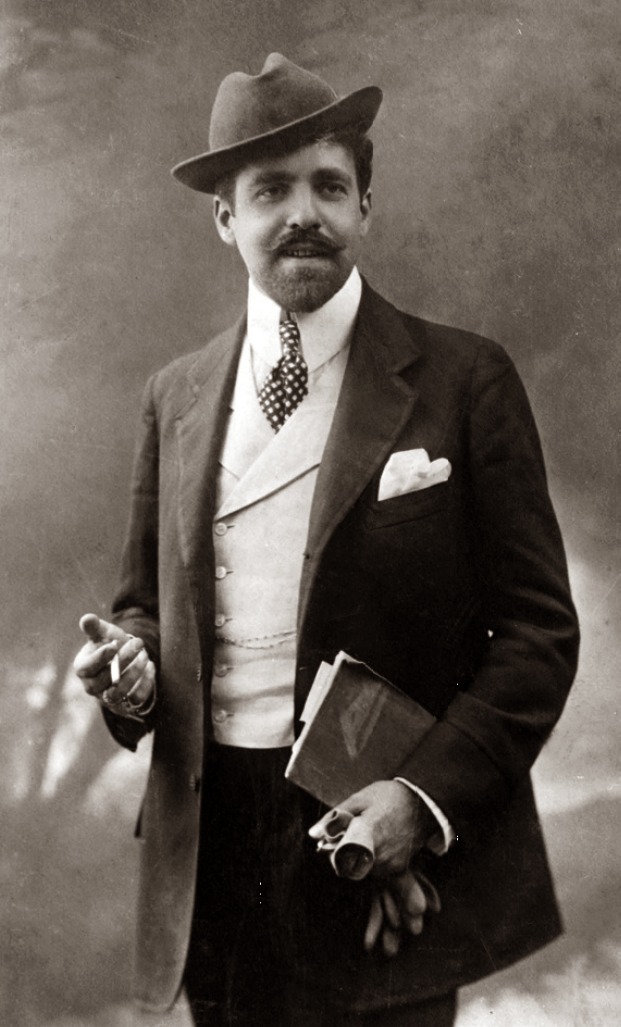
    He certainly enjoyed the good life, nattily attired, living in a lavishly appointed flat, and always with fine cigarettes at hand. He also gained a considerable reputation as a most charming performer. His delightfully informal presentations at musical evenings of the Belle Epoque would involve him leaning far back at the piano, cigarette dangling from a corner of his mouth, and casting languid glances at the audience through long lashes. Sample his artistry below.

    Happy 150, Reynaldo Hahn!


    Hahn conducts one of his most frequently heard works, “Le bal de Béatrice d’Este” for winds, percussion, two harps, and piano

    One of his most famous songs, “À Cloris”

    Another, “L’heure exquise” (“The Exquisite Moment”)

    Hahn sings in 1909. (Great photos too!)

    Always fond of this one

    Hahn’s Piano Concerto
  • Othmar Schoeck: A Forgotten Swiss Composer?

    Othmar Schoeck: A Forgotten Swiss Composer?

    It’s September 1st, and I’m all Schoeck up!

    On this day when the birthdays of Johann Pachelbel and Engelbert Humperdinck are generally observed, Othmar Schoeck is foremost in my thoughts.

    Schoeck (1886-1957) may be largely forgotten now, but he once enjoyed international recognition for his art songs, which he composed prolifically. He also produced opera, orchestral, and instrumental works. His ambitious Violin Concerto – some 40 minutes in length – was composed at white heat, out of love for Stefi Geyer, the same violinist who captivated Béla Bartók and inspired Bartók’s Violin Concerto No. 1.

    Schoeck was born in Switzerland and spent most of his life there, other than a brief period during which he lived in Leipzig, where he studied with Max Reger. He had considered pursuing a career in the visual arts, as had his father, before finally committing himself to music. He was fortunate enough to secure patronage so that he could compose more or less undisturbed.

    When Ferruccio Busoni settled in Switzerland during the First World War, the two developed a friendship, despite some disagreements on certain artistic matters. In fact, Busoni provided the libretto for Schoeck’s opera “Das Wandbild” (“The Picture on the Wall”), marked by the kind of chinoiserie that characterized Busoni’s own “Turandot” (in no way to be confused with the later, more famous opera by Puccini).

    Schoeck’s music experienced a stylistic shift as he became acquainted with the works of Alban Berg and Arthur Honegger. A torrid affair with the pianist Mary de Senger seems to have changed him for good. When their relationship ended, so did Schoeck bid farewell to his earlier, Romantic style.

    Though he was no Nazi sympathizer, Schoeck had the bad judgment or naivete to attend the premiere of one of his operas in Berlin in 1943. This led to a lot of stress at home, with the Swiss unhappy with his actions. Schoeck suffered a heart attack, but continued to compose. He died in 1957.

    I seem to recall his reputation was such that the writer Hermann Hesse referred to Schoeck in one of his books – I think it was “Journey to the East” – in the same breath as Richard Strauss. I suppose it didn’t hurt that Hesse and Schoeck were friends and Schoeck set some of Hesse’s poems (as did Strauss). Hesse pitched the idea of an operatic collaboration, and even wrote a libretto, but the proposal never came to anything.

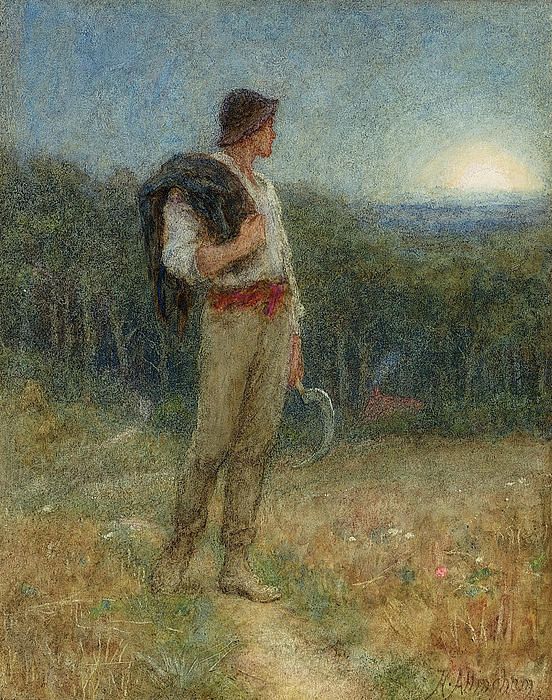
    Here is Schoeck’s lovely “pastoral intermezzo,” as the composer described it, “Summer Night.” It tells of a summer harvest, during which field hands come to the aid of a widow and work all night in order to get in her crop, before embarking on their own day jobs.

    Here’s a song, “Summer Night,” on a text of Hesse, with Dietrich Fischer-Dieskau

    https://www.youtube.com/watch?v=AflKXAZaUsY

    And the composer’s Violin Concerto

    Happy birthday, Othmar Schoeck!


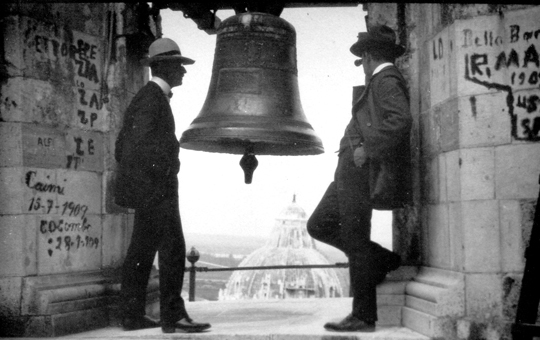
    HATS IN THE BELFRY: Hermann Hesse and Othmar Schoeck

  • Othmar Schoeck’s Birthday & “Summer Night”

    Othmar Schoeck’s Birthday & “Summer Night”

    Today is the birthday of Swiss composer Othmar Schoeck (1886-1957). Schoeck is best known for his many art songs. I’m not sure, but I believe I first learned of him not from any of his music, but from a mention in one of Hermann Hesse’s novels. Schoeck and Hesse were friends and sometime collaborators, who exchanged letters for decades.

    Here’s a lovely pastoral intermezzo for strings from 1945, called “Summer Night.” The work takes its inspiration from a poem by Gottfried Keller. During a bright summer night, young peasants reap grain for a widow who has no one else to help her. The work proceeds cheerfully through the dawn, when the secret helpers slip away, to begin their own day’s labors.

    Hard to believe Schoeck was just recovering from a heart attack when he wrote this, but it was probably therapeutic in more ways than one. The choice of subject matter, a recollection of simpler times, and its romantic treatment, might be interpreted as a reaction against the hardships and horrors of World War II.

Tag Cloud

Aaron Copland (92) Beethoven (95) Composer (114) Film Music (119) Film Score (143) Film Scores (255) Halloween (94) John Williams (185) KWAX (229) Leonard Bernstein (99) Marlboro Music Festival (125) Movie Music (134) Opera (198) Philadelphia Orchestra (86) Picture Perfect (174) Princeton Symphony Orchestra (106) Radio (87) Ralph Vaughan Williams (85) Ross Amico (244) Roy's Tie-Dye Sci-Fi Corner (290) The Classical Network (101) The Lost Chord (268) Vaughan Williams (102) WPRB (396) WWFM (881)

DON’T MISS A BEAT

Receive a weekly digest every Sunday at noon by signing up here


RECENT POSTS