Tag: Arthur Honegger

  • Honegger’s Pacific 231 A Runaway Train at 100

    Honegger’s Pacific 231 A Runaway Train at 100

    More powerful than a locomotive!

    Arthur Honegger’s “Pacific 231” was first performed on this date, one hundred years ago.

    Originally, Honegger had given the work a more generic title, “Mouvement symphonique,” asserting that he had written it as “an exercise in building momentum while the tempo of the piece slows.” However, like Dvořák, he was widely known to be a train enthusiast. It seems almost too convenient that the music resembles the journey of a steam locomotive.

    In Whyte notation, such a locomotive would be designated as 4-6-2 (four pilot wheels, six powered and coupled driving wheels, and two trailing wheels). However, in France, where axles rather than wheels are counted, the arrangement would be 2-3-1.

    The composer once confided, “I have always loved locomotives passionately. For me they are living creatures and I love them as others love women or horses.”

    “Pacific 231” is one of the composer’s most frequently performed works.

    In 1948, Jean Mitry choreographed and edited an award-winning film inspired by the piece, which employs Honegger’s music as the soundtrack. The composer was always cagey about tying music, which he regarded as an absolute art form, to visuals in the minds of his audiences, so he was quick to indicate that he had come up with his titles after the fact. Perhaps the film did him no favors. You can watch it here:

    https://www.youtube.com/watch?v=czVhBf0Lg2Y

    Ironically, Honegger enjoyed a successful side career as, that’s right, a film composer. It was his advice that helped a struggling young artist by the name of Miklós Rózsa to discover his métier. Rózsa, of course, went on to win three Academy Awards and is perhaps best known for his music for “Ben-Hur.”

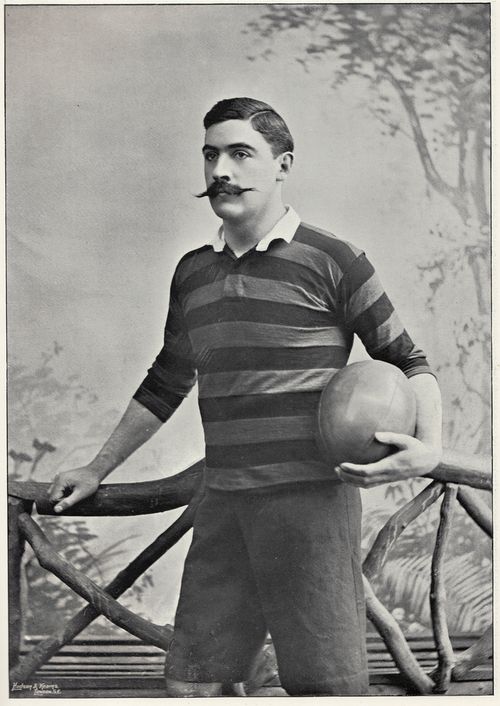
    How canny is it to give your music a descriptive title, even it is a bit after the fact? Honegger composed three “mouvements symphoniques.” Beside “Pacific 231,” there’s also “Rugby” (actually my favorite of the three). The third? It has no descriptive title. Unsurprisingly, it remains the least well-known.

    But “Pacific 231?” A hundred years later, it’s still a runaway train.


    Honegger probably would have hated this video, because of all the images of locomotives, but the performance, with Ernest Ansermet conducting, is a classic.

    BONUS: Honegger’s “Rugby”
  • Ida Rubinstein Sultry Sugar Heiress

    Ida Rubinstein Sultry Sugar Heiress

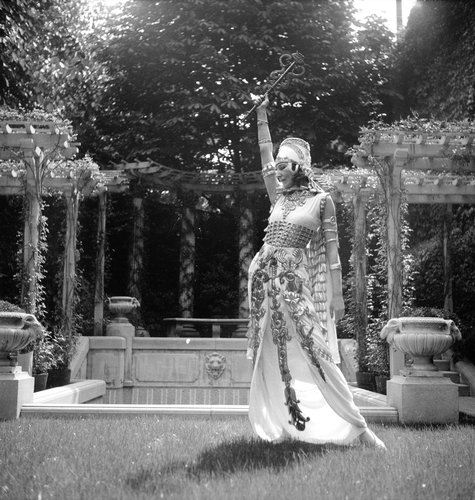
    The actor and dancer Ida Rubinstein specialized in strong, often sultry heroines. A remarkable figure, this sugar heiress from a family of Ukrainian Orthodox Jews essentially willed herself onto the Parisian stage, where her acting ability and natural magnetism more than compensated for her limited ability as a dancer.

    She was welcomed into the Ballets Russes in 1909, where she assumed the roles of Cleopatra and Scheherazade. Later, for her own company, she introduced Ravel’s “Bolero” and Stravinsky’s “Le Baiser de la fée” (“The Fairy’s Kiss”).

    She gained notoriety for her often racy sensuality, stripping naked for the “Dance of the Seven Veils” in a production of Oscar Wilde’s “Salome” in 1908. Her performance in the title role in Gabriele d’Annunzio and Claude Debussy’s “The Martyrdom of Saint Sebastian” generated further scandal in 1911. The Archbishop of Paris prohibited all Catholics from attending, on account of Saint Sebastian being portrayed by a woman and a Jew.

    This Sunday night on “The Lost Chord,” we salute Rubinstein with music that supported two of her lesser-known characterizations.

    In 1924, she appropriated the symphonic variations “Istar,” by Vincent d’Indy. Originally composed in 1896, the subject was a natural fit for the Rubinstein image, with the Assyrian goddess of love and war descending into the underworld to rescue her lover. Along the way, she passes through seven doors. At each door, she removes a piece of jewelry or an article of clothing, until, as she passes through the last, she stands unadorned. So does the music arrive finally at a complete statement of the theme, turning the usual structure of theme and variations on its head to suit the narrative.

    We’ll also hear “Sémiramis,” from 1934. This time Rubinstein played an Assyrian queen with insatiable carnal appetites. The music was by Arthur Honegger, and the instrumentation is quite striking: female narrator, vocal soloists, five-part mixed chorus, with orchestra including double bass clarinet, saxophone, two harps, two pianos, celesta, and two ondes Martenot – electronic keyboard instruments sounding very much like a couple of theremins.

    This was the fifth commission the composer was to receive from Rubinstein. The sixth and last brought forth his magnum opus, “Jeanne d’Arc au Bûcher” (“Joan of Arc at the Stake”).

    “Sémiramis” was not a success, and the work remained unpublished during Honegger’s lifetime. In particular, a 15-minute monologue toward the climax, written by Paul Valéry, took all the air out of the room. This spoken interlude has been omitted from the recording we’ll hear of the piece’s first modern performance in 1992.

    I hope you’ll join me as we celebrate Ida Rubinstein, with “Ida Danced All Night,” this Sunday night at 10:00 EST, on WWFM – The Classical Network and wwfm.org.


    PHOTO: Diaphanous dancer Ida Rubinstein

  • Bernstein Honegger Summer Music Beethoven

    Bernstein Honegger Summer Music Beethoven

    I’m not a big fan of compilation CDs, but this one happens to contain a beautiful performance of Arthur Honegger’s “Pastorale d’été” (“Summer Pastorale”), perfect music for a summer’s afternoon, conducted by Leonard Bernstein, on his birthday. Listen for Honegger’s allusion to Beethoven’s “Pastoral” Symphony.

    And, while we’re on the subject, Bernstein talks about and conducts the “Pastoral” Symphony, here:

    https://www.youtube.com/watch?v=iPd4jc-c_qY

  • Father’s Day Sports Music on The Lost Chord

    Father’s Day Sports Music on The Lost Chord

    Happy Father’s Day! This Sunday night on “The Lost Chord,” we pay tribute to Dad, with an hour of music about sports.

    I realize it’s a possibility that not all dads necessarily like sports. However, it’s been my experience that Sunday afternoons and Monday nights have always been off-limits, as far as the family television is concerned. For me personally, that meant that after Abbott and Costello or the Bowery Boys, it was football, golf, or “Wide World of Sports,” and that I never saw “MAS*H” during its first run.

    Be that as it may, it’s Dad’s day, so we’re going to give him what he wants – an hour of rough-and-tumble, the thrill of victory, and the agony of defeat.

    We’ll hear “Rugby” by Arthur Honegger, “Half-Time” by Bohuslav Martinu,” “The Yale-Princeton Football Game” by Charles Ives, and highlights from the baseball opera “The Mighty Casey” by William Schuman.

    Combine with a La-Z-Boy and a cold beer, and it’s a recipe for dad contentment. I hope you’ll join me for “Good Sports,” this Sunday night at 10:00 EDT, on WWFM – The Classical Network and wwfm.org.

  • Honegger’s Christmas Cantata on The Classical Network

    Honegger’s Christmas Cantata on The Classical Network

    Hear ye! Let it be known that I will include, by popular demand, Arthur Honegger’s “Une cantate de Noël” (“A Christmas Cantata”), among my mid-winter offerings this afternoon on The Classical Network.

    Composed in 1953, Honegger’s musical journey from dark-to-light is thought to have been his final work. And quite a journey it is, from its jet-black opening; through the redemptive entrance of children’s voices in radiant settings of familiar carols; to the ecstatic conclusion, the chorus singing “Gloria in excelsis Deo” with carols in counterpoint, this music is very special indeed. The despair of “De profundis clamavi” only serves to heighten a sense of delirious joy and uplift when the clouds finally part.

    Also on today’s program, enjoy Ariel Ramirez’s festive “Navidad Nuestra,” selections from Franz Liszt’s “Christus” and “Christmas Tree Suite,”and “Old Christmas Return’d,” early music from England, Germany, and France, performed by the York Waits.

    The star atop the tree will be a Brahms Christmas, on “Music from Marlboro.” I’ll be decking the halls and untangling the lights, from 4 to 7 p.m. EST, on WWFM – The Classical Network and wwfm.org.

Tag Cloud

Aaron Copland (92) Beethoven (95) Composer (114) Film Music (119) Film Score (143) Film Scores (255) Halloween (94) John Williams (185) KWAX (229) Leonard Bernstein (99) Marlboro Music Festival (125) Movie Music (134) Opera (198) Philadelphia Orchestra (87) Picture Perfect (174) Princeton Symphony Orchestra (106) Radio (87) Ralph Vaughan Williams (85) Ross Amico (244) Roy's Tie-Dye Sci-Fi Corner (290) The Classical Network (101) The Lost Chord (268) Vaughan Williams (102) WPRB (396) WWFM (881)

DON’T MISS A BEAT

Receive a weekly digest every Sunday at noon by signing up here


RECENT POSTS