Tag: Arthurian legends

  • Arthurian Music Lost Chord from the West Coast

    Arthurian Music Lost Chord from the West Coast

    King Lot, Lancelot, Camelot – that’s a lot of “lots.”

    This week on “The Lost Chord,” we put the “art” in “Arthur” with musical treatments of the Arthurian legends by two peripatetic American Romantics. We’re a little peripatetic ourselves as, for reasons beyond our control, the show is now being broadcast from KWAX on the West Coast!

    But one cannot expect to attain the Grail without a quest. You’ll find the time and streaming information at the end of this post.

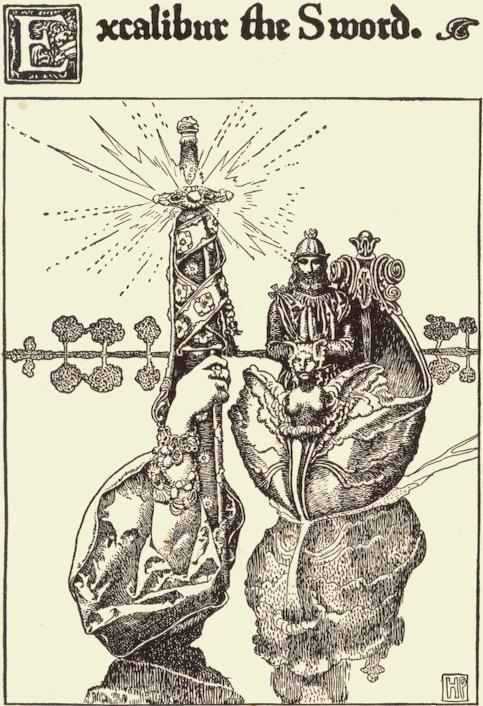
    As for what we’ll hear, we’ll begin with “Excalibur,” a symphonic poem after Arthur’s enchanted sword, by Louis Coerne (pronounced “Kern”). Coerne was born in Newark, NJ, in 1870. As was the custom at the time, he studied abroad, in France and Germany, then closer to home with John Knowles Paine. In Munich, he pursued organ and composition studies with Josef Rheinberger.

    After that, it was back and forth to Germany, between church and conducting appointments in the United States, and then the assumption of a series of academic posts throughout the American Northeast and Midwest. Despite all the worn shoe leather, in his 52 years he managed to produce 500 works.

    The remainder of the hour will be devoted to the Straussian tone poem “Le Roi Arthur,” a work in three movements, by George Templeton Strong, son of the famous Civil War diarist, born in 1856. Strong Jr. studied at the Leipzig Conservatory, where Joachim Raff was among his teachers. For a time, he played viola in the Gewandhaus Orchestra. He rubbed shoulders with Liszt and Wagner, then was lured back to the United States by the offer of a teaching position (by former European transplant Edward MacDowell) at the New England Conservatory.

    However, in part because the work didn’t agree with him, and in part because of health issues, Strong soon took off for Switzerland, where he settled on the banks of Lake Geneva. There, he dedicated the remainder of his life to painting watercolors and composing. Even after musical fashion had changed, he continued to play an active role in Geneva’s musical life.

    I hope you’ll join me for “Kinetic Yankees in King Arthur’s Court.” Break a lance for Arthur, on “The Lost Chord,” now in syndication on KWAX, the radio station of the University of Oregon!


    Keep in mind, KWAX is on the West Coast, so there’s a three-hour difference for the Trenton-Princeton area. Here are the respective air-times of my recorded shows (with East Coast conversions in parentheses):

    PICTURE PERFECT, the movie music show – Friday on KWAX at 5:00 PACIFIC TIME (8:00 PM EDT)

    THE LOST CHORD, unusual and neglected rep – Saturday on KWAX at 4:00 PACIFIC TIME (7:00 PM EDT)

    Stream them here!
    https://kwax.uoregon.edu/

  • Arthurian Movie Music Beyond Excalibur

    Arthurian Movie Music Beyond Excalibur

    The best movie about King Arthur is probably “Excalibur.” We will NOT be hearing music from that movie.

    The reason for this is that the soundtrack, while excellent, is made up mostly of pre-existing works by Wagner and Carl Orff. Granted, it is one of the better uses of classical music in film since “2001: A Space Odyssey.”

    Barring that, this week on “Picture Perfect,” we’ll hear original music from movies inspired by the legends of King Arthur.

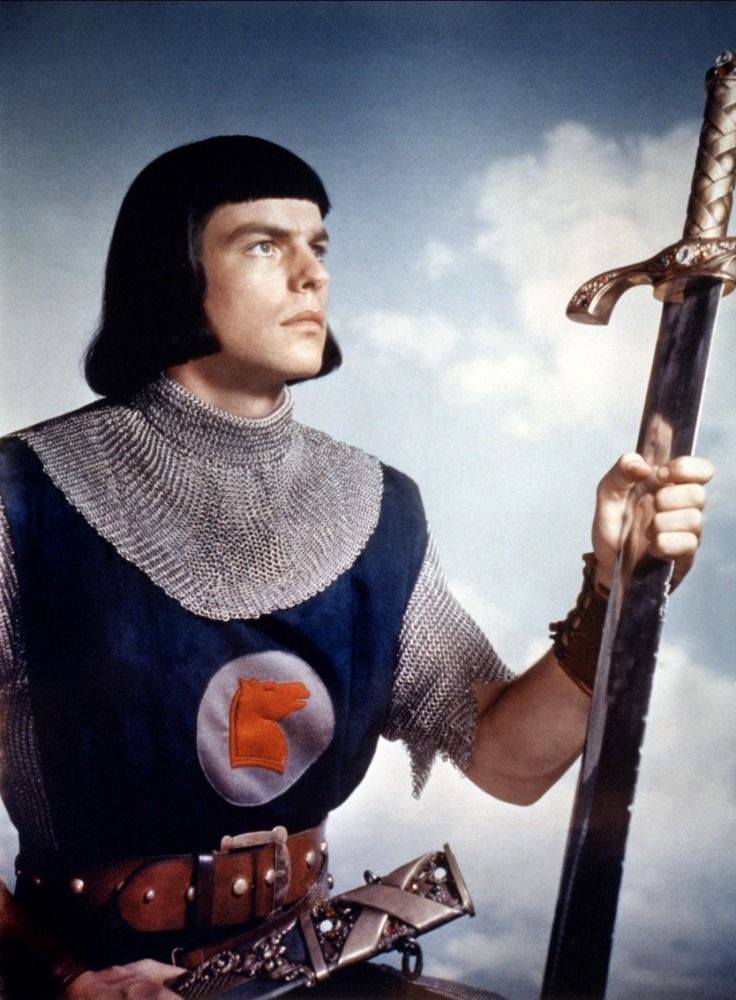
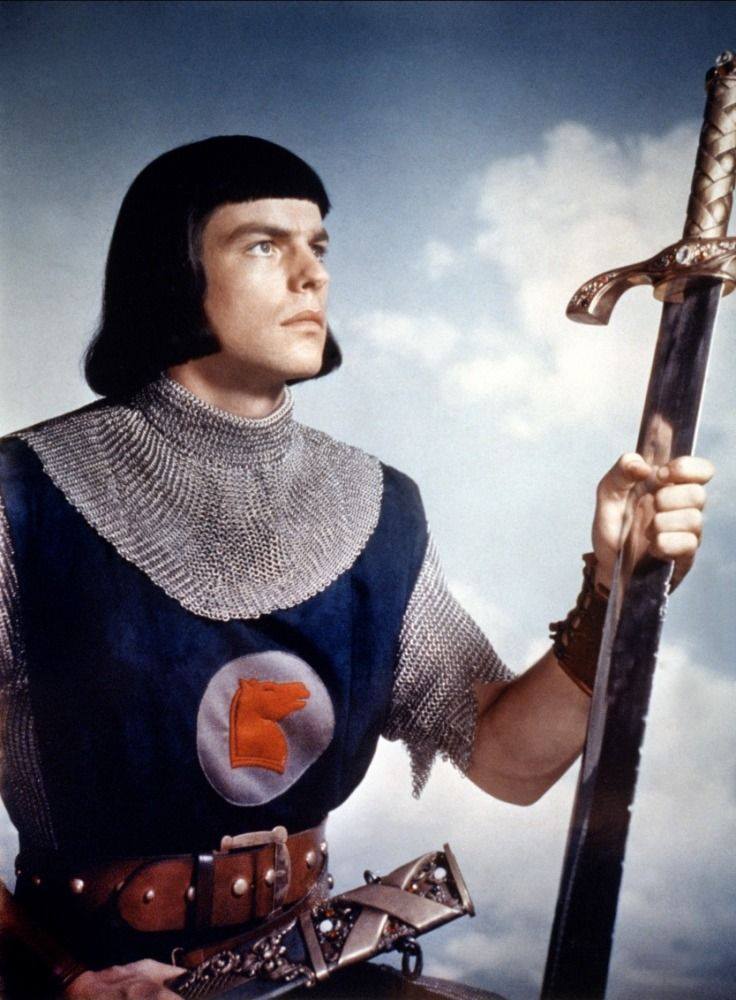
    The legends provide so much grist for “Prince Valiant” (1954), based on Hal Foster’s enduring comic strip, set in the days of Arthur, though Val himself is a Viking prince of the kingdom of Scandia. Janet Leigh plays Princess Aleta, James Mason the villainous Sir Brack, Victor McLaglen Val’s Viking pal Boltar, and Sterling Hayden a preposterous Gawain. For the title role, Robert Wagner dons the signature page-boy haircut. The score, by Franz Waxman, is every bit as vivid as the film’s Technicolor, and a clear prototype for the thrilling, leitmotif-driven music of John Williams.

    “The Mists of Avalon” (2001), adapted from Marion Zimmer Bradley’s novel, took the ingenious approach of retelling the Arthurian stories from the perspective of the often-marginalized female characters. The revisionist perspective breathed fresh life into the familiar tales, so that the book was greeted with critical and popular acclaim upon its release in 1983. A television miniseries, starring Julianna Margulies, Angelica Huston and Joan Allen, was produced for TNT, with music by Lee Holdridge.

    “First Knight” (1995) featured the unlikely cast of Sean Connery as Arthur, Richard Gere as Lancelot, and Julia Ormond as Guinevere. The film is unique, to my knowledge, in being based on the writings of medieval French poet Chrétien de Troyes, as opposed to the more frequent source, Sir Thomas Malory.

    The score was by Jerry Goldsmith. It was actually a bit of a rush job for Goldsmith, who stepped up at the very last minute to replace Maurice Jarre. Jarre had been approached to write music for what was originally a three-hour cut of the film. However, he only had four weeks to do so. Goldsmith, very well-known for his ability to write at white heat, was able to complete the score, and record the music in the allotted time.

    “Knights of the Round Table” (1953) is like “Excalibur” without the gravitas and grit, with Robert Taylor as Lancelot, Ava Gardner as Guinevere, and Mel Ferrer as Arthur. As envisioned by MGM, it’s far too glossy and pat, though it does sport some satisfying 1950s spectacle and a fine score by Miklós Rózsa.

    Join me, in the name of God, St. Michael and St. George, for music inspired by the legends of Arthur, on “Picture Perfect” – music for the movies – this Friday evening at 6:00 EST, on WWFM – The Classical Network and wwfm.org.

  • Arthurian Movie Music Legends on Screen

    Arthurian Movie Music Legends on Screen

    “Whoso pulleth out this sword of this stone and anvil is rightwise king born of all England.”

    — Sir Thomas Malory, “Le Morte d’Arthur” (because simply pulling a sword from a stone isn’t enough)


    This week on “Picture Perfect,” we have music from movies inspired by the legends of King Arthur.

    The legends provide so much grist for “Prince Valiant” (1954), based on Hal Foster’s enduring comic strip, set in the days of Arthur, though Val himself is a Viking prince of the kingdom of Scandia. Janet Leigh plays Princess Aleta, James Mason the villainous Sir Brack, Victor McLaglen Val’s Viking pal Boltar, and Sterling Hayden a preposterous Gawain. For the title role, Robert Wagner dons the signature page-boy haircut. The score, by Franz Waxman, is every bit as vivid as the film’s Technicolor, and a clear prototype for the thrilling, leitmotif-driven music of John Williams.

    “The Mists of Avalon” (2001), adapted from Marion Zimmer Bradley’s novel, took the ingenious approach of retelling the Arthurian stories from the perspective of the often-marginalized female characters. The revisionist perspective breathed fresh life into the familiar tales, so that the book was greeted with critical and popular acclaim upon its release in 1983. A television miniseries, starring Julianna Margulies, Angelica Huston and Joan Allen, was produced for TNT, with music by Lee Holdridge.

    “First Knight” (1995) featured the unlikely cast of Sean Connery as Arthur, Richard Gere as Lancelot, and Julia Ormond as Guinevere. The film is unique, to my knowledge, in being based on the writings of medieval French poet Chretien de Troyes, as opposed to the more frequent source, Sir Thomas Malory.

    The score was by Jerry Goldsmith. It was actually a bit of a rush job for Goldsmith, who stepped up at the very last minute to replace Maurice Jarre. Jarre had been approached to write music for what was originally a three-hour cut of the film. However, he only had four weeks to do so. Goldsmith, very well-known for his ability to write at white heat, was able to complete the score, and record the music in the allotted time.

    For my money, the version most faithful to the spirit – if not always the letter – of “Le Morte d’Arthur” is “Excalibur” (1981). The film sports a peerless British and Irish cast, with an uncanny number of the supporting players going on to achieve world fame.

    Unfortunately the soundtrack is largely made up of pre-existing music by Wagner and Carl Orff (put to brilliant use, by the way) – with only a few atmospheric numbers composed by Trevor Jones. These, to my knowledge, have never been issued commercially. However, the same story was given the M-G-M treatment, as “Knights of the Round Table” (1953), with Robert Taylor as Lancelot, Ava Gardner as Guinevere, and Mel Ferrer as Arthur.

    While the film is nowhere in the same league as “Excalibur” – it’s far too glossy and pat – it does sport some satisfying 1950s spectacle, and a fine score by Miklós Rózsa.

    I hope you’ll join me, in the name of God, St. Michael and St. George, for music inspired by the legends of Arthur, on “Picture Perfect” – music for the movies – this Friday evening at 6, with a repeat tomorrow morning at 6; or enjoy it later as a webcast at wwfm.org.

Tag Cloud

Aaron Copland (93) Beethoven (95) Composer (114) Film Music (126) Film Score (143) Film Scores (255) Halloween (94) John Williams (189) KWAX (229) Leonard Bernstein (101) Marlboro Music Festival (125) Movie Music (141) Mozart (87) Opera (203) Philadelphia Orchestra (89) Picture Perfect (174) Princeton Symphony Orchestra (107) Radio (87) Ross Amico (244) Roy's Tie-Dye Sci-Fi Corner (290) The Classical Network (101) The Lost Chord (268) Vaughan Williams (103) WPRB (396) WWFM (881)

DON’T MISS A BEAT

Receive a weekly digest every Sunday at noon by signing up here


RECENT POSTS