Tag: Arturo Toscanini

  • Toscanini Legend Anti-Fascist Autocrat

    Toscanini Legend Anti-Fascist Autocrat

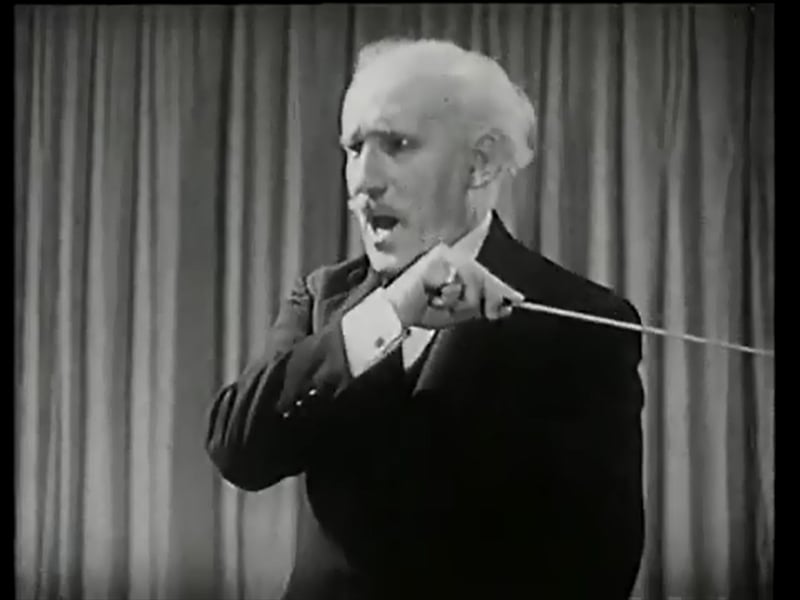
    There was a time when Arturo Toscanini was likely the most famous conductor in the United States. In fact, he was one of the most celebrated conductors of the 20th century. His intensity, perfectionism, and alleged fidelity to the score have been enshrined in legend. And when the legend becomes fact, I print the legend.

    Toscanini served as music director of La Scala, Milan, the Metropolitan Opera, the New York Philharmonic, and the NBC Symphony Orchestra. He conducted first performances of Puccini’s “La bohème,” Leoncavallo’s “Pagliacci,” Respighi’s “Feste Romane,” and Barber’s “Adagio for Strings.” As a cellist, he played in the world premiere of Verdi’s “Otello.”

    From 1937 to 1954, he reached millions of Americans via his weekly broadcast concerts on NBC radio. These originated at Rockefeller Center’s Studio 8-H, now the home of “Saturday Night Live.”

    Toscanini was vehemently anti-fascist. He despised Hitler, and vowed never to conduct in Germany as long as “the Führer” remained in power. In Italy, he was beaten up by brownshirts and had his passport confiscated for refusing to conduct “Giovinezza,” the fascist anthem. He also worked closely with violinist Bronislaw Huberman in support of the Palestine Orchestra, made up of Jewish exiles from fascist Europe. He once confided to a friend, “If I were capable of killing a man, I would kill Mussolini.”

    Il Duce really caught a break when Toscanini emigrated to America. It sounds to me as if the Maestro could have been borderline more than once. Ironically, for someone who hated dictators, he sure could dish out an autocratic tirade.

    Happy birthday, Arturo Toscanini.


    Conducting Verdi, “La Forza del Destino Overture” (on film, 1944)

    Beethoven, Symphony No. 3, “Eroica” (at Carnegie Hall, 1939)

    Respighi, “Feste Romane” (“Roman Festivals,” 1949)

    Toscanini snaps his baton and calls his double bassists “ball breakers”
  • Castelnuovo-Tedesco A Composer for All Seasons

    Castelnuovo-Tedesco A Composer for All Seasons

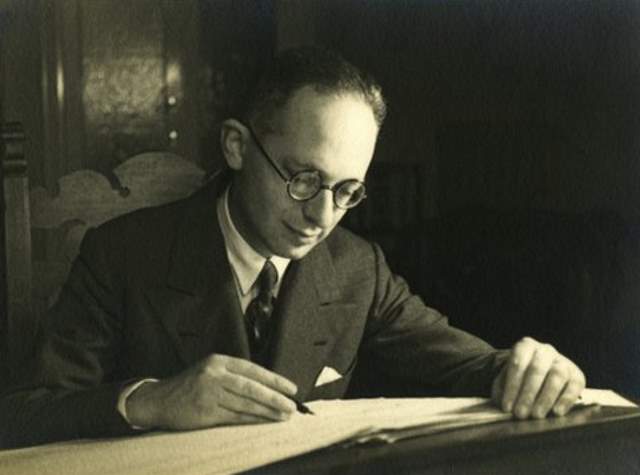
    If ABC can blow-out its annual broadcast of “The Ten Commandments” 25 days before Passover, I can reflect on Mario Castelnuovo-Tedesco’s “The Prophets,” which was always a staple of my Passover playlist over the decades I enjoyed doing a live radio air shift. The second of Castelnuovo-Tedesco’s violin concertos was given its first performance at Carnegie Hall in 1933, with Jascha Heifetz the soloist and Arturo Toscanini on the podium. Its three movements are named for the Biblical figures Isaiah, Jeremiah, and Elijah.

    But nevermind the Passover association. Castelnuovo-Tedesco is a composer for all seasons. His music is well-crafted, ingratiatingly tuneful, and a joy to listen to.

    Furthermore, anyone who loves film music owes an incalculable debt to him. He wrote scores for some 200 movies (including “And Then There Were None,” with Barry Fitzgerald, and “The Loves of Carmen,” with Rita Hayworth), and as a teacher, his students included André Previn, Nelson Riddle, Herman Stein, Henry Mancini, Jerry Goldsmith, and John Williams.

    Castelnuovo-Tedesco was yet another refugee displaced by fascism in Europe who enriched the American cultural landscape. We can thank Toscanini for sponsoring his passage to the United States in 1939. He got out just in the nick of time. Already Italian Jewish citizens had been stripped of many basic human rights. Well before the imposition of Italian racial laws in 1938, Castelnuovo-Tedesco’s music had been banned from radio and public performances of his works had been cancelled.

    Internationally, his works were embraced by top-flight musicians such as Heifetz, Andrés Segovia, and Gregor Piatigorsky.

    The first piece of his I ever heard was the Guitar Concerto No. 1. I remember listening to it on the radio on my first drive to WWFM, the day before my job interview, in 1995, undertaken on a Sunday afternoon to be sure I knew the route from Philadelphia. There’s a lot for me wrapped up in this composer.

    Thank you, and happy birthday, Mario Castelnuovo-Tedesco!


    Violin Concerto No. 2 “The Prophets”

    Segovia masterclass on the Guitar Concerto No. 1

    Radio interview with Segovia and the composer

    Toscanini conducts an adventurous program, including Castelnuovo-Tedesco’s “Overture to a Fairy Tale” (later known as the “Midsummer Night’s Dream Overture”)

  • Puccini’s Birthday: La Bohème & Bohemian Life

    Puccini’s Birthday: La Bohème & Bohemian Life

    Happy birthday, Giacomo Puccini!

    The first two acts of “La bohème,” of course, are set on Christmas Eve – Act I in a chilly but cheery artists’ garret, and Act II on the festive streets of Paris’ Latin Quarter.

    The world premiere of Puccini’s opera took place at the Teatro Regio in Turin on February 1, 1896. On the podium was a 28-year-old Arturo Toscanini.

    Allegedly, the opening night reaction was a subdued one, and critics were divided. But it wasn’t long before Rodolfo’s kindling gave rise to a flame that would engulf all of Europe and the New World.

    Though audiences quickly grew to love it, “Bohème” and its composer have always been regarded with a degree of suspicion – condescension even – by critics and Puccini’s envious colleagues. The music lacks sophistication, we are told, and the opera’s lyricism and pathos are calculating – emotional pandering. Whether or not that’s the case, music lovers can’t get enough of it and Puccini cried all the way to the bank.

    Prior to his years of success, Puccini and his friends, mostly writers and artists, would gather at a roadside shed in Torre del Lago to drink and play cards. They referred to the structure as “Capanna di Giovanni delle Bande Nere” (“Cabin of Giovanni of the Black Stripes”), after its owner, a local cobbler. When the cobbler struck out to seek his fortune in America, the artists bought the shack and continued to meet under the banner “La Bohème Club” (as stated on a sign they painted on the roof).

    Further signs were posted on the walls inside, in faulty Latin and ungrammatical Italian. Its members pledged themselves under oath to be well and eat butter.

    The following were the club’s by-laws:

    1. Poker faces, pedants, weak stomachs, blockheads, puritans and other wretches of the species are not admitted and will be chased away.

    2. The President acts as conciliator but undertakes to hinder the Treasurer in the collection of the subscription money.

    3. The Treasurer is empowered to abscond with the money.

    4. The lighting of the locale is provided by a petrol lamp. Failing the fuel, the “moccoli” of the members are to be used [a pun on “moccolo,” meaning either “candle stump” or “blockhead”].

    5. All games permitted by law are forbidden.

    6. Silence is prohibited.

    7. Wisdom is not permitted, except in special cases.

    One can imagine the carefree bohemians, Rodolfo’s companions, rollicking in their garret. After the triumph of “Bohème,” the opera, no one was having to burn their plays for fuel, or hock their coats for medicine.

    There’s nothing like a little success to take the worry out of “bohemian life.”


    André Kostelanetz (also born on this date) conducting a purely orchestral suite of highlights from “La bohème”

    The bohemians in their garret

    Mimi’s hands are cold, so Rodolfo goes to work (the old smoothie)


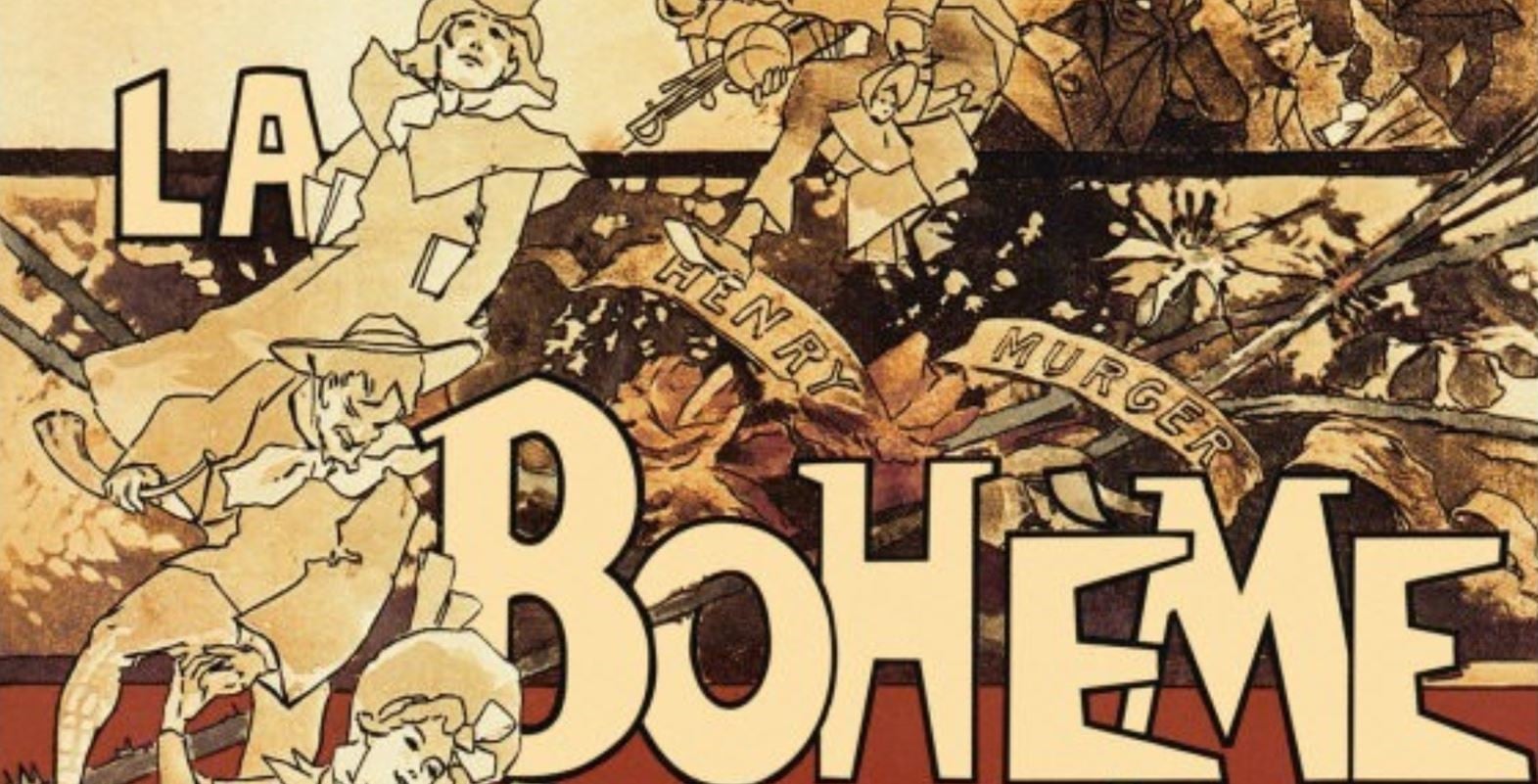
    IMAGES: From an 1896 poster of the opera, and an 1897 photo of the club

  • Respighi: Modesty, Bikinis & Roman Spectacle

    Respighi: Modesty, Bikinis & Roman Spectacle

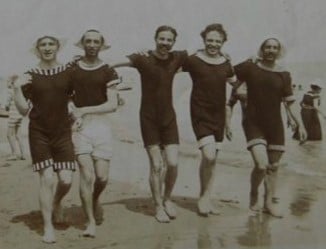
    In a week that saw the 75th anniversary of the bikini (unveiled on July 5. 1946), Ottorino Respighi hangs on to his modesty by rocking a one-piece bathing suit with four of his amici.

    You won’t detect much of that modesty in his rafter-rattling tone poems, “Fountains of Rome” (1916), “Pines of Rome” (1924), and “Roman Festivals” (1928). But he also had his softer side, as evidenced by the time-tripping Renaissance lute recreations, the “Ancient Airs and Dances” (composed in 1917, 1923 & 1932).

    I’m reminded that Respighi died in 1936 at the age of 55. Mortality is staring me in the face!

    Incredibly, his wife, Elsa, outlived him by some 60 years. A singer and composer herself, she died in 1996, one week shy of her 102nd birthday! She remained her husband’s biggest cheerleader, tirelessly promoting his music. She even completed his final opera, “Lucrezia,” given its debut in 1937.

    As a soundtrack to the photo: In 1929, when conductor Serge Koussevitzky formulated the idea that Respighi should orchestrate some of Rachmaninoff’s keyboard pieces, Rachmaninoff was nothing if not enthusiastic. He supplied Respighi with hidden programs behind the works to lend additional insights into their creation. Koussevitzky was impressed with the results, which he debuted with the Boston Symphony Orchestra in 1931. More importantly, Rachmaninoff found the orchestrations to be faithful to the spirit of the originals.

    Here is “The Sea and the Seagulls,” from “Cinq Études-Tableaux” by Respighi, after Rachmaninoff.

    Also, footage of Arturo Toscanini conducting “Pines of Rome” in 1952, with the NBC Symphony. Toscanini conducted the work’s U.S. premiere, with the New York Philharmonic, in 1926. The bird calls begin at 14:43.

    A mesmerizing performance, from 1949, of the “Arie de corte” from the “Ancient Airs and Dances Suite No. 3,” with Eugene Ormandy conducting the Philadelphia Orchestra (part of Sony’s recently-released “Eugene Ormandy: The Columbia Legacy” boxed set):

    Finally, a guilty pleasure that’s so over-the-top, it would have made Cecil B. DeMille blush: a suite from the ballet “Belkis, Queen of Sheba,” a quasi-Biblical spectacle set at the court of King Solomon. The work was given its first performance at La Scala Milan in 1932. The finale featured over a thousand performers, which likely accounts for its subsequent neglect. Grandiose even by Respighi standards, the concluding orgiastic dance whipped the opening night audience into a frenzy.

    Romantic, Classicist, Impressionist, AND supermodel – Happy birthday, Ottorino Respighi!


    PHOTO: Respighi (second from right) and friends horsing around, like an outtake from Fellini’s “I Vitelloni”

  • Arturo Toscanini Legend Intensity and Legacy

    Arturo Toscanini Legend Intensity and Legacy

    Arturo Toscanini was one of the most celebrated conductors of the 20th century. His intensity, perfectionism, and alleged fidelity to the score have been enshrined in legend. And when the legend becomes fact, I print the legend.

    Toscanini served as music director of La Scala, Milan, the Metropolitan Opera, the New York Philharmonic, and the NBC Symphony Orchestra. He conducted first performances of Puccini’s “La bohème,” Leoncavallo’s “Pagliacci,” Respighi’s “Feste Romane,” and Barber’s “Adagio for Strings.” As a cellist, he played in the world premiere of Verdi’s “Otello.”

    From 1937 to 1954, he reached millions of Americans via his weekly broadcast concerts on NBC radio. These originated at Rockefeller Center’s Studio 8-H, now the home of “Saturday Night Live.”

    Toscanini was vehemently anti-fascist. He despised Hitler, and vowed never to conduct in Germany as long as “the Führer” remained in power. In Italy, he was beaten up by brownshirts and had his passport confiscated for refusing to conduct “Giovinezza,” the fascist anthem. He also worked closely with violinist Bronislaw Huberman in support of the Palestine Orchestra, made up of Jewish exiles from fascist Europe. He once confided to a friend, “If I were capable of killing a man, I would kill Mussolini.”

    Il Duce really caught a break when Toscanini emigrated to America. It sounds to me as if the Maestro could have been borderline more than once. Ironically, for someone who hated dictators, he sure could dish out an autocratic tirade.

    Happy birthday, Arturo Toscanini.


    Conducting Verdi, “La Forza del Destino Overture” (on film, 1944)

    Beethoven, Symphony No. 3, “Eroica” (at Carnegie Hall, 1939)

    https://www.youtube.com/watch?v=uYfgjL9dBkU

    Respighi, “Feste Romane” (“Roman Festivals,” 1949)

    Toscanini snaps his baton and calls his double bassists “ball breakers.”

    https://www.youtube.com/watch?v=i-1KtSOwLXE

Tag Cloud

Aaron Copland (92) Beethoven (95) Composer (114) Film Music (121) Film Score (143) Film Scores (255) Halloween (94) John Williams (185) KWAX (229) Leonard Bernstein (100) Marlboro Music Festival (125) Movie Music (136) Opera (198) Philadelphia Orchestra (88) Picture Perfect (174) Princeton Symphony Orchestra (106) Radio (87) Ralph Vaughan Williams (85) Ross Amico (244) Roy's Tie-Dye Sci-Fi Corner (290) The Classical Network (101) The Lost Chord (268) Vaughan Williams (103) WPRB (396) WWFM (881)

DON’T MISS A BEAT

Receive a weekly digest every Sunday at noon by signing up here


RECENT POSTS