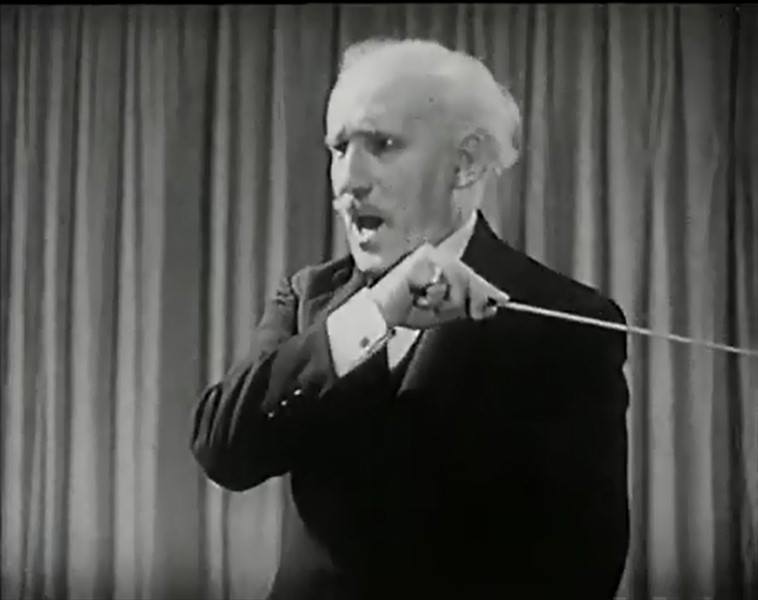
Happy birthday, Arturo Toscanini. Now this is a forcefully conducted “Forza!”
Tag: Arturo Toscanini
-
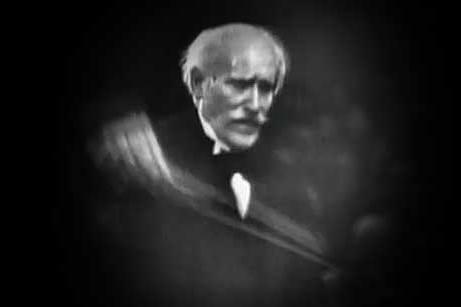
Toscanini’s Furious & Fiery Eroica Symphony
For Arturo Toscanini, apparently, it was all about that bass:
https://www.youtube.com/watch?v=i-1KtSOwLXE
Toscanini was as notorious for his rafter-rattling temper tantrums as he was for his alleged fidelity to the score. The man was driven by demons in his quest for perfection. His evident frustration with the inability of his players to deliver existed in parallel with an over-stated humility in the face of his own limitations. Here was a perfectionist living in an imperfect world, and Toscanini spared no one, not even himself. His intensity was electric. There were times when conductor and orchestra seemed to skirt, on two wheels, the very mouth of the Abyss.
It would be unrealistic to expect to capture lightning in a bottle every single time. But it happened with Toscanini surprisingly often. Join me today on The Classical Network for the most hair-raising recording of Beethoven’s “Eroica” Symphony you will ever hear. Toscanini flays the NBC Symphony Orchestra to the limits of endurance in this legendary performance, given on October 28, 1939. This is not an “Eroica” for every day, and it is certainly not an “Eroica” for the weak of heart. Those with pre-existing medical conditions are advised to turn off their radios following my salute to Haydn Wood.
Everyone else, hang on tight, as we celebrate the birthday of Arturo Toscanini – and Béla Bartók, for that matter – from 4 to 7 p.m. EDT, on WWFM – The Classical Network and wwfm.org.
-
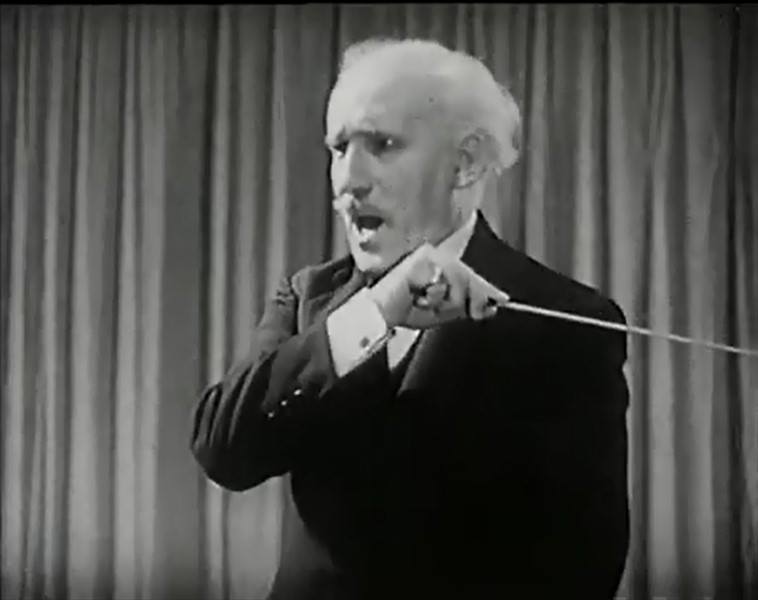
Toscanini Verdi Overture Morning Energy Boost
Feeling a little draggy this morning? Arturo Toscanini will get you going with the overture to Verdi’s “La forza del destino.”
Not for the faint of heart!
-
Toscanini at 150 The Maestro’s Rage & Resistance
Today is the 150th birthday of Arturo Toscanini (1867-1957), arguably the most famous conductor of his time. At various points in his career, he was music director of La Scala Milan, the Metropolitan Opera, the New York Philharmonic, and finally the NBC Symphony Orchestra. Radio broadcasts of the latter brought him into millions of American homes. Celebrated for his intensity, perfectionism, and alleged fidelity to the score, he was equally notorious for his rafter-rattling temper tantrums.
Ironically, he despised authoritarians, refusing to conduct in Germany while Hitler remained in power. In his homeland, he was beaten up by brownshirts and had his passport confiscated for his repeated refusal to conduct the fascist anthem “Giovanezza.” He also worked closely with violinist Bronislaw Huberman in support of the Palestine Orchestra, made up of Jewish exiles from fascist Europe.
Toscanini confided to a friend, “If I were capable of killing a man, I would kill Mussolini.” It sounds to me like he could have been borderline more than once.
Hear him rage, with translation, here:
https://www.youtube.com/watch?v=Sdi0SFyXwKg
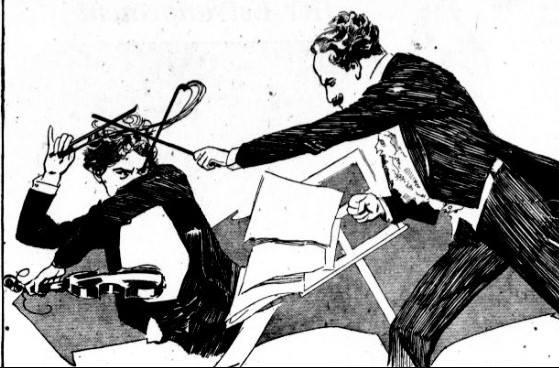
A report of an earlier tantrum, which led to a lawsuit, in the January 18, 1920, edition of The Washington Post:
-

Elie Siegmeister’s Western Americana
On this date in 1945, Arturo Toscanini conducted the premiere of Elie Siegmeister’s “Western Suite” in a concert broadcast with the NBC Symphony Orchestra. Its cowpoke lyricism and buckaroo high spirits struck a bulls-eye with audiences and critics in a cowboy-mad America. Aaron Copland’s “Billy the Kid” had been given its premiere in 1939 (the same year as John Ford’s “Stagecoach”) and “Rodeo” followed in 1942. Pulp magazines and dime-store novels fed the western craze, and cinemas were teeming with broad vistas and portrayals of the quiet dignity of the cowboy.
While hardly his most innovative or personal work, the “Western Suite” served to put Siegmeister on the map. According to the composer, he had only a few of his compositions published up until that time. The day after the performance, three publishers were vying for his work. “The piece had a lot of earthy, touchy quality about it,” he said, “which is, I think, one of the characteristics of a great deal of American music. There is a kind of lusty feeling, with sometimes a roughness, a harshness, or whatever you want to call it.”
Already in 1939, he had formed the American Ballad Singers, hoping to replicate the experience he had had when he first witnessed the English Singers, six touring musicians who introduced the madrigal to New York. It was like an epiphany for Siegmeister, and he determined to bring our native folk tradition alive in a similar fashion for the American public. Americana was at its peak during those years, with folk singers like Burl Ives and, soon after, Woody Guthrie and Pete Seeger very much on the rise. The American Ballad Singers tapped into the zeitgeist and toured the country to enthusiastic reviews.
Though Siegmeister wrote orchestral works like “American Holiday” (1933), “Abraham Lincoln Walks at Midnight” (1937), the “Ozark Suite” (1943) and “Prairie Legend” (1944), and an opera (he composed eight) called “Night of the Moonspell” (1974-6), which transposed Shakespeare’s “A Midsummer Night’s Dream” to Louisiana, homespun Americana hardly encapsulates the whole of his output.
True, American jazz was frequently an influence. He also wrote a string quartet on Jewish themes. But there were plenty of abstract pieces, as well, including eight symphonies, a number of concertos and plenty of chamber music.
In addition, he wrote successful books on music, including “Treasury of American Song” (1940-43), “The Music Lover’s Handbook” (1943, revised in 1973), and “Harmony and Melody” (1985). He helped found the American Composers Alliance, with the aim of publishing and promoting music by American composers, in 1937. Later, he served on the board of directors of ASCAP, from 1977 until his death in 1991.
By coincidence, Siegmeister’s “American Sonata” (1944) will be performed tonight by pianist Cecile Licad, on a recital hosted by the Philadelphia Chamber Music Society. Also on the program will be sonatas by Alexander Reinagle (who wrote a number of pieces for George Washington), Edward MacDowell and Charles Tomlinson Griffes. The concert will take place at the American Philosophical Society, 427 Chestnut Street, at 8 p.m.
FUN FACT: The theme from Siegmeister’s only film score, “They Came to Cordura” (1959), is the signature music for my show, “Picture Perfect.” You can hear the passage at 43 seconds into the film.
https://www.youtube.com/watch?v=XwYWx8gtjBo
Siegmeister’s “Western Suite”:
https://www.youtube.com/watch?v=2tzyS1klaRoAs part of the fascinating Toscanini broadcast, which also features music by Mario Castelnuovo-Tedesco, Vittorio Rieti and Paul Creston (the “Western Suite” begins at the 40 minute mark):
https://www.youtube.com/watch?v=Ufiigg8_DMIInterview with Siegmeister by Bruce Duffie:
http://www.kcstudio.com/sieg2.htmlInterview with Siegmeister by David Dubal!
PHOTOS: Elie Siegmeister (right) with pulp western from 1945
Tag Cloud
Aaron Copland (94) Beethoven (95) Composer (114) Film Music (149) Film Score (143) Film Scores (255) Halloween (97) John Williams (197) KWAX (232) Leonard Bernstein (105) Marlboro Music Festival (125) Movie Music (164) Mozart (91) Opera (215) Philadelphia Orchestra (90) Picture Perfect (174) Princeton Symphony Orchestra (110) Radio (90) Ross Amico (244) Roy's Tie-Dye Sci-Fi Corner (290) The Classical Network (101) The Lost Chord (269) Vaughan Williams (107) WPRB (397) WWFM (881)