Tag: Atonality

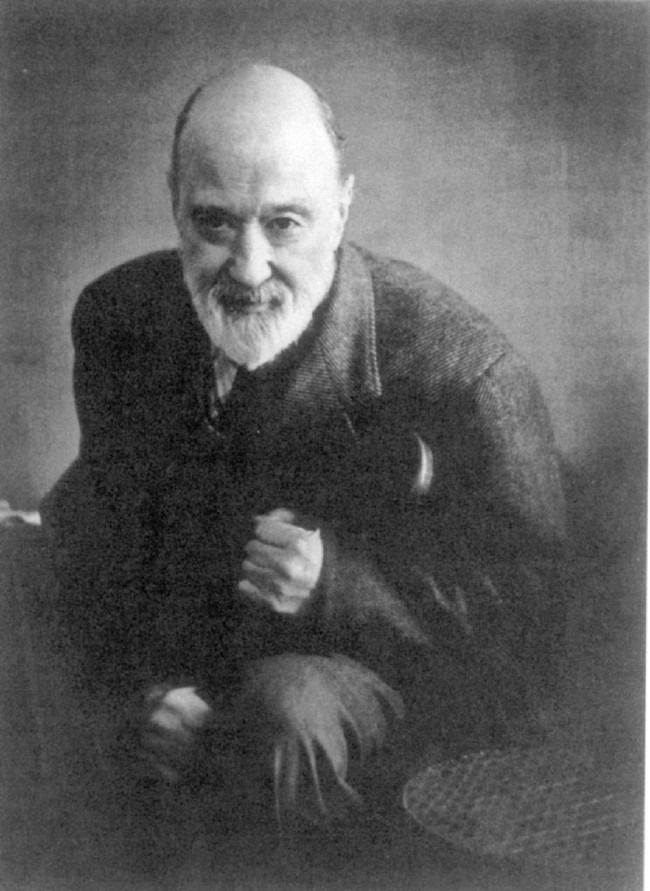
  • Charles Ives: An American Original

    Charles Ives: An American Original

    “Are my ears on wrong?” once remarked Charles Ives, marveling at how out of step with musical convention his own compositions could be. Yet he soldiered on, writing works of all stripes, tonalities, and quasi-tonalities, even atonality, navigating with remarkable certainty for some 30 years, with very few performances to affirm his chosen course.

    I’m not saying anything new in stating that Ives was an American original. He wrote the kind of music he wanted to write, stitching together hymns and fiddle tunes of his youth into a brilliant crazy quilt of the American experience.

    His father had been something of an original himself, a bandmaster during the Civil War. He taught Ives to sing in one key while he played in another. This likely contributed to his son’s unique appreciation of a formative experience: while standing on a street corner during a parade, the boy Ives giddily perceived the natural dissonances and rhythmic complexities resulting from a clash of marching bands as they wrapped around the block.

    Thankfully, his quirky musical predilections were tempered by a practical streak. Ives pursued a career in the insurance business, and he became very successful at it. (His work in the field helped lay the groundwork for modern practices in estate planning.) While this would occupy much of his time, it also allowed him the financial security to follow his idiosyncratic muse. Ives composed in the evenings, on weekends, and during holidays. For a few years, in the 1890s, he was also organist and choirmaster at a couple of New York churches.

    Ives retired in 1930, which permitted him to devote himself wholeheartedly to music. Ironically, by then, he found he was no longer able to compose. His wife recalled a day in 1927 when he came downstairs with tears in his eyes and confessed that everything sounded wrong to him. After that, he labored mostly at revision and publication.

    By the time his works finally began to gain recognition, it had already been 20 years since he stopped writing. At the time of his death, in 1954, he was still widely misunderstood and much of his music remained unperformed. Nevertheless, he had some important champions. He was a recipient of the Pulitzer Prize for Music in 1947, for his Symphony No. 3, subtitled “The Camp Meeting,” a work he composed in 1904. The symphony was given its belated premiere, under Lou Harrison’s direction, in 1946.

    Arnold Schoenberg regarded Ives as a paragon of artistic integrity. After Schoenberg’s death, his widow found the following note, scrawled, among his papers: “There is a great Man living in this Country – a composer. He has solved the problem of how to preserve one’s self-esteem and to learn. He responds to negligence by contempt. He is not forced to accept praise or blame. His name is Ives.”

    Here is Ives, in all his patriotic, profane glory, singing “They Are There,” from 1943. Originally written in 1917, for the Great War, the song employs an updated text.

    Ives draws on his memory of the wrap-around marching bands of his youth, in Danbury, Connecticut, for “The Fourth of July.” Note the climactic rocket explosion, fading away into sparks!

    Finally, the work that won him the Pulitzer, the Symphony No. 3, “The Camp Meeting”:

    Ives’ characteristically gruff reaction: “Prizes are for boys. I’m grown up.” In private, though, he proudly hung the certificate on his wall.

    Happy birthday, Charles Ives!
  • Cowell & Ruggles: Maverick American Originals

    Cowell & Ruggles: Maverick American Originals

    At the risk of instigating a slap fight between two of America’s foremost musical mavericks, I salute both Henry Cowell (1897-1965) and Carl Ruggles (1876-1971) on their shared birthday.

    Actually the two were good friends. Their circle of “ultra-modernists,” as they were dubbed, must have been swollen with cake this time of year. (Colin McPhee’s birthday anniversary is on March 15.) The surfeit of sugar made them all the more volatile, I’m sure.

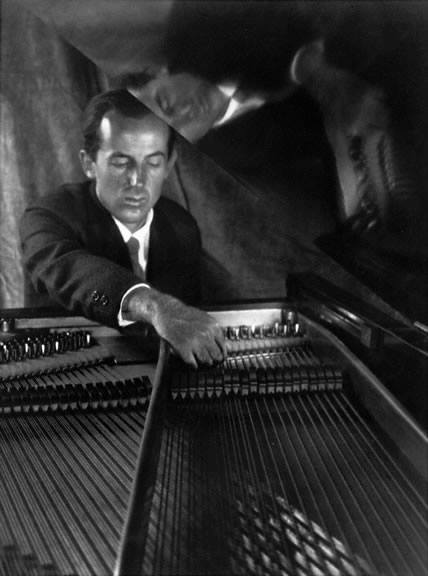
    Cowell pioneered the use of atonality, polytonality, polyrhythms, and non-Western modes. He was employing tone clusters (chords made up of adjacent keys on the chromatic scale, often played with a fist or forearm) in his keyboard music before Béla Bartók.

    His experiments with aleatory (chance elements) and the “string piano” (reaching inside the piano to play the strings) influenced generations of composers. He was an autodidact who adopted established musical techniques only as he felt he needed them.

    Cowell was so bad-ass that when he was sent to San Quentin on a “morals” charge, he kept right on churning out music at his usual prolific pace. He taught his fellow inmates and organized a prison band. There’s got to be a movie in this, the musical equivalent of “The Shawshank Redemption.”

    That said, Cowell did not emerge from the experience unscarred. His later works take a more conservative tack. No longer was he quite as radical, either musically or politically. It is his music from this era that is usually deemed radio-safe.

    Cowell and Carl Ruggles were two-fifths or the “American Five,” which also included John J. Becker, Wallingford Riegger and Charles Ives. Ives was a good friend of both, supporting Cowell’s experimentation before he himself became well-known.

    He famously defended Ruggles by leaping to his feet, following a performance of “Men and Mountains,” to confront a heckler with, “You g**d*** sissy! When you hear strong, masculine music like this, get up and use your ears like a man.” Seemingly, Ives was the only one of Ruggles’ acquaintances never to be on the receiving end of his ire.

    Ruggles disdained music theory and composed by ear, painstakingly, through trial and error. He did adhere to a kind of dissonant counterpoint. Because of his perfectionism, he left only ten authorized works. He found it to be much less labor-intensive to paint. Over the course of his lifetime, he sold hundreds of his paintings.

    There’s no question that Ruggles was a world-class S.O.B., but he did manage to leave behind some fascinating, even breathtaking music.

    Happy birthday to two American originals.

    Henry Cowell, “The Banshee,” for string piano:
    https://www.youtube.com/watch?v=ND-ga_BrkCE

    Carl Ruggles, “Men and Mountains”:

    PHOTOS: Zing! went the strings of Cowell’s banshee (left); Ruggles, as bitter as his cigar

Tag Cloud

Aaron Copland (93) Beethoven (95) Composer (114) Film Music (126) Film Score (143) Film Scores (255) Halloween (94) John Williams (189) KWAX (229) Leonard Bernstein (101) Marlboro Music Festival (125) Movie Music (141) Mozart (87) Opera (203) Philadelphia Orchestra (89) Picture Perfect (174) Princeton Symphony Orchestra (107) Radio (87) Ross Amico (244) Roy's Tie-Dye Sci-Fi Corner (290) The Classical Network (101) The Lost Chord (268) Vaughan Williams (103) WPRB (396) WWFM (881)

DON’T MISS A BEAT

Receive a weekly digest every Sunday at noon by signing up here


RECENT POSTS