Tag: Augusta Holmès

  • César Franck: A Love-Hate Relationship

    César Franck: A Love-Hate Relationship

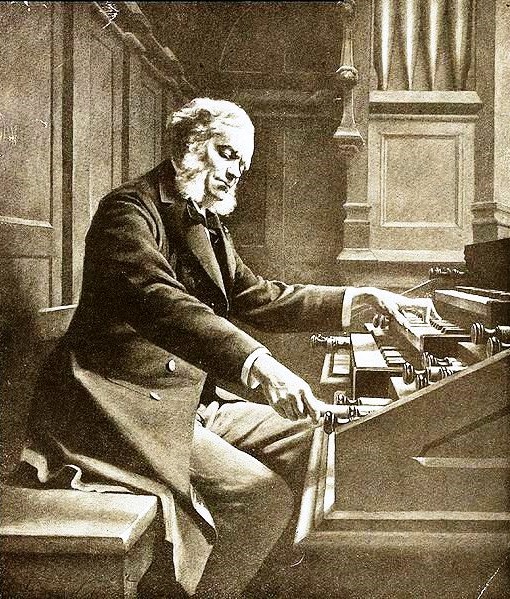
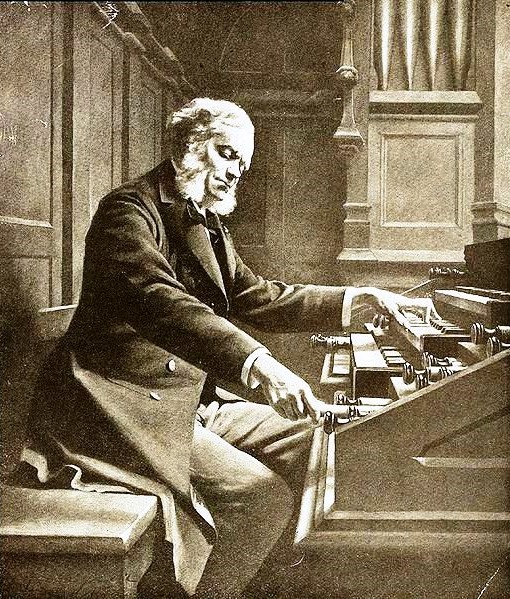
    Franckly, I’ve never been all that fond of César Franck’s Symphony in D minor. It’s no secret that I find the big theme of the last movement to be insipid. But prolonged exposure has done its work and now I at least concede the symphony’s overall greatness. Like Bruckner (a composer I have no problem with), Franck’s long experience as an organist unmistakably colors the piece. Understanding this makes it moderately more enjoyable. Still, it’s not something I would ordinarily go out of my way to listen to. I rank it perhaps just a notch above Schubert’s “Great” C major symphony, which is a total snooze. When Schumann hailed the latter work for its “heavenly length,” I can only hope he was being sarcastic.

    Shakespeare’s proverb “brevity is the soul of wit” could be applied to this seasonal gem by Franck, “Panis Angelicus.” The text, by Thomas Aquinas, was actually intended for Corpus Christi, but thanks to Luciano Pavarotti and any number of other opera singers, who included Franck’s setting on their Christmas albums, I will always associate it with this time of year.

    Aquinas’ text, translated from the Latin:

    Thus Angels’ Bread is made
    the Bread of man today:
    the Living Bread from heaven
    with figures dost away:
    O wondrous gift indeed!
    the poor and lowly may
    upon their Lord and Master feed.

    Thee, therefore, we implore,
    o Godhead, One in Three,
    so may Thou visit us
    as we now worship Thee;
    and lead us on Thy way,
    That we at last may see
    the light wherein Thou dwellest aye.
    Amen.

    Other composers to have set the lines include João Lourenço Rebelo, Marc-Antoine Charpentier, André Caplet, and Camille Saint-Saëns. None of the settings are as well known as Franck’s. For me, anyway, Franck’s star rises in the yeast.

    “Panis Angelicus”

    Sung by Pavarotti

    As good a performance of the Symphony in D minor as you’re likely to get

    Though I much prefer Franck’s symphonic poems, especially “Le Chasseur maudit” (“The Accursed Huntsman”)

    And his lovely Violin Sonata in A major

    Franck’s Piano Quintet in F minor riled his wife (and his rival, Saint-Saëns), since it evidently sprang from his illicit love for one of his pupils, Augusta Holmès

    Franck’s “Grande pièce symphonique,” played by Marcel Dupré

    Prelude, Chorale and Fugue

    https://www.youtube.com/watch?v=wHftZ2-w4XE

    Happy birthday, César Franck!
  • Franck, Saint-Saëns, & Unrequited Love

    Franck, Saint-Saëns, & Unrequited Love

    Camille Saint-Saëns was not only the dedicatee of the Piano Quintet in F minor by his friend, César Franck; he also played in work’s premiere in 1879. But as he sight-read through the piano part, he became more and more agitated – angry, even. At the conclusion of the piece, he rejected Franck’s attempt to shake his hand, and stormed off without acknowledging the applause.

    He wasn’t the only one. Franck’s wife also made no secret of hating it.

    Here was music of sublimated desire, and everyone knew the cause. Saint-Saëns knew, because he felt the same way about Franck’s pupil, Augusta Holmès. Franck tutored Holmès in organ and composition. No doubt he admired her musical talent, but equally there was no doubt his interest went beyond that of master-disciple. Don’t let those mutton chops fool you. A man is only flesh and blood. And in Franck’s case, also mutton chops.

    There must have been something about Holmès, the French composer of Irish descent, because she had the same effect on just about every man she crossed paths with. Saint-Saëns had proposed marriage to her multiple times, always without success. He would refer to her as a “beautiful pythoness.” Methinks his vines had tender sour grapes.

    I know I’ve made no secret of my struggles with the popularity of Franck’s highly-regarded Symphony in D minor. I’ve been very slow to warm to it. It’s taken decades, in fact. I never much liked the insipid theme of the last movement. But I’ve gotten to the point now where at last I’m willing to concede its overall greatest.

    Much more congenial to me are his symphonic poems and his lovely chamber music.

    No comment on the organ works – although I once attended a “Franckathon” at St. Clement’s Church in Philadelphia, back in the 1990s, at which his complete output for the instrument was presented, with two intermissions. Just to say I did. Well, that and for the free doughnuts and coffee.

    Nothing makes Franck more palatable than caffeine and fried dough.

    Happy birthday, mon vieux!


    Incendiary Piano Quintet in F minor

    Symphony in D minor

    “Le Chasseur maudit” (“The Accursed Huntsman”)

    Violin Sonata in A major

    “Grande pièce symphonique,” played by Marcel Dupré

    Prelude, Chorale and Fugue

    https://www.youtube.com/watch?v=wHftZ2-w4XE

    And, for the season, “Panis Angelicus”

  • Rediscovering Louise Farrenc & Neglected Romantics

    Rediscovering Louise Farrenc & Neglected Romantics

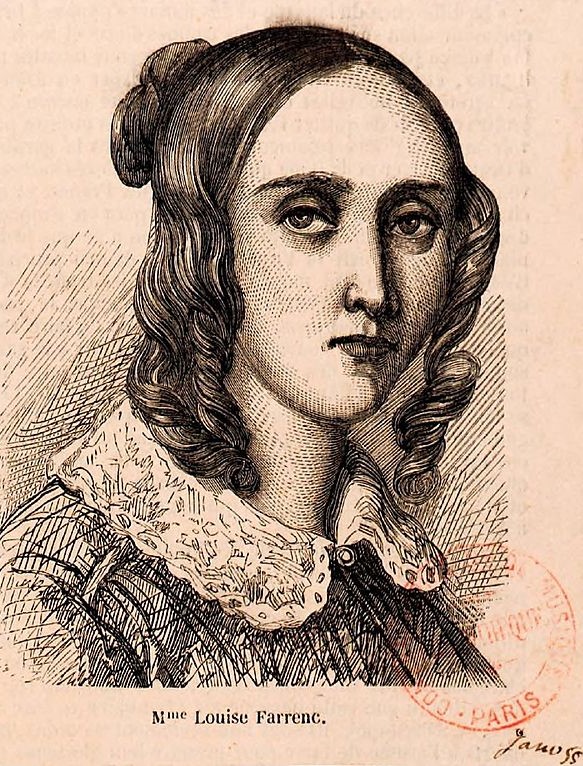
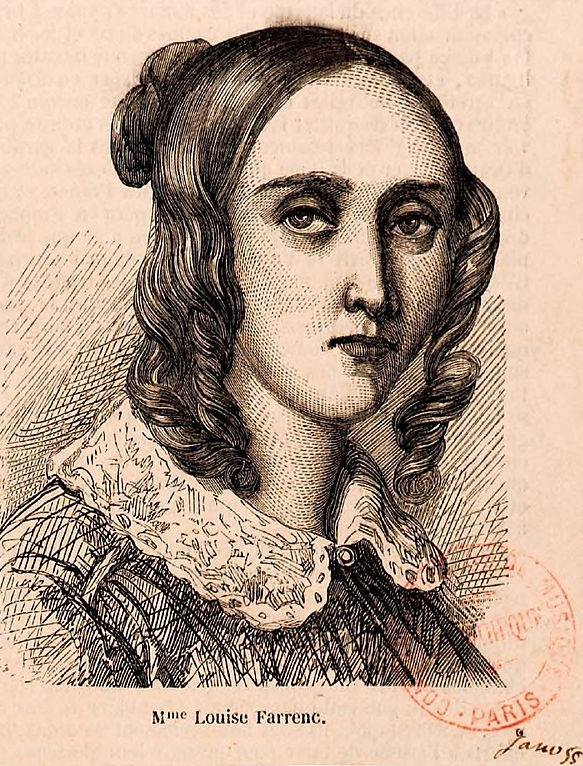
    Nearly 150 years after her death, composer Louise Farrenc is finally coming into her own. Farrenc (1804-1875) was the only female professor at the Paris Conservatory during the whole of the 19th century. Of course, she was only allowed to teach women.

    This Sunday night on “The Lost Chord,” we’ll hear Farrenc’s remarkable Third Symphony, on a program of music by three neglected French Romantics.

    A pupil of Moscheles (teacher of Mendelssohn) and Hummel (who studied with Mozart), Farrenc was a formidable pianist, who also took private lessons with Conservatory professor Anton Reicha. She paused in her career as a performer in order to start a successful publishing house, with her husband, Éditions Farrenc, which flourished for nearly 40 years.

    Beginning in 1842, Farrenc was finally accepted it into the Paris Conservatory, as a professor. There, she taught piano, but not composition. However, her stature was such that she was able to demand – and receive – equal pay.

    We’ll also hear music by Augusta Holmès (1847- 1903), French composer of Irish ancestry. Holmès received encouragement from Liszt and Wagner, as well as multiple marriage proposals from Saint-Saëns (which she declined). She became a pupil of César Franck. It’s said that Franck’s Piano Quintet enshrines the teacher’s ardent longing for his student. Saint-Saëns, who participated in the work’s scandalous premiere, was not amused.

    Holmès will be represented by her symphonic poem “Andromède,” from 1883. Andromeda, you may recall from Greek mythology, is the daughter of Cassiopeia, who incurs the wrath of the gods when she brags of Andromeda’s extraordinary beauty (comparing her favorably to the Nereids). Andromeda is chained to a rock as a sacrifice to a sea serpent, but rescued from her fate by Perseus, who arrives just in the nick of time, astride the winged horse Pegasus and bearing the severed head of the Gorgon Medusa, with which he turns the serpent to stone.

    Finally, Marie Gandval (1830-1907) studied with Flotow, then Chopin, and later Saint-Saëns. Saint-Saëns dedicated his Christmas Oratorio to her. She was the most frequently performed composer on concerts of the Société Nationale de Musique. The Société was founded by Saint-Saëns with an aim to promote orchestral music, which he found underserved in opera-mad France, where orchestras were tied to the theatres. Grandval herself was a composer of opera and choral music, but tonight there will be just enough time for her “Deux pièces” for oboe, cello and piano.

    Look for the women on “Cherchez la Femme,” this Sunday night at 10:00 EST, on WWFM – The Classical Network and wwfm.org.

  • Louise Farrenc Rediscovered Composer

    Louise Farrenc Rediscovered Composer

    Nearly 150 years after her death, composer Louise Farrenc is finally coming into her own. Farrenc (1804-1875) was the only female musician on the faculty of the Paris Conservatory during the whole of the 19th century. Of course, she was only allowed to teach women.

    This Sunday night on “The Lost Chord,” we’ll hear Farrenc’s remarkable Third Symphony, on a program of music by three neglected French Romantics.

    A pupil of Moscheles (teacher of Mendelssohn) and Hummel (who studied with Mozart), Farrenc was a formidable pianist, who also took private lessons with Conservatory professor Anton Reicha. She paused in her career as a performer in order to start a successful publishing house, with her husband, Éditions Farrenc, which flourished for nearly 40 years.

    Beginning in 1842, Farrenc was finally accepted it into the Paris Conservatory, as a professor. There, she taught piano, but not composition. However, her stature was such that she was able to demand – and receive – equal pay.

    We’ll also hear music by Augusta Holmès (1847- 1903), French composer of Irish ancestry. Holmès received encouragement from Liszt and Wagner, as well as multiple marriage proposals from Saint-Saëns (which she declined). She became a pupil of César Franck. It’s said that Franck’s Piano Quintet enshrines the teacher’s ardent longing for his student. Saint-Saëns, who participated in the work’s scandalous premiere, was not amused.

    Holmès will be represented by her symphonic poem “Andromède,” from 1883. Andromeda, you may recall from Greek mythology, is the daughter of Cassiopeia, who incurs the wrath of the gods when she brags of Andromeda’s extraordinary beauty (comparing her favorably to the Nereids). Andromeda is chained to a rock as a sacrifice to a sea serpent, but rescued from her fate by Perseus, who arrives just in the nick of time, astride the winged horse Pegasus and bearing the severed head of the Gorgon Medusa, with which he turns the serpent to stone.

    Finally, Marie Gandval (1830-1907) studied with Flotow, then Chopin, and later Saint-Saëns. Saint-Saëns dedicated his Christmas Oratorio to her. She was the most frequently performed composer on concerts of the Société Nationale de Musique. The Société was founded by Saint-Saëns with an aim to promote orchestral music, which he found underserved in opera-mad France, where orchestras were tied to the theatres. Grandval herself was a composer of opera and choral music, but tonight there will be just enough time for her “Deux pièces” for oboe, cello and piano.

    Look for the women on “Cherchez la Femme,” this Sunday night at 10:00 EDT, on WWFM – The Classical Network and wwfm.org.

  • Remembering Biava Plus Franck’s Passion

    Remembering Biava Plus Franck’s Passion

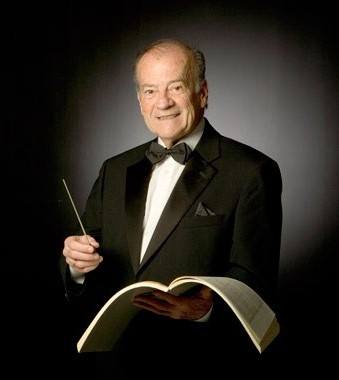
    At 4:00 EDT, we’ll remember Philadelphia violinist and conductor Luis Biava, who died yesterday at the age of 85.

    We’ll hear two of Biava’s recordings, made with The Philadelphia Orchestra and the Temple University Symphony Orchestra, respectively. Biava was a long-time faculty member at the Boyer College of Music and Dance – Temple University. Then toward the latter portion of the hour we’ll celebrate the birthday anniversaries of composer-arrangers Ferde Grofé and Richard Hayman.

    In the 5:00 hour, we’ll blow out some more candles for composer Vincent d’Indy and cellist and conductor Mstislav Rostropovich, both also born on this date. As a special added bonus, we’ll hear a symphonic poem by the woman who destroyed Camille Saint-Saëns and César Franck’s friendship, Augusta Holmès.

    At 6:00, on this week’s “Music from Marlboro,” the featured highlight will be Franck’s Piano Quintet in F minor, the work into which Franck poured all his sublimated passion for Holmès, a fact which, unfortunately, was not lost on Saint-Saëns, who played the piano part at the work’s premiere in 1879.

    Life is messy. Embrace the music, from 4 to 7 p.m. EDT, on WWFM – The Classical Network and wwfm.org.

Tag Cloud

Aaron Copland (92) Beethoven (95) Composer (114) Film Music (120) Film Score (143) Film Scores (255) Halloween (94) John Williams (185) KWAX (229) Leonard Bernstein (100) Marlboro Music Festival (125) Movie Music (135) Opera (198) Philadelphia Orchestra (88) Picture Perfect (174) Princeton Symphony Orchestra (106) Radio (87) Ralph Vaughan Williams (85) Ross Amico (244) Roy's Tie-Dye Sci-Fi Corner (290) The Classical Network (101) The Lost Chord (268) Vaughan Williams (103) WPRB (396) WWFM (881)

DON’T MISS A BEAT

Receive a weekly digest every Sunday at noon by signing up here


RECENT POSTS