Tag: Augusta Holmès

  • Saint-Saëns’ Fury Franck Holmès Music from Marlboro

    Saint-Saëns’ Fury Franck Holmès Music from Marlboro

    It’s music to get Camille Saint-Saëns’ blood boiling, on the next “Music from Marlboro.”

    Saint-Saëns was the dedicatee of the Piano Quintet in F minor by his friend, César Franck. But as he sight-read through the piano part at the work’s premiere in 1879, he became more and more agitated, angry even. At the conclusion of the piece, he rejected Franck’s attempt to shake his hand, and stormed off without acknowledging the applause.

    He wasn’t the only one. Franck’s wife also made no secret of hating it.

    Here was music of sublimated desire, and everyone knew the cause. Saint-Saëns knew, because he felt the same way about Franck’s pupil, Augusta Holmès. Franck tutored Holmès in organ and composition. No doubt he admired her musical talent, but equally there was no doubt his interest went beyond that of master-disciple. Don’t let those mutton chops fool you. A man is only flesh and blood.

    There must have been something about Holmès, the French composer of Irish descent, because she had the same effect on just about every man she crossed paths with. Saint-Saëns had proposed marriage to her multiple times, always without success. He would refer to her as a “beautiful pythoness.” Methinks his vines had tender sour grapes.

    We’ll hear a performance of Franck’s incendiary piece, featuring pianist Mitsuko Uchida, violinists Soovin Kim and David McCarroll, violist Milena Pajaro-van de Stadt, and cellist Matthew Zalkind, from the 2012 Marlboro Music Festival.

    The hour will open with a work by Claude Debussy. Debussy composed “En blanc et noir” in 1915, making it one of his later creations, contemporaneous with the Cello Sonata, the Sonata for Flute, Viola and Harp, and the Etudes for solo piano.

    It is to be remembered that Saint-Saëns, who basically lived forever, was 80 years-old by this time. He loathed the work. “We must at all costs bar the door of the Institute against a man capable of such atrocities,” he fumed. “They should be put next to the cubist pictures.”

    The first movement, an energetic waltz, is dedicated to Serge Koussevitzky; the second, a somber slow movement, to Debussy’s friend, Jacques Charlot, who was killed during the First World War; and the third, a playful scherzando, to Igor Stravinsky.

    We’ll hear it played at Marlboro in 2017 by pianists Xiaohui Yang and Cynthia Raim.

    The forbidden fruit tastes the sweetest, thanks to Saint-Saëns’ anger management issues, on the next “Music from Marlboro,” this Wednesday evening at 6:00 EDT, on WWFM – The Classical Network and wwfm.org.

    BONUS: Tune in early to hear one of Holmès’ symphonic poems in the 5:00 hour!

    Marlboro School of Music and Festival: Official Page


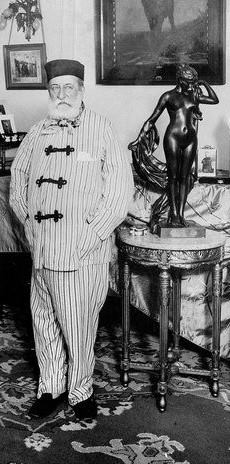
    PHOTOS (clockwise from left): Saint-Saëns, all dressed up with nowhere to go; Franck at the organ; Holmès with her je ne sais crois; Debussy, transfixed by a cigarette
  • French Women Composers Rediscovered

    French Women Composers Rediscovered

    On this last Sunday of Women’s History Month, we travel to France on “The Lost Chord” for an hour of neglected music by female composers.

    We’ll hear from Augusta Holmès (1847- 1903), French composer of Irish ancestry. Holmès received encouragement from Liszt and Wagner, as well as multiple marriage proposals from Saint-Saëns (which she declined). She became a pupil of César Franck. It’s said that Franck’s Piano Quintet enshrines the teacher’s ardent longing for his student. Saint-Saëns, who participated in the work’s premiere, was not amused.

    Holmès will be represented by her symphonic poem “Andromède,” from 1883. Andromeda, as you may recall from Greek mythology, is at the receiving end of divine envy because of her extraordinary beauty. She is chained to a rock as a sacrifice to a sea serpent, but rescued from her fate by Perseus, who arrives just in the nick of time, astride the winged horse Pegasus and bearing the severed head of the Gorgon Medusa, with which he turns the serpent to stone.

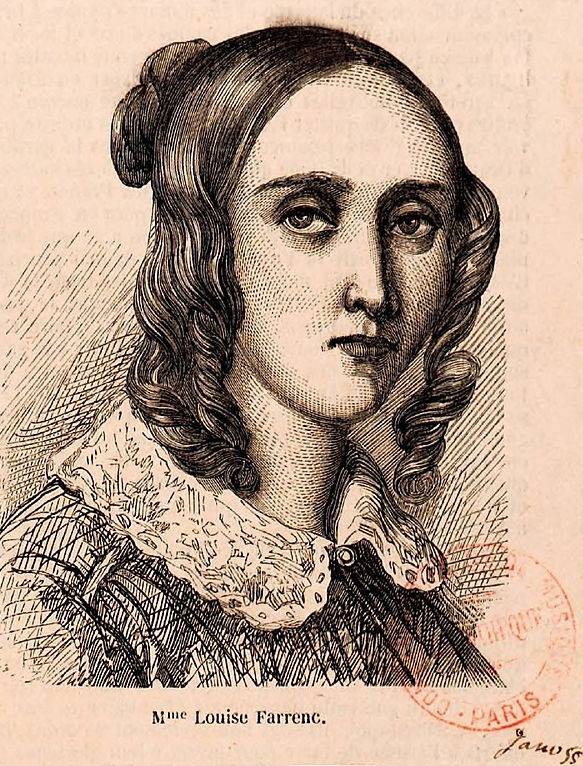
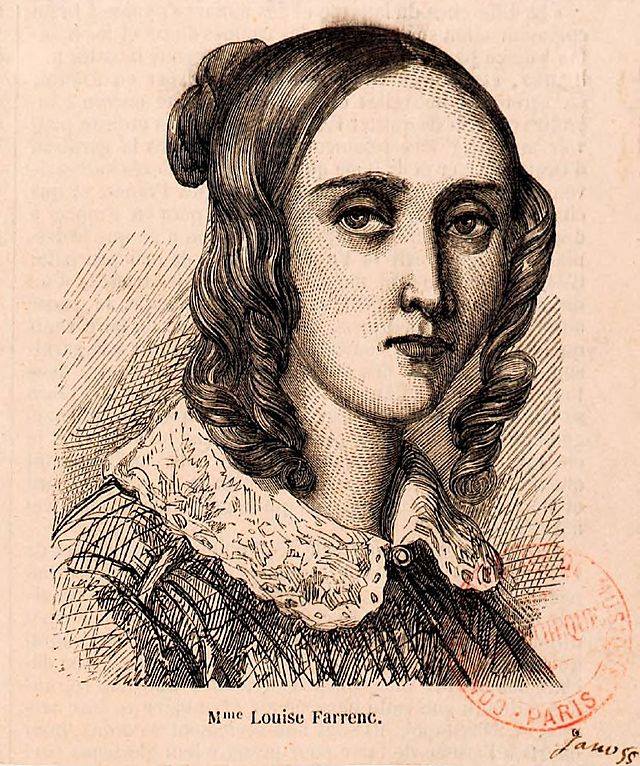
    Louise Farrenc (1804-1875) was remarkable for, among other things, being the only woman on the teaching faculty of the Paris Conservatory during the whole of the 19th century. Beginning in 1842, she served as professor of piano there for 30 years. Of course, she was only allowed to teach women. By the end of the first decade, her stature was such that she was able to demand – and receive – equal pay.

    A pupil of Moscheles (who taught Mendelssohn) and Hummel (who studied with Mozart), she also took composition lessons privately with Anton Reicha, who also taught at the conservatory. She paused in her career as a performer to start a successful publishing house, Éditions Farrenc, which flourished for nearly 40 years. Farrenc composed three symphonies. We’ll hear the third of those tonight.

    Finally, we’ll have music by Marie Gandval (1830-1907). Grandval studied with Flotow, then Chopin, and later Saint-Saëns. Saint-Saëns dedicated his Christmas Oratorio to her. She was the most frequently performed composer on concerts of the Société Nationale de Musique, which Saint-Saëns founded to promote orchestral music, underserved in opera-mad France, where orchestras were tied to the theatres. Grandval herself was a composer of opera and choral music, but we’ll have just enough time for “Deux pièces” for oboe, cello and piano.

    I hope you’ll join me for “Cherchez la Femme,” neglected music by French female composers, this Sunday night at 10:00 EDT, on WWFM – The Classical Network and at wwfm.org.

  • Louise Farrenc Symphonies Rediscovered

    Louise Farrenc Symphonies Rediscovered

    I can’t get through Women’s History Month without listening to the symphonies of Louise Farrenc. In truth, they are good enough to hold up at any time of the year. Lyrical, fluid and well-argued, they are all worthwhile endeavors in the Mendelssohn/Schumann mold. In fact, Schumann was among Farrenc’s admirers. Berlioz was another.

    Her life, which spanned the years 1804 to 1875, was remarkable for, among other reasons, her being the only woman on the teaching faculty of the Paris Conservatory during the whole of the 19th century. Beginning in 1842, she served as professor of piano there for 30 years. Of course, she was only allowed to teach women. By the end of the first decade, her stature was such that she was able to demand – and receive – equal pay.

    Her own teachers included Ignaz Moscheles (who taught Mendelssohn) and Johann Nepomuk Hummel (who studied with Mozart). Beginning at 15, she took composition lessons privately with Anton Reicha, who also taught at the conservatory.

    At about age 17, she married a flute student, ten years her senior, with whom she toured as a pianist. She paused in her career as a performer to start a successful publishing house, Éditions Farrenc, which flourished for nearly 40 years. She also gave birth to a daughter, who also matured into a professional pianist.

    Farrenc’s fame as a performer survived her by several decades. She left 49 published works, mostly piano and chamber music. Her Nonet in E-flat, Op. 38, was a particular success.

    Ironically, it wasn’t the fact that she was a woman that led to her symphonies’ neglect, at least not exclusively. Apparently, anyone in France who wrote symphonies had pretty much the same problem getting any traction, since the orchestras were all tied to the theatre. If one wanted to get his or her symphony heard, he or she had to hire the musicians and organize the performances him or herself.

    Camille Saint-Saëns was so frustrated by the circumstance that he was finally moved to found his own permanent organization for the promotion of orchestral music, the Societé Nationale de Musique, though it really didn’t take flight until the 20th century. Then, as now, audiences didn’t exactly flock to new music by unrecognized composers.

    I hope you’ll join me tomorrow night for an example of Farrenc’s artisty. We’ll also hear a symphonic poem, “Andromède,” by Augusta Holmès (1847-1903), a French composer of Irish descent, who became a pupil of César Franck. Saint-Saëns proposed marriage to her multiple times, without success. Franck’s Piano Quintet is said to enshrine the teacher’s ardent longing for his student. Saint-Saëns, who participated in the work’s premiere, was not amused.

    That’s “Cherchez la Femme,” this Sunday evening at 10 ET, with a repeat Wednesday evening at 6; or you can enjoy it later as a webcast at http://www.wwfm.org.

Tag Cloud

Aaron Copland (92) Beethoven (95) Composer (114) Film Music (120) Film Score (143) Film Scores (255) Halloween (94) John Williams (185) KWAX (229) Leonard Bernstein (100) Marlboro Music Festival (125) Movie Music (135) Opera (198) Philadelphia Orchestra (88) Picture Perfect (174) Princeton Symphony Orchestra (106) Radio (87) Ralph Vaughan Williams (85) Ross Amico (244) Roy's Tie-Dye Sci-Fi Corner (290) The Classical Network (101) The Lost Chord (268) Vaughan Williams (103) WPRB (396) WWFM (881)

DON’T MISS A BEAT

Receive a weekly digest every Sunday at noon by signing up here


RECENT POSTS