Big doings with the @[100064825684990:2048:Rotary Club of Trenton, New Jersey] today, as I’ll be delivering a lunchtime talk about Trenton’s own George Antheil. Antheil was the avant-garde composer and super-pianist who put Paris on its ear in the 1920s. He then devoted himself to symphonies, ballets for Balanchine, and even Hollywood film scores. But he also did a lot of other things, including laying the groundwork, with actress Hedy Lamarr, for the kind frequency-hopping spread-spectrum technology that decades later would be employed for wireless phones, GPS, and Wi-Fi. Always fun to talk about Antheil, as he was such an eccentric and versatile character. I didn’t realize there would be a shout-out on the Rotary Club’s Facebook page, but here it is!
Tag: Avant-Garde
-

Ligeti: Avant-Garde, Affection, and 2001
György Ligeti was that rare bird: an avant-garde composer whose music could actually inspire affection. He rocketed to worldwide fame after some of his works were used, without permission, in Stanley Kubrick’s “2001: A Space Odyssey.”
Ligeti was born into a Jewish family in an ethnically Hungarian region of Transylvania, one hundred years ago today. Destined to become one of the most important musical voices of his generation, he first had to overcome many hardships. Most of his family was wiped out in the Holocaust. He was conscripted into a forced labor brigade. He lived for a time under strict communist rule. He survived the violent Soviet putdown of the Hungarian Revolution, and finally escaped with his on-again/off-again wife in a couple of mail sacks, leaping off a night train and crawling for miles through the mud to find safety in Vienna.
Ligeti was not the kind of artist who would have flourished under totalitarianism. “Totalitarian regimes do not like dissonances,” he ruefully observed. He even abandoned the avant-garde circle in Cologne, which included Karlheinz Stockhausen, because he found the environment to be too dogmatic. Though he wrote little electronic music himself, he incorporated the lessons he learned at the Cologne Electronic Music Studio into his instrumental works, often creating otherworldly textures.
Remarkably, for all he endured, he was able to hang on to his sense of humor. Unquestionably, he had his playful side, and this shone through in his music from time to time.
Here’s the car horn prelude to his opera, “Le Grand Macabre.”
And the Act II doorbell prelude
If you’re wondering how to pronounce his name, the first sounds like George. His last name does NOT rhyme with spaghetti, since in Hungarian the accent is on the first syllable. Only when you realize this will you understand the genius of my pun when I state that “Ligeti split” in 2006. He was 83 years-old.
His centenary is a round occasion I would have loved to have observed on “The Lost Chord,” had I had the capability to record new shows. No longer reliant on WWFM, you can expect more flexibility from me in the future.
For now, happy birthday, György Ligeti!
Perhaps his greatest hit, thanks to a boost from Kubrick: the Kyrie from “Requiem”
“Lux Aeterna” (with creepy fractal)
https://www.youtube.com/watch?v=-iVYu5lyX5M.
“Mysteries of the Macabre,” a distillation of three coloratura arias from “Le Grand Macabre,” with Barbara Hannigan as Gepopo, the chief of secret police – in case you’re curious, the text is semi-nonsense!
In London
In Berlin
In New York in a semi-staged production of the complete opera
Trailer for the New York Philharmonic performances
H. Paul Moon’s film on Ligeti’s “Poème Symphonique for 100 metronomes”
Ligeti for people who think they don’t like Ligeti: the folk-inflected “Concert Românesc” (“Romanian Concerto”)
I once interviewed Cristian Măcelaru, then conductor-in-residence with the Philadelphia Orchestra, for an intermission feature for a broadcast concert on Philadelphia’s WRTI. You’ll have to scroll down to the gray box below the article at the link (below, not above, the photo of Sarah Chang) in order to hear it. I was not the one who edited the interview, or it would not have sounded so choppy!
Perhaps equally attractive, Ligeti’s “Six Bagatelles”
“I am in a prison: one wall is the avant-garde, the other wall is the past, and I want to escape.” – György Ligeti
-

Krzysztof Penderecki, Avant-Garde Master, Dies
One of the most important composers of the second half of the 20th century has died.
In 1960, Polish master Krzysztof Penderecki rode an atomic blast that leveled Soviet-sanctioned socialist realism in music and propelled him into the forefront of the avant-garde. “Threnody for the Victims of Hiroshima” became an international sensation.
A follow-up, “Polymorphia,” for 48 violins, was creepy enough that it was selected by director William Friedkin for inclusion in the soundtrack to “The Exorcist.” For both works, Penderecki abandoned traditional notation and invented his own system of graphic notation inspired by electroencephalograms. Dense clusters, microtones and glissandi prevail.
Over the decades, filmmakers have been drawn to Penderecki’s early concert works to enhance their own eerie, anxious, and otherworldly visions. His music was used in “The Shining,” “Wild at Heart,” “Twin Peaks,” and “Shutter Island.” He provided an original score for the cult classic “The Saragasso Manuscript” (1965), based on a trippy 1815 picaresque, in itself way ahead of its time, by Jan Potocki. It’s said that “The Saragasso Manuscript” was Jerry Garcia’s favorite movie.
In the 1970s, Penderecki, while still employing avant-garde techniques, began to explore more recognizable harmonic relations, and by 1980, he leveled off into a more widely approachable style. He felt the avant-garde had tumbled too far down the formalistic rabbit hole. The pendulum had swung too wide; the solution had become the problem. It had served its purpose as a big “eff you” to Soviet authoritarianism, but now he was ready to settle down and write music.
He abandoned the undeniably striking stunt compositional style of his youth – on which his fame principally rests – and in the works of his maturity everything is laid bare. There is not much in his later music to frighten the horses, but prolonged exposure might make them a little gloomy.
Critics began to offer comparisons to the works of Dmitri Shostakovich. Penderecki was seldom ingratiating – I am hard-pressed to think of a sunny Penderecki piece – but he was always a master of his craft.
He composed four operas, eight symphonies, concertos, chamber and solo instrumental music, and choral settings of mainly religious texts. His “St. Luke Passion” made a big impression in Rome, though he himself attended a minority Armenian church.
Penderecki was 86 years-old.
The first time I encountered “Threnody for the Victims of Hiroshima” (1960), it was like nothing I had ever heard before. This is not comforting music, but it is unforgettable.
“Polymorphia” (1961), with score in graphic notation:
“St. Luke Passion” (1966):
Symphony No. 3 (1988-95), Penderecki embraces the Romantic tradition:
“Resurrection” Concerto (2002), written in response to the terrorist attacks of 9/11:
-
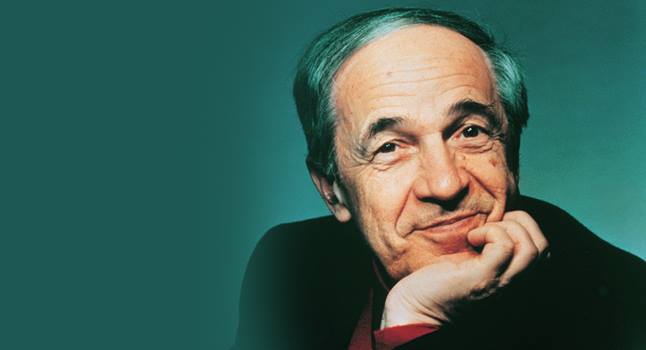
Pierre Boulez Radical Avant-Garde Composer
“Blow the opera houses up!”
“All the art of the past should be destroyed!”
“A musician who has not experienced… the necessity for the dodecaphonic language is USELESS!”
“From Schoenberg’s pen flows a stream of infuriating clichés!”
“The Paris opera is full of dust and crap! Operatic tourists make me want to vomit!”
Pierre Boulez could be provocative and full of contradictions. The gadfly of modern music died on Tuesday at the age of 90. I hope you’ll join me as we celebrate this radical figure of the avant-garde, who in his later years found value even in the music of Strauss and Bruckner.
It’s all Pierre Boulez this morning, from 6 to 11 ET, on WPRB 103.3 FM and at wprb.com. We “excite the curiosity of the snobs,” on Classic Ross Amico.
-

Remembering Ligeti Avant-Garde Genius
I can’t believe György Ligeti has been dead for eight years already. An avant-garde composer whose music could actually inspire affection, Ligeti rocketed to broader fame when his music was used, against his will, in Stanley Kubrick’s “2001: A Space Odyssey.”
Ligeti was born in Transylvania in 1923. He survived many hardships. Most of his family was wiped out in the Holocaust; he was conscripted into a forced labor brigade; he lived for a time under strict communist rule. He survived the violent Soviet putdown of the Hungarian Revolution, and finally escaped with his on-again/off-again wife in a pair of mail sacks, leaping off a night train and crawling for miles through the mud to find safety in Vienna. He went on to become one of the leading composers of the second half of the 20th century.
Ligeti was not the kind of artist who would have flourished under totalitarianism. (Come to think of it, what artist is?) He even abandoned the avant-garde circle in Cologne, which included Karlheinz Stockhausen, because he found the environment to be too dogmatic. Though he wrote little electronic music himself, he incorporated the lessons he learned at the Cologne Electronic Music Studio into his instrumental works, often creating otherworldly textures.
Remarkably, for all he endured, he was able to hang on to his sense of humor, and this shone through in his music from time to time.
Here’s the car horn prelude to his opera, “Le Grand Macabre.”
And perhaps his greatest hit (thanks to Kubrick), his “Requiem,” most recently heard in the trailers for “Godzilla.”
Lastly, Barbara Hannigan in “Mysteries of the Macabre,” a distillation of three coloratura arias from “Le Grand Macabre,” sung by the character of Gepopo, the chief of secret police. In case you’re curious, the text is semi-nonsense.
https://www.youtube.com/watch?v=sFFpzip-SZk
Happy birthday, György Ligeti!
Tag Cloud
Aaron Copland (94) Beethoven (95) Composer (114) Film Music (150) Film Score (143) Film Scores (255) Halloween (102) John Williams (198) KWAX (233) Leonard Bernstein (105) Marlboro Music Festival (125) Movie Music (165) Mozart (91) Opera (215) Philadelphia Orchestra (90) Picture Perfect (174) Princeton Symphony Orchestra (110) Radio (90) Ross Amico (244) Roy's Tie-Dye Sci-Fi Corner (290) The Classical Network (101) The Lost Chord (269) Vaughan Williams (107) WPRB (397) WWFM (881)