Tag: Ballet mécanique

  • Classical Music’s Wackiest Composers

    Classical Music’s Wackiest Composers

    If you’re in search of loony tunesmiths, you need look no further than July 8. Today marks the birthday anniversaries of two of classical music’s wackiest pianist-composers.

    George Antheil, self-proclaimed “Bad Boy of Music,” was born in Trenton, NJ on this date in 1900. His “Ballet Mécanique,” scored for synchronized player pianos, airplane propellers, siren and electric bells, provoked one of the great classical music riots at its Paris premiere in 1926.

    Antheil would practice the piano with such ferocity that he would have to pause, periodically, to thrust his hands into two fish bowls filled with ice water. Before the start of a recital, he would ostentatiously remove a pistol from a silk holster sewn into his jacket and place it atop the piano, to telegraph the message that he would brook no nonsense.

    Later, he became a Hollywood film composer, a war correspondent, the author of a column of advice to the lovelorn, an expert in endocrinology, and co-inventor, with actress Hedy Lamarr, of a frequency-hopping system for the guidance of Allied torpedoes that would become the basis for modern spread-spectrum communications technology. Neither Antheil nor Lamarr would ever see a dime for their invention.

    In 1944, he scored a notable success with his Symphony No. 4, after it was taken up by Leopold Stokowski and later Sir Eugene Goossens, who recorded it. Antheil was also the author of a bestselling autobiography, “Bad Boy of Music.” He died of a heart attack at the age of 59. A third recorded cycle of his symphonies was recently completed for the Chandos label. Not bad for a boy from Trenton.

    Wouldn’t you know, Percy Aldridge Grainger was also born on this date, outside Melbourne, Australia, in 1882. Another one of classical music’s great eccentrics, Grainger was obsessed with physical fitness. Rather than drive or take the train between towns and recitals, it was his preference to jog. He was also known to throw a ball over one side of a house, and then race through to the other side to catch it.

    Enamored with Nordic culture, he went out of his way to use only Anglo-Saxon words, avoiding in his letters anything of Norman or Latin origin. This extended to his scores, in which he eschewed Italian musical terms in favor of faux “Anglo-Saxon” equivalents (“middle fiddle” for viola, “tone-wright” for composer, “louden” for crescendo). In 1928, he married Ella Ström, from Sweden, during a concert at the Hollywood Bowl. On the program was his new work, “To a Nordic Princess.”

    Lest his cultural quirks be misconstrued in an increasingly black-and-white world, Grainger’s embrace of “blue-eyed English” was as idiosyncratic as everything else in his character. He bristled against the dominance of German music, he served in the U.S. Army against Germany in WWI, he embraced music from a wide diversity of cultures, all the way to Bali, he championed works by African-Canadian-American composer R. Nathaniel Dett, and he adored Duke Ellington and George Gershwin.

    Grainger was unusually close to his mother and exhibited sadomasochistic tendencies. He donated whips and blood-stained clothes to the Grainger Museum, which he founded in 1932. His request to have his skeleton displayed – posthumously, of course – was denied.

    Later, while living in White Plains, NY, he experimented with electronics and “machine music,” in a sense paralleling an obsession of Antheil, who besides “Ballet Mécanique,” wrote such works as “Airplane Sonata” and “Death of Machines.”

    Sadly, only the tiniest portion of Grainger’s output is known by the general public, and he is celebrated as the composer of such folksy trifles as “Country Gardens,” “Molly on the Shore,” and “Shepherd’s Hey.” But Grainger’s treatment of harmony and rhythm could be highly original. He was a brilliant musician, and wholly unconventional in more ways than one.

    Grainger died in White Plains in 1961 at the age of 78. His remains, including his skeleton, rest in Adelaide.

    Happy birthday, you wacky, wacky boys.


    Grainger, “Scotch Strathspey and Reel”

    Grainger orchestration of Debussy’s “Pagodes”

    His imaginary ballet, “The Warriors”

    Grainger plays “Molly on the Shore”

    R. Nathaniel Dett’s “Juba”

    Antheil, “Ballet Mécanique” – presumably in its revision, because of the use of live pianists – with the annoying Fernand Léger film

    Antheil, “Jazz Symphony”

    Antheil, Symphony No. 4 “1942”

    Antheil, “Specter of the Rose” (from the film score, 1946)

    Antheil speaks!


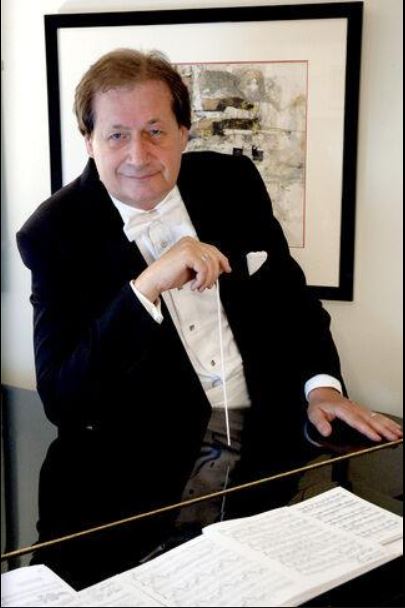
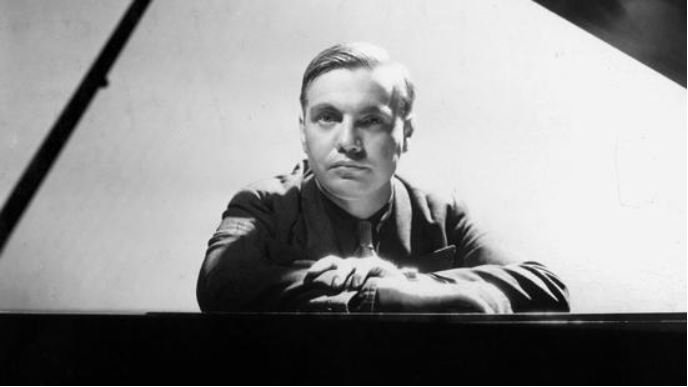
    PHOTOS: Antheil packing heat (top), and the multifaceted Grainger

  • George Antheil Bad Boy Genius Rediscovered

    George Antheil Bad Boy Genius Rediscovered

    This week on “The Lost Chord,” Trenton’s Bad Boy makes good.

    George Antheil, self-proclaimed “Bad Boy of Music” (the title of his autobiography), sparked one of classical music’s great riots when his “Ballet Mécanique” was unveiled in Paris in 1926.

    The work made preposterous demands on performers and audience alike, with its battery of player pianos, sirens, bells, and airplane propellers – all difficult to coordinate, but worth it, if they were to transform concert halls into free-for-alls and secure Antheil’s status as enfant terrible. His notoriety earned him the respect, friendship, and envy of Paris’ artistic community. From the stage, he watched as Man Ray punched a heckler in the face, as Satie cheered, “Quel precision!,” and as Ezra Pound shouted, “Shut up, you are all stupid idiots!” Pound became one of Antheil’s most ardent champions, taking a break from poetry to publish an inflammatory book, “Antheil and the Treatise on Harmony.”

    Antheil speculated, perhaps facetiously, that his mechanistic nightmares may have been inspired by his having been born across the street from a noisy machine shop. In fact, a number of his works bear the boisterous imprint of the factories he knew in Trenton as a boy, including the “Airplane Sonata,” “The Death of Machines,” and the “Sonata Sauvage.”

    It was all rather forward-looking. Antheil was one of the first composers to search beyond conventional instruments for musical means. He not only presaged the alien soundscapes of Edgard Varèse, but also anticipated the stupefying repetitions of minimalism – though infusing his own compositions with enough violence to prevent them from ever becoming numbing. Stravinsky was his hero. He fed off the savagery of “The Rite of Spring,” then followed the master’s subsequent hairpin turn into neoclassicism. Both artists suffered a backlash from former idolaters who felt betrayed by what was perceived as a cowardly retreat into the past.

    In Antheil’s case, his reputation never recovered. The one-two punch of his Piano Concerto No. 2, transparently influenced by Bach, and the spectacular failure of his “Ballet Mécanique” to impress at its American premiere at Carnegie Hall (mostly due to faulty machinery) cast Antheil, rebel angel that he was, from the lofty heights of notoriety to the slag heap of has-beenery.

    But if it is true that the remainder of his career was indeed that of a has-been, we should all be so lucky.

    The composer of six symphonies, Antheil also wrote books on endocrinology and speculative war tactics, a murder mystery, a nationally syndicated column of advice to the lovelorn, and over 30 Hollywood film scores. With the actress Hedy Lamarr, he patented a torpedo guidance system that became the basis for modern Bluetooth, Wi-Fi, and cellular phone technology.

    I hope you’ll join me for music by this eccentric and multitalented figure, including “Ballet Mécanique,” in all its original, uncompromising glory; then selections from his neo-classical Piano Concerto No. 2, his wartime Symphony No. 4, and dance music from his score to the ballet film noir “Specter of the Rose.”

    That’s “Antheil Establishment” – three days before the composer’s birthday anniversary – on “The Lost Chord,” now in syndication on KWAX, the radio station of the University of Oregon!


    Clip and save the start times for all three of my recorded shows:

    PICTURE PERFECT, the movie music show – Friday at 8:00 PM EDT/5:00 PM PDT

    SWEETNESS AND LIGHT, the light music program – Saturday at 11:00 AM EDT/8:00 AM PDT

    THE LOST CHORD, unusual and neglected rep – Saturday at 7:00 PM EDT/4:00 PM PDT

    Stream them, wherever you are, at the link!

    https://kwax.uoregon.edu/


    PHOTO: Sylvia Beach acts as spotter as Antheil ascends to his second-story apartment, located above the legendary Parisian bookshop Shakespeare and Company

  • Antheil’s Machine Music A Christmas Story Connection

    Antheil’s Machine Music A Christmas Story Connection

    I’ve written a great deal about George Antheil, Trenton-born “Bad Boy of Music” (which also happens to be the title of his autobiography) – his early notoriety, riots erupting in Europe over the brutality of his machine music (he used to brandish a pistol before launching into his recitals), most famously the “Ballet Mécanique,” with its battery of player pianos, sirens, doorbells, and airplane propellers; his writings on a wide variety of topics (murder mysteries, endocrinology, war correspondence, advice to the lovelorn); his Hollywood film scores; his symphonies in the grand manner of the Greatest Generation of American composers, championed by Leopold Stokowski and others; his friendship with Hedy Lamarr and their experiments with torpedo-jamming technology in the hopes of aiding the Allied war effort.

    There are so many stories to tell about George Antheil. What didn’t he do? Who didn’t he know?

    Well, today I’m going to turn it over to Jean Shepherd. In case the name doesn’t ring a bell, Shepherd was the storyteller, humorist, writer, and radio personality who spun gold from the experiences and eccentricities of his boyhood in blue-collar Indiana, which he harvested to notable comic effect. These provided seemingly inexhaustible grist for his radio broadcasts, books, movies, and television specials. Shep was a virtuoso at making the personal universal. His blend of comic observation and nostalgia invariably entertained.

    For those too young to have caught his radio show, Shep’s spirit lives on in annual marathons of the modern classic “A Christmas Story” (1983), with its knowing reminiscences of the aspirations and terrors of childhood. References to Red Ryder BB guns and “fra-gee-lee” leg lamps are now part of the American holiday experience.

    Well, Shep happened to be a huge Antheil fan, sometimes incorporating the composer’s music into his radio broadcasts. You can hear Shep’s account of how he met Antheil at the automat, in this show from 1976.

    As is often the case with Shep, the journey is the destination. He likes to digress and take in the scenery, so depending on how you calculate, he finally arrives at Antheil somewhere between 12 and 15 minutes in. However, the preamble, about Dadaism and Paris in the 1920s, is certainly relevant. He doesn’t get all the details correct (there are no anvils or sledgehammers in “Ballet Mécanique”), but he’s got the spirit right and it’s still colorfully told. Shep’s not one to let facts get in the way of a good story!

    More concise, at 7 minutes, is Shep’s eulogy to Antheil on another show, following the composer’s death. If you can only listen to one, make it this one.

    https://www.antheil.org/audio/ShepEulogy.mp3?fbclid=IwZXh0bgNhZW0CMTAAAR178E4RWuaNxGzdrfDjuC0S99yr147jcsZwg8XHs0FhPFQJQg_c2g47ADU_aem_C_kPbZAFOqzuPYmPO-8daA

    Happy birthday, George Antheil, and thank you, Jean Shepherd – two American originals!


    “Ballet Mécanique” was revised for performance by more manageable forces in 1953, but that version fails to capture the inexorable machine madness of the 1924 original, here recreated with the assistance of digital technology (MIDI, Yamaha Dysklaviers, computers, etc.) and the percussive digits of six live pianists (as opposed to just pianolas).

  • Capital Philharmonic Director Steps Down

    Capital Philharmonic Director Steps Down

    The Capital Philharmonic of New Jersey has announced that its founding music director, Daniel Spalding, has stepped down. Assistant conductor Sebastian Grand and “several distinguished guest conductors” will take over for the orchestra’s 2024-25 season. No reason was specified for Spalding’s departure.

    At least he went out with a bang. His final concert as music director took place in April at Trenton’s Roebling Machine Shop in celebration of the centenary of Trenton-born George Antheil’s “Ballet Mécanique.” Four pianists, a plethora of percussionists, the Plenty Pepper Steel Band, and Trenton Circus Squad combined for a memorable season finale.

    Spalding spearheaded the formation of the Capital Philharmonic in 2013. The organization was raised from the ashes of the Greater Trenton Symphony Orchestra – New Jersey’s oldest professional symphonic ensemble – which essentially folded when it couldn’t pay its musicians in 2012.

    Spalding directed the Capital Phil for the first ten years of its existence. He is also music director of the Philadelphia Virtuosi Chamber Orchestra, a group he founded in 1991. His recordings are available on the Arabesque, Ariel, Connoisseur Society, Naxos, New World, and Vienna Modern Masters labels.

  • Diplomat’s Lost Plane Found Baltic Mystery Solved

    Diplomat’s Lost Plane Found Baltic Mystery Solved

    84 years after it was shot down – nearly to the day – the wreckage of Henry William Antheil Jr.’s plane has been found at the bottom of the Baltic.

    Henry, who worked as an American diplomat, departed from Tallinn, bound for Helsinki, on June 14, 1940, when approximately ten minutes after take-off the aircraft, a commercial passenger plane, exploded. At the time of his death, Henry was in possession of several pouches of secret information.

    Henry was the brother of composer George Antheil, Trenton’s self-proclaimed “Bad Boy of Music” (also the title of his autobiography). George achieved his greatest notoriety for his mechanized nightmare, “Ballet Mecanique,” which caused fists to fly at its Paris premiere. Later, his music became less confrontational and he pursued the Great American Symphony.

    George also wrote prose on a variety of subjects (war correspondence, murder mysteries, endocrinology, and advice to the lovelorn) and, when he needed cash, Hollywood film scores. Latterly, he became a footnote in biographies of actress Hedy Lamarr for their experiments in developing a frequency-hopping system to confound Nazi torpedoes.

    A grave marker to Henry’s memory was installed in Trenton’s Riverview Cemetery. Of course, his body is not there, but the remains of George and the rest of the family are.

    Bad Boy brother’s plane is found

    More about the circumstances of Henry Antheil’s death here.

    https://ee.usembassy.gov/wp-content/uploads/sites/207/Henry-W_-Antheil.pdf

    What was in the pouches?

    https://lamokaledger.com/the-kaleva-incident-and-the-death-of-henry-antheil-jr/

Tag Cloud

Aaron Copland (92) Beethoven (95) Composer (114) Film Music (119) Film Score (143) Film Scores (255) Halloween (94) John Williams (185) KWAX (229) Leonard Bernstein (99) Marlboro Music Festival (125) Movie Music (134) Opera (198) Philadelphia Orchestra (87) Picture Perfect (174) Princeton Symphony Orchestra (106) Radio (87) Ralph Vaughan Williams (85) Ross Amico (244) Roy's Tie-Dye Sci-Fi Corner (290) The Classical Network (101) The Lost Chord (268) Vaughan Williams (102) WPRB (396) WWFM (881)

DON’T MISS A BEAT

Receive a weekly digest every Sunday at noon by signing up here


RECENT POSTS