Tag: Barbara Strozzi

  • Concertanti & Women Composers on WWFM

    Concertanti & Women Composers on WWFM

    This afternoon on The Classical Network, I’ll make a concerted effort to hold your concentration with an afternoon of compelling concertanti.

    We’ll hear works featuring one or more solo parts, reminiscent of practices of the 17th and 18th centuries. These could take the form of sinfonie concertanti – typically two or more soloists with orchestra – or the Baroque concerto grosso, with musical material passed back and forth between a smaller group of instruments and larger ensemble.

    Along the way, I’ll continue to highlight the contributions of women composers during this month in which we celebrate the Clara Schumann bicentennial, with Ellen Taaffe Zwilich’s “Concerto Grosso 1985” and Dame Ethel Smyth’s quixotic Concerto for Violin, Horn and Orchestra.

    First – and perhaps of related interest – on today’s Noontime Concert we’ll hear a recital of works by Baroque anomaly Barbara Strozzi.

    Strozzi proved to be a phenomenon in an art form that, until the 20th century, wasn’t exactly the most nurturing to women. She was not only a singer, but also a composer. More astonishingly, she appears to have been recognized for it.

    DuoSeraphim – soprano Sarah Hawkey and gambist Niccolo Seligmann – will celebrate Strozzi with “In Defiance of Time and Fate.” The program was recorded on December 20th at St. Bartholomew’s Church, 325 Park Avenue, in New York City. Free Midtown Concerts are held at St. Bart’s every Thursday at 1:15 p.m.

    Today’s broadcast is another made possible in part by Gotham Early Music Scene, or GEMS. GEMS is a non-profit corporation that supports and promotes artists and organizations in New York City devoted to Early Music. For more information and the complete events calendar, visit gemsny.org.

    I think you’ll find there’s always plenty to think about. Your concentration will be amply rewarded, from 12 to 4 p.m. EDT, on WWFM – The Classical Network and wwfm.org.

  • Celebrating Women Composers

    Celebrating Women Composers

    September 13th marks the 200th anniversary of the birth of Clara Schumann. In celebration of this remarkable pianist, teacher, composer, wife, and mother of eight, I’ll be especially conscious of honoring the achievements of women in music all month long on The Classical Network, with works by female composers, ranging from the 12th century to the present.

    Of course, with few exceptions, women did not enjoy the same advantages as men, in terms of education and acceptance, so it is unlikely that many fulfilled their natural promise.

    Barbara Strozzi (1619-1677) and Francesca Caccini (1587-after 1641) were notable exceptions, at least to some extent.

    Today’s Noontime Concert on The Classical Network will be devoted to music by these two remarkable women. “Enchanting Voices: Music of Barbara Strozzi & Francesca Caccini” will be performed by the Canzonetta Duo, Elissa Edwards, soprano, and Richard Kolb, theorbo and archlute.

    The concert was presented on November 15, 2018, at St. Bartholomew’s Church, 325 Park Avenue, in Midtown Manhattan, where free concerts are held every Thursday at 1:15 p.m. The 2019-2020 season gets underway this Thursday, as The Vivaldi Project will perform a program of classical string trios.

    These concerts are made possible in part by Gotham Early Music Scene, or GEMS. GEMS is a non-profit corporation that supports and promotes artists and organizations in New York City devoted to Early Music. For more information and a look at GEMS’ events calendar, visit gemsny.org.

    Following today’s broadcast concert, stick around for an afternoon of works by musical women.

    Julia Wolfe was awarded the Pulitzer Prize for Music for “Anthracite Fields” in 2015. The oratorio, composed for the Bang on a Can All-Stars and the Mendelssohn Club Chorus, was given its premiere in Philadelphia the previous year. “Anthracite Fields” examines the plight of Northeastern Pennsylvania coal miners, a topic of particular interest to me, since my father’s father’s family labored in the mines of Pittston. The work was presented at the Roebling Wire Works in Trenton by Westminster Choir in 2017. On this day after Labor Day, we’ll hear a complete performance of the piece in its world premiere recording.

    We’ll also enjoy a very impressive Serenade in D – really more of a symphony – by composer and hell-raising suffragette Dame Ethel Smyth. Smyth served time in prison for putting out the windows of politicians who opposed a woman’s right to vote. When Sir Thomas Beecham went to visit her in jail, he found her conducting her associates through the bars of her window with a toothbrush as they sang “The March of the Women,” also composed by Smyth, while gathering for exercise in the prison courtyard.

    These women were nothing if not composed. Join me for musical contributions by women, all month long. They’ll punctuate my programming, beginning this afternoon from 12 to 4 p.m. EDT, on WWFM – The Classical Network and wwfm.org.


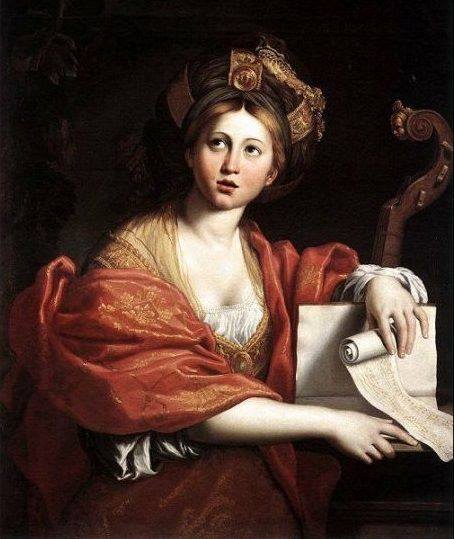
    CLOCKWISE FROM LEFT: Clara Schumann, Barbara Strozzi, Julia Wolfe, and Ethel Smyth (under arrest)

  • Barbara Strozzi Baroque Composer Spotlight

    Barbara Strozzi Baroque Composer Spotlight

    Barbara Strozzi (1619-1677) was a significant anomaly in an art form that, until the 20th century, did not exactly nurture women. She was a singer, but also a composer. More astonishingly, she appears to have been recognized for it.

    Today’s Noontime Concert on The Classical Network will be devoted almost exclusively to Strozzi’s music. Brooklyn Baroque will present “Barbara Strozzi and Her World.” The program will also include a sonata by virtuoso cellist Domenico Gabrielli.

    Strozzi was the adopted (and possibly biological) daughter of Giulio Strozzi. Giulio was one of the driving forces behind the propulsive growth of opera in Venice in the first half of the 17th century. He was a poet and librettist, a regular collaborator of Claudio Monteverdi and others. He was also unusually supportive of his daughter’s talent, arranging for her studies with Francesco Cavalli (of “La Callisto” fame) and even founding an academy for its display, in order to help legitimize it in the eyes of the public.

    Barbara’s music was published and it’s thought that later in life she was able to support herself by means of her investments and compositions. Did she bolster her income as a courtesan, or was this a fabrication of her jealous (male) rivals? Many important details of her life have had to be fleshed out by hearsay and conjecture. After all, she lived 400 years ago, and society hasn’t been particularly attentive to its female artists.

    Today’s broadcast comes our way courtesy of Gotham Early Music Scene (GEMS). The program was presented on October 26, 2017 at St. Bartholomew’s Church, 50th Street and Park Avenue, in Midtown Manhattan, where free concerts are held every Thursday at 1:15 p.m. The 2017-2018 season will conclude on June 28. This Thursday, Empire Viols will present “Strictly Organic: Transcriptions of Organ Trios by J.S. Bach and J.L. Krebs.” For a complete schedule of lunchtime performances, look online at midtownconcerts.org.

    GEMS also hosts evening concerts. The ensemble Voyces will present “Angels Cry Aloud: Masters of the Roman Collegio Germanico,” featuring music by Victoria, Carissimi, and Charpentier, at Trinity Lutheran Church, 309 St. Paul’s Avenue, Staten Island, tonight at 7:30 p.m. Artek will present “Madrigal Madness,” highlighting the work of Monteverdi, at 17 Frost Gallery, 17 Frost Street, Williamsburg, Brooklyn, Friday at 7:30 p.m. Angelica Women’s Chamber Choir will present “Sanctuary,” a program that seeks refuge from life’s turbulence, with repertoire ranging from the Middle Ages to the present, at the Church of St. John of Nepomucene, 411 East 66th St., New York City, Sunday at 3 p.m.

    Gotham Early Music Scene is a non-profit corporation that supports and promotes artists and organizations in New York City devoted to early music – music of the Middle Ages, Renaissance, Baroque, and early Classical periods. For more information and GEMS’ events calendar, look online at gemsny.org.

    Following today’s Noontime Concert, I’ll return to some of the unplayed “favorites” left over from last week’s “Play It Again” membership campaign. These will be drawn from lists submitted by WWFM hosts, partners, and listeners. We’ll hear more of this music, in its entirety, until 4 p.m. EDT. David Diamond’s Symphony No. 2 will be a particular highlight.

    If you haven’t gotten around to making your contribution to WWFM – The Classical Network, remember, you may do so at any time at wwfm.org. As always, thank you for your support!

Tag Cloud

Aaron Copland (93) Beethoven (95) Composer (114) Film Music (126) Film Score (143) Film Scores (255) Halloween (94) John Williams (189) KWAX (229) Leonard Bernstein (101) Marlboro Music Festival (125) Movie Music (141) Mozart (87) Opera (203) Philadelphia Orchestra (89) Picture Perfect (174) Princeton Symphony Orchestra (107) Radio (87) Ross Amico (244) Roy's Tie-Dye Sci-Fi Corner (290) The Classical Network (101) The Lost Chord (268) Vaughan Williams (103) WPRB (396) WWFM (881)

DON’T MISS A BEAT

Receive a weekly digest every Sunday at noon by signing up here


RECENT POSTS