Tag: Baroque

  • Telemann Has a Lot to Tell

    Telemann Has a Lot to Tell

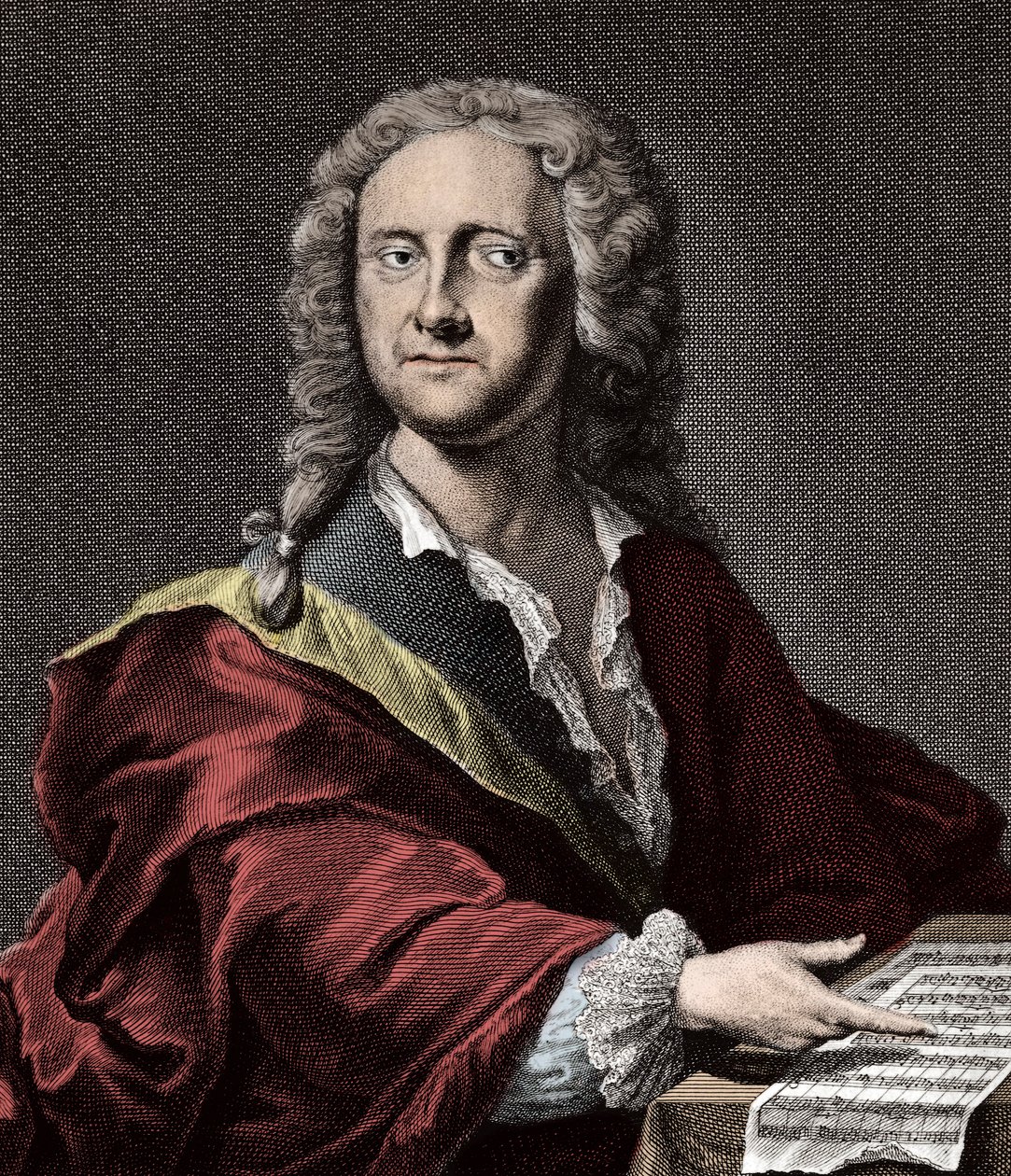
    Poor Telemann. Every year, if I write anything laudatory about him for his birthday anniversary, following as closely as it does on the heels of the March birthdays of his great colleagues and rivals, Handel (March 5) and Bach (March 21), it seems to bring the invective raining down upon him.

    “He’s boring!” will write one.

    “He’s a notespinner!” will opine another.

    “How many times can you rewrite the same piece?” will grumble a third.

    Could it be that he was a casualty of having done his job too well?

    After all, Telemann wrote more music than Bach and Handel combined – over 3,000 works – making him one of the most prolific composers of all time. Yet nothing in his oeuvre has captured the public imagination quite like the “Brandenburg Concertos” or the “Water Music.”

    Of course, Telemann wrote “Water Music” too. Keep in mind, this was not conceived for a king’s leisurely cruise down the Thames (à la Handel), but rather to celebrate the centennial of the Hamburg Admiralty. That’s a pretty dry commission.

    The work opens with an Ouverture in C, perhaps suggestive of the movement of the water itself. Then Telemann begins to gussy it up with music representative of various mythological figures (Thetis asleep and awake, Neptune in love, Naiads at play, Triton the jokester, stormy Aeolus, and pleasant Zephir, comprising movements 2-8). The penultimate movement is a gigue inspired by the tides, and the work concludes with a suggestion of some jolly sailors.


    No one is going to argue against the fact that Handel had the more indelible tunes. As a classical music broadcaster, I’ve had more experience with this suite than most, but I still can’t say I could pick it out of a police line-up.

    Nevertheless, Telemann was a significant talent, who was recognized in his own lifetime. He was an innovator, assimilating Italian and French influences into his own style, and his contemporaries bought and studied his scores. He was offered the cantorate of the Thomaskirche in Leipzig, ahead of Bach. He counted Bach among his friends, as well as Handel. Bach even requested that he be the godfather of his son, Carl Philipp Emanuel.

    Telemann lived an unusually long life (86 years), though it was not without its miseries. His first wife died young. His second ran up gambling debts in amounts larger than his annual income. Ultimately, his friends had to bail him out. As he grew older, he suffered further indignities, including failing eyesight.

    Celebrated in his own day, by the 19th century he was dismissed as a “polygraph,” someone who had simply composed too much. In a sense, he was a victim of his own success.

    Today, he inspires renewed enthusiasm among early music specialists, who have done much to restore his reputation. At the very least, he deserves a little love on his birthday.

    Happy Birthday, Georg Philipp Telemann!*

    ——————

    One of my favorite Telemann moments, the “Air à l’Italien” from the Suite in A Minor for Flute and Orchestra:


    Always been partial to this one, too:

    ——————

    *NOTE: By the Julian calendar, Telemann was born on March 14

  • Mendelssohn & Reger: Bridging Worlds at Marlboro

    Mendelssohn & Reger: Bridging Worlds at Marlboro

    On this week’s “Music from Marlboro,” we’ll have music by two undersold composers who seemed trapped between two worlds.

    While Felix Mendelssohn and Max Reger were very much figures of their respective times, they both found abundant inspiration in music of the past, frequently the distant past. In addition, they often gave the impression of being just a little tentative when it came to exploring musical trends of the present.

    Common to both was an overarching respect for the works of Johann Sebastian Bach. It was Mendelssohn, of course, who at the age of 20 would engineer the first modern performance of Bach’s “St. Matthew Passion.”

    Reger composed a lot of fugues and sets of variations, fancying himself the heir of Beethoven and Brahms; but also, in his own gargantuan, overbaked way, modeling himself on the Baroque’s most outstanding genius.

    Though both Mendelssohn and Reger subsumed romantic characteristics into their music, neither did so at the expense of traditional forms. There are exceptions to every rule, as they say, but generally speaking Mendelssohn’s more emotional utterances seemed to flow most convincingly in the works of his early maturity.

    When he came to write his String Quartet in A minor, it was not Bach but Beethoven who was foremost in his thoughts. The composer was 18 years-old at the time of Beethoven’s death in 1827. He was clearly intoxicated by the Master’s late quartets, which had only recently been published.

    Though certainly influenced by Beethoven, Mendelssohn’s own essay in the form is quite at odds with the introspection of Beethoven’s Op. 135. In contrast, he infuses his own quartet’s Classical structure with a passionate Romanticism. That the synthesis would be so successful is hardly surprising from a teenaged marvel who, within the last two years, had already written an astonishing Octet for Strings and the overture to “A Midsummer Night’s Dream.” In his quartet, Mendelssohn also explores the possibilities of cyclic form more exhaustively than just about any other composer before César Franck.

    We’ll hear the Quartet in A minor performed at the 1995 Marlboro Music Festival by violinists Lisa-Beth Lambert and Hiroko Yajima, violist Annemarie Moorcroft, and cellist Sophie Shao.

    There are times when Reger’s music can be beyond rigorous. In fact, it might be better termed “Regerous.” Perhaps the craziest exemplar of vertiginous Teutonic counterpoint, he could write organ music of such density that the individual voices get lost in a tangle, deep inside a knot, somewhere in an impenetrable thicket.

    However, on two pianos, it all seems to make sense. The program will begin with a 1977 performance of Reger’s “Introduction, Passacaglia and Fugue,” Op, 96, performed by Marlboro stalwart Luis Batlle and a 19 year-old Yefim Bronfman.

    Were they born too late, or merely uneasy with the more progressive impulses of their times? Quiet your head and enjoy the music. I hope you’ll join me for works by Reger and Mendelssohn on the next “Music from Marlboro,” this Wednesday evening at 6:00 EST, on WWFM – The Classical Network Network and wwfm.org.

    Marlboro School of Music and Festival: Official Page

  • Baroque & Sea Music on The Classical Network

    Baroque & Sea Music on The Classical Network

    AAAaaAaAaaaRRRRgh!

    We’ll bust open a sea chest full of Baroque treasures on today’s Noontime Concert on The Classical Network. Harpsichordist Elena Zamolodchikova and violinist Natalie Kress will perform music by Heinrich Ignaz Franz von Biber, William Byrd, Girolamo Frescobaldi, and Johann Heinrich Schmelzer.

    The program was presented on December 7, 2017 at St. Bartholomew’s Church, 50th Street and Park Avenue, in Midtown Manhattan, where free lunchtime concerts are held every Thursday at 1:15 p.m. The 2017-2018 schedule has run its course, but concerts will resume in the fall.

    Today’s broadcast is made possible in part by Gotham Early Music Scene, or GEMS. GEMS is a non-profit corporation that supports and promotes artists and organizations in New York City devoted to early music – music of the Middle Ages, Renaissance, Baroque, and early Classical periods. For more information and updates to GEMS’ events calendar, look online at gemsny.org.

    Then we bid farewell to landlocked humidity and strike out for the high seas. We’ll feel the spray in our faces and the wind in our hair, courtesy of Ralph Vaughan Williams’ “A Sea Symphony,” Georg Philipp Telemann’s “Water Music” (written in celebration of the centennial of the Hamburg Admiralty), and Anton Rubinstein’s “Ocean” Symphony.

    Start queuing up now for your mermaid tattoos. It’s anchors aweigh, from 12 to 4 p.m. EDT, on WWFM – The Classical Network and wwfm.org.

  • Cello Baroque on The Classical Network

    Cello Baroque on The Classical Network

    Hello, cello!

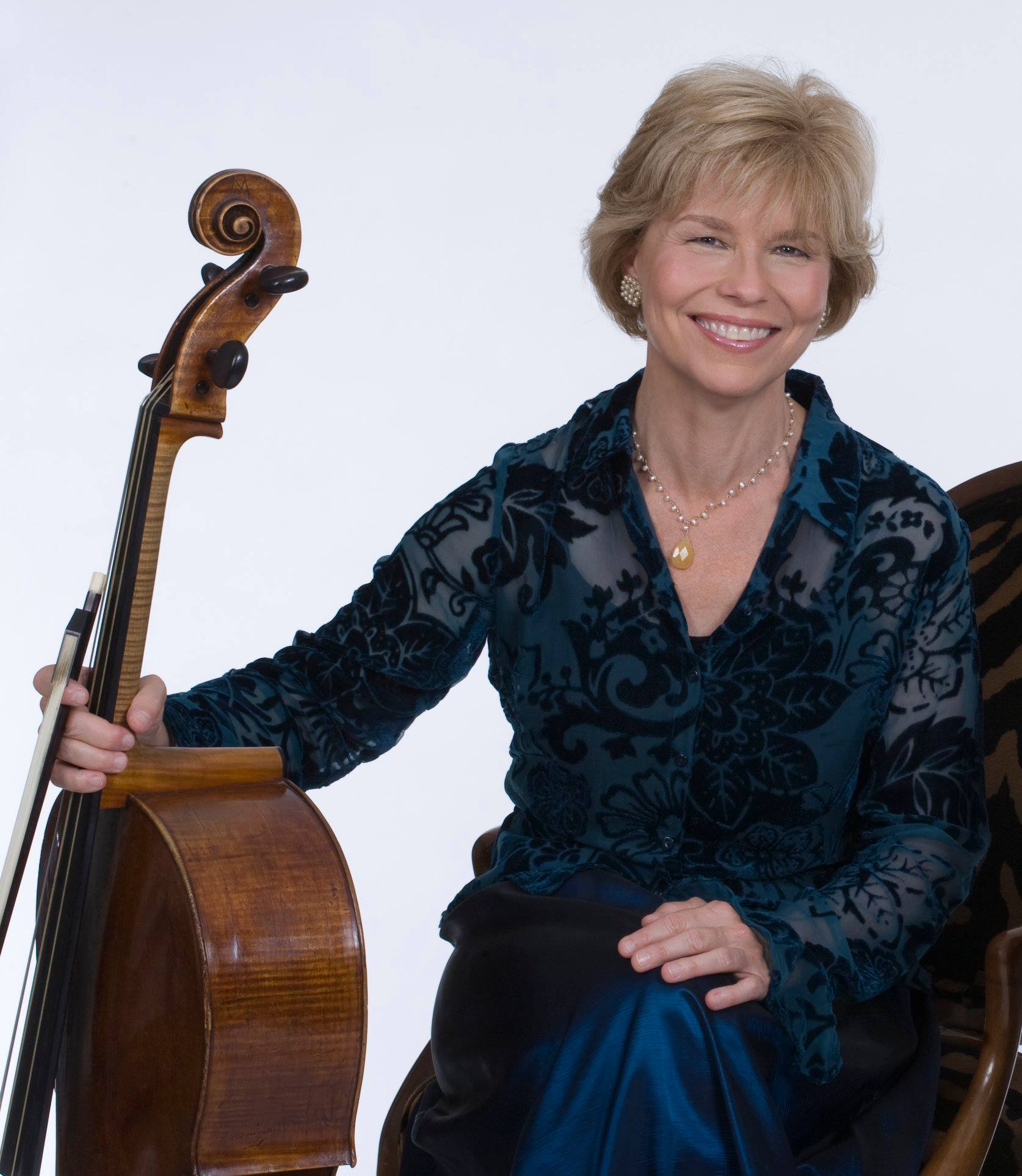
    Today’s Noontime Concert on The Classical Network will be a Baroque recital for solo cello, presented by Loretta O’Sullivan.

    On the program will be music by Johann Sebastian Bach – his Suite No. 3 in C major, BWV 1009 – and a Passacaglia by Heinrich Biber. These are the bricks of an edifice held together by grout in the form of four caprices by Giuseppe Maria Dall’Abaco, according to Sullivan, “…each with its own color, texture and mood.”

    The program was presented on November 20, 2017 at St. Bartholomew’s Church, 50th Street and Park Avenue, in Midtown Manhattan, where free lunchtime concerts are held every Thursday at 1:15 p.m. The 2017-2018 schedule has run its course, but concerts will resume in the fall.

    Today’s broadcast is made possible in part by Gotham Early Music Scene, or GEMS. GEMS is a non-profit corporation that supports and promotes artists and organizations in New York City devoted to early music – music of the Middle Ages, Renaissance, Baroque, and early Classical periods. For more information and updates to GEMS’ events calendar, look online at gemsny.org.

    Then stick around as we celebrate the birthdays of musicologist and composer Sir Donald Francis Tovey, composers Wojciech Kilar and Peter Schickele – with an appearance by Schickele’s alter ego, P.D.Q. Bach – and sopranos Eleanor Steber and Dawn Upshaw.

    I’ll provide the music; you provide the ice cream cake, this afternoon from 12 to 4 p.m. EDT, on WWFM – The Classical Network and wwfm.org.

  • Baroque Concerts NYC Marian Music & More

    Baroque Concerts NYC Marian Music & More

    On today’s Noontime Concert on the Classical Network, members of the Queen’s Baroque Ensemble will join countertenor Ryland Angel and organist William Trafka – with special guest, countertenor Jonathan May – for another Midtown Concert presented by Gotham Early Music Scene (GEMS).

    The program, titled “Portraits of Mary,” will be made up of works by Johannes Schenck, Johann Pachelbel, Johann Sebastian Bach, Domenico Scarlatti, and Dietrich Buxtehude, all reflective of the Marian theme, the love between mother and child.

    Trafka is director of music at St. Bartholomew’s Church, 50th Street and Park Avenue, where free concerts are held each Thursday at 1:15 p.m. This Thursday, violinist Theresa Salomon will present a program of works by Telemann and Bach. You’ll find a complete schedule of lunchtime performances at midtownconcerts.org.

    In addition, GEMS presents evening concerts. “The Keys to Heaven: Music of Giovanni Pierluigi da Palestrina,” which will include Palestrina’s “Missa Tu es Petrus,” will be performed by the Choir of St. Luke in the Fields. That concert will take place this Thursday at 8 p.m. at the Church of St. Luke in the Fields, 487 Hudson Street (just south of Christopher).

    Gotham Early Music Scene is a non-profit organization that supports and promotes artists and organizations in New York City devoted to early music – music of the Middle Ages, Renaissance, Baroque, and early Classical periods. For more information and GEMS’ events calendar, look online at gemsny.org.

    Then, free-associating on the Marian theme, we’ll follow-up with a symphony by Meredith Willson, composer of “The Music Man,” among our featured works. We’ll do our best to remain merry, from 12 to 4 p.m. EST, on WWFM – The Classical Network and wwfm.org.

Tag Cloud

Aaron Copland (92) Beethoven (94) Composer (114) Film Music (116) Film Score (143) Film Scores (255) Halloween (94) John Williams (185) KWAX (228) Leonard Bernstein (99) Marlboro Music Festival (125) Movie Music (131) Opera (197) Philadelphia Orchestra (86) Picture Perfect (174) Princeton Symphony Orchestra (106) Radio (86) Ralph Vaughan Williams (85) Ross Amico (244) Roy's Tie-Dye Sci-Fi Corner (290) The Classical Network (101) The Lost Chord (268) Vaughan Williams (99) WPRB (396) WWFM (881)

DON’T MISS A BEAT

Receive a weekly digest every Sunday at noon by signing up here


RECENT POSTS