Tag: Baroque Music

  • NYC Early Music Concerts on WWFM

    NYC Early Music Concerts on WWFM

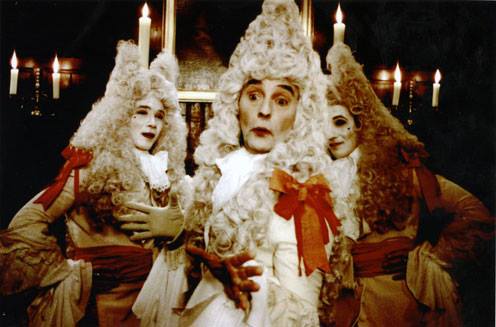
    The signal goes out for another Noontime Concert on The Classical Network, courtesy of Gotham Early Music Scene (GEMS).

    Today’s program will be drawn from two of GEMS’ Midtown Concerts. Duo Dialogues (made up of harpsichordist Alissa Duryee and Baroque cellist Jérôme Huille) will present a program of suites and sonatas by Giacomo Cattaneo, Johann Sebastian Bach, and Jean Barrière; then Gold and Glitter (Baroque flutist Sang Joon Park, Baroque violinist Daniel Lee, viola da gambist Martha McGaughey, and harpsichordist Arthur Hass) will convene for Francois Couperin’s “La Françoise” from the collection “Les Nations” of 1728.

    The concerts took place at St. Bartholomew’s Church, 50th Street and Park Avenue, in Midtown Manhattan, where free concerts are held every Thursday at 1:15 p.m. This Thursday, cellist Juliana Soltis and fortepianist Sylvia Berry will salute Hélène Liebmann, Marianna von Auenbrugger, and Maria Szymanowska on a program titled “In History’s Shadow: Forgotten Female Virtuosi.” To find a complete schedule of lunchtime performances, look online at midtownconcerts.org.

    GEMS also presents evening concerts. The ensemble Artek will offer music by the three B’s of German Baroque music – Bach, Bruhns, and Buxtehude – this Friday at 8 p.m. at Holy Trinity Church, Central Park West and West 65th Street, on the Upper West Side.

    Academy of Sacred Drama will present the U.S. premiere of Antonio Draghi’s “Oratorio di Guiditta,” inspired by the Biblical tale of Judith, Saturday at 7:30 p.m. at Corpus Christi Church, 529 West 121st Street.

    And Voices of Ascension will celebrate the paintings of Francisco Zurbarán, “Joseph and His Twelve Sons,” currently on display at the Frick Collection, with related works by Cristóbal de Morales, Alonso Lobo, Francisco Guerrero, Roque Ceruti, and George Frideric Handel, next Tuesday at 7:30 p.m. at Madison Avenue Presbyterian Church, 921 Madison Avenue (at 73rd Street).

    Gotham Early Music Scene is a non-profit corporation that supports and promotes artists and organizations in New York City devoted to early music – music of the Middle Ages, Renaissance, Baroque, and early Classical periods. For more information and GEMS’ events calendar, look online at gemsny.org.

    To the Batpole! It’s Baroque music from Gotham this afternoon at 12:00 EST. Then stick around until 4 – among my featured works, by request, will be a symphony by Edmund Rubbra and a concerto by Joachim Raff. Dark justice meets public service, on WWFM – The Classical Network and wwfm.org.
  • Scarlatti Tributes on The Lost Chord

    Scarlatti Tributes on The Lost Chord

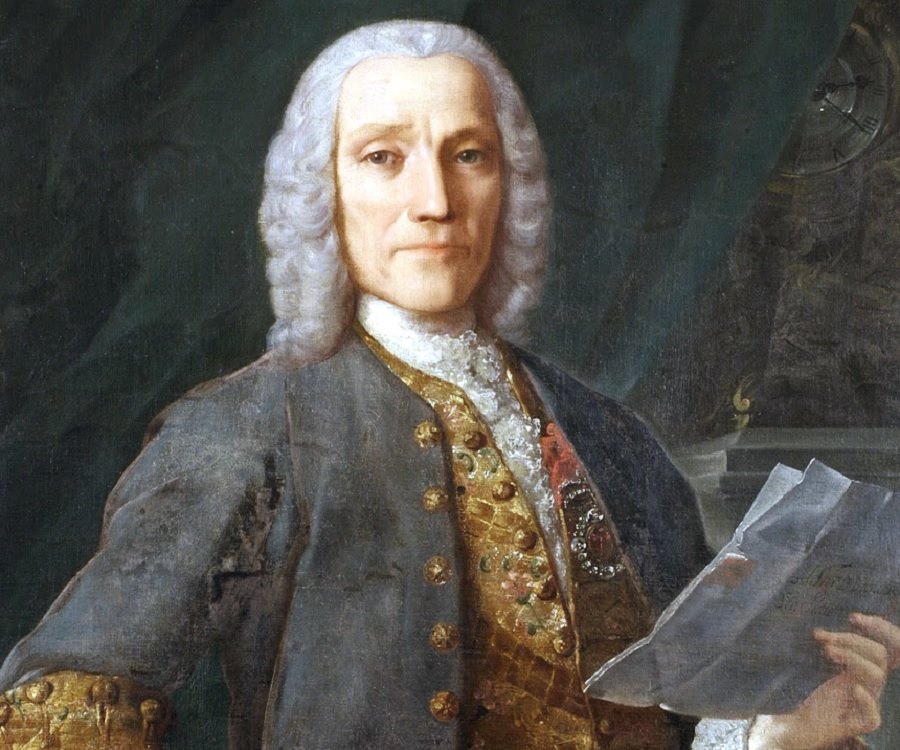
    It seems that any Baroque musician of worth couldn’t help but become embroiled in a musical duel of some sort. In the case of Domenico Scarlatti, he was challenged by none other than George Frideric Handel, in Rome. Handel was deemed superior to his rival on the organ, but on the harpsichord Scarlatti was unsurpassed. In fact, Scarlatti’s unusual facility has had artists “keyed up” for centuries.

    Scarlatti was born in Naples in 1685, the same year as Handel and Bach. He spent much of his career in the service of the Portuguese and Spanish royal families, composing some 555 keyboard sonatas. His works have been admired by composer-performers from Frederic Chopin to Marc-André Hamelin. This Sunday night on “The Lost Chord,” we’ll enjoy four pieces inspired by the Baroque master.

    The English composer Charles Avison, whose life overlapped Scarlatti’s own (he was born in 1709, when Scarlatti would have been 23 years-old) arranged a number of the older composers keyboard works into a set of 12 concerti grossi. We’ll sample one of those, Avison’s Concerto No. 10 in D.

    Then we’ll turn to a tribute by American composer Norman Dello Joio. Dello Joio was the recipient of the Pulitzer Prize for Music in 1957 for his “Meditations on Ecclesiastes.” From 1979, we’ll hear his four movement piano work, “Salute to Scarlatti.”

    Dmitri Shostakovich arranged two of Scarlatti’s keyboard sonatas for small wind ensemble and percussion. We’ll enjoy performances by members of the former USSR Ministry of Culture Symphony Orchestra conducted by Gennady Rozhdestvensky.

    Finally we’ll turn to a work from 1926 by Alfredo Casella – a seven movement suite for piano and orchestra titled “Scarlattiana,” a high-spirited piece that is unabashedly reminiscent of Stravinsky’s “Pulcinella.”

    I hope you’ll join me for “Italian Dressing” – musical tributes to Domenico Scarlatti – this Sunday night at 10:00 EDT, on WWFM – The Classical Network and wwfm.org.

  • Telemann The Genius Overshadowed

    Telemann The Genius Overshadowed

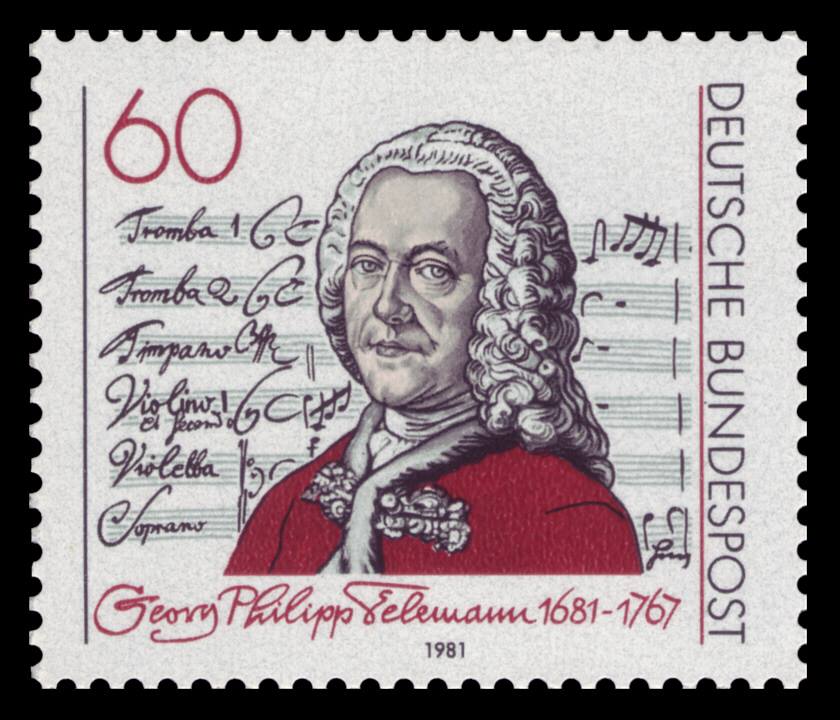
    Poor Telemann. You were a casualty of having done your job too well.

    A composer of genius, you were virtually self-taught, against the opposition of your family. In addition, you taught yourself flute, oboe, violin, recorder, double bass, etc. You spun out music by the yard. In fact, you wrote more music than Bach and Handel combined, over 3000 works, making you one of the most prolific composers of all time. Yet nothing in your oeuvre has captured the public imagination quite like the “Brandenburg Concertos” or the “Water Music.”

    Of course, you wrote Water Music, too.

    On the other hand, you were recognized in your lifetime. You were an innovator, taking what you needed from the Italians and the French to bolster your own style, and your contemporaries bought and studied your scores. You were offered the cantorate of the Thomaskirche in Leipzig ahead of Bach. You counted Bach among your friends, as well as Handel. Bach even requested that you become the godfather of his son, Carl Philipp Emanuel.

    You lived an unusually long life (86 years), though it was not without its miseries. Your first wife died young. Your second ran up gambling debts in amounts larger than your annual income, and ultimately your friends had to bail you out. As you grew older, you suffered further indignities, including failing eyesight.

    Celebrated in your own day, by the 19th century you were dismissed as a “polygraph,” someone you had simply composed too much. In a sense, you were a victim of your own success.

    Still, you continue to give employment to thousands of early music specialists, who have done much to restore your reputation. I think at least you deserve a little recognition on your birthday:

    Happy Birthday, Georg Philipp Telemann (1681-1767).


    One of my favorite Telemann moments, the “Air à l’Italien” from the Suite in A Minor for Flute and Orchestra:

  • Domenico Scarlatti Tributes on The Lost Chord

    Domenico Scarlatti Tributes on The Lost Chord

    Not for any reason beyond the fact that I was able to cobble together what I think is an interesting program, this Sunday night on “The Lost Chord,” the focus will be on Domenico Scarlatti.

    The Baroque keyboard master, born in Naples in 1685 – the same year as Bach and Handel – composed some 555 keyboard sonatas, revered by artists from Frédéric Chopin to Marc-André Hamelin.

    We’ll have tributes and arrangements by four different composers, including Charles Avison, Norman Dello Joio, Dmitri Shostakovich and Alfredo Casella.

    Casella’s “Scarlattiana” (1926), a seven movement suite for piano and orchestra, draws its inspiration from dozens of Scarlatti sonatas. It was not intended for the dance, but since it unabashedly recalls Stravinsky’s “Pulcinella,” it’s hardly surprising that it was only a matter of time before some clown decided to choreograph it.

    I hope you’ll join me for “Italian Dressing” – musical tributes to Domenico Scarlatti – tomorrow night at 10 ET, with a repeat Wednesday evening at 6; or that you’ll enjoy to it later as a webcast at http://www.wwfm.org.

    PHOTO: Wladimir Skouratoff (levitating) and Jacqueline Moreau in a 1954 production of “Scarlattiana”

  • Rediscovering a Lost Baroque Genius

    Rediscovering a Lost Baroque Genius

    The greatest of neglected Baroque composers?

Tag Cloud

Aaron Copland (92) Beethoven (95) Composer (114) Film Music (120) Film Score (143) Film Scores (255) Halloween (94) John Williams (185) KWAX (229) Leonard Bernstein (100) Marlboro Music Festival (125) Movie Music (135) Opera (198) Philadelphia Orchestra (88) Picture Perfect (174) Princeton Symphony Orchestra (106) Radio (87) Ralph Vaughan Williams (85) Ross Amico (244) Roy's Tie-Dye Sci-Fi Corner (290) The Classical Network (101) The Lost Chord (268) Vaughan Williams (103) WPRB (396) WWFM (881)

DON’T MISS A BEAT

Receive a weekly digest every Sunday at noon by signing up here


RECENT POSTS