Tag: Baroque Music

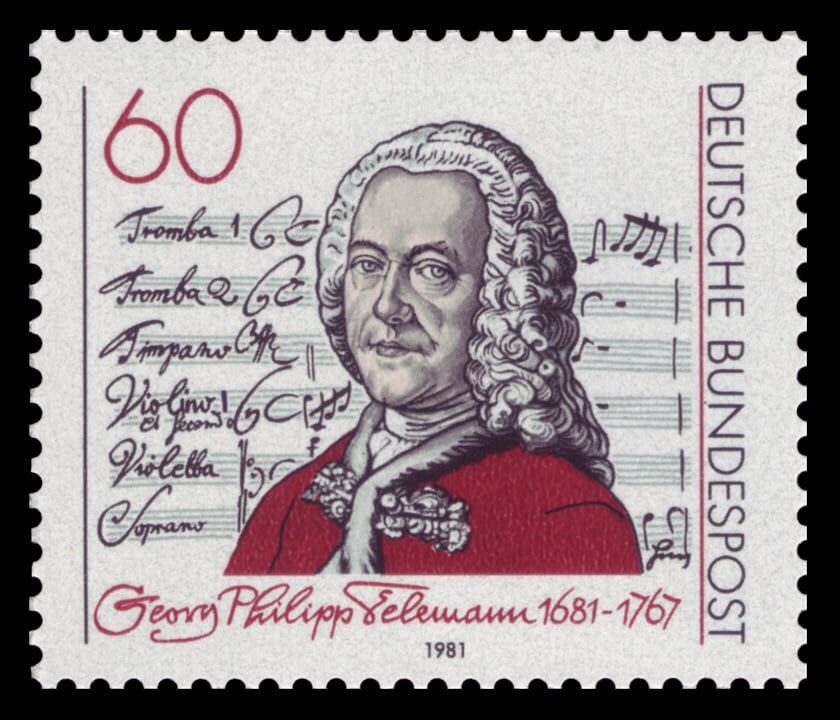
  • Telemann The Overshadowed Baroque Master

    Telemann The Overshadowed Baroque Master

    Poor Telemann. He was a casualty of having done his job too well.

    He wrote more music than Bach and Handel combined – over 3000 works – making him one of the most prolific composers of all time. Yet nothing in his oeuvre has captured the public imagination quite like the “Brandenburg Concertos” or the “Water Music.”

    Of course, he wrote “Water Music” too.

    On the other hand, he was recognized in his own lifetime. He was an innovator, assimilating Italian and French influences into his own style, and his contemporaries bought and studied his scores. He was offered the cantorate of the Thomaskirche in Leipzig, ahead of Bach. He counted Bach among his friends, as well as Handel. Bach even requested that he be the godfather of his son, Carl Philipp Emanuel.

    Telemann lived an unusually long life (86 years), though it was not without its miseries. His first wife died young. His second ran up gambling debts in amounts larger than his annual income. Ultimately, his friends had to bail him out. As he grew older, he suffered further indignities, including failing eyesight.

    Celebrated in his own day, by the 19th century he was dismissed as a “polygraph,” someone who had simply composed too much. In a sense, he was a victim of his own success.

    Today, he inspires renewed enthusiasm among early music specialists, who have done much to restore his reputation. At the very least, he deserves a little recognition on his birthday.

    Happy Birthday, Georg Philipp Telemann!


    One of my favorite Telemann moments, the “Air à l’Italien” from the Suite in A Minor for Flute and Orchestra:

    Always been partial to this one, too:


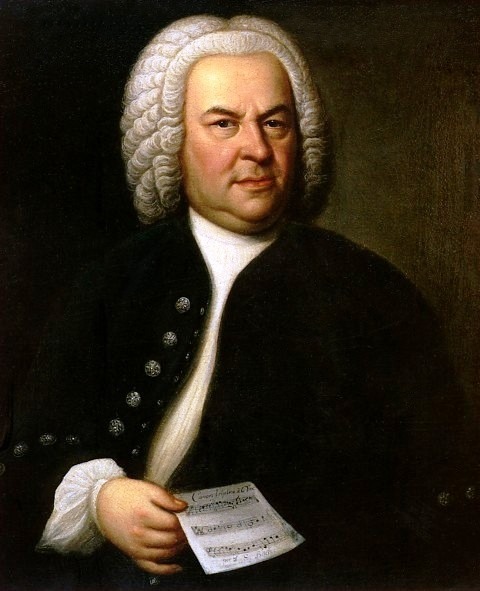
    While we’re on the topic of Baroque masters, allow me to offer a gentle remind that we are now only a week away from Bach’s birthday. WWFM The Classical Network is looking to generate enough donations to cancel fundraising on March 21, so that we can all celebrate with just Bach’s music. To make it happen, we need 500 listeners to step up and contribute IN ANY AMOUNT. Once the 500 donations are reached, the focus will shift exclusively to the music.

    Already the tally is at the halfway point. Contribute now, and become one of the “Bach 500.” Thank you for doing your part in making this campaign a success and in ensuring a home for great music from the Baroque and beyond, on WWFM – The Classical Network and wwfm.org!
    https://wwwfm.secureallegiance.com/wwfm/WebModule/Donate.aspx?P=DEFAULT&PAGETYPE=PLG&CHECK=vOU2bz5JCWmgCDbf53nm9ezWDeZ%2beA1M

  • Baroque Music Today on The Classical Network

    Baroque Music Today on The Classical Network

    This afternoon on The Classical Network, we’ll go for Baroque.

    First, on today’s Noontime Concert, The Dryden Ensemble will present “A Baroque Tapestry,” with works by Johann Rosenmüller, Heinrich Ignaz Franz von Biber, Tomaso Albinoni, Georg Muffat, and of course Johann Sebastian Bach. The program was performed at Princeton Theological Seminary’s Miller Chapel.

    This weekend, Dryden will present three performances of Bach’s “St. John Passion,” at All Saints’ Church in Princeton (Friday & Saturday at 7:30 p.m.) and Trinity Episcopal Church in Solebury, PA (Sunday at 3). To find out more, look online at http://www.drydenensemble.org.

    We’re also, of course, in the midst of our annual “Bach 500,” at The Classical Network.

    In celebration of the anniversary of Bach’s birthday (March 21st, 1685), we’re looking for 500 listeners to step up and make a donation IN ANY AMOUNT. You set the level. When we reach 500 donations, we’ll tally in the funds from our Bach Pot – contributions solicited in advance from some especially ardent supporters – and, best of all, we’ll be able to cancel fundraising on Bach’s birthday and enjoy just his music.

    You can do your part to make that happen by calling us during business hours at 1-888-232-1212, or by donating online anytime at wwfm.org. While you’re over there, at the website, you can monitor our progress by consulting our Bach 500 membership thermometer.

    To keep us mindful, following today’s concert broadcast, I’ll continue along the lines of last Tuesday, by offering hourly reminders, harnessed to a short work of Bach; then another work in some way related – for example, the “Choral and Choral-Prelude ‘Ach bleib bei uns, Herr Jesu Christ,’” from Bach’s Cantata, BWV 6, reimagined by Ralph Vaughan Williams – followed by something related to the related material, which ideally will have nothing at all to do with Bach – such as an original work by Vaughan Williams or one of his colleagues – thereby keeping it varied, while still getting the message out there.

    If it’s not Baroque, we’ll still fix it, from 12 to 4 p.m. EDT. Thank you for your support of WWFM – The Classical Network and wwfm.org.


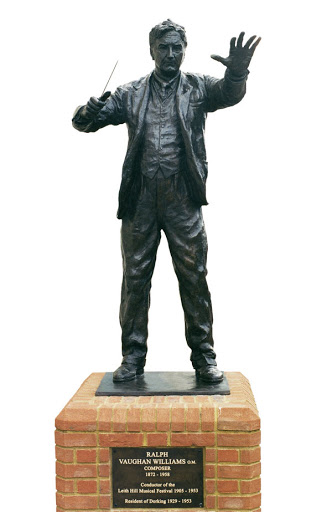
    PHOTO: William Fawke’s statue commemorating Ralph Vaughan Williams, who annually conducted the combined choirs of the Leith Hill Music Festival in Bach’s “St. Matthew Passion”

  • Graupner, Bach, and a Baroque Birthday!

    Graupner, Bach, and a Baroque Birthday!

    A show of hands! How many of you are familiar with the name Christoph Graupner?

    I thought so.

    Join me today on The Classical Network, on Graupner’s birthday, as I share music by this neglected master. Despite the fact that Graupner is now little more than a footnote in music history, he was highly regarded in his day. In fact, he was offered the cantorate in Leipzig (where he had studied with Johann Kuhnau).

    Finances were particularly rocky in Graupner’s Darmstadt. The opera house was closed, court musicians were not being paid. Musical opportunities were withering. Even so, Graupner’s patron insisted he be held to his contract.

    In the end, things worked out for the best. Graupner’s back salary was paid in full, and he was given a substantial raise into the bargain. As for the cantorate? It went to Johann Sebastian Bach.

    Of course, the first choice for the position had been George Philipp Telemann. But Telemann also decided to remain where he was – in his case Hamburg – after he too was promised more money.

    Graupner graciously wrote Bach a glowing recommendation. Like so many forgotten figures of the Baroque, his recognition once again received a substantial boost with the rise of the authenticity movement, and a nice cross-section of his own music is now available in recordings.

    It’s also the birthday of Graupner contemporary Gottfried Heinrich Stölzel. Again, you may not know the name, but if you’re a Bach fan, there’s a good chance you know at least some of his music. He is the composer of “Bist du bei mir,” long attributed to Bach because of its inclusion in one of Anna Magdalena Bach’s notebooks

    Like Bach, Stölzel wrote a ton of church music, including a crushing number of cantatas. Unlike Bach, he also wrote operas – 18 of them. In fact, “Bist du bei mir” was originally written for the opera “Diomedes.” Now we hear it at weddings.

    Don’t forget, Monday on The Classical Network also means “Bach at One.” As stated right in the title of the program, that will come your way at 1 p.m. EST.

    I’ll be along at 4. If Baroque is not really your thing, I’ll also have music by Vasily Kalinnikov, a too short-lived Russian Romantic composer, and Richard Addinsell – he of “Warsaw Concerto” fame.

    It’s nice to be known for something. Don’t forget to join me in remembering, from 4 to 7 p.m. EST, on WWFM – The Classical Network and wwfm.org.


    Catch the Baroque wave (in both wig and music): clockwise from left, Bach, Graupner and Stölzel

  • Scarlatti’s Legacy: Musical Duels & Tributes

    Scarlatti’s Legacy: Musical Duels & Tributes

    It seems as if it was only a matter of time before any Baroque musician of merit would become embroiled in a musical duel.

    In the case of Domenico Scarlatti, he was challenged by none other than George Frideric Handel, in Rome. The resulting contest led to Handel being judged superior to his rival on the organ; however, on the harpsichord Scarlatti was deemed to be supreme. In fact, Scarlatti’s unusual facility at the keyboard has had artists “keyed up” for centuries.

    Born in Naples in 1685 – the same year as Handel and Bach – Scarlatti spent much of his career in the service of the Portuguese and Spanish royal families. He wrote 555 keyboard sonatas, which have been admired by composer-performers from Frederic Chopin to Marc-André Hamelin.

    This Sunday night on “The Lost Chord,” we’ll enjoy several works written in tribute to this Baroque master.

    Charles Avison, whose life overlapped Scarlatti’s own (he was born in 1709, when Scarlatti was 23 years-old), arranged a number of his elder colleague’s keyboard works into a set of 12 concerti grossi. We’ll sample one of those, Avison’s Concerto No. 10 in D.

    Then we’ll turn to American composer Norman Dello Joio. Dello Joio was the recipient of the Pulitzer Prize for Music in 1957 for his “Meditations on Ecclesiastes.” From 1979, we’ll hear his four-movement piano work, “Salute to Scarlatti.”

    Dmitri Shostakovich arranged two of Scarlatti’s keyboard sonatas for small wind ensemble and percussion. We’ll enjoy performances of these by members of the former USSR Ministry of Culture Symphony Orchestra conducted by Gennady Rozhdestvensky.

    Finally, Alfredo Casella’s 1926 suite for piano and orchestra, “Scarlattiana,” draws its inspiration from dozens of Scarlatti sonatas. Though unquestionably high-spirited, it was not originally intended for the dance – but since it unabashedly recalls Stravinsky’s “Pulcinella,” it is hardly surprising that some clown decided to choreograph it.

    I hope you’ll join me for a mixed salad of Scarlatti tributes, on “Italian Dressing,” this Sunday night at 10:00 EDT, on WWFM – The Classical Network and wwfm.org.


    PHOTO: Wladimir Skouratoff (levitating) and Jacqueline Moreau in a 1954 production of “Scarlattiana”

  • Beauty Patches & Royal Romps on Picture Perfect

    Beauty Patches & Royal Romps on Picture Perfect

    Beauty patches are back!

    This week on “Picture Perfect,” it’s an hour of lace and licentiousness, with music from movies set during the reign of Charles II.

    “Restoration” (1995) features quite a cast, with a pre-“Iron Man” Robert Downey, Jr., as a young doctor torn between duty and debauchery. He succumbs to the latter at the court of Charles, played by Sam Neill, before finding redemption as he battles the Great Plague and braves the Fire of London. The film also stars David Thewlis, Polly Walker, Meg Ryan, Ian McKellan and Hugh Grant.

    The main title of James Newtown Howard’s score takes its impetus from Henry Purcell’s “The Fairy Queen.” And indeed there are baroque inflections throughout.

    George Sanders plays Charles in “The King’s Thief” (1955). Edmund Purdom is a highwayman who pilfers an incriminating book from David Niven. An aristocratic schemer, Niven will stop at nothing to get it back. The swashbuckling score is by Miklós Rózsa.

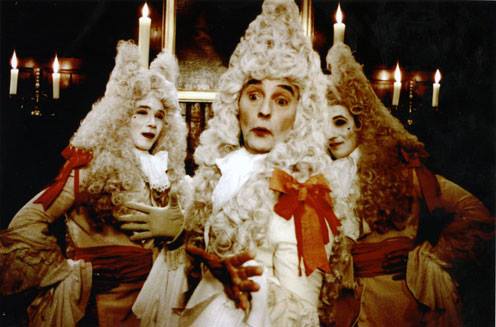
    I don’t recall Charles making an appearance in “The Draughtsman’s Contract” (1982), Peter Greenaway’s saucy though strangely aloof Restoration opus. However, there is plenty of licentiousness and an abundance of outlandish wigs. And, it being a Greenaway film, it is certainly strange in more ways than one. Michael Nyman’s score puts a minimalist spin on baroque sources.

    Finally, “Forever Amber” (1947) is based on a then-scandalous novel by Kathleen Winsor, about an ambitious young woman’s rise through the bedchambers of the Royal Court. The film was directed by Otto Preminger. Linda Darnell is Amber. Once again, George Sanders plays Charles, eight years before reprising the role for “The King’s Thief.” Cornel Wilde, Richard Greene and Jessica Tandy are also in the cast. Philadelphia-born composer David Raksin, of “Laura” fame, plays fast and loose with music of the era.

    Bwoo-hoo-hoo-hoo! It’s so naughty! Everyone, giggle into your handkerchiefs and wear ribbons on your shoes, this Friday evening at 6:00 EDT, on WWFM – The Classical Network and wwfm.org.

Tag Cloud

Aaron Copland (92) Beethoven (95) Composer (114) Film Music (120) Film Score (143) Film Scores (255) Halloween (94) John Williams (185) KWAX (229) Leonard Bernstein (100) Marlboro Music Festival (125) Movie Music (135) Opera (198) Philadelphia Orchestra (88) Picture Perfect (174) Princeton Symphony Orchestra (106) Radio (87) Ralph Vaughan Williams (85) Ross Amico (244) Roy's Tie-Dye Sci-Fi Corner (290) The Classical Network (101) The Lost Chord (268) Vaughan Williams (103) WPRB (396) WWFM (881)

DON’T MISS A BEAT

Receive a weekly digest every Sunday at noon by signing up here


RECENT POSTS