Tag: Baroque Music

  • Bach’s 300th Anniversary Love Story

    Bach’s 300th Anniversary Love Story

    What do you get someone for their 300th wedding anniversary? That’s like gold times six.

    It was on this date in 1721 that Johann Sebastian Bach, 36, married Anna Magdalena Wilcke, 20. She was Bach’s second wife, a soprano at the princely court of Anhalt-Cöthen. Bach had been working there as Kapellmeister since December 1717. His first wife, Maria Barbara Bach, died 17 months earlier.

    In 1723, the Bachs moved to Leipzig when Johann Sebastian was hired as Cantor at the Thomasschule (St. Thomas School). Anna Magdalena continued to sing professionally, and the couple’s shared interest in music contributed to a happy homelife. Bach wrote a number of works dedicated to her and assembled two volumes of “Anna Magdalena Bach Notebooks.”

    In addition, Anna Magdalena organized musical evenings at the Bach home, with the participation of family and guests, making their house a center of attraction. Together, they raised the children from Bach’s first marriage, alongside 13 of their own. Seven of these died in infancy or childhood.

    After Bach’s death in 1750, Anna Magdalena continued to care for their two youngest daughters and her stepdaughter. Increasingly, she became dependent on charity and handouts from the Leipzig city council. Ultimately, she had to rely on public begging to survive.

    The only one of their sons to provide any financial assistance was Carl Philipp Emanuel Bach – and he was a child of Bach’s first marriage. Anna Magdalena died on the street, penniless, in 1760, and was buried in a pauper’s grave.

    Roughly 35 years earlier, in markedly happier times, Bach unveiled his latest cantata, the Cantata No. 62, “Nun komm, der Heiden Heiland” (“Now come, Savior of the heathens”), on the first day of Advent, which fell on this date in 1724. The work was inspired by an Advent hymn of Martin Luther.

    Bach would compose over 200 such cantatas in Leipzig, largely in fulfillment of his duties as Cantor at the Thomaskirche (St. Thomas Church). The premiere of his Advent cantata coincided with Johann Sebastian and Anna Magdalena’s “leather anniversary.”


    The ”Anna Magdalena Bach Notebook”

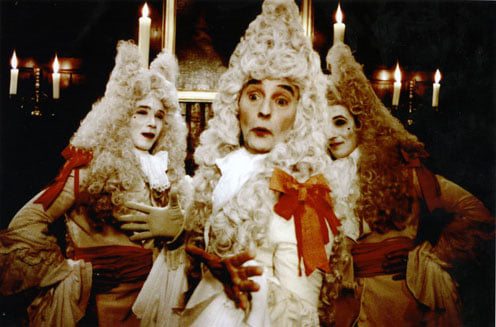
    Gustav Leonhardt in a very silly wig, in “The Chronicle of Anna Magdalena Bach”

    https://www.youtube.com/watch?v=VlRK1VzKGns

    Advent cantata “Nun komm, der Heiden Heiland,” BWV 62


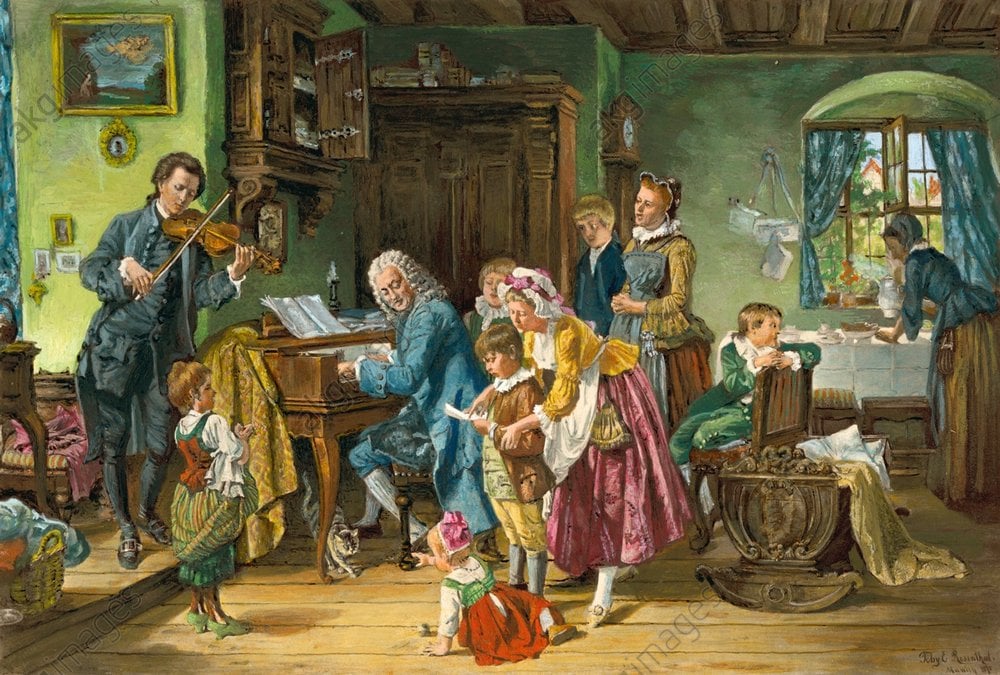
    IMAGE: “Bach with His Family at Morning Devotion” (1870), by Toby Edward Rosenthal
  • Remembering Jeanne Lamon Tafelmusik’s Legacy

    Remembering Jeanne Lamon Tafelmusik’s Legacy

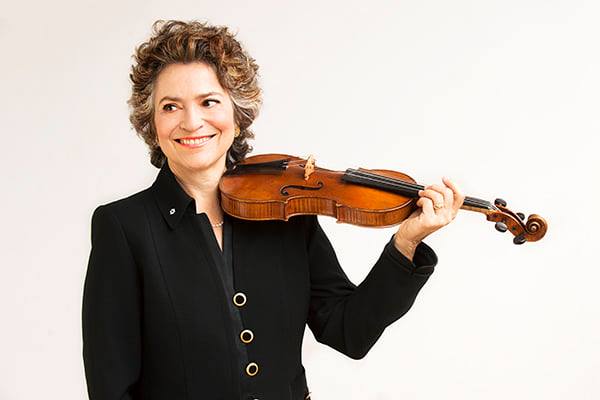
    I was extremely sorry to learn yesterday of the death of Jeanne Lamon.

    Lamon was probably best-known as music director of Tafelmusik, the Toronto-based Baroque orchestra she directed for 33 years. In fact, so associated had she been with the Canadian cultural scene, I was surprised to learn, a number of years ago, that she was actually born in New York City. She didn’t move to Toronto until 1981. It was in 1988 that she became a Canadian citizen.

    Lamon taught at the University of Toronto and the Royal Conservatory of Music. Among her honors, she was appointed a member of the Order of Canada in 2000. She was also made a member or the Order of Ontario in 2014. 2014 was the year she stepped down from her directorship of Tafelmusik to pursue other projects, recording, performing, and touring as a solo violinist. But she remained connected to the group, traveling the globe with the orchestra as part of its “Galileo Project” and gracing its promotional material as Music Director Emerita.

    Her records with Tafelmusik vastly enriched my appreciation of music of the Baroque and Classical Eras. A number of them are still among my favorites. I am particularly fond of her collaborations with Anner Bylsma, who recorded cello concertos by Boccherini, Haydn, and Anton Kraft. Looking back on these, recorded now some thirty years ago, it is difficult to comprehend the passage of time.

    Lamon was 71 years-old. R.I.P.


    CBC obituary, with performance videos:

    https://www.cbc.ca/music/jeanne-lamon-violinist-and-former-tafelmusik-director-dead-at-71-1.5926256

  • Albinoni’s Adagio Mystery: Fact or Fiction?

    Albinoni’s Adagio Mystery: Fact or Fiction?

    I’ve told this story so many times, I thought surely I had shared it here before. Maybe I have. But it’s not turning up in a search of my old posts, so please forgive me if I’m repeating myself.

    Today is the 350th anniversary of the birth of Tomaso Albinoni.

    Albinoni is one of those Italian Baroque composers (Venetian, to be exact) who wrote so much agreeable, fairly interchangeable music. Perfect for morning or afternoon drivetime. For the most part, his works are short – ten minutes at average, as an educated guess. Those in a major key are bright, those in a minor key don’t dig too deeply. Oboe concertos. Concertos for strings. Thanks to Albinoni, the term “concerto a cinque” is heard fairly commonly on classical music radio stations.

    In his lifetime, his works were viewed as being on a par with those of Arcangelo Corelli and Vivaldi. Bach also found his music of interest, basing at least two of his fugues on Albinoni themes and using the composer’s basslines for instructional purposes. It is this matter of the bassline that has secured Albinoni’s immortality in the hearts of music-lovers everywhere.

    During World War II, a significant portion of Albinoni’s output was lost in the bombing of Dresden. (Which makes me wonder, how much did this guy actually write, anyway?) Then in 1958, seemingly out of nowhere, a musicologist by the name of Remo Giazotto (1910-1998) published a previously-unknown “Adagio in G minor.” This he claimed to have reconstructed from surviving fragments – a bassline and the wisp of a violin melody – from an Albinoni manuscript that had been housed in the Dresden State Library.

    Sad and soulful, perhaps even desolate – wholly of a piece, in fact, with the tale of its recovery from the ruins of a city that had been leveled in a three-day Allied attack – it has become Albinoni’s most-frequently performed work. It’s been used in countless movies and television shows – “Gallipoli” comes to mind – and it is included in just about any collection of greatest hits of the Baroque.

    The thing is, did Albinoni really write it?

    Curiously, for whatever reason, Giazotto never produced the actual manuscript from which he claimed to have reassembled the work. This has led to a widespread belief that the piece is not by Albinoni at all, but Giazotto’s own creation. But if that’s indeed the case, why not own it? It’s beautiful music, man!

    Perhaps he was afraid of being laughed out of academia. “Respectable” music at this point in time was teetering into the avant-garde. At the very least, it wasn’t tonal.

    Interestingly, following Giazotto’s death, one of his assistants, Muska Mangano, did find the “Albinoni” fragments among his papers. In the upper right-hand corner of the page, there was a stamp corroborating that the source material had indeed once been stored in Dresden. However, the fragments had been transcribed in a modern hand. It’s assumed that this was the source from which Giazotto worked.

    The original Albinoni manuscript has yet to be recovered. Clearly, there is still a fair amount of mystery surrounding the true provenance of this timeless, haunting classic.

    So once more, an assessment of Albinoni manages to focus very little on the merits of his own achievements! Nothing about the cantatas. Nothing about the operas, which nobody knows.

    Still, if people are still talking about him 270 years after his death, he must have done something right.

    Happy birthday, Tomaso Albinoni!


    The Albinoni Adagio

    A whole mess of Albinoni “concerti a cinque” performed by I Musici

    An aria from one of his operas

    Trailer for Peter Weir’s “Gallipoli”

  • Restoration Cinema Beauty Patches and Film Scores

    Restoration Cinema Beauty Patches and Film Scores

    Beauty patches are back!

    This week on “Picture Perfect,” it’s an hour of lace and licentiousness, with music from movies set during the reign of Charles II.

    “Restoration” (1995) features quite the cast, with a pre-“Iron Man” Robert Downey, Jr. as a young doctor torn between duty and debauchery. He succumbs to the latter at the court of Charles, played by Sam Neill, before finding redemption as he battles the Great Plague and braves the Fire of London. The film also stars David Thewlis, Polly Walker, Meg Ryan, Ian McKellen, and Hugh Grant.

    The main title of James Newtown Howard’s score takes its impetus from Henry Purcell’s “The Fairy Queen.” And indeed there are baroque inflections throughout.

    George Sanders plays Charles in “The King’s Thief” (1955). Edmund Purdom is a highwayman who pilfers an incriminating book from David Niven. An aristocratic schemer, Niven will stop at nothing to get it back. The swashbuckling score is by Miklós Rózsa.

    I don’t recall Charles making an appearance in “The Draughtsman’s Contract” (1982), Peter Greenaway’s saucy, though strangely aloof, Restoration opus. However, there is plenty of licentiousness and an abundance of outlandish wigs. And, it being a Greenaway film, it is certainly strange in more ways than one. Michael Nyman’s score puts a minimalist spin on baroque sources.

    Finally, “Forever Amber” (1947) is based on a then-scandalous novel by Kathleen Winsor, about an ambitious young woman’s rise through the bedchambers of the Royal Court. The film was directed by Otto Preminger. Linda Darnell is Amber. Once again, George Sanders plays Charles, eight years before reprising the role for “The King’s Thief.” Cornel Wilde, Richard Greene, and Jessica Tandy are also in the cast. Philadelphia-born composer David Raksin, he of “Laura” fame, plays fast and loose with music of the era.

    Bwoo-hoo-hoo-hoo! It’s so naughty! Everyone, giggle into your handkerchiefs and wear ribbons on your shoes. We’ll be powdering our faces and going heavy on the rouge, on “Picture Perfect,” music for the movies, this Saturday evening at 6:00 EDT, on WWFM – The Classical Network and wwfm.org.

  • Discovering Archived Baroque Music on YouTube

    Discovering Archived Baroque Music on YouTube

    You never know what you’re going to stumble across when you’re bopping around YouTube. This week, I discovered one of my old Noontime Concerts. These aired on WWFM The Classical Network on Tuesdays at noon. Essentially, I was provided with audio files and a copy of a printed program. More often than not, the programs contain information on the performers but little or nothing about the music. These shows were done on the fly, live, with no script. In the moment, I would be a bundle of adrenaline and self-criticism. Going back to it now, I have to say… not bad!

    If you’re a fan of Baroque music, keep in mind that this Sunday is Bach’s birthday, and WWFM is in the midst of its annual “Bach 500” challenge. If we receive 500 donations IN ANY AMOUNT, we will cancel fundraising on March 21st and enjoy just Bach’s music. Furthermore, every dollar will be matched by money from the “Bach Pot,” put up in advance by some especially generous listeners.

    Consulting the donations thermometer on the station’s home page, I note that there are only 187 contributions to go until we meet our goal. Get your weekend underway by Bach-ing up your commitment to the classics on WWFM – The Classical Network and wwfm.org.

    Have a great weekend, and thank you for your support!

    https://wwwfm.secureallegiance.com/wwfm/WebModule/Donate.aspx?P=DEFAULT&PAGETYPE=PLG&CHECK=vOU2bz5JCWmgCDbf53nm9ezWDeZ%2beA1M


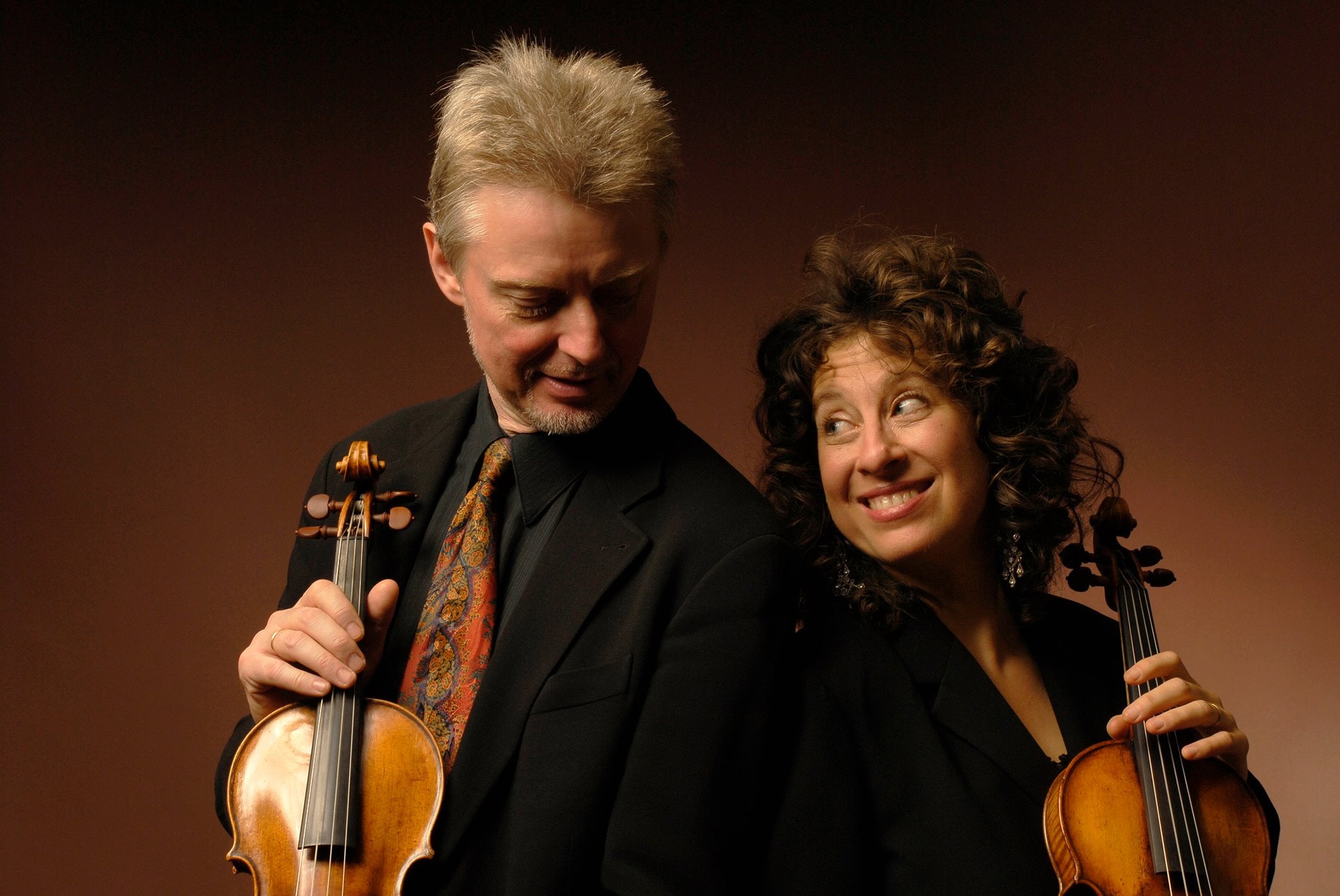
    Archived Noontime Concert musicians, the duo Black Marble: Jörg-Michael Schwarz & Karen Marie Marmer, baroque violins

Tag Cloud

Aaron Copland (92) Beethoven (95) Composer (114) Film Music (120) Film Score (143) Film Scores (255) Halloween (94) John Williams (185) KWAX (229) Leonard Bernstein (100) Marlboro Music Festival (125) Movie Music (135) Opera (198) Philadelphia Orchestra (88) Picture Perfect (174) Princeton Symphony Orchestra (106) Radio (87) Ralph Vaughan Williams (85) Ross Amico (244) Roy's Tie-Dye Sci-Fi Corner (290) The Classical Network (101) The Lost Chord (268) Vaughan Williams (103) WPRB (396) WWFM (881)

DON’T MISS A BEAT

Receive a weekly digest every Sunday at noon by signing up here


RECENT POSTS