How much joy is too much joy?
In an impressive display of excess, 10,000 singers gather for Beethoven’s “Ode to Joy.”
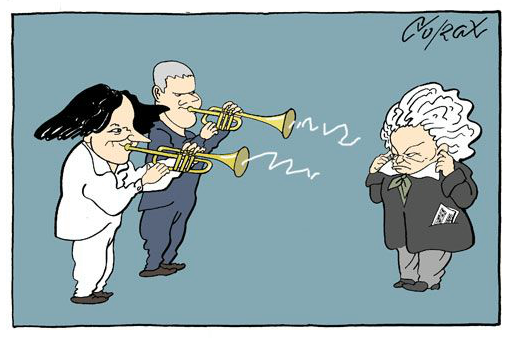
How much joy is too much joy?
In an impressive display of excess, 10,000 singers gather for Beethoven’s “Ode to Joy.”
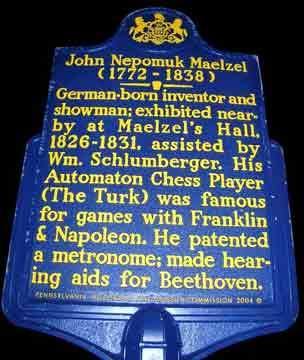
Perhaps in your haste to escape Philadelphia by way of South 5th Street, en route to the Ben Franklin Bridge, you may have glimpsed the Johann Nepomuk Maelzel commemorative marker at the corner of 5th and St. James, just below Walnut Street.
Maelzel died in the extraordinary act of actually trying to get back to Philadelphia. On the 21st of July, 1838, he was found dead in the berth of a brig returning from the Caribbean. Whether he died of yellow fever or alcohol poisoning is a matter of ambiguity. Maelzel was consigned to a watery grave somewhere off the coast of Charleston, South Carolina.
In his lifetime, Maelzel was a renowned inventor of mechanical wonders. He created machines that could play works of Haydn and Mozart. No doubt his most ambitious achievement in this regard was the panharmonicon, a kind of mechanical orchestra, for which Beethoven composed “Wellington’s Victory.”
Beethoven and Maelzel would quarrel over the division of spoils, and Beethoven would re-orchestrate the work for human performers of a conventional symphony orchestra. Maelzel, seemingly always in debt, would exhibit his creations in his own museum in Vienna, and on tours throughout the United States and the West Indies.
He achieved notoriety for his work with automatons, most notably a mysterious humanoid engine called “The Turk.” The Turk was marketed as a thinking machine that could outmaneuver opponents in a game of chess. And the Turk almost always delivered on his promise. The device captivated figures from Edgar Allan Poe (a skeptic) to S. Weir Mitchell (haunted by it as a child).
Some felt Maelzel had set foot into some pretty murky ethical territory, with arguments prefiguring some in our own day regarding artificial intelligence. This was the era, after all, of Mary Shelley’s “Frankenstein.” Sensible folk speculated it was all humbug and that there was a man hidden somewhere in the vicinity of The Turk. Others thought Maelzel was dabbling in matters best left to God. Maelzel was mum on the subject, and The Turk was destroyed by fire in 1854.
Though no doubt there was a whiff of charlatanism about Maelzel, who schooled no less a figure than P.T. Barnum in the effective use of the press, he had a remarkable talent for finessing and perfecting the ideas of others.
His most enduring legacy is the metronome, which he patented in 1815. Beethoven wrote glowingly of the device and declared that henceforth he would stop using traditional tempo indications in his scores in favor of metronome markings. We all know how well that served him. Seemingly as with anything influenced by Maelzel, Beethoven’s choices of metronome markings continue to be a source of controversy.
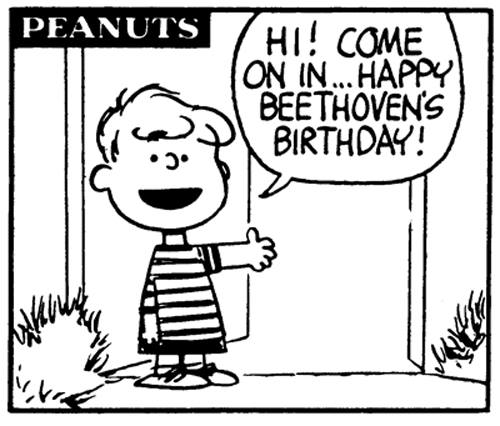
Happy birthday, Ludwig van!
There’s not much I need to say about Beethoven. Not satisfied merely to be the summation of his era, he pushed so hard that he’s influenced the development of music history ever since.
Today, The Classical Network will honor The Master with a full day of his symphonies, beginning at 10 a.m. ET. It will also honor the listener by broadcasting them complete and uninterrupted. Along the way there will be some colorful commentary and some fun additions.
This is also a 10k “challenge day,” as Princeton’s Municipal Capital Management LLC has challenged the station and its listeners to bring in $10,000. If that goal is achieved before the final notes of Beethoven’s 9th Symphony have sounded, Municipal Capital Management will match every dollar up to $10,000, resulting in (doing the simple math) $20,000 for WWFM. At which point, an Ode to Joy would certainly be in order.
If you enjoy programs like “Picture Perfect” and “The Lost Chord,” or any of the other music that comes your way courtesy of The Classical Network, please consider lending your support.
Remember, your pledge today will be doubled. You can donate online at http://www.wwfm.org, or by calling 1-800-232-1212.
On behalf of The Classical Network, thank you!
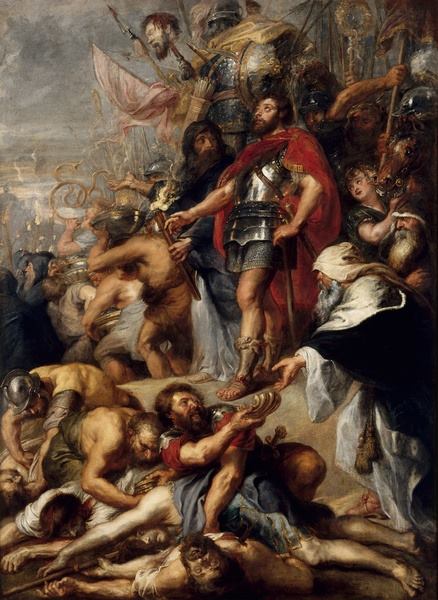
Hanukkah begins at sunset.
The confluence of Beethoven’s birthday and the Festival of Lights: Twelve Variations for Cello & Piano on “See, the Conqu’ring Hero Comes,” from Handel’s oratorio “Judas Maccabaeus.”
Aaron Copland (92) Beethoven (94) Composer (114) Film Music (116) Film Score (143) Film Scores (255) Halloween (94) John Williams (185) KWAX (228) Leonard Bernstein (99) Marlboro Music Festival (125) Movie Music (131) Opera (197) Philadelphia Orchestra (86) Picture Perfect (174) Princeton Symphony Orchestra (106) Radio (86) Ralph Vaughan Williams (85) Ross Amico (244) Roy's Tie-Dye Sci-Fi Corner (290) The Classical Network (101) The Lost Chord (268) Vaughan Williams (99) WPRB (396) WWFM (881)